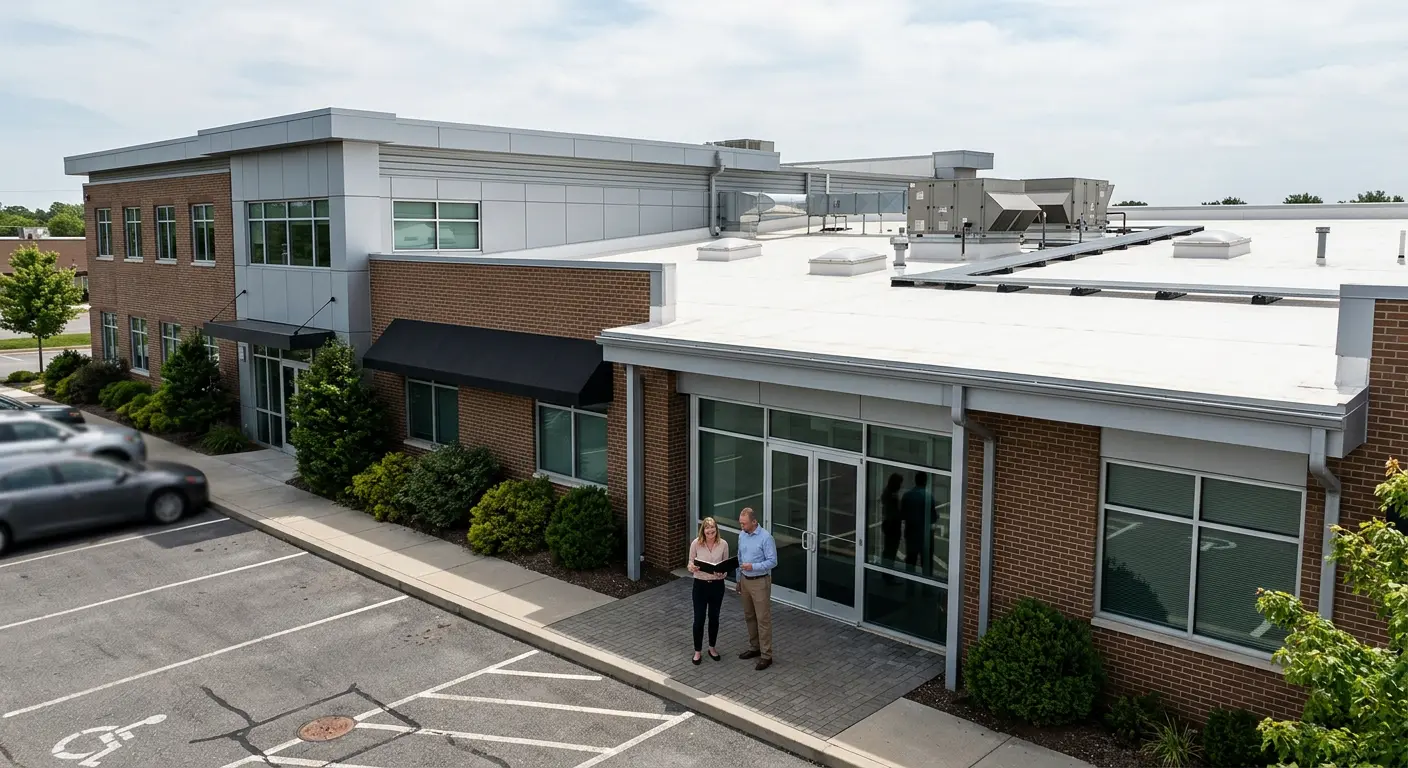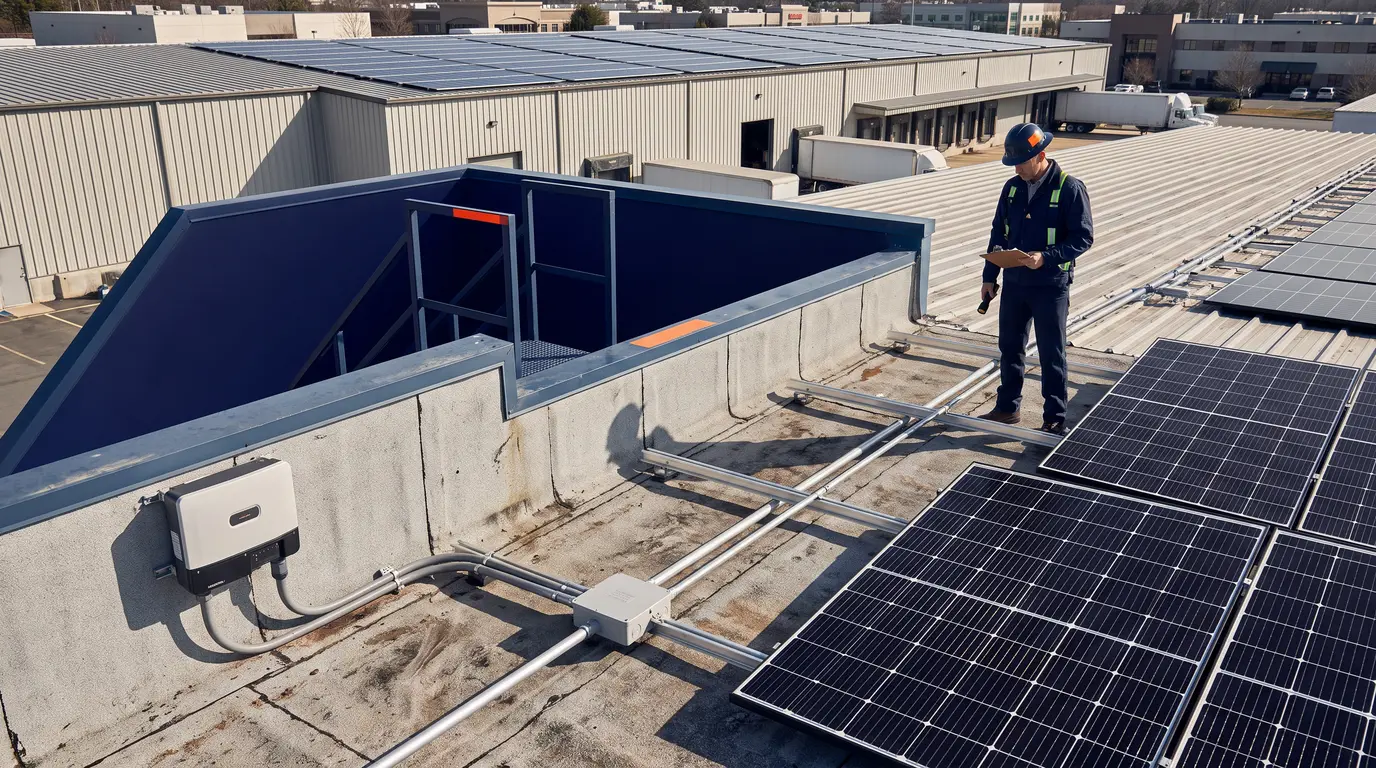
Buying a commercial building with rooftop solar can be a smart acquisition, but the panels need to be evaluated as both an energy asset and a long term obligation. The right question is not simply whether the building has solar. It is whether the system is productive, properly documented, attached to a sound roof, and connected to contracts you are prepared to assume.
Before closing, confirm who owns the equipment, review any lease or power purchase agreement, examine production records, check for liens or other recorded interests, and understand how the sale affects the utility account and interconnection arrangement. A system owned by the building owner and supported by clear records is generally simpler to evaluate than a system owned by a solar provider under a long term contract.
Start by identifying who owns the solar system
The presence of panels does not tell you who owns them. The system may belong to the seller, be financed but still owned by the seller, or be owned by a solar provider through a lease or power purchase agreement. The purchase agreement, financing documents, property records, and related amendments determine the buyer’s actual rights and obligations.
Under a power purchase agreement, a third party typically owns, operates, and maintains the system while the building owner buys the electricity it produces. That arrangement may shift some operating responsibilities away from the property owner, but it can also create continuing payments, access rights, assignment requirements, and administrative obligations.
| Structure | Who owns or operates the system | Buyer’s main financial obligation | Key transfer issue | Main diligence focus |
|---|---|---|---|---|
| Building owner owns the system | The property owner owns the equipment and generally receives the operating benefits while retaining maintenance and replacement responsibilities. | Future maintenance, repair, and replacement costs. | Verify ownership, warranties, permits, and interconnection records. | Review title, production, warranties, permits, and operating records. |
| Third party lease | A solar provider owns the system and the property owner pays according to a lease. | Continuing lease charges and related property obligations. | Determine whether the lease can be assigned or assumed and what access rights apply. | Review payment terms, maintenance duties, access rights, and end of term provisions. |
| Power purchase agreement | A third party owns and operates the system while the host purchases the generated electricity. | Electricity payments under the agreement, including any escalation provisions. | Review assignment requirements, pricing, output provisions, and provider consent. | Review pricing, renewable energy certificate ownership, roof access, and performance records. |
These are common structures, not every possible financing arrangement. A contract may separate equipment ownership, tax benefits, and operating responsibilities among different entities. Have the transaction counsel and title team review the actual documents rather than relying on the panel installation alone.
Review every contract and recorded interest
Request the complete executed agreement and every amendment. The review should cover the payment schedule, price escalation provisions, purchase or buyout options, insurance requirements, roof access rights, maintenance responsibilities, default provisions, removal obligations, and assignment language.
Ask the title company and transaction counsel to search for UCC filings, fixture filings, liens, easements, leases, and other recorded interests associated with the equipment. A UCC filing is not automatically the same as a mortgage lien. The important question is what collateral and property rights the filing actually covers, and how those rights will be handled at closing.
A sale may require assignment or assumption documents, provider consent, buyer qualification, and coordination with the lender, utility, title company, or other parties. The exact process varies by contract, state filing system, utility territory, and transaction structure, so a commercial buyer should not assume that a residential transfer process applies.
Ask for a complete solar record
A system can look clean from the ground and still have performance or documentation gaps. Request several years of production data, monitoring access, utility bills, inverter fault records, inspection reports, repair invoices, warranty documents, commissioning records, permits, interconnection approval, and as built drawings.
Compare actual output with the original production estimate and the system’s current operating condition. Review degradation assumptions, component warranties, maintenance responsibilities, the performance plan, and the provider’s ability to continue servicing the system. The monitor commercial solar performance resource can help organize questions about production data, alerts, and monitoring records.
Production should be reviewed over time rather than judged from one low month. Weather, shading, soiling, equipment outages, curtailment, utility rules, and changes in building load can all affect output. A pattern of faults or unexplained underperformance deserves closer attention, while a single unusual result does not establish that the system is defective.
For additional context, the Procuring Solar Energy: A Guide for Federal Facility identifies generation records, degradation factors, warranties, performance plans, and long term service capability as useful evaluation items. It is older federal procurement guidance, so use it as a due diligence framework rather than a current commercial performance benchmark.
Evaluate the roof and solar system together
The roof is part of the solar investment. If it needs major work before the solar agreement ends, the project may involve panel removal, storage, reinstallation, electrical reconnection, warranty questions, and business disruption. Those costs and responsibilities should be understood before you commit to the purchase.
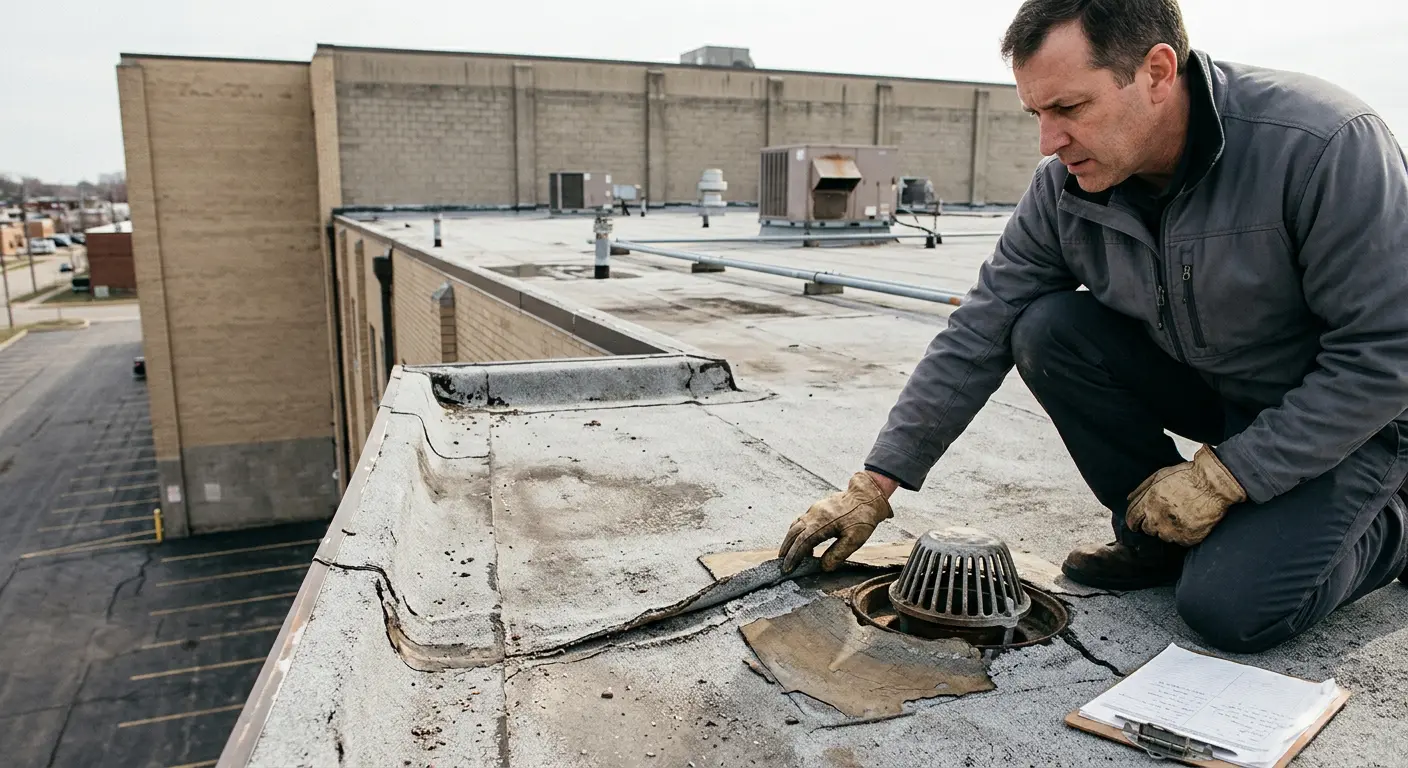
Have a qualified commercial roof professional review the roof covering or membrane, drainage, penetrations, attachment points, structural capacity, and likely repair or replacement timing. Coordinate that review with a solar professional so the access method, removal process, reinstallation obligations, and possible warranty effects are addressed together.
The guide to evaluate the commercial roof before buying can help you organize roof records, warranty documents, and future capital questions. Also check whether the commercial roof warranty transfers. That roof warranty review is separate from reviewing warranties for the solar equipment.
Ask directly: if the roof requires replacement before the solar contract ends, who pays for panel removal, storage, reinstallation, electrical reconnection, and any lost production? The answer should be documented rather than assumed.
Check the utility and transfer requirements
Confirm with the serving utility whether the account, meter, interconnection agreement, export arrangement, and applicable rate structure can continue after the ownership change. Utility treatment is location specific, and the sale may require updated documents or coordination with the solar provider.
The Solar Photovoltaic Program from the City of Mesa illustrates why interconnection requirements should be checked with the applicable utility rather than generalized from another property. Virginia buyers can also review the Virginia Energy Connect solar information, while recognizing that local program information does not establish a nationwide transfer rule.
Calculate the full financial obligation
A fixed electricity price or reduced utility use may be attractive, but solar savings do not automatically exceed the remaining contract cost. Review the system’s output, utility rate structure, payment schedule, escalation terms, maintenance costs, insurance, roof work, and possible equipment replacement over the period you expect to own the building.
Also confirm who receives electricity bill savings, renewable energy certificates, rebates, tax benefits, and other environmental attributes. These benefits may belong to the system owner or may be addressed separately in the contract.
For a structured financial review, use the guidance on how to evaluate commercial solar payback. For preliminary planning around future solar related costs, you can also estimate commercial solar costs. Neither resource replaces a property specific review of the contract, utility account, production history, roof work, and maintenance obligations.
A useful question for the transaction team is: what is the buyer’s total expected cost over the planned holding period after combining utility bills, solar payments, maintenance, insurance, roof work, and eventual equipment replacement?
Questions to ask before closing
- Who owns the equipment today, and what document proves that ownership?
- Are there any leases, power purchase agreements, financing documents, UCC filings, fixture filings, liens, easements, or other recorded interests?
- What payments, escalations, maintenance duties, insurance requirements, access rights, and removal obligations will the buyer assume?
- Can the contract be assigned, and does the solar provider, lender, title company, or utility need to approve the transaction?
- Does the roof have a repair or replacement need that could require solar removal before the contract ends?
- Who receives renewable energy certificates, rebates, tax benefits, and other environmental attributes?
- What is the complete expected cost of the system and related roof obligations over the buyer’s planned holding period?
Frequently asked questions
Can a solar lease or PPA transfer when the building is sold?
It may, but transfer is contract dependent. Review the assignment and assumption language, provider consent requirements, buyer qualifications, payment obligations, and any coordination required with the utility, lender, and title company. The exact process varies by agreement, utility territory, state filing system, and transaction structure.
What solar records should a commercial buyer request?
Request production data, monitoring access, utility bills, inverter fault records, inspection reports, repair invoices, warranties, commissioning records, permits, interconnection approval, and as built drawings. Also request the complete contract and its amendments, including payment terms, maintenance duties, roof access rights, and removal provisions.
What happens if the roof needs replacement after buying a building with solar?
The project may require panel removal, storage, reinstallation, electrical reconnection, warranty coordination, and planning for lost production. The contract should identify which party pays and manages those obligations. Review the roof and solar system together before closing so the timing and possible capital exposure are clear.
Make the decision with the full picture
An existing solar system can add useful operating value to a commercial building, but only when its ownership, performance, contract terms, roof condition, and transfer requirements are understood. Proceed with greater confidence when the records are complete, the system is performing as expected, the roof can support its remaining service life, and the future obligations fit your financial and operational plans.
The most useful next step is to gather the solar agreement, production history, roof records, title information, and utility documents in one review. Then have the transaction team coordinate the contract, title, roof, solar, and utility questions before the closing terms are finalized.