The practical choice between whole home and partial home battery backup is not simply a question of how large the house is or how many batteries fit on the wall. It depends on which circuits you want available during an outage, how much power those circuits require, whether motors need a large startup surge, and how long you want the system to operate.
Partial home backup is generally the simpler, lower demand design. It protects selected circuits such as refrigeration, lighting, internet equipment, outlets, medical equipment, security systems, or a furnace control circuit. Whole home backup keeps the home’s circuits connected to the backup system, but it still does not guarantee that every appliance can run at the same time.
The right design starts with an outage priority list and a load review. Battery capacity matters, but inverter output, startup capability, voltage, service configuration, and load management can matter just as much.
Whole Home and Partial Home Backup Compared
These two options describe the electrical coverage of the backup system, not merely the number of batteries installed.
| Backup design | What it does | Main design question |
|---|---|---|
| Partial home backup | Powers selected circuits while other circuits remain outside the backup island. | Which loads are essential during an outage? |
| Whole home backup | Keeps the home’s circuits connected to the backup system, subject to the system’s power, surge, and energy limits. | Can the system manage the connected loads at the same time or in a controlled sequence? |
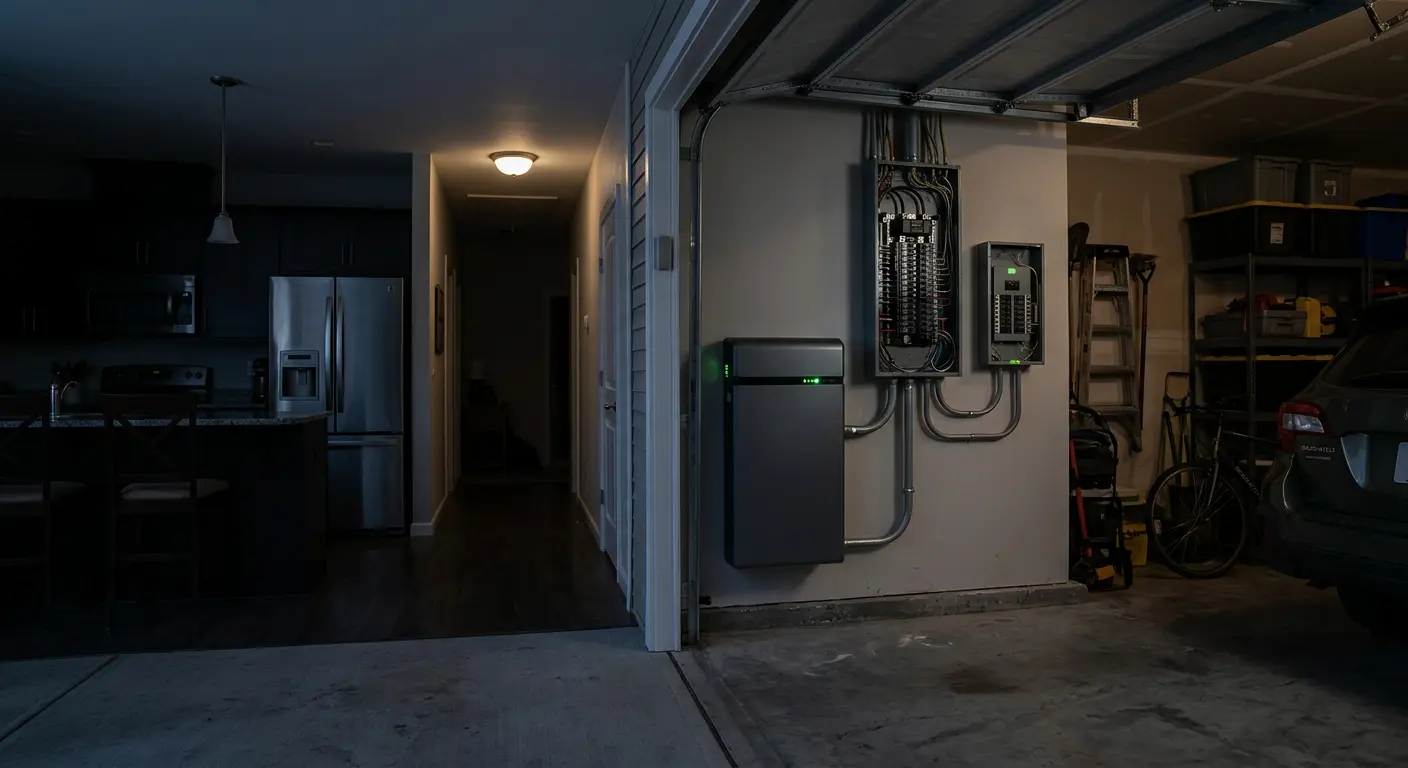
With partial home backup, the installer configures selected circuits for backup. A backup load panel, sometimes called a critical loads subpanel, may be used to separate those circuits from the rest of the electrical system. The exact arrangement varies by product and property.
Whole home backup provides broader coverage, but “whole home” does not mean unlimited simultaneous operation. A battery inverter must provide enough continuous output for running loads, enough surge capability for starting motors, and enough stored energy for the desired runtime. A system can keep every circuit available while still controlling, delaying, or shedding certain high demand appliances.
That distinction is easy to miss. Whole home describes where the backup system can send power. It does not promise that every large appliance will operate together without limits.
Which Circuits Should Be Included in Partial Home Backup?
A partial backup design should begin with the circuits that support safety, basic living conditions, communication, and property protection. The exact list is different for every household, so there is no universal definition of a critical load.
- Refrigerators and freezers
- Lighting circuits
- Internet, communications, and security equipment
- Convenience outlets for essential devices
- Medical equipment
- A furnace control circuit or other essential heating controls
- A sump pump or well pump, after its running and startup demand has been evaluated
- Garage door equipment or other circuits the household considers important during an outage
Large appliances should not be added to the protected list based only on their breaker labels. Air conditioners, heat pumps, well pumps, electric water heaters, ranges, dryers, pool equipment, and electric vehicle chargers can create substantial running or startup demand.
For example, a well pump may be an essential circuit because the home depends on it, while also being a challenging circuit because its motor requires startup power. The same issue can apply to central air conditioning or a heat pump. The question is not only whether a circuit is important. It is whether the proposed backup equipment can start and operate the connected load while still serving the other protected circuits.
Is a Critical Loads Subpanel Required for Partial Home Backup?
Not necessarily. Partial home backup may use a backup load panel, a modified panel arrangement, or another manufacturer supported configuration. The correct architecture depends on the battery system, backup interface, service configuration, panel layout, and local approval requirements.
Before signing a proposal, ask to see the electrical drawings. They should identify whether the design protects a backup subpanel, selected circuits in another arrangement, or loads located upstream or downstream of the gateway or backup interface.
What Whole Home Backup Really Requires
Whole home backup requires more than enough kilowatt hours on a battery label. The system must also be able to deliver the required power at the correct voltage and phase, handle startup demand, and operate safely while the utility is unavailable.
Battery Energy Versus Inverter Output
Stored energy affects runtime. Inverter output affects whether the equipment can run at all. A system may have enough stored energy for an appliance’s expected runtime but still fail to start that appliance if the inverter cannot handle its running current or startup surge.
This is especially relevant for motors and compressors. Whole home air conditioners, heat pumps, well pumps, and pool equipment may require a substantial inrush of current when they start. Some systems may need a soft start device, staged operation, or load shedding. Those capabilities are product specific and must be confirmed for the proposed equipment.
For example, Tesla’s documentation gives product specific guidance for Powerwall 3, including a largest backup load or breaker of 60 amperes per Powerwall 3 and a motor load limit of 185 amperes of locked rotor amps per Powerwall 3. Those figures apply to that product and design guidance. They are not universal limits for every battery or inverter.
Transfer and Islanding Equipment
A battery system must safely disconnect the home from the utility when the grid goes down. Manufacturer documentation may call the required equipment a backup gateway, backup interface, system controller, backup switch, or another equivalent term.
This equipment manages the transition between grid connected operation and backup operation. It also helps establish the protected electrical island so the home does not continue sending power toward an interrupted utility circuit. The exact equipment and wiring depend on the battery system and the property’s service configuration.
Load Management Can Broaden Backup Coverage
Load management can make a broader backup design practical. Depending on the product and installation, the system may shed a high power load, delay it, schedule it, or control it through dedicated equipment.
That can allow a home to keep more circuits available without treating every appliance as if it must operate simultaneously. The homeowner still needs to know what happens during an outage. A proposal should identify which loads are shed, delayed, limited, or manually managed.
For product specific planning information, homeowners can review the Tesla Powerwall 3 Owner’s Manual, the Enphase Energy System Planning technical brief, and the SolarEdge Home Backup Interface installation guide.
How to Choose Between Whole Home and Partial Home Backup
Choose partial home backup when the priority is dependable power for a defined group of essential circuits and the household is comfortable leaving other loads outside the backup island. It is generally the less demanding design because the system does not need to serve every connected circuit during the outage.
Consider whole home or managed whole home backup when broad circuit coverage is important and the equipment can support the property’s electrical loads. The design may still rely on load management, especially for air conditioning, heat pumps, water heating, pumps, pool equipment, or vehicle charging.
Ask for two designs if the choice is unclear:
- A partial backup design that lists every protected circuit.
- A whole home or managed whole home design that identifies loads which may be excluded, shed, delayed, scheduled, or limited.
Compare the designs based on the outage objective, not just the equipment count. A system intended for short outages has a different planning target from one expected to support overnight operation or several days of emergency use with solar recharge.
Solar can help recharge the battery while the grid is down, but it does not guarantee indefinite whole home operation. Recharge depends on available sunlight, array output, battery charge controls, household demand, weather, and whether the system is designed to operate safely while islanded.
Questions to Ask Before Choosing a Backup Design
A useful proposal should answer more than how many batteries are being installed. Ask the installer to document the following:
- Which circuits are backed up, and which are excluded?
- What are the continuous running loads and the startup or inrush loads?
- Which appliances require 120 volt power, 240 volt power, or a particular phase configuration?
- Can the system start and operate the largest motor or compressor load?
- Will a soft start device, staged operation, or load shedding be needed?
- What is the maximum backed up current for the proposed equipment?
- Where is the backup gateway, backup interface, or equivalent islanding equipment located?
- Does the design require a backup panel, panel modification, service upgrade, or particular meter arrangement?
- What happens to the electric water heater, well pump, central air conditioner, heat pump, pool equipment, and electric vehicle charger during an outage?
- What runtime is expected at the stated load, and what solar recharge assumptions are included?
Also confirm the model specific documentation before signing. Supported wiring arrangements, maximum current, motor starting capability, expansion limits, load control functions, generator compatibility, warranty conditions, and approved diagrams can vary by manufacturer, model, firmware, region, and equipment revision.
Permits, inspections, utility procedures, emergency disconnects, equipment listing, placement, clearance rules, and other local approval requirements should be confirmed with the installer, utility, and authority having jurisdiction. A configuration supported for one service arrangement or jurisdiction may not be supported for another.
Common Misconceptions About Home Battery Backup
Misconception: Whole home backup means every appliance can run at the same time.
Correction: Whole home architecture keeps all or nearly all circuits available, but inverter output, battery energy, motor starting capability, and load management still limit simultaneous operation.
Misconception: A battery’s kilowatt hour rating alone determines whether it can run an appliance.
Correction: Stored energy affects runtime, while appliance operation also depends on continuous output, voltage, breaker size, and startup or inrush capability.
Misconception: Partial backup is simply a smaller battery.
Correction: Partial backup is primarily an electrical coverage and control arrangement. Selected circuits are placed in the backup island while other circuits are excluded. Battery size remains important, but it is only one part of the design.
Frequently Asked Questions
Which circuits should be included in a partial home battery backup?
Common priorities include refrigeration, lighting, communications, essential outlets, medical equipment, security equipment, and selected heating controls. Pumps and other motor loads may also be important, but their running and startup demand should be evaluated before they are included.
Can a whole home battery backup run central air conditioning or a heat pump?
It may be possible, but the answer depends on the equipment’s running demand, startup or inrush demand, voltage, breaker size, and the battery inverter’s capabilities. A soft start device, staged operation, or load management may be needed for some systems.
Is a critical loads subpanel required for partial home backup?
Not in every supported design. A backup load panel or another panel arrangement may be used, depending on the manufacturer, service configuration, panel layout, and local approval requirements.
Can load management make whole home backup possible with fewer batteries?
Load management can expand or optimize backup coverage by shedding, delaying, scheduling, or controlling high power loads. Whether it can reduce the required battery quantity depends on the product, configuration, connected loads, and desired runtime.
What happens to an electric water heater, well pump, or electric vehicle charger during an outage?
It may remain available, be excluded, or be controlled through load management. The result depends on the backup architecture and the equipment’s power and startup requirements. The proposal should state what happens to each of these loads.
Does whole home backup require a main panel replacement or service upgrade?
Not universally. Existing panel configuration, service size, multiple load centers, voltage and phase requirements, available breaker space, and manufacturer supported wiring arrangements determine whether panel work or a service change is needed.
Can solar recharge a battery while the grid is down?
Solar may recharge the battery during an outage when the system is designed and configured to operate safely while islanded. Recharge is not guaranteed and depends on sunlight, array output, battery controls, household demand, weather, and system compatibility.
How do 120 volt and 240 volt appliances affect backup system design?
The backup equipment must support the voltage and phase arrangement required by the connected circuits. Appliances using 240 volt power, including some pumps, heating equipment, and charging equipment, can materially affect the system design and should be included in the electrical review.
The Practical Choice
Partial home backup is usually the clearer choice when the goal is dependable power for a defined group of essential circuits. Whole home backup can provide broader coverage, but it still depends on inverter output, startup capability, stored energy, electrical service configuration, and load management.
Before choosing, make a complete circuit inventory, identify the loads that matter most during an outage, and request both running load and startup load calculations. Then verify the backup boundary on the electrical drawings and confirm the model specific equipment limits and local project requirements.