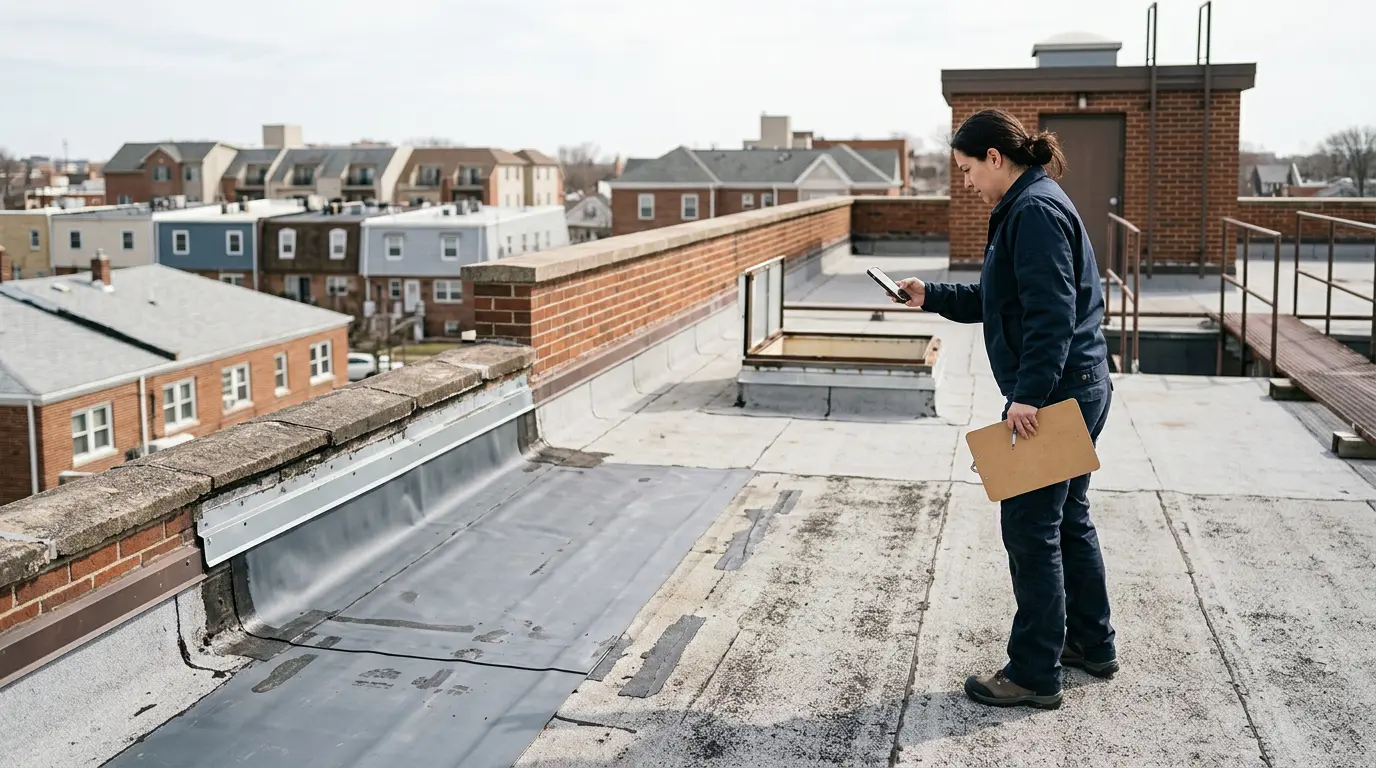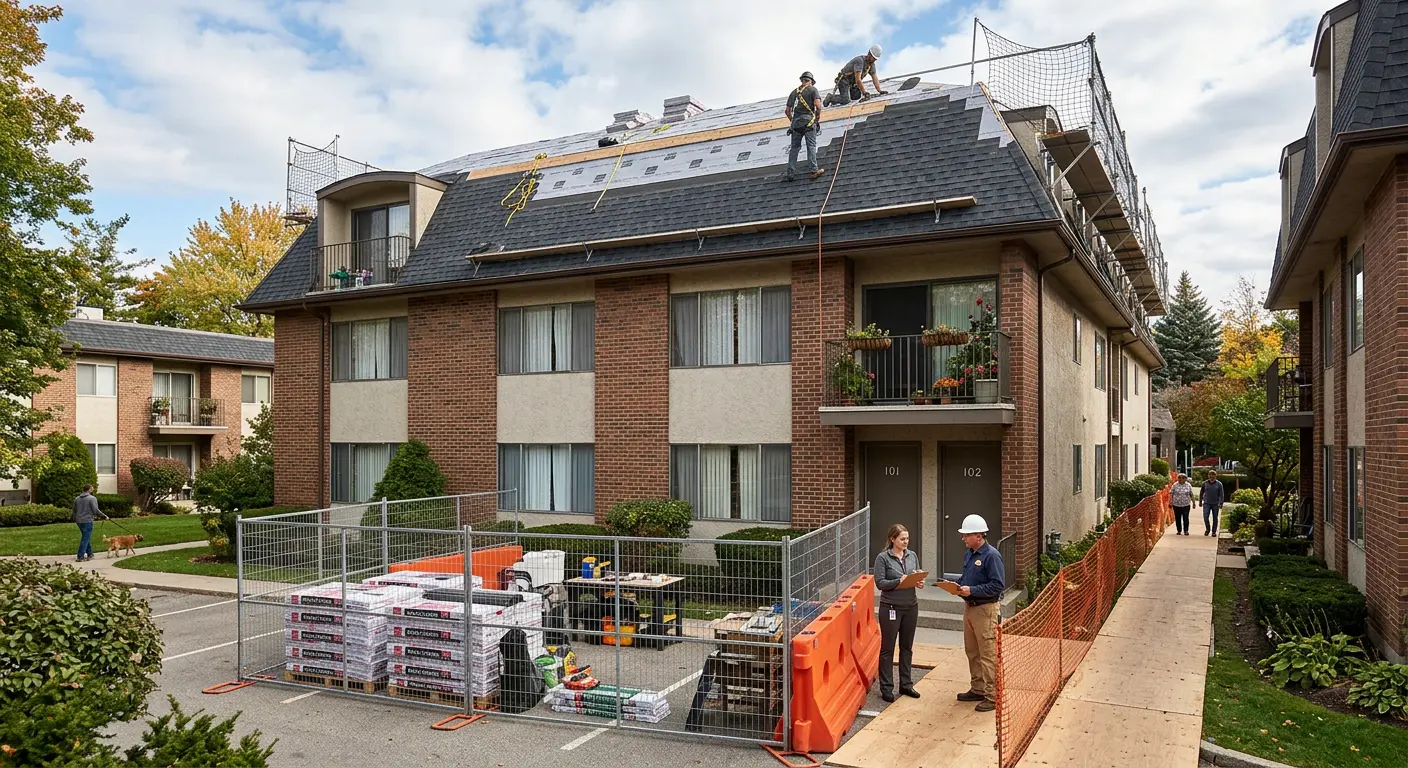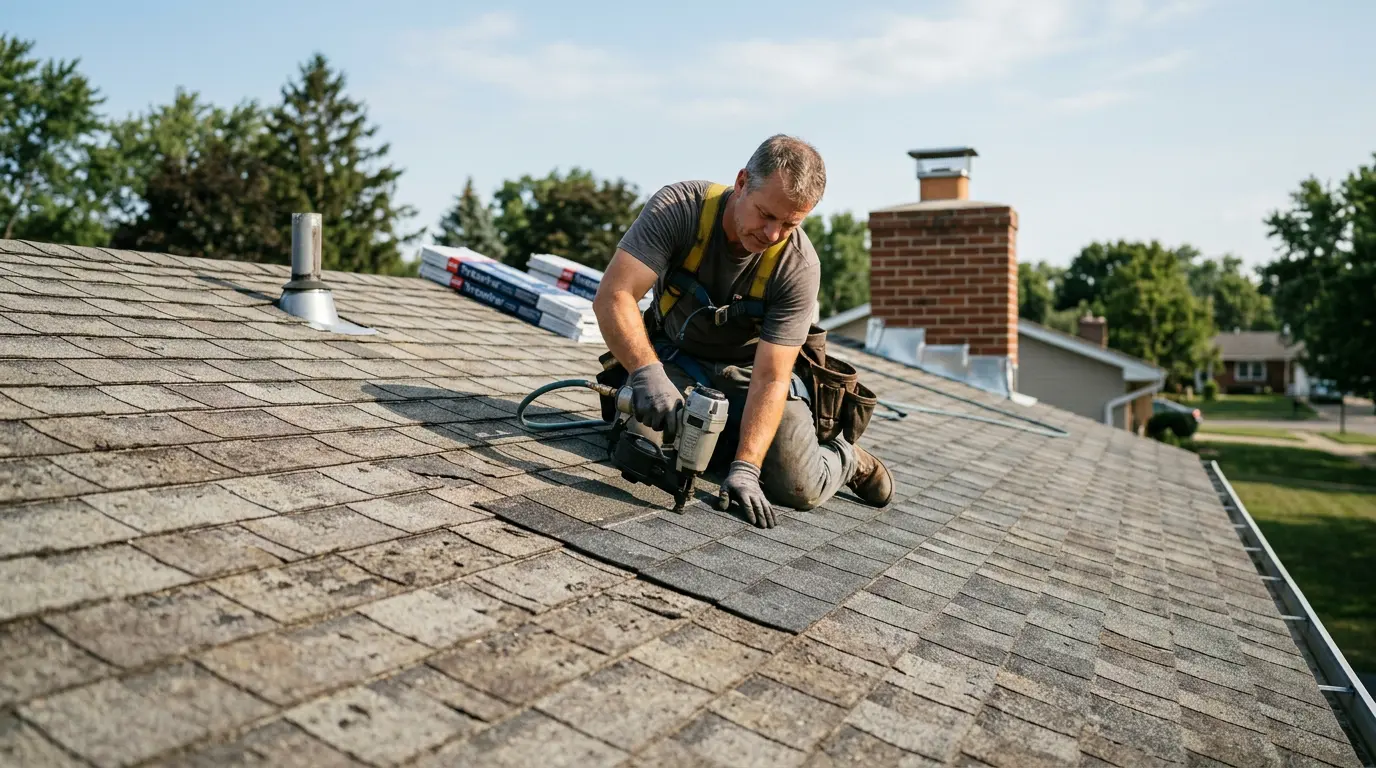
Sometimes, new asphalt shingles can be installed over one existing layer of shingles. This is commonly called a roof recover, overlay, or layover. However, permission to install a second layer does not automatically make it the right choice for the roof.
The decision depends on the locally adopted building code, the number and condition of the existing roof layers, the roof deck and structure, flashing, ventilation, and the new shingle manufacturer’s instructions. An overlay may be reasonable when the existing shingles form a sound, flat base. It is usually a poor solution when the roof is leaking, deteriorated, uneven, sagging, or hiding problems that need to be repaired.
The basic tradeoff is straightforward: an overlay may avoid some immediate removal work, but it leaves much of the existing roof assembly concealed. It also adds weight and creates more material to remove at the next replacement. The roof may look ready from the driveway, but roofs have a way of keeping their more expensive surprises underneath.
When Can You Shingle Over an Existing Roof?
An overlay may be considered when the existing roof has one layer of asphalt shingles that lies flat and provides a sufficiently smooth, secure base. The deck should be in good condition, and there should be no known signs of chronic leaks, widespread deterioration, sagging, soft areas, or defective roof details.
The locally adopted code must allow the work, and the new shingle manufacturer must permit installation over existing shingles. The Asphalt Roofing Manufacturers Association guidance on reroofing explains that a single layer that lies flat may be suitable for a recover when the deck is in good condition. That is guidance, not a universal approval for every roof.
- The roof has one existing layer of asphalt shingles.
- The shingles are flat, securely attached, and not broadly curled, buckled, warped, loose, or damaged.
- The deck appears sound, with no known soft areas, sagging, or widespread deterioration.
- There is no unresolved history of chronic leaking.
- The local building department allows a recover under its adopted code and amendments.
- The new shingle manufacturer permits the proposed installation method.
A roof that looks acceptable from the ground has not necessarily been properly evaluated. Curled or uneven shingles can telegraph their shape through the new layer and interfere with proper fastening and sealing. Non asphalt and specialty roof coverings also require separate review. The common one layer guidance for asphalt shingles should not automatically be applied to slate, tile, wood, metal, membrane, or designer roofing products.
When Is a Tear Off the Better or Required Option?
Under the 2018 International Residential Code model code framework, a roof recover is not permitted when the existing roof is water soaked or deteriorated, consists of slate, clay, cement, or asbestos cement tile, or already has two or more roof covering applications. The 2018 International Residential Code roof assembly provisions are model code text, not automatically binding law everywhere. The authority having jurisdiction determines which code edition and amendments apply.
Even when local rules allow an overlay, tear off is generally the more responsible direction when the roof has chronic leaks, sagging, soft decking, widespread shingle irregularities, or suspected framing problems. A second layer should not be used to conceal conditions that need repair.
- Water soaked or deteriorated roofing.
- Two or more existing roof covering applications where the applicable code does not permit another recover.
- Chronic or unresolved leaks.
- Sagging ridges, soft areas, or suspected structural problems.
- Rotten, damaged, or deteriorated roof decking.
- Curled, buckled, loose, or broadly uneven shingles.
- Flashing defects that cannot be properly inspected or corrected in place.
A tear off exposes the deck and underlying assembly. That creates an opportunity to identify and repair hidden rot, damaged underlayment, concealed flashing defects, and other conditions that an overlay leaves in place. It does not guarantee that every problem will be found or repaired, so the written scope still matters, but it provides a much better inspection opportunity.
How an Overlay Affects Inspection and Hidden Roof Problems
The main practical limitation of an overlay is that much of the existing roof remains hidden. The contractor may be able to evaluate visible shingles and accessible details, but the deck, underlayment, and concealed portions of the roof assembly are not exposed in the same way they are during a tear off.
An overlay does not repair rotten decking, hidden underlayment problems, or a leak source at a valley, penetration, or roof to wall transition. Ask the contractor to document the existing layer count, visible roof condition, known leak history, and areas that cannot be inspected without removal.
The new shingle manufacturer’s reroofing instructions should also be reviewed before work begins. The Asphalt Roofing Residential Manual advises consulting the manufacturer of the new shingles for special reroofing procedures.
Flashing, Valleys, and Roof Details Still Need to Be Addressed
New shingles do not automatically fix old flashing. Before approving an overlay, the contractor should evaluate the condition and accessibility of step flashing, counterflashing, chimney flashing, skylight flashing, pipe boots, valleys, wall transitions, eaves, rakes, ridge caps, and metal edging.
Flashing defects are commonly associated with chronic leaks. An overlay can make some flashing repairs more difficult because the existing roof layers remain around the detail. Depending on the design and condition, a component may be repairable, reusable, or better replaced. The point is not that every piece of metal must always be removed. The point is that it should not be quietly covered without a decision.
Require a written scope that states which valleys, pipe boots, skylights, chimneys, wall transitions, and metal edges will be repaired, replaced, or left in place. If the source of an existing leak has not been identified, covering the shingles may hide the symptom while leaving the cause untouched.
Ventilation and Moisture: What a Second Layer Does and Does Not Do
A shingle overlay does not create attic ventilation. The existing intake and exhaust paths still need to be evaluated, including soffit, ridge, gable, or other ventilation components where applicable.
The goal is a balanced intake and exhaust system that meets the applicable installation requirements. Inadequate ventilation can contribute to heat and moisture buildup and may affect some product warranty coverage. The exact requirements and warranty effects depend on the shingle product and the complete roof system.
Ask the contractor to identify any needed ventilation work before the contract is signed. The GAF roofing materials guidance discusses balanced intake and exhaust ventilation, while the manufacturer’s written warranty terms control any product specific conditions.
Weight, Structural Capacity, and Future Removal
A second shingle layer adds dead load to the roof system. The existing framing and deck must be capable of supporting the current roof, the proposed new roof, and the loads associated with installation. An overlay also leaves more roofing material to remove during the next replacement.
Extra structural attention is appropriate when the roof already sags, the framing is unusual, the existing roofing system is unusually heavy, or no one can establish adequate capacity. In those situations, obtain an evaluation from a qualified structural professional before adding load. A contractor should not guess at a structural question simply because the new shingles look light in a sample.
Overlay Versus Tear Off: How to Compare the Options
An overlay leaves the existing shingle layer in place and may reduce immediate removal work. A tear off removes the old roof and allows the deck and concealed assembly to be inspected and repaired. Neither approach should be selected from the estimate total alone.
Compare estimates that separately identify disposal, possible deck repairs, flashing replacement, ventilation work, underlayment, permits, and inspections. An overlay estimate that leaves out these decisions may appear less expensive simply because it does not include work that still needs to be considered.
There is no reliable universal percentage savings or added service life for every overlay. Results vary with the product, climate, roof shape, workmanship, ventilation, and hidden conditions. Warranty coverage also depends on the product’s written terms, installation requirements, accessories, fastening, ventilation, and contractor qualifications where applicable.
Code, Permits, and Inspections: Verify the Local Rule
Do not treat two layers as a universal legal rule. The number of permitted roof covering applications depends on the code adopted in your jurisdiction, local amendments, the type of roof covering, and the scope of work.
Before signing a contract, contact the local building department and ask whether a recover is allowed, how existing applications are counted, whether a permit is required, whether an inspection is required, and whether local amendments change the layer limit.
Permit rules can differ even within the same broad type of roofing work. For example, New York City rules on work exempt from or requiring permits provide a local example in which some roof work may be exempt while associated structural or other work may still require filing. That example does not establish the rule for another city, county, or state.
A Homeowner’s Pre Contract Checklist
Before choosing an overlay, ask for clear documentation rather than a quick opinion based only on the view from the driveway.
- Ask the contractor to document the number of existing roof layers, the roof covering type, visible damage, uneven areas, signs of sagging, and known leak history.
- Confirm the local code, permit, and inspection requirements with the building department.
- Request the new shingle manufacturer’s written instructions and warranty terms, including whether installation over existing shingles is allowed and what fastening, underlayment, slope, accessory, and ventilation conditions apply.
- Require a written scope for valleys, eaves, rakes, ridge caps, pipe boots, skylights, chimneys, flashing, wall transitions, and metal edging.
- Ask for an assessment of attic intake and exhaust ventilation and a description of any required work.
- Obtain a tear off comparison estimate that separates disposal, deck repairs, flashing, ventilation, underlayment, permits, and inspections.
- Seek a structural evaluation when sagging, unusual framing, heavy roofing, or uncertain capacity is involved.
Frequently Asked Questions
Can You Put New Shingles Over One Layer of Old Shingles?
Sometimes. The existing asphalt shingles must be a sound, sufficiently smooth layer, the deck and roof details must be suitable, local rules must allow the recover, and the new shingle manufacturer must permit the installation.
How Many Layers of Shingles Are Allowed on a Roof?
There is no single rule that applies everywhere. The cited 2018 model code does not permit a recover where the roof already has two or more roof covering applications, but the locally adopted code and amendments control.
Is It Better to Overlay Shingles or Tear Off the Old Roof?
An overlay may be suitable for a sound, flat, single layer roof with no unresolved problems. Tear off is generally the better direction when the deck, flashing, ventilation, structure, or leak history requires closer inspection or repair.
Can You Shingle Over Curled or Damaged Shingles?
Curled, buckled, warped, loose, damaged, or uneven shingles may not provide an adequate base. Even if a local rule technically allows a recover, the roof still needs a sufficiently smooth and secure surface for the new system.
Does a Roof Overlay Hide Rotten Decking or Flashing Problems?
It can. Because the old roof remains in place, the deck, underlayment, and some flashing conditions may not be fully visible. An overlay does not repair concealed rot or the source of a leak.
Will Roofing Over Existing Shingles Affect Ventilation?
Adding shingles does not create attic intake or exhaust ventilation. The existing ventilation system should be evaluated separately, and the proposed work should follow the product requirements for ventilation and moisture control.
Does a Second Layer of Shingles Affect the Manufacturer’s Warranty?
It may, depending on the product and warranty terms. Review the written requirements for installation over existing shingles, fastening, underlayment, accessories, ventilation, and contractor qualifications before work begins.
Do You Need a Permit to Install Shingles Over an Existing Roof?
Permit requirements vary by jurisdiction and scope of work. Contact the local building department to confirm whether a permit or inspection is required rather than relying on a rule from another location.
The Bottom Line
New asphalt shingles can sometimes go over one existing layer, but an overlay is appropriate only when the roof is a suitable base, local rules allow it, and the manufacturer’s instructions are followed. It should not be used to hide leaks, deteriorated decking, defective flashing, ventilation problems, or structural concerns.
Confirm the local requirements, document the roof’s condition, review the written product terms, and compare the overlay with a properly scoped tear off estimate. The cheapest way to put shingles on the roof is not always the best way to solve the roofing problem.