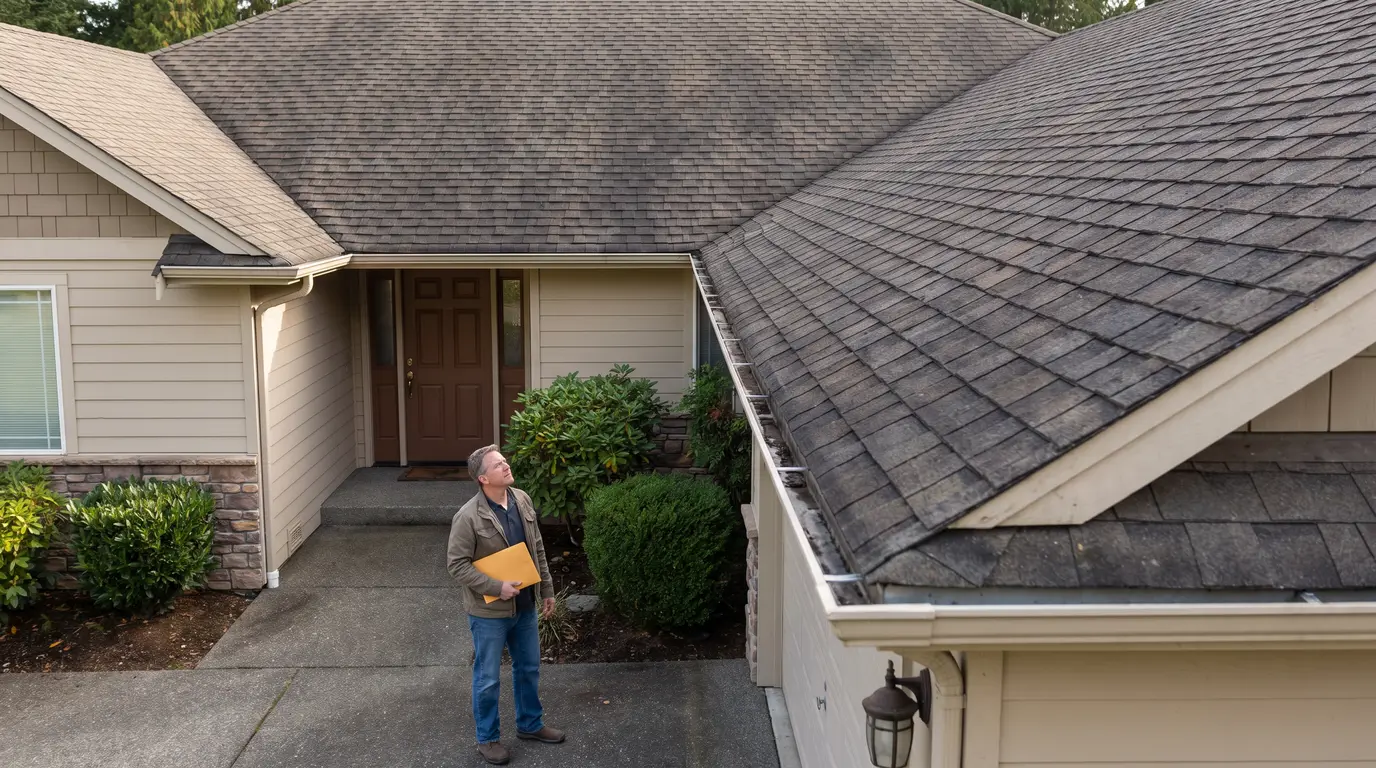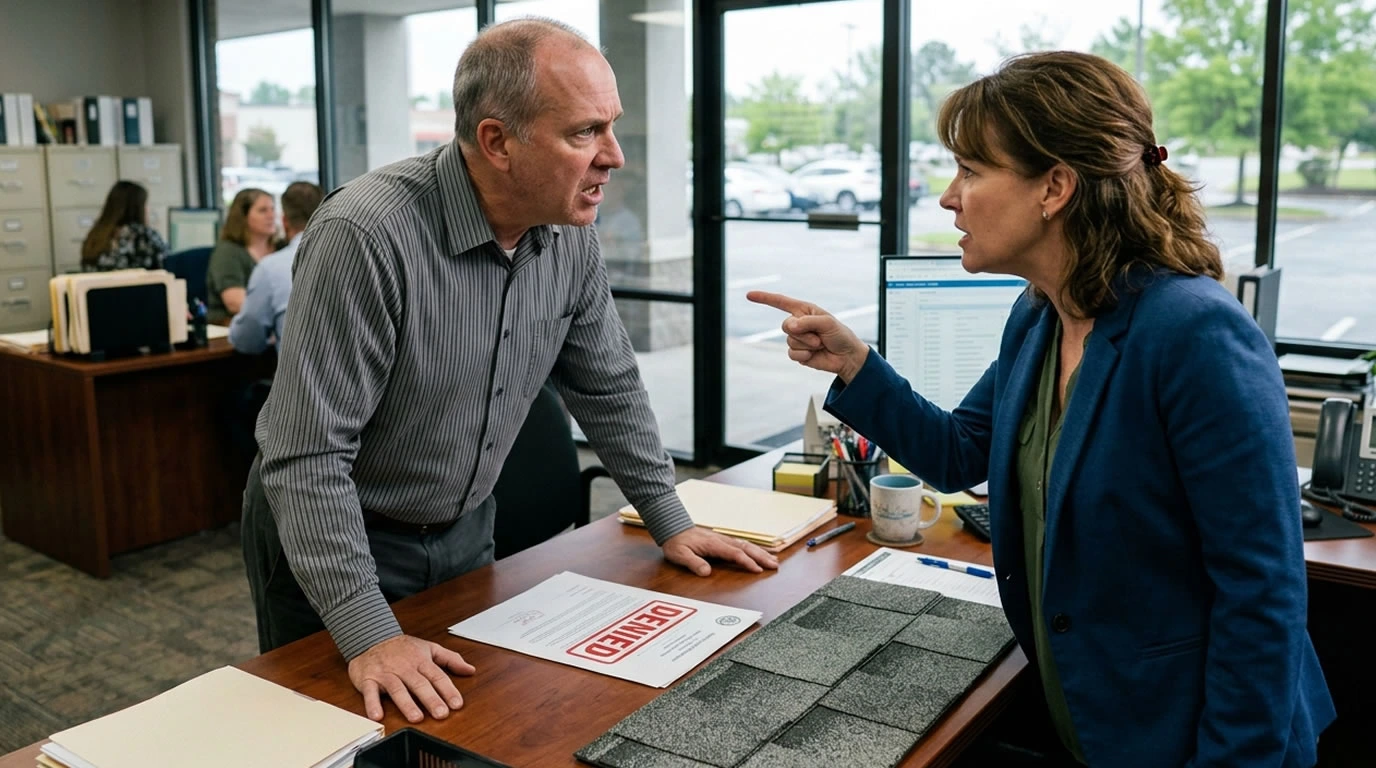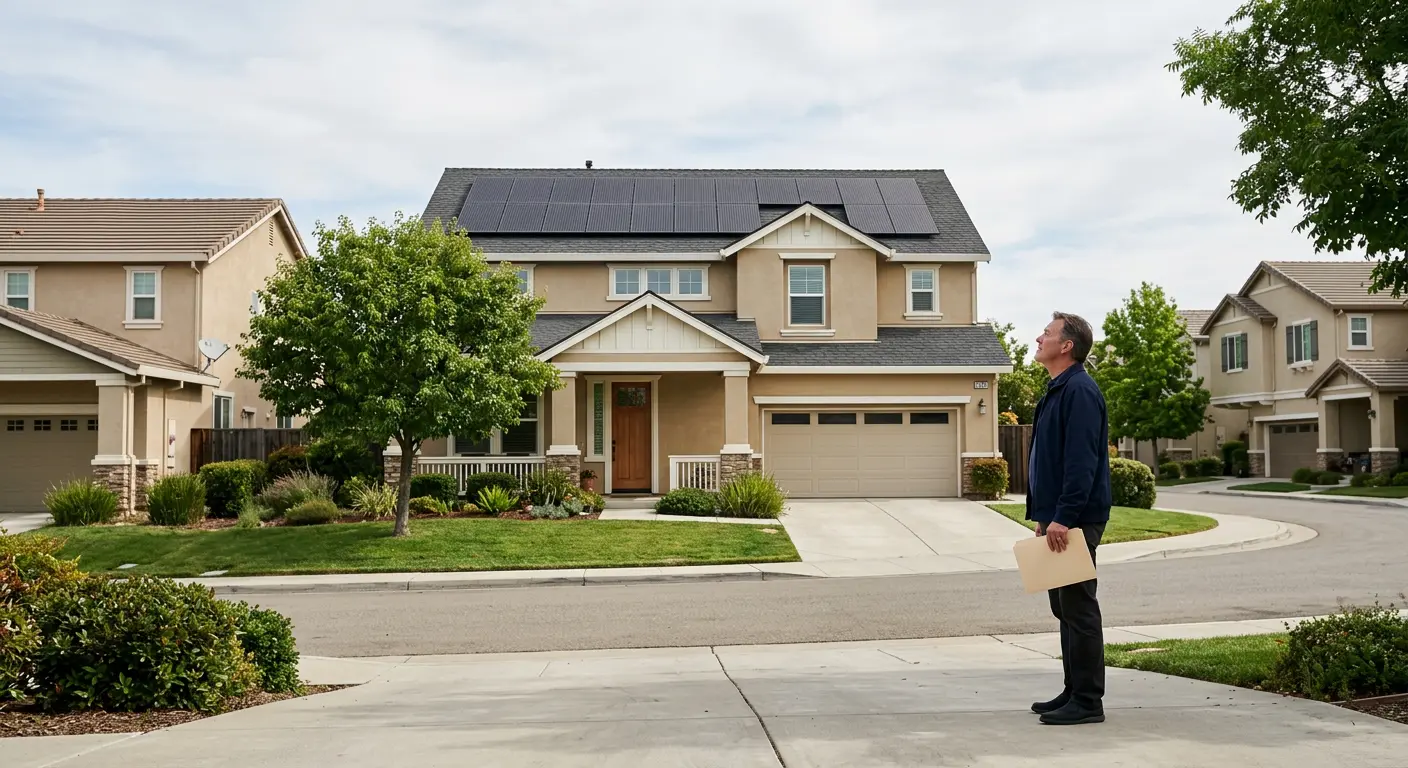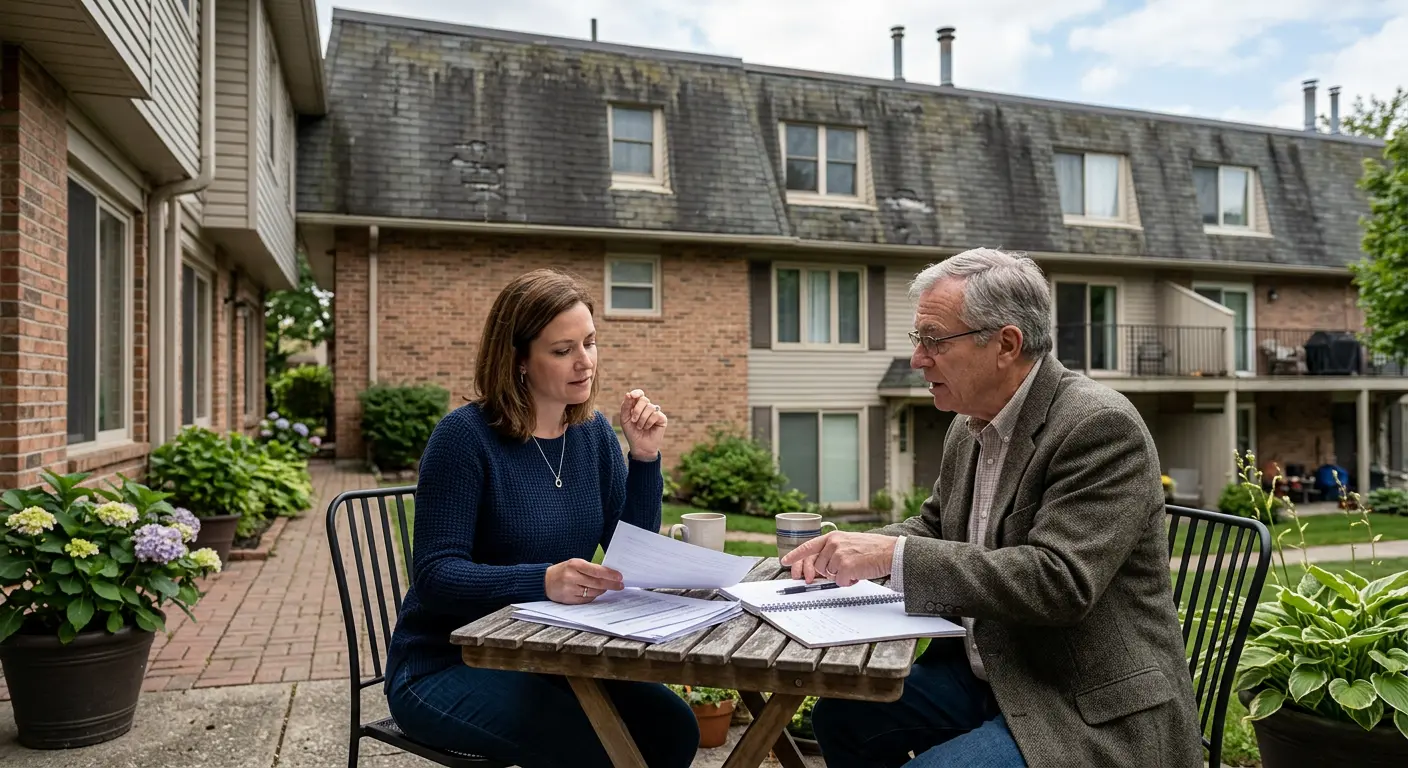
There is no single nationwide rule for who pays for roof repairs in an HOA. The answer usually comes from the declaration or CC&Rs, bylaws, recorded plat, amendments, maintenance chart, applicable state law, and the legal classification of the roof.
A condominium association may be responsible for a shared roof, while the owner of a detached home may be responsible for the roof as part of the separate interest. A townhome roof could fall into either category, or be treated as a limited common element. Roof ownership also does not automatically determine who must maintain or repair it.
The roof itself is only part of the question. Interior drywall, flooring, personal belongings, deductibles, temporary relocation, and other resulting losses may be handled under different documents or insurance policies. The safest approach is to identify the roof’s legal classification first, then trace the maintenance duty, cause of damage, insurance coverage, and available funding.
Start With the Governing Documents and Roof Classification
Begin with the documents, not with assumptions about what an HOA usually does. Request the complete and current declaration or CC&Rs, bylaws, recorded plat, amendments, maintenance chart, and provisions addressing roofs, exterior components, limited common elements, casualty damage, insurance, and owner alterations.
Read those documents together with applicable state law. A general statement such as “the HOA handles the outside” may not answer whether the association is responsible for routine maintenance, repairs, replacement, the insurance deductible, emergency mitigation, or restoration inside the home. The relevant duty may be divided among several provisions.
Look for the roof’s legal classification:
- Common element: A shared component generally treated as part of the association’s property or common area.
- Limited or exclusive use common element: A component connected to, serving, or accessible to one unit or owner, with duties that may be divided by the governing documents.
- Association property: Property owned or controlled by the association, subject to the responsibilities assigned in the documents and applicable law.
- Part of the separate interest: A roof that forms part of an individually owned home and may be maintained by that homeowner.
Ownership and maintenance are separate concepts. A homeowner may technically own a roof while the declaration assigns the HOA responsibility for maintaining or repairing it. The reverse can also occur: a roof may be a common or limited common element while the documents assign some maintenance duties to the owner.
Ask the board or manager for a written determination that identifies the specific document section supporting the proposed allocation. The response should address routine maintenance, repair, replacement, the deductible, interior restoration, and emergency mitigation. A written answer is much easier to evaluate than a hallway conversation that disappears as quickly as a puddle on a warm roof.
How Property Type Changes the Starting Assumption
Property type provides a useful starting point, but it does not settle the question. The legal structure of the community and the language in its governing documents matter more than labels such as condominium, townhome, or single family home.
In a condominium style community, a shared roof is commonly treated as a common element. The condominium association may then handle its maintenance, repair, or replacement, subject to the declaration and applicable state law.
California provides one jurisdiction specific illustration. California Civil Code section 4775 generally assigns repair, replacement, and maintenance of common areas to the association unless the declaration provides otherwise. The statute is a useful example of a default rule that still must be read alongside the declaration. You can review the statute through California Civil Code section 4775.
Florida condominium law also generally assigns common element maintenance to the association, while allowing declaration based assignments for certain limited common elements. Florida Chapter 718 applies to residential condominium associations and should not be treated as a rule for every non condominium HOA. The relevant provisions are available through the Florida Statutes Chapter 718.
Detached single family communities can begin from a different assumption. The homeowner may own and maintain the roof as part of the separate interest. Some declarations, though, assign exterior maintenance to the HOA or establish a uniform replacement program. California regulations provide an example of a community structure in which individual homeowners have maintenance responsibilities while the association retains specified insurance and reconstruction duties. See California Code of Regulations, Title 10, section 2797.
Townhomes require especially careful review. A townhome roof may be a common element, a limited common element, or part of the owner’s separate interest. A shared wall, similar appearance, or neighborhood wide roofing style does not by itself determine who pays.
Separate Ordinary Maintenance From the Cause of the Damage
The source of the problem can affect both responsibility and insurance. Ordinary deterioration, deferred maintenance, and faulty installation may be treated differently from storm, fire, hail, falling tree, or another casualty event.
Owner related circumstances can also matter. Negligence, an owner installed alteration, failure to report a known leak, or damage caused by a tenant or guest may create a reimbursement or charge back question. That does not mean every leak connected to an owner automatically becomes the owner’s bill. The association needs applicable authority in the governing documents, a factual basis for causation, and adequate documentation, along with compliance with applicable state law.
California Civil Code section 5725 illustrates the point. In circumstances covered by the statute, an association may have authority to impose a monetary charge for repair costs caused by a member, guest, or tenant when the governing documents authorize the charge and related remedy. That is a jurisdiction specific example, not a universal rule or automatic finding of liability. The statute is available through California Civil Code section 5725.
Report a leak promptly in writing. Keep photographs, the date you discovered the problem, affected rooms, weather information, temporary mitigation records, and contractor or inspection reports. If the roof is a common element, avoid permanent alterations without authorization unless immediate action is needed to prevent imminent damage.
Roof Repairs, Interior Damage, and Insurance Are Separate Questions
Responsibility for repairing the roof does not automatically determine responsibility for everything damaged underneath it. The roof, interior drywall, paint, flooring, cabinetry, personal property, upgrades, mold remediation, temporary relocation, and additional living expenses may be handled differently.
An HOA master policy may cover association property and shared building components such as a roof. An individual HO 6 policy or homeowners policy may respond to interior portions of a unit, contents, improvements, additional living expenses, or owner liability, depending on the policy and the facts of the loss.
Those are general coverage distinctions, not promises of payment. Coverage depends on the insured property, cause of loss, exclusions, limits, deductible, policy language, and applicable law. Storm damage may receive different treatment from age, deferred maintenance, faulty installation, or excluded water intrusion.
Ask the association for the master policy declarations page, coverage summary, deductible, exclusions, and claim instructions. Notify your personal insurer as well if the loss may involve interior finishes, contents, improvements, additional living expenses, or owner liability. The National Association of Insurance Commissioners provides general insurance guidance in its Affordability and Availability of Homeowners Insurance Playbook.
Insurance does not mean the homeowner will pay nothing. A deductible, an exclusion, a policy limit, or a disagreement about the cause of damage may leave some costs unresolved or assigned to the association or an owner under the governing documents.
How an HOA May Fund a Roof Obligation
If the governing documents assign the roof repair or replacement to the association, the association may fund that obligation through operating funds, reserves, insurance proceeds, or a special assessment. Owners may still bear the cost indirectly through regular assessments or a special assessment, even when the HOA is the party responsible for arranging the work.
A shortage of reserve money generally does not transfer a documented maintenance obligation to one homeowner. It may require the association to consider lawful funding options, subject to the governing documents and applicable state law.
For a major project, ask how the association plans to pay and verify the required notice, vote, assessment, and dispute resolution procedures. The funding method can affect what owners owe, but it does not independently determine who had the underlying duty to maintain the roof.
Reserve and structural integrity planning rules are not universal HOA requirements. California has inspection requirements for certain accessible major components that an association is obligated to repair, replace, restore, or maintain when the statutory reserve study conditions apply. Florida’s condominium structural integrity reserve study provisions include roofs among the minimum components for covered buildings three habitable stories or higher. Those provisions are jurisdiction and property specific, and they should not be used as a general rule for every community.
What to Do When the Responsibility Is Unclear or Disputed
When responsibility is disputed, turn the question into a document review rather than an argument about what seems fair. The following steps can help organize the issue:
- Obtain the complete current governing document package, including the declaration or CC&Rs, bylaws, recorded plat, amendments, maintenance chart, and relevant insurance or alteration provisions.
- Identify whether the roof is a common element, limited or exclusive use common element, association property, or part of the homeowner’s separate interest.
- Locate the specific language assigning routine maintenance, repair, replacement, deductible responsibility, interior restoration, and emergency mitigation.
- Ask the board or manager for a written determination that cites the document section supporting the proposed allocation.
- Report the leak in writing and preserve photographs, dates, affected room information, weather details, mitigation records, and contractor or inspection reports.
- Request master policy information and notify your personal insurer when the loss may involve interior finishes, contents, improvements, additional living expenses, or owner liability.
- For a major repair, ask whether the association will use reserves, operating funds, insurance, a loan, or a special assessment, and verify the applicable procedures.
If the documents conflict or are ambiguous, or if the board proposes charging one owner for a shared roof, consider obtaining a written opinion from a lawyer familiar with the property’s state law and common interest development documents. Declared emergencies or special disaster conditions may involve additional rules, so ordinary procedures should not be generalized to those circumstances.
Common Misconceptions About HOA Roof Repairs
Misconception: The person who owns the roof always pays for repairs.
Correction: Ownership and maintenance responsibility can differ. The governing documents may assign HOA maintenance or repair duties even when title remains with an individual homeowner.
Misconception: A shared roof is automatically the HOA’s responsibility in every state.
Correction: Responsibility varies by property type, declaration, roof classification, and jurisdiction. California and Florida provide useful examples, not a nationwide rule.
Misconception: If the HOA repairs the roof, it must also repair all interior damage.
Correction: Roof repairs, interior finishes, personal property, upgrades, mold remediation, and additional living expenses may be governed by different documents or insurance policies.
Misconception: Insurance means the homeowner will not pay anything.
Correction: Deductibles, exclusions, policy limits, the cause of loss, and the distinction between common property and unit interiors may leave costs unresolved or assigned elsewhere.
Misconception: A lack of HOA reserve funds automatically makes the homeowner responsible.
Correction: Funding problems do not by themselves change the documented maintenance obligation. Lawful assessments or other funding mechanisms may be relevant, subject to the governing documents and state law.
Frequently Asked Questions
Does the HOA pay for a roof leak in a condominium?
A condominium association commonly handles a shared roof treated as a common element, but the declaration and applicable state law control. Interior damage and personal property may be handled separately.
Who pays for roof repairs in a townhome HOA?
It depends on whether the roof is a common element, limited common element, or part of the owner’s separate interest. The townhome label, shared wall, and exterior appearance do not answer the question by themselves.
Is the roof a common element or part of my separate interest?
Check the declaration, recorded plat, amendments, and maintenance chart. Those documents should be read with applicable state law and any provisions addressing limited common elements or exterior components.
Can an HOA charge one homeowner for roof damage?
It may be possible when the governing documents and applicable law authorize the charge and the association can establish the relevant cause and responsibility. Owner involvement does not automatically make every roof loss chargeable.
Who pays for ceiling, drywall, flooring, or mold damage after an HOA roof leak?
The answer may differ from responsibility for the roof itself. Governing documents, the cause of loss, the master policy, and an individual HO 6 or homeowners policy may each address different parts of the damage.
Does the HOA’s master insurance cover roof repairs and the deductible?
A master policy may cover shared building components such as a roof, but coverage depends on the policy, cause of loss, exclusions, limits, and deductible. The policy does not automatically cover every resulting expense or determine who ultimately bears the deductible.
Can the HOA impose a special assessment for roof repairs?
A special assessment may be one way to fund an association roof obligation, but the association must follow the procedures required by its governing documents and applicable state law. The specific authority depends on the community and jurisdiction.
What should I do if the HOA refuses to repair a roof it is responsible for?
Request a written explanation that identifies the document section supporting the refusal, report the problem in writing, preserve photographs and repair records, and request the relevant insurance information. If the documents are unclear or the proposed charge or refusal concerns a shared roof, a lawyer familiar with the property’s state law and common interest development documents can review the issue.
The practical answer is straightforward even when the documents are not: identify who legally owns or controls the roof, determine who the governing documents assign to maintain and repair it, separate roof damage from interior losses, and check the insurance and funding provisions. Until those pieces are reviewed together, neither “the HOA always pays” nor “the homeowner always pays” is a reliable answer.