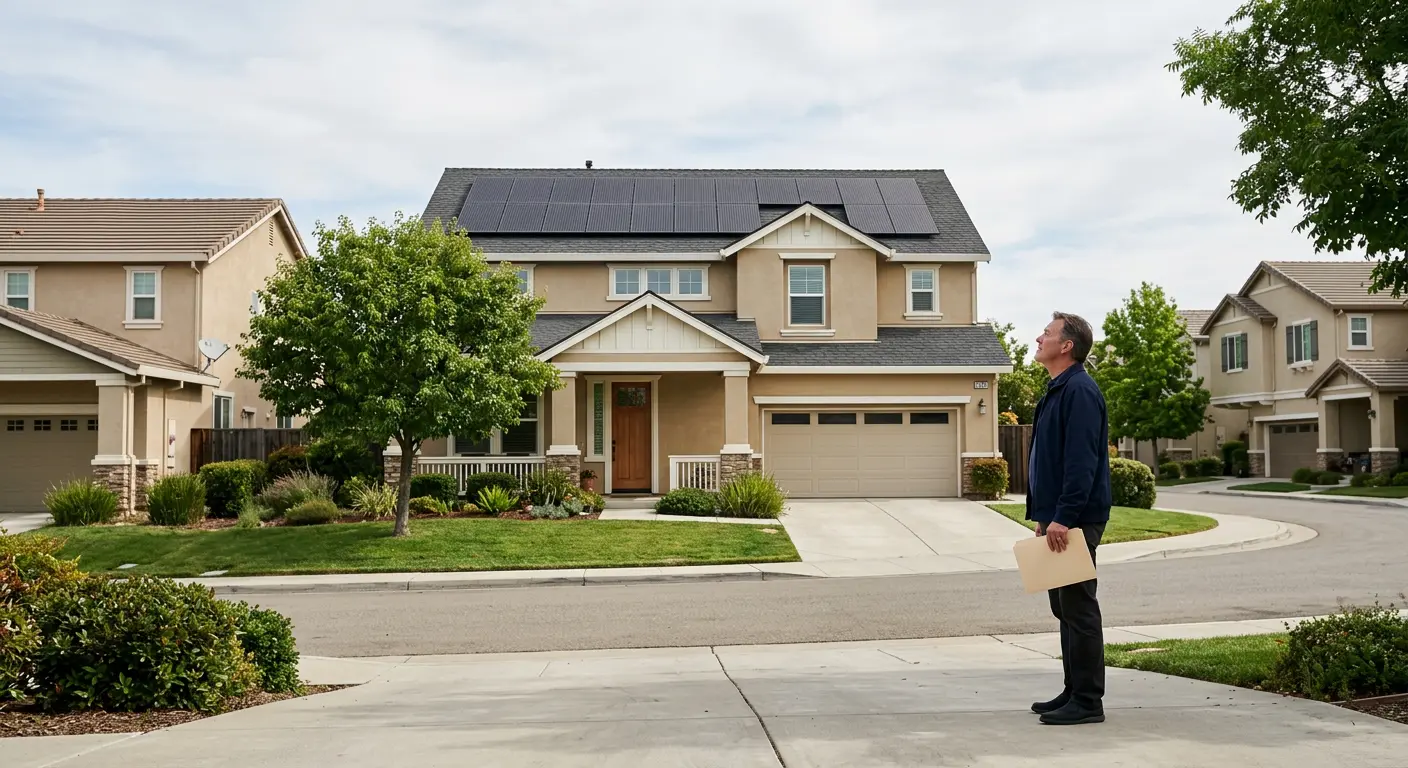
Yes, an HOA may be able to regulate a homeowner’s solar panel installation, but it cannot automatically prohibit or unreasonably restrict solar in every state. The answer depends on your community’s recorded governing documents, the HOA’s architectural review process, state solar access law, local permitting rules, and the design of the proposed system.
In many communities, homeowners can pursue residential solar but will need to submit an HOA request first. A state protection against an outright ban does not necessarily remove requirements related to application procedures, placement, appearance, safety, building codes, or the condition of the roof.
A practical starting point is to review the HOA documents, identify the approval steps, check the law that applies in your state, and obtain written approval before installation. The U.S. Department of Energy’s Homeowner’s Guide to Solar also explains that homeowners in HOA communities will generally need to submit a request.
How HOA solar rules can differ
Solar access protections are not the same across the country. Some states limit rules that prohibit or unreasonably restrict residential solar. Other laws use more specific standards involving system production, installation location, cost, or efficiency. The property type can matter too. A detached home, condominium unit, and shared common area may not be treated identically.
| Jurisdiction | Supported protection or standard | Important qualification |
|---|---|---|
| United States generally | Many states and territories limit HOA bans or unreasonable restrictions. HOA approval may still be required. | Protections vary by state and may differ for roof mounted systems, ground mounted systems, batteries, condominiums, and common area property. |
| New York | State legislation identified by the National Conference of State Legislatures prohibits HOA rules that prevent or unreasonably restrict residential solar installations. | This is a New York example, not a nationwide standard. Current law should be verified. |
| Illinois | Solar restrictions may not unreasonably reduce system production by more than 10 percent. Protections also include solar storage mechanisms. | The production standard and storage provisions are Illinois specific. |
| Florida | Associations generally may not deny permission for covered residential solar devices, while the statute addresses association authority over location. | Florida Statute Section 163.04, property type, condominium boundaries, and the proposed installation should be reviewed together. |
| California | The Solar Rights Act limits effective prohibitions and defines reasonable restrictions using California specific cost and efficiency standards for covered systems. | The referenced cost and efficiency standards apply to covered California systems and should not be generalized to other states. |
These examples are illustrative rather than comprehensive. Before relying on a protection, compare the current state statute with your property type, HOA documents, local requirements, and proposed system design. The National Conference of State Legislatures provides examples of state legislation, but current statutory language and later changes should be verified.
What to review before applying
Your HOA’s declaration or CC&Rs are the first place to look. Then check the bylaws, architectural standards, application form, and any related rules. Look for provisions addressing exterior changes, roof alterations, equipment visibility, roof penetrations, panel placement, contractor requirements, application fees, approval deadlines, and maintenance responsibilities.
If the documents are unclear, ask the HOA for the complete procedure in writing. Confirm where the application must be submitted, which drawings and equipment details are required, and when the HOA expects to make a decision. Keep a copy of your submission, plans, correspondence, and written decision. Good records make the process easier to understand if questions arise later.
- Review the recorded declaration or CC&Rs and architectural guidelines.
- Identify the required application form, supporting documents, fees, and deadlines.
- Check your state’s solar access protections before accepting a blanket denial.
- Ask how the HOA evaluates location, visibility, roof appearance, safety, and installation methods.
- Save every submission and decision in one project file.
The goal is to distinguish a design condition from an effective prohibition. Depending on state law, an HOA may have authority to address where equipment goes, how visible it is, how it affects the roofline, or how it is installed, as long as the restriction stays within the applicable legal limits.
Check the roof and system design
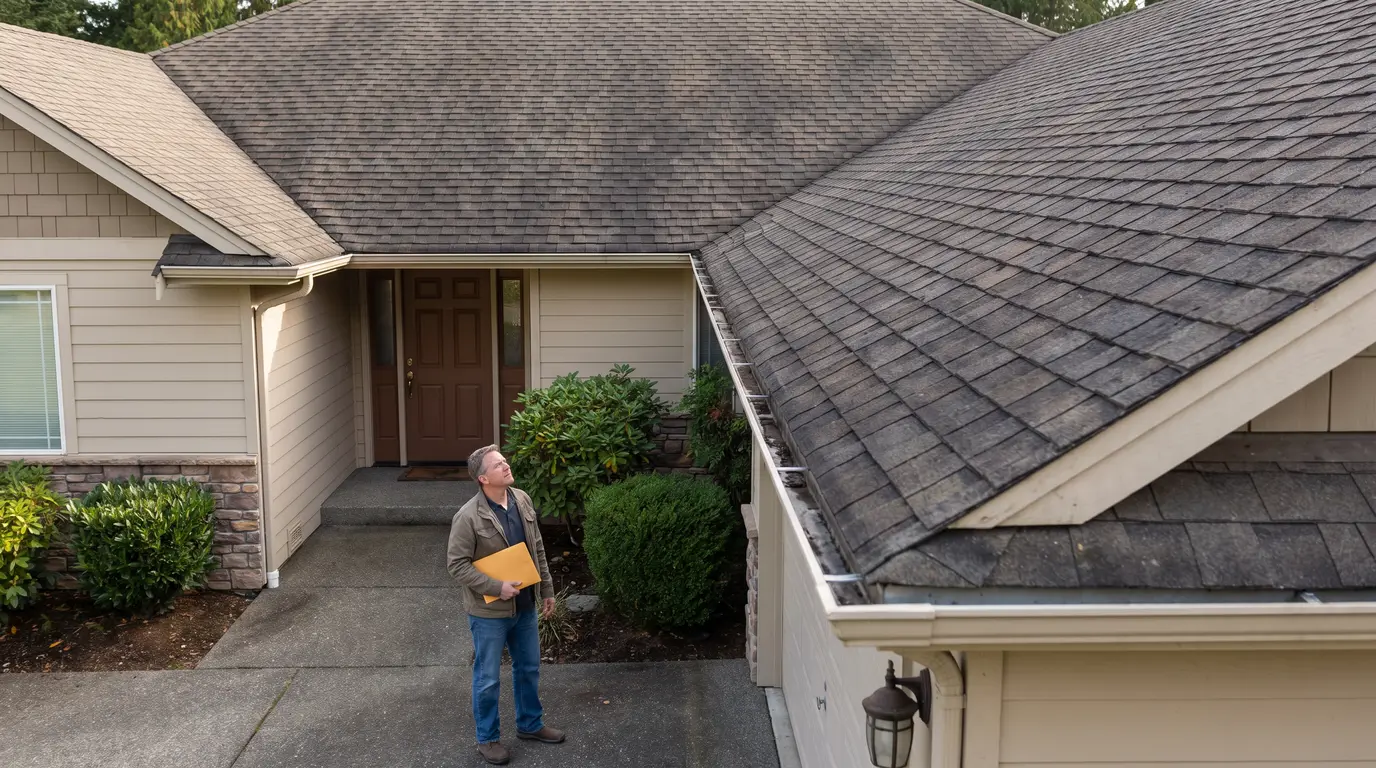
HOA review is only one part of planning. Coordinate the proposed layout with your solar contractor, a roofing professional, the building department, and the utility serving the property. The roof’s age and condition deserve particular attention. Installing panels on a roof that may soon need replacement can complicate future removal and reinstallation.
If your home has a metal roof, the mounting approach and roof condition can affect the project design. The Roof Mechanics guide on solar panels on a metal roof explains the related mounting, structure, and local requirement questions.
If the roof is nearing the end of its useful planning window, review whether to replace your roof before installing solar. This is a project planning consideration, not automatically an HOA requirement, but addressing it early can help you compare installation options more clearly.
HOA approval does not replace local approvals
Even when state law limits an HOA’s ability to ban or restrict solar, other approvals may still apply. Local building, electrical, fire, zoning, and utility requirements are separate from the HOA process. Depending on the location, system design, and utility territory, the project may require permits, inspections, utility interconnection, and compliance with applicable safety standards.
Think of these as separate tracks that need to meet at the right time. HOA approval addresses the community’s governing documents and review process. Local agencies and the utility address their own requirements. Receiving one approval does not automatically provide the others.
Design changes can also affect the project’s cost. If the HOA requests a different panel location or mounting approach, you can use the Solar Cost Calculator for a preliminary estimate while comparing options. It is a planning resource, not a project specific quote or an HOA approval tool.
What to do if the HOA denies your request
Do not install first and seek approval later. Unauthorized work can create a dispute about the application process, governing documents, or possible property damage, even when state law protects solar access.
If the HOA denies the application, request the denial and the reasons in writing. Then compare the stated reason with the governing documents, the applicable state law, and the details of your proposed system. A blanket statement that solar panels are prohibited may require closer review in a state with solar access protections, but the actual statute and proposed design still matter.
Two useful questions can keep the discussion specific:
- What specific provision supports this restriction, and how does the proposed design fail that provision?
- Would a different panel location or mounting design address the stated concern without materially reducing system performance or increasing cost?
For a significant dispute, consult a lawyer familiar with your state’s HOA and solar statutes. That review can help you evaluate the documents and the denial without guessing about which protection applies.
Frequently asked questions
What documents should I review before submitting an HOA solar application?
Review the declaration or CC&Rs, bylaws, architectural standards, application form, and rules addressing roof changes, exterior appearance, equipment visibility, penetrations, contractors, fees, and decision deadlines.
Can an HOA require a solar panel application when state law protects solar access?
Generally, yes. State protections may limit a ban or unreasonable restriction without eliminating the HOA’s application process or reasonable design, safety, placement, and appearance requirements.
What should I do if the HOA denies my solar request?
Ask for the denial and reasons in writing. Compare them with the governing documents, applicable state law, and your system design. If the dispute is significant, consult a lawyer familiar with HOA and solar law in your state.
Do local permits and utility approval still apply when an HOA cannot ban solar?
Yes. HOA review is separate from local building, electrical, fire, zoning, and utility requirements. The approvals needed depend on the property location, system design, and utility territory.
A clear path to your solar application
An HOA may be able to regulate a residential solar installation, but it may not be able to ban or unreasonably restrict solar under the law that applies to your property. Start by reviewing the HOA documents, confirming the application process in writing, checking state protections, and coordinating the design with the roof, local permitting requirements, and utility process.
With those pieces in place, you can move from a general question about HOA authority to a specific, documented review of your proposed system. Roof Mechanics is a roofing and solar directory that can also help you explore local contractors as you plan the next step.