Yes, solar panels can generally be installed on many residential metal roofs. Standing seam, corrugated, and trapezoidal roofs may all have compatible mounting options. The right approach depends on the roof profile, its condition, the supporting structure, the proposed mounting hardware, and local requirements.
Metal roofing is not automatically a barrier to solar. It is also not a guarantee that every mounting system will work. Before signing an installation agreement, identify the exact roof type and ask how the proposed system will attach, manage structural loads, protect against water intrusion, and meet applicable code and permitting requirements.
How solar panels attach to metal roofs
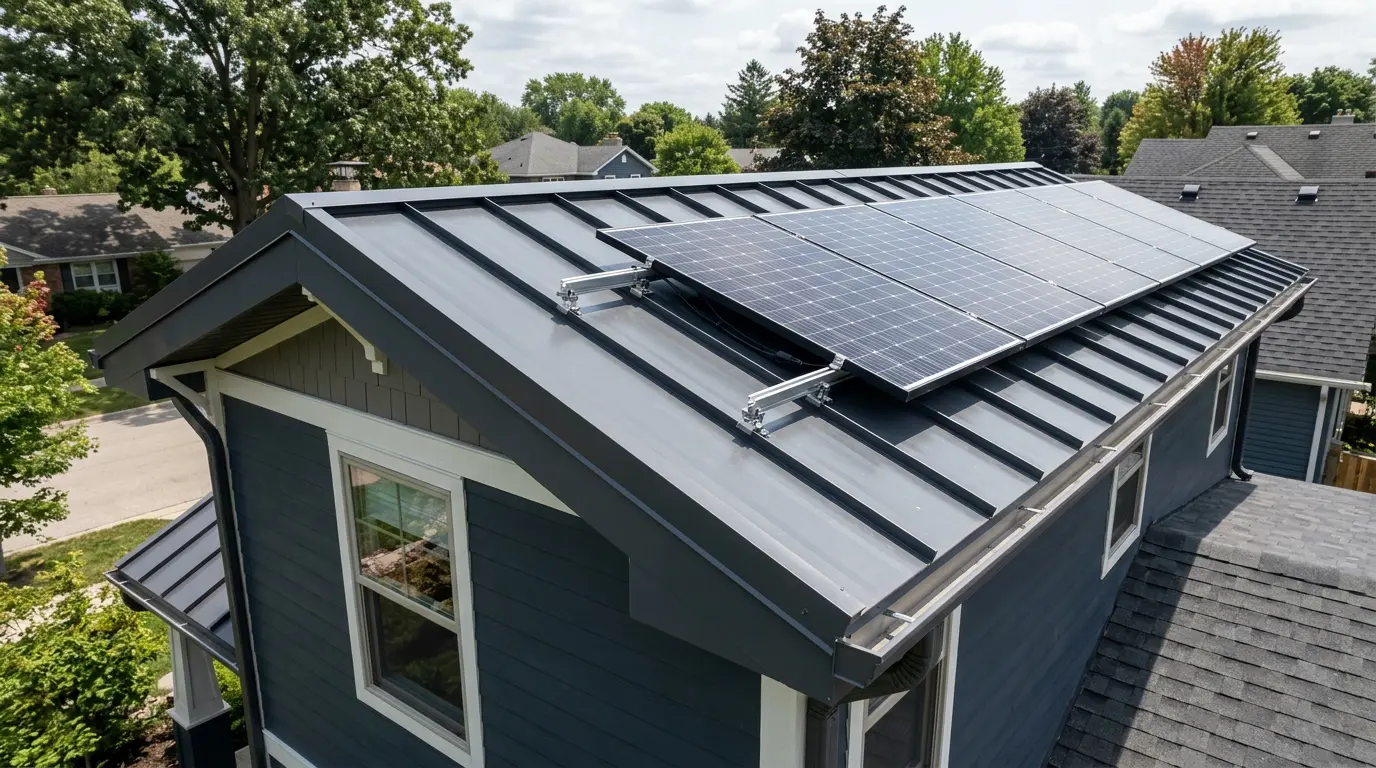
The mounting method usually follows the shape and construction of the metal roof. Standing seam roofs may allow purpose built clamps to grip the seams without penetrating the metal panels. Corrugated and trapezoidal roofs generally require profile specific hardware that attaches through or to the roof assembly and supporting structure.
Those categories are useful starting points, not approvals. A clamp designed for one seam shape may not fit another. Similarly, a product intended for corrugated or trapezoidal panels does not establish that every roof with that appearance is suitable. The installer should document compatibility with the specific panel or seam profile on your home.
| Metal roof type | Potential solar attachment approach | What must be verified |
|---|---|---|
| Standing seam metal roof | Purpose built seam clamps, potentially without penetrating the roof panels | Exact seam geometry, approved clamp compatibility, structural capacity, wind loads, and system listing |
| Corrugated metal roof | Profile specific attachment hardware, often involving attachment to the panel and or supporting structure | Panel profile, fastener location, waterproofing details, structural support, and manufacturer instructions |
| Trapezoidal metal roof | Profile specific attachment hardware and rails | Panel geometry, attachment design, structural capacity, waterproofing, and applicable code requirements |
| Metal roof type not identified | No mounting method should be assumed before identification | Roof inspection, manufacturer documentation, and installer or structural review |
These are comparison categories rather than guarantees that every roof in a category can accept solar. Product compatibility, roof condition, structural design, waterproofing, local code, and permitting still need to be confirmed for the specific home.
Standing seam roofs and nonpenetrating clamps
Standing seam roofs may be a straightforward fit for certain solar mounting systems because compatible clamps can attach to the raised seams without penetrating the metal panels. This can reduce the number of openings made in the roof covering, but it does not remove the need for a complete project review.
Seam clamps are not universal. Ask the installer to identify the proposed clamp and provide documentation showing that it supports your exact seam dimensions and profile. The review should also address structural capacity, wind loads, grounding, electrical equipment, and the applicable mounting system listing.
For background on how rooftop photovoltaic mounting systems are evaluated, homeowners can review PV Mounting Systems Certification from UL Solutions. A listing for a particular system does not by itself confirm compliance with every building, electrical, fire, roofing, or local permitting requirement.
Corrugated and trapezoidal metal roofs
Solar mounting products are also available for corrugated and trapezoidal metal roofs. These systems differ from standing seam clamps and must be selected for the specific panel profile. The attachment may involve the metal panel, the supporting structure, or both.
Because some systems use fasteners or penetrations, the proposal should explain exactly where attachments will be installed and how the waterproofing details will be handled. A general statement that the hardware is “metal roof compatible” is less useful than a written description naming the roof profile, attachment points, mounting product, and sealing or flashing approach.
The installer should also explain the structural assumptions behind the design. Model code provisions address structural requirements for rooftop solar and call for metal roof coverings and related components to follow applicable manufacturer installation instructions. The code adopted and enforced in your location may differ, so confirm the local requirements with the authority having jurisdiction.
Check the roof before adding solar
Solar panels can remain in service for decades, so the roof should be evaluated as part of the solar decision. A metal roof may look durable while still having issues that affect the installation, including corrosion, loose or damaged panels, failed fasteners, leaks, deteriorated coatings, or flashing problems.
Remaining service life matters as well. The U.S. Department of Energy advises homeowners to compare the age of the solar system with the age of the roof and consider whether the roof may need work before the solar system reaches the end of its service life. That is practical planning guidance, not a universal rule that every metal roof must be replaced first.
If the roof needs substantial repairs or may require replacement relatively soon, address that question before panels are installed. Our guide explains how to replace your roof before solar when roof condition and service life need a closer look.
A roof review may involve the installer, a roofing professional, or a structural engineer, depending on the project and local requirements. The purpose is to confirm that the roof assembly and supporting structure can accommodate the proposed system, not simply to judge the visible metal covering.
Evaluate the whole solar site
Roof attachment is only one part of solar suitability. The roof direction, shade, geographic location, available roof area, structural capacity, and selected photovoltaic system can all affect the project. A metal roof that can physically accept panels may still need a thoughtful layout to determine how much usable solar area is available.
If you are comparing roof sections, review which roof direction is best for solar and remember that direction is only one part of the evaluation. Once usable area and production potential are clearer, you can also explore how many solar panels your home needs.
Before work begins, confirm the local permit process, inspection requirements, utility interconnection steps, and any homeowners association rules that apply to your property. Requirements are established locally, so a general answer about metal roofs cannot replace project specific confirmation.
Questions to include in the proposal
A clear written scope can make the decision easier to compare. Consider asking:
- What exact metal roof profile and seam or panel dimensions does the proposed mounting hardware support?
- Will the system attach without penetrating the panels, or will it use fasteners through the roof assembly?
- Where will attachments connect, and how will waterproofing be maintained around them?
- What structural design assumptions, wind loads, grounding details, and system documentation apply?
- What roof repairs, corrosion treatment, flashing work, or other preparation is needed before installation?
- If the roof needs work later, who will remove and reinstall the panels, and how will that work be handled under the contracts and warranties?
These questions help distinguish a proposal designed for your roof from a generic metal roof package. They also bring future maintenance responsibilities into the conversation before installation.
Common questions about solar on metal roofs
Do solar panels have to penetrate a metal roof?
No. Compatible standing seam systems may use clamps that attach to the seams without penetrating the roof panels. Corrugated and trapezoidal roofs may use different profile specific hardware that can involve attachments through or to the roof assembly. The answer depends on the roof profile and approved mounting product.
Is a standing seam roof easier to mount solar on than a corrugated roof?
It may offer a nonpenetrating clamp option, but that does not make it automatically suitable or simpler for every home. Seam geometry, structural capacity, wind loads, system compatibility, roof condition, and local requirements still need to be verified. Corrugated roofs also have purpose specific mounting options when the profile and supporting structure are compatible.
Should a metal roof be repaired or replaced before solar panels are installed?
Not necessarily. The decision depends on the roof’s condition, remaining service life, and the work required. Corrosion, leaks, damaged panels, failed fasteners, flashing problems, or substantial deterioration may justify addressing the roof first. Comparing the roof’s expected service life with the solar system’s planned service life can help guide that decision.
What should a homeowner ask about removing solar panels for future roof work?
Ask who would remove and reinstall the panels, how that work is priced, and how it is treated under the installation agreement and warranties. Include those responsibilities in writing before installation so future roof work does not create an avoidable gap between the roofing and solar arrangements.
Next steps for a metal roof solar project
Solar panels can generally go on a residential metal roof. Start by identifying the exact roof profile, then confirm mounting compatibility, roof condition, structural capacity, waterproofing details, electrical requirements, and local permits before choosing a system.
Once those basics are documented, you can use the Solar Cost Calculator for preliminary project budgeting. Roof Mechanics is a roofing and solar directory that can also help homeowners continue comparing local project options. The calculator and directory are planning resources, not substitutes for a roof and installation review specific to your home.