When an HOA cannot afford a necessary roof replacement, the problem does not disappear simply because the reserve account is empty. If the association is responsible for the roof, it may need to combine available reserves, regular assessment changes, a properly authorized special assessment, borrowing, insurance proceeds where applicable, and limited repair deferral only when qualified professionals determine that delay is safe and legally defensible.
The correct response depends on the governing documents and the law applicable to that association. Those rules may determine who is responsible for the roof, how costs are allocated, whether owners must approve an assessment, what notice is required, whether the board may borrow, and how unpaid assessments may be collected.
The board should proceed in a deliberate sequence: confirm the association’s responsibility and the roof’s urgency, update the reserve and cost analysis, compare funding options, obtain legal and professional review, and give owners a documented explanation of the plan. That process may not make the roof inexpensive, but it can make the decision more defensible and less chaotic.
Start by Confirming the HOA’s Responsibility, the Roof’s Condition, and the Funding Gap
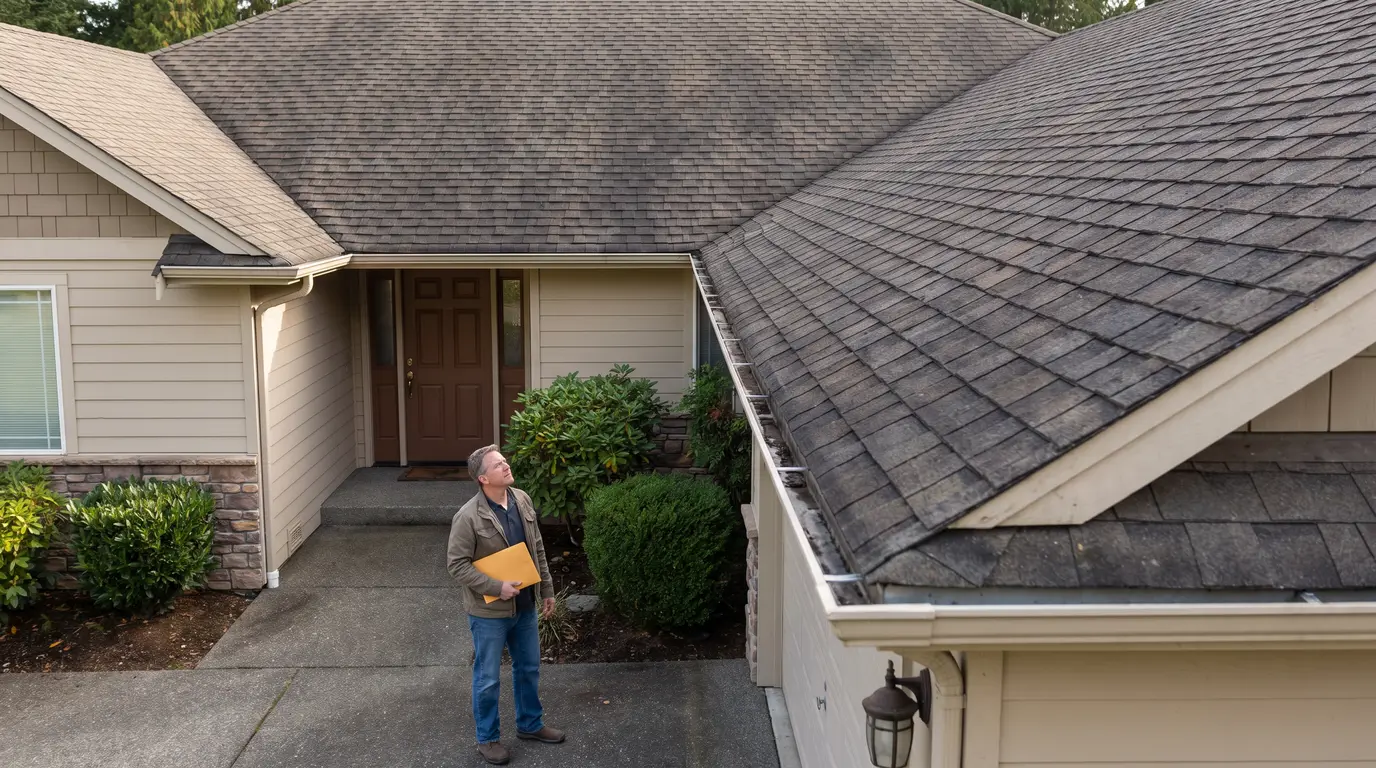
Before discussing a special assessment or loan, the board needs to establish what the HOA actually owns or maintains and what the roof actually needs. A roof related expense is not automatically the association’s responsibility in its entirety.
- Review the declaration, CC&Rs, bylaws, maintenance responsibilities, maintenance matrix, limited common element provisions, prior amendments, warranties, permits, and earlier roof reports.
- Determine whether responsibility differs for the roof membrane, structure, framing, drainage, skylights, or interior damage.
- Obtain a written assessment from a qualified roofing professional or engineer addressing active water intrusion, safety, habitability, structural deterioration, remaining useful life, repair options, replacement options, and the consequences of delay.
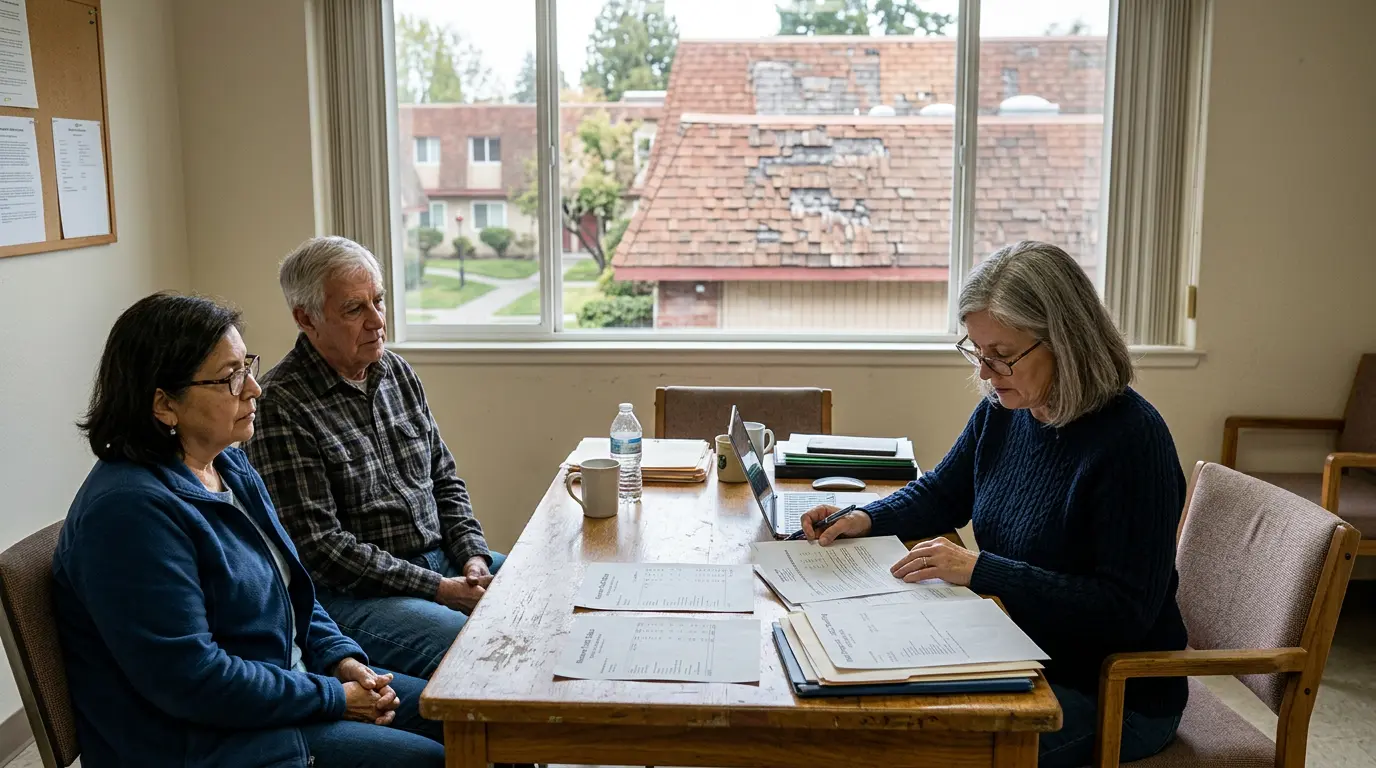
- Update or commission a reserve study or reserve analysis that identifies the roof’s condition, projected cost, current reserve balance, other committed projects, the funding shortfall, and a feasible funding schedule.
- Use available reserves, if permitted, while preserving funding for other committed projects.
- Impose an immediate special assessment if authorized.
- Use a phased special assessment if the documents and applicable law permit that approach.
- Temporarily increase regular assessments if the board has that authority.
- Obtain a loan or line of credit, subject to authority, approval, lender terms, and repayment capacity.
- Pursue insurance recovery when the damage may result from a covered event.
- Use a limited repair and monitoring plan only when qualified technical advice supports the safety and feasibility of delay.
- Obtain at least two or three comparable scopes and bids.
- Require bidders to identify tear off assumptions, allowances for substrate replacement, code and permit costs, warranties, exclusions, schedule, retainage, and change order controls.
- Verify contractor licensing and insurance information as part of the association’s project records.
- Photograph and document active leaks, temporary repairs, inspections, board decisions, owner notices, insurance communications, permits, and contractor certificates.
- Confirm responsibility and urgency. Review the governing documents and obtain a qualified roofing or engineering assessment.
- Update the reserve analysis. Reconcile the roof’s remaining useful life and scope with current bids, contingency, permits, possible hidden damage, other committed projects, and the timing of the cash shortfall.
- Build multiple funding scenarios. Compare a special assessment, phased assessment, regular assessment increase, permitted reserve transfer, loan or line of credit, insurance recovery, and limited repair and monitoring.
- Have counsel verify authority. Confirm voting, notice, allocation, collection, borrowing, emergency, and reserve requirements before any vote or owner demand.
- Obtain comparable bids. Establish controls for scope, change orders, contractor qualifications, documentation, and project monitoring.
- Communicate the financial package. Give owners the facts, assumptions, alternatives, payment information, and decision timeline without promising uncertain results.
- Preserve records and revisit the plan. Update the decision as inspections, insurance positions, bids, financing terms, or project conditions change.
A reserve study combines physical and financial analysis with a funding plan for major components the association is responsible for maintaining or replacing. It is a planning tool, not a construction contract. Hidden damage, code related costs, permitting, access constraints, inflation, contractor availability, and other conditions can cause the final price or schedule to differ from the study.
The board should reconcile the reserve analysis with two or three comparable bids and realistic contingency assumptions. It should calculate not only the total shortfall, but also when cash will be needed and how paying for the roof will affect other common element projects. A plan that raises enough money for construction while leaving every other reserve obligation unfunded may only move the problem down the road.
A leaking roof also is not automatically an emergency. The practical question is whether qualified technical advice identifies a threat to safety, habitability, active intrusion, structural deterioration, or materially greater damage if work is delayed. A routine roof replacement at the end of its useful life may be treated differently from a hazardous condition under the law of a particular jurisdiction.
Compare the HOA’s Main Funding Options
There is no universal funding method that works for every association. The board should compare several scenarios rather than treating a special assessment or loan as the automatic answer.
For each option, the board should show the total owner cost, the timing of payments, the effect on association cash flow, interest cost, delinquency assumptions, effect on future reserves, and the risk that the funding will not cover the final project price. A combination may be more practical than relying on one source of money.
Borrowing spreads repayment over time, but it does not eliminate the owners’ obligation to fund the roof. Insurance may help with damage from wind, hail, fire, or another covered event, but ordinary aging, deterioration, faulty maintenance, or an unfunded reserve obligation may be treated differently under the policy. Coverage must be analyzed from the actual policy and claim facts, not from the presence of a leak alone.
Special Assessments and Regular Assessment Increases
A special assessment is a temporary assessment imposed in addition to regular assessments. It is a common way to address an immediate capital shortfall, but its availability and approval requirements depend on the governing documents and applicable law.
The documents may establish voting thresholds, notice periods, payment schedules, allocation formulas, limits, or other restrictions. State law may impose additional requirements. A board should confirm whether owner approval is required before announcing an assessment, even if state law appears to give the board assessment authority.
California example: California Civil Code Section 5600 generally requires assessments sufficient for an association to perform its obligations. California Civil Code Section 5605 generally limits a board imposed increase to a regular assessment to 20 percent above the preceding fiscal year, and limits aggregate special assessments to 5 percent of budgeted gross expenses in specified circumstances. Exceptions and procedural requirements apply.
Those percentages are California statutory examples, not nationwide HOA limits. They apply within California’s common interest development framework and should not be used to analyze an association in another state. The relevant documents and current law for the association’s jurisdiction control.
For reference, the association can review California Civil Code Section 5600 and California Civil Code Section 5605. Because statutory webpages may be updated, the association should obtain current jurisdiction specific legal advice before acting.
Emergency Assessment Treatment in California
California provides a specific example of why the roof’s condition matters. Civil Code Section 5610 identifies certain emergencies, including extraordinary expenses necessary to operate, repair, or maintain the development when a threat to personal health or safety or another hazardous condition is discovered.
A qualifying situation does not remove the need for documentation. The board must make written findings addressing why the expense is necessary and why it could not reasonably have been foreseen. Notice and other statutory procedures still matter.
An aging roof with an ordinary replacement need is not automatically a California emergency, and an unfunded reserve account does not create an emergency by itself. The board should obtain a professional assessment of the condition before relying on any emergency treatment. The association can review California Civil Code Section 5610, but this California provision is not a nationwide rule.
Loans, Lines of Credit, and Insurance
An HOA loan or line of credit can provide construction cash while repayment is collected through regular assessments, a special assessment, or both. Before pursuing financing, the board should verify governing document authority, member approval requirements, lender covenants, interest cost, security, repayment source, delinquency assumptions, and whether borrowing is permitted for this specific project.
Financing may be unavailable or impractical. A lender may require a current reserve study, a project inspection, collateral, personal guarantees, a membership vote, or evidence that the association can repay the obligation. High delinquencies or serious deferred maintenance may also affect the lender’s decision.
Insurance should be reviewed before owners are assessed, but it should not be treated as a guaranteed funding source. The board should gather the policy, deductible, exclusions, claim history, adjuster position, and coverage analysis. The key question is whether the damage resulted from a potentially covered event or from ordinary aging, deterioration, faulty maintenance, an excluded cause, or a condition below the deductible.
Tax treatment is a separate issue. The IRS explains that an association assessment for replacing association owned capital property is generally treated as a contribution to association capital and is not ordinarily a current individual casualty loss deduction for an owner. Owners should obtain professional tax advice for their own circumstances rather than assuming that a roof assessment will be deductible.
Check Jurisdiction Specific Requirements Before the Board Acts
Before voting on an assessment, loan, or repair delay, the board should have HOA counsel review the documents and law that apply to the association. The review should address assessment limits, owner approval, notice and meeting rules, allocation among units, collection procedures, borrowing authority, emergency provisions, and statutory reserve requirements.
The same word, HOA, can describe associations with very different legal structures. A condominium association, a planned community association, and a qualifying Florida condominium or cooperative building may not be governed by the same requirements. General advice from another state can be worse than unhelpful if it causes the board to rely on authority it does not have.
Florida example: Certain qualifying condominium and cooperative buildings, generally those three habitable stories or more and subject to statutory age and other conditions, may face milestone inspection requirements. Florida condominium law also addresses structural integrity reserve studies and limits the ability to waive or underfund certain required reserves.
These requirements can make roof and other common element funding decisions time sensitive. Exact deadlines and exceptions depend on building age, certificate of occupancy, association type, statutory amendments, and inspection status. They do not apply to every HOA.
The association can review Florida Statutes Section 553.899 and Florida Statutes Section 718.112. The supplied statutory pages do not independently establish the historical applicability of every later webpage revision as of October 2, 2026, so current legal advice remains necessary.
Manage Project, Financing, Lending, and Owner Communication Risks
Once the funding direction is taking shape, the board still has to manage the project itself. A low initial bid is not necessarily a complete project budget, especially when the scope does not clearly address hidden damage, permits, code requirements, or change orders.
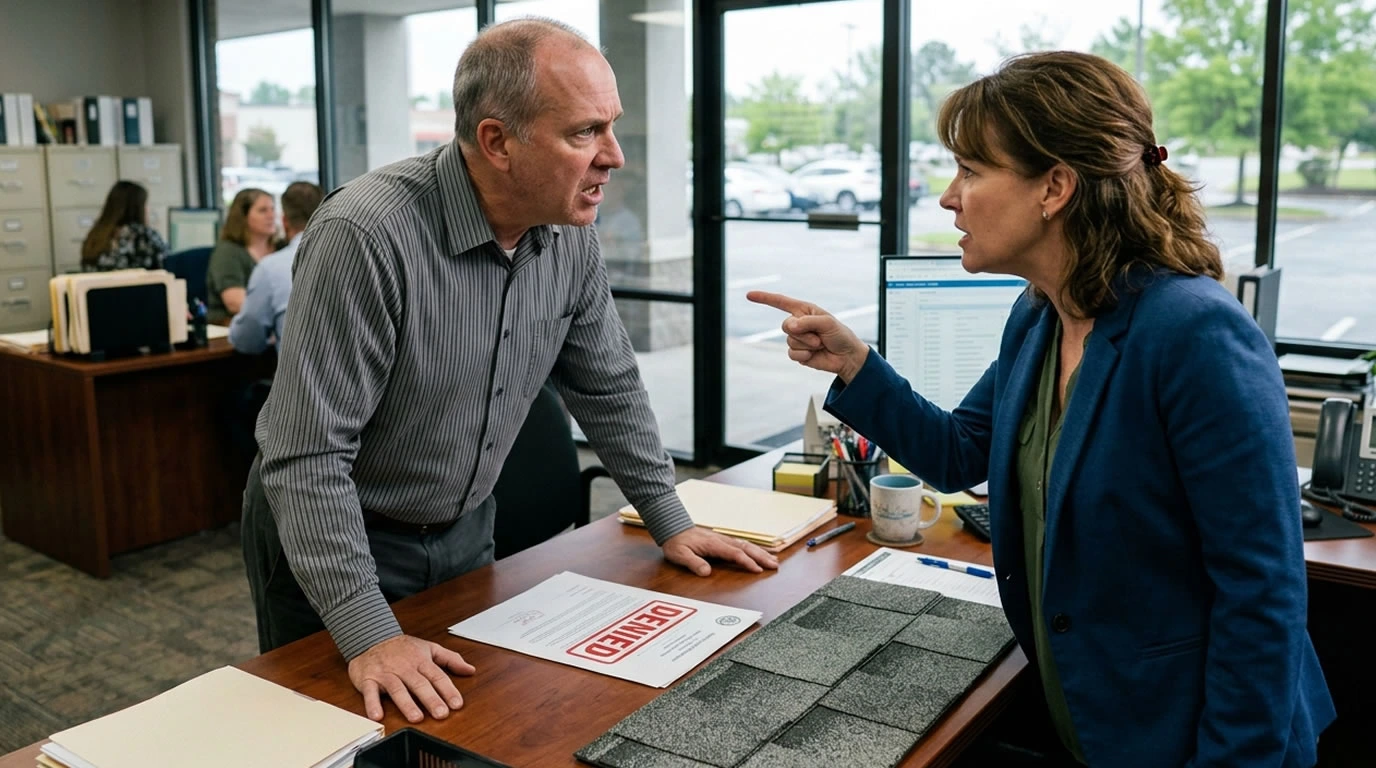
Owner communication should include the condition report, reserve study assumptions, bids, alternatives considered or rejected, assessment formula, payment dates, any legally available hardship or installment policy, consequences of delinquency, and a schedule for future updates. Owners may disagree about the preferred funding method, but unexplained numbers tend to make every disagreement louder.
A roof assessment may affect delinquency, resale, insurance underwriting, and litigation risk, but none of these outcomes is automatic. Mortgage eligibility can also be affected by project condition, deferred maintenance, reserve adequacy, and special assessment status. Fannie Mae’s Full Review guidance addresses budget adequacy, replacement reserves, critical repairs, deferred maintenance, and special assessments, but it is secondary market lender guidance, not state law and not a guarantee that every lender will reach the same result.
The board should not promise insurance recovery, financing approval, a tax deduction, resale approval, or a particular completion date. Those outcomes depend on the policy, lender, project facts, documents, and changing conditions.
A Practical Decision Sequence for the Board
The following sequence gives the board a disciplined way to move from an unfunded roof problem to a documented decision. It is a planning framework, not a universal legal checklist.
Common Misconceptions About an Unfunded HOA Roof
Misconception: An HOA can simply refuse to replace the roof because its reserves are empty.
Correction: If the association is responsible for the roof, a lack of cash changes the funding strategy but does not necessarily eliminate the maintenance or replacement obligation. The board needs to address the shortfall through a lawful and documented plan.
Misconception: A special assessment is always illegal if it exceeds a percentage limit.
Correction: Limits vary by jurisdiction and governing documents, and some laws contain exceptions. California’s assessment limits and emergency provisions are examples of a state specific framework, not nationwide rules.
Misconception: Reserve funds are intended only for emergencies.
Correction: Reserve planning generally addresses planned repair and replacement of major common components, including roofs. A reserve account is supposed to help prepare for large expenses before they become urgent, although projections do not guarantee the final construction cost.
Misconception: A roof replacement assessment is automatically deductible by each homeowner.
Correction: An assessment for an association owned capital item is generally treated as a contribution to association capital and is not ordinarily a current individual casualty loss deduction. Individual tax treatment requires professional review.
Misconception: Any special assessment automatically prevents owners from obtaining mortgages.
Correction: Lenders consider the assessment, project condition, reserves, deferred maintenance, and other project factors. A special assessment connected to critical repairs or significant deferred maintenance can create financing problems, but there is no automatic outcome for every assessment.
Frequently Asked Questions
Who is legally responsible for replacing the roof in an HOA or condominium?
The answer depends on the declaration, CC&Rs, bylaws, maintenance responsibilities, limited common element provisions, amendments, and applicable state law. Responsibility may differ for the membrane, structure, framing, drainage, skylights, and interior damage, so the board should not assume that every roof related expense belongs to the association.
Can an HOA levy a special assessment for roof replacement without a homeowner vote?
Sometimes, but there is no nationwide answer. The governing documents and applicable law may require a vote, establish notice procedures, impose limits, or give the board authority under particular conditions. HOA counsel should verify the requirements before the board announces or imposes the assessment.
What happens when the roof must be replaced but the reserve fund is empty?
The association should confirm its responsibility, determine the roof’s urgency and scope, quantify the shortfall, and compare assessments, borrowing, insurance recovery, available reserves, and limited repair deferral where technically defensible. Empty reserves do not necessarily remove the association’s obligation to maintain a common element.
Is it better to borrow for an HOA roof replacement or impose a special assessment?
Neither option is automatically better. Borrowing spreads payments over time but adds interest and depends on authority, lender terms, repayment capacity, and delinquency assumptions. A special assessment may provide funds without loan interest, but its approval, timing, allocation, and effect on owners must comply with the governing documents and applicable law.
Can an HOA delay roof replacement while it raises money?
Only limited delay may be defensible when qualified technical advice supports the safety and feasibility of repair and monitoring. The board should determine whether active intrusion, structural deterioration, safety concerns, habitability issues, or a greater risk of damage make delay unreasonable. A routine end of life condition and a hazardous condition may receive different treatment under applicable law.
Does homeowners association insurance cover an aging or leaking roof?
Coverage is fact specific. The board should review the policy, deductible, exclusions, claim history, adjuster position, and cause of damage. Wind, hail, fire, or another covered event may be treated differently from ordinary aging, deterioration, faulty maintenance, or damage below the deductible.
How should a roof replacement assessment be divided among owners?
The allocation should follow the governing documents and applicable law. The documents may establish an allocation formula or distinguish among units and common elements. The board should have counsel confirm the formula before issuing payment demands.
Can an unpaid roof assessment affect a homeowner’s mortgage, sale, or collection status?
It may affect delinquency and collection activity, and the project’s assessment status, reserves, deferred maintenance, and condition may affect lender review or a resale transaction. None of those outcomes is automatic. Mortgage decisions depend on the lender and project review rules, while collection remedies depend on the governing documents and applicable law.
The Practical Takeaway
An HOA that cannot afford roof replacement should not ignore the obligation or rush into a funding method without confirming the facts. The board’s next steps are to establish responsibility, document the roof’s condition, update the reserve and cost analysis, compare lawful funding options, and obtain current legal, engineering, accounting, insurance, and lending advice where needed.
A clear record of the roof condition, project scope, funding gap, alternatives, owner communications, and board decisions gives the association a stronger basis for moving forward. The roof may still be expensive, but the response should be based on verified responsibility, realistic numbers, and the rules that actually govern that association.