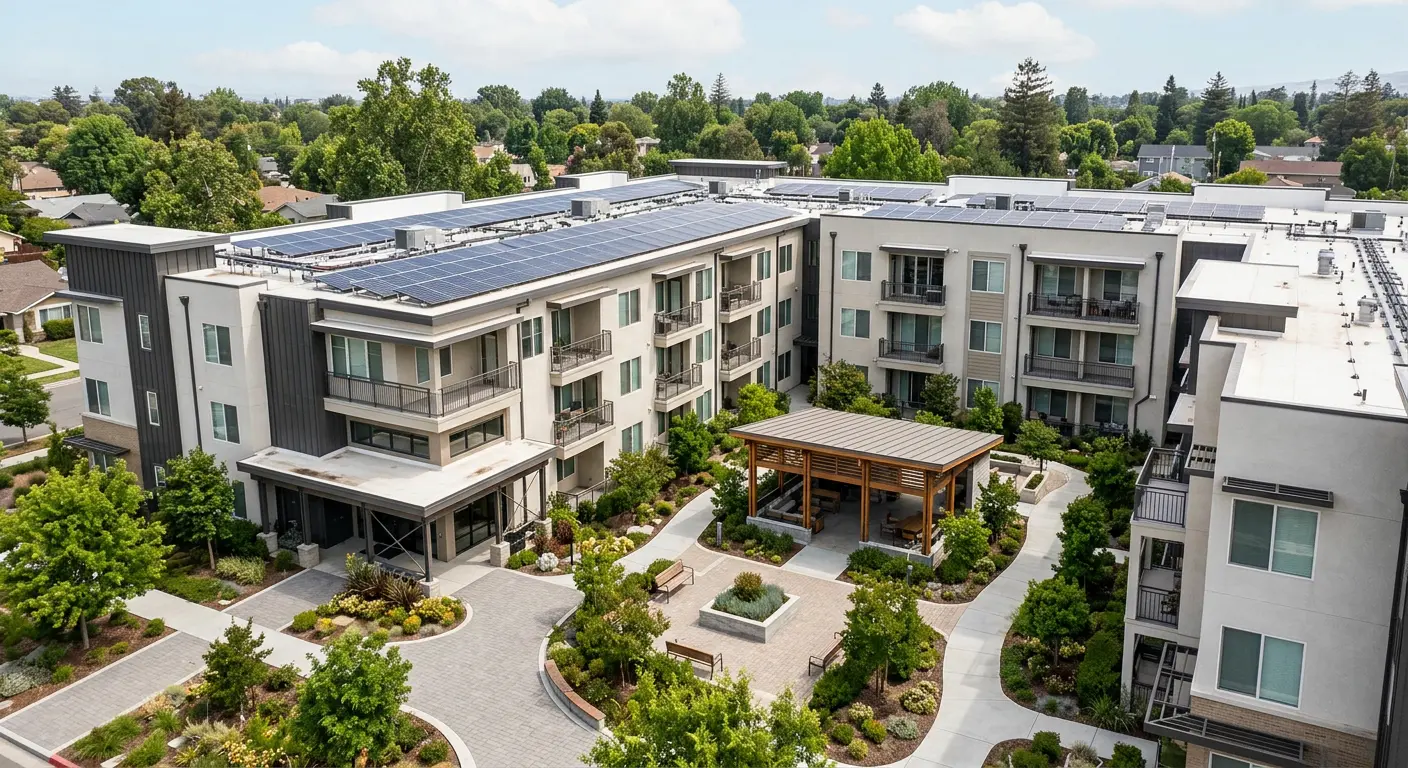
Yes. Solar photovoltaic systems can power shared spaces in multifamily properties, including corridor and exterior lighting, laundry facilities, offices, recreation rooms, elevators, pumps, and other owner paid building systems. The array and electrical equipment must connect to the appropriate property or common area electrical service.
For property managers, the right project structure depends on the building’s meters, available roof or site area, electrical layout, utility rules, roof condition, and the intended beneficiaries. A system may offset common area electricity, distribute credits to residents, or support selected common loads with battery storage. The practical evaluation starts with understanding how the property uses and measures electricity.
Common multifamily solar arrangements
Before requesting proposals, identify whether the project is intended to serve owner paid common areas, resident accounts, or both. The following arrangements are useful starting points for that conversation.
| Arrangement | Primary electricity beneficiary | Metering or credit path | Main issue to confirm |
|---|---|---|---|
| Common area offset | Owner paid common area loads | Solar connects to the common area or property electrical service and offsets usage under the applicable utility arrangement | Confirm the correct meter, load profile, interconnection terms, and export compensation |
| Master metered multifamily property | The property or master meter may serve building loads, with resident benefit depending on the billing structure | One physical meter may support the property, but resident allocation may require an approved virtual credit arrangement | Confirm who administers credits and how residents are informed |
| Separately metered apartments with resident credits | Individual resident accounts may receive allocated solar credits | Solar may connect at one physical location while credits are distributed through virtual metering or a similar program | Confirm eligible accounts, allocation rules, resident turnover procedures, and credit value |
| Solar plus battery for selected common loads | Common areas or designated emergency circuits | Storage, controls, and backed up circuits provide energy to selected loads during outages | Confirm which loads are backed up and how long the system is expected to operate |
These are general project structures, not universally available options. Utility territory, property wiring, local requirements, ownership, financing, and equipment design can change the result. Virtual metering and similar credit programs also vary by state and utility.
Start with electricity use and metering
The first question is not simply how much roof space is available. It is which electricity accounts the solar system can serve and how much electricity those accounts use.
Review at least 12 months of utility bills where they are available. Separate owner paid common area consumption from tenant paid consumption, and identify the accounts associated with lighting, laundry facilities, offices, recreation spaces, elevators, pumps, and other shared systems. This creates a clearer basis for comparing a common area offset project with a project that also seeks to provide resident credits.
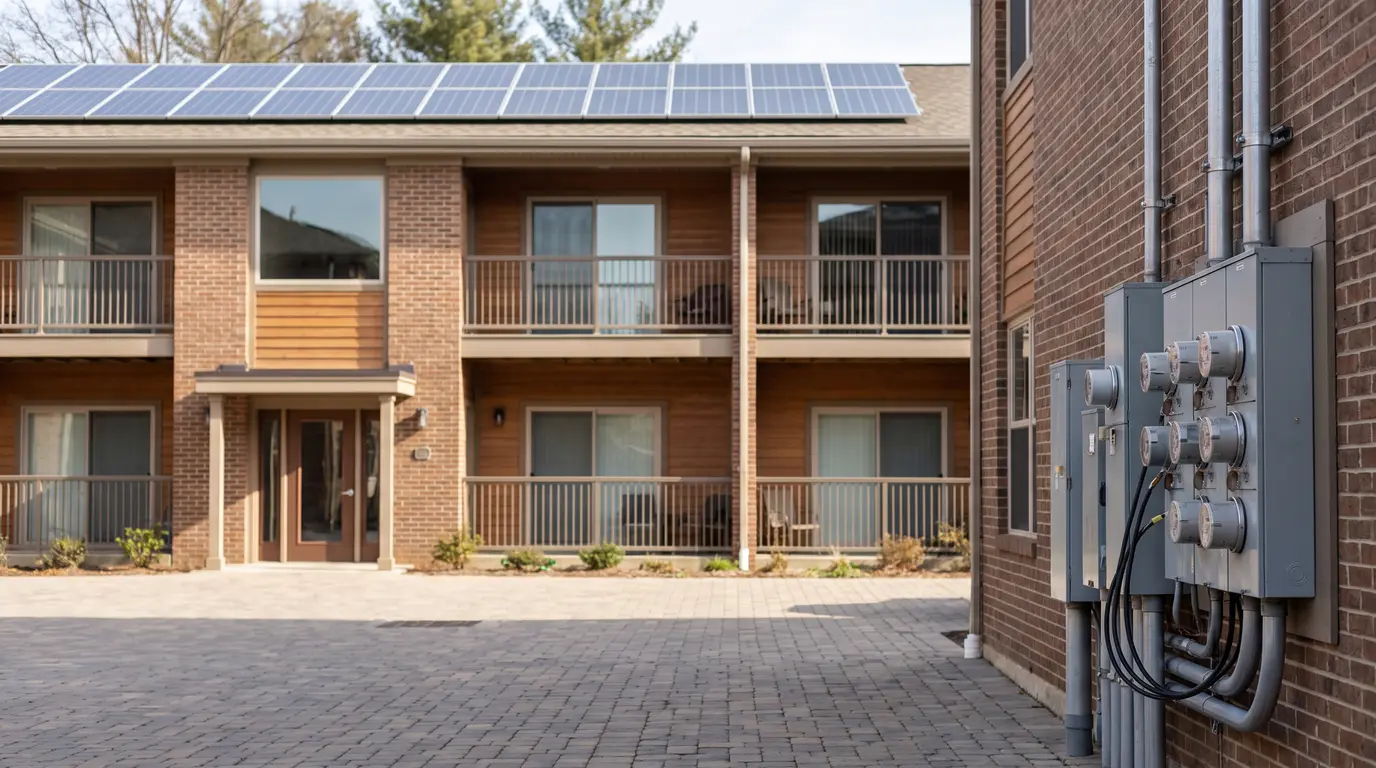
Multifamily properties may have separately metered apartments, a master meter, or a combination of both. Owners and managers may have detailed information for common area bills while lacking complete whole building data for apartments where residents pay utilities directly. The property’s actual meter configuration should be confirmed alongside the utility’s data sharing and interconnection rules. The ENERGY STAR multifamily benchmarking guidance provides useful context for this data challenge.
Questions for the utility
- Which property and common area accounts can receive solar output or bill credits?
- Is interconnection available for the proposed system?
- How are exported electricity, net metering, or other credits handled?
- Is virtual metering or a similar credit allocation program available in this service territory?
- What happens to an allocation when a resident moves out?
- Who applies for the program and administers the credits?
Resident credit programs can be useful, but they are not nationwide options with uniform rules. Eligible accounts, enrollment steps, credit value, and administrative responsibilities require local confirmation. A Department of Energy Better Buildings case describes a 140 unit property with a 190 kilowatt rooftop array and individual meters that allowed residents to receive solar credits. That example shows one workable approach, not a guaranteed structure or financial result for every property.
Evaluate the roof and system placement
Solar placement should be evaluated as part of the property’s roof and electrical planning, not as a separate equipment decision. Review available roof or site area, shading, roof access, structural considerations, electrical routing, and local fire safety requirements.
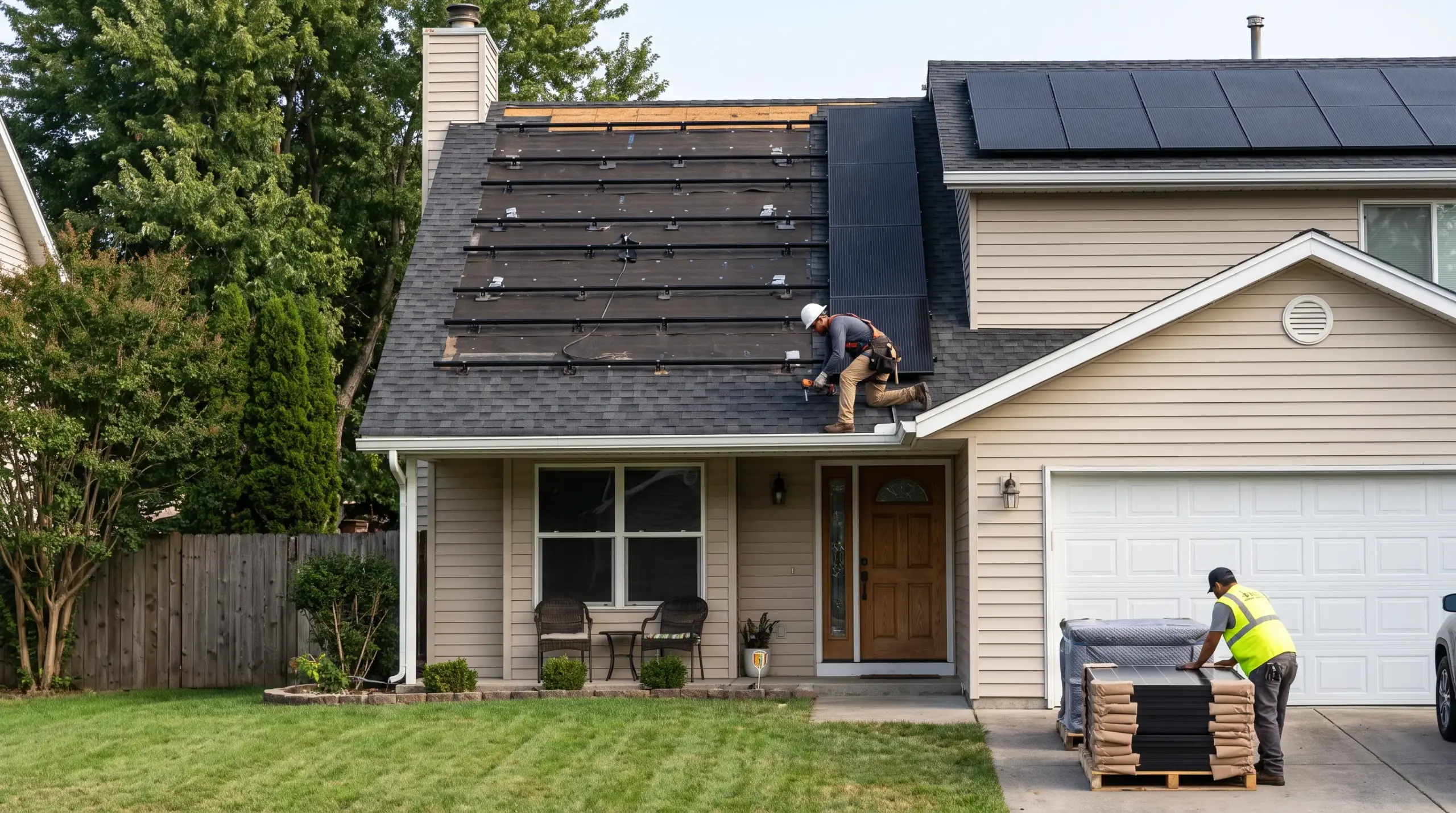
Roof timing deserves particular attention. If major repairs or a roof replacement are approaching, address that work before installing panels when practical. Removing and reinstalling a solar array later can complicate the project and the property’s capital planning. Property managers can assess the roof before installing solar while considering the roof’s remaining service life, ownership responsibilities, and access needs.
Orientation is one factor in placement, along with shading, roof geometry, access, and the location of electrical equipment. To understand that factor, managers can compare roof direction and solar exposure. That general information should not be treated as a production estimate for a multifamily property.
Details to request from bidders
- The proposed array location and reason for selecting it
- Roof penetrations or ballast and responsibility for related roof work
- Electrical tie in points and equipment locations
- Access routes for installation, inspection, and service
- Fire code review and coordination with the applicable authority having jurisdiction
- Monitoring, warranties, and responsibility for roof repairs around the system
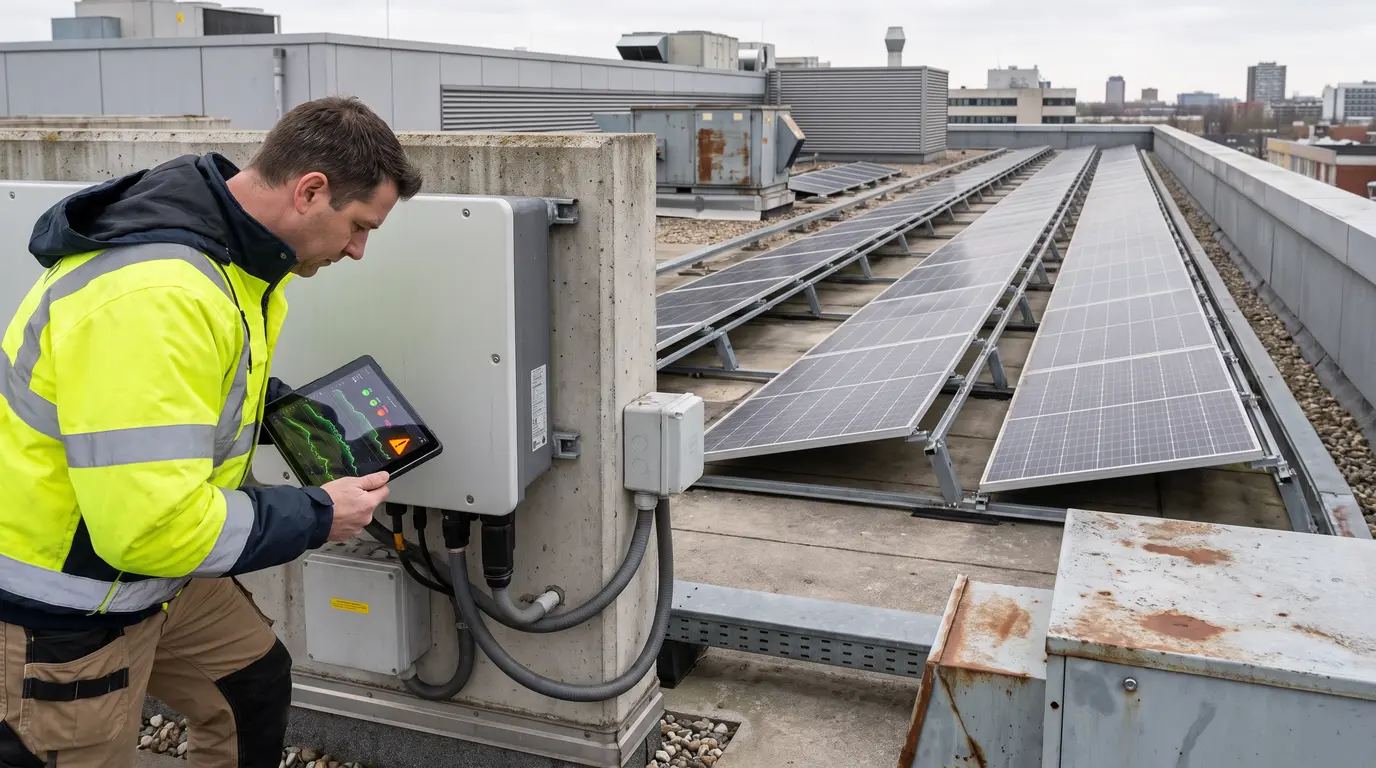
Qualified roofing, structural, electrical, and solar professionals may each have different review responsibilities. Local code and fire safety requirements control the particular property. Rooftop equipment can also create electrical hazards and affect firefighter access, so residents and onsite staff should not be directed to inspect or service the system themselves. The ENERGY STAR rooftop solar guidance and the Department of Energy’s guide to fire safety with solar systems offer general planning context.
Plan maintenance and operations
A multifamily solar system becomes part of the property’s operating plan once it is installed. The proposal and service agreement should make clear who monitors the system, arranges service, manages roof access, and coordinates work around residents and onsite staff.
Ask for a written operations and maintenance plan that addresses manufacturer recommended preventive maintenance, expected costs, suppliers, work hours, site access, vehicle staging, and service instructions. The equipment, roof and site conditions, contract terms, and any included batteries will affect the actual maintenance needs. The Department of Energy’s Federal Energy Management Program guidance on solar photovoltaic performance and longevity can help managers identify topics for that discussion.
Include responsibilities in the contract
- System monitoring and notice of performance or equipment issues
- Inspection and preventive maintenance responsibilities
- Service response and emergency contact procedures
- Roof access procedures and coordination with property staff
- Debris or vegetation control where relevant to the site
- Responsibility for roof related work, insurance changes, and future removal or reinstallation
If a battery is included, the plan should also identify which circuits are connected to it and how the storage and controls will be serviced. A battery system may support selected loads, but it does not automatically keep every common area operating during an outage.
Communicate clearly with residents
Resident communication should match the project that is actually being approved. Explain whether the array serves common area electricity, distributes utility bill credits, supports selected circuits during outages, or combines more than one purpose.
Avoid promising individual savings unless the utility rules and project documents establish them. If residents may receive credits, explain which accounts are eligible, how allocations are handled, who manages enrollment, and what happens when a resident moves out. If the system serves only owner paid common areas, say that directly so residents understand the project’s scope.
It is also useful to explain practical access and safety procedures. Residents and staff should know who to contact about questions, but rooftop equipment should remain the responsibility of qualified service providers and the applicable property, electrical, and fire safety professionals.
Budget and compare proposals
Once the electrical accounts, roof, and intended benefits are clear, compare proposals on more than system size. Review the proposed meter connection, treatment of exported electricity, resident credit administration, roof work, monitoring, maintenance, warranties, insurance considerations, and future roof access.
For an initial budgeting conversation, property managers can estimate preliminary solar costs. The calculator supports residential and commercial project exploration, but it is not a substitute for multifamily specific metering review, utility confirmation, financing analysis, incentives, savings calculations, or project documentation.
A useful proposal comparison asks which accounts benefit, how those benefits are measured, and who carries each long term responsibility. This keeps an attractive equipment proposal connected to the property’s actual operations.
Frequently asked questions
Can solar serve common areas if apartments have separate electric meters?
Yes. Solar can connect to the common area or property electrical service and offset owner paid loads, even when apartments have separate meters. The correct connection and treatment of any exported electricity must be confirmed with the utility.
Can residents receive credits from a multifamily solar system?
Sometimes. Virtual metering or a similar arrangement may distribute credits to eligible resident accounts, but availability, enrollment, credit value, and account rules vary by state and utility. Resident benefits should not be promised before those details are documented.
Should the roof be replaced before installing solar?
If major repairs or replacement are needed, completing that work before the solar installation may help avoid later removal and reinstallation. The decision should reflect the roof’s condition, remaining service life, ownership responsibilities, and the project schedule.
What should a multifamily solar maintenance contract include?
It should identify monitoring, preventive maintenance, service response, suppliers, work hours, site access, roof access procedures, and responsibility for related roof work. Equipment, site conditions, contract terms, and batteries can change the actual maintenance needs.
Will solar keep common areas powered during an outage?
Not by itself in every design. Solar plus battery equipment may support selected common area or emergency circuits, but the proposal must identify which loads are backed up and how the system is expected to operate during an outage.
Final takeaway
Solar can power multifamily common areas when the system is connected to the appropriate electrical service and designed around the property’s meters, roof, utility rules, and operating needs. The most useful next step is to gather common area bills, confirm the meter arrangement, assess the roof before selecting an array location, and ask proposals to document credits, maintenance, access, and future roof responsibilities.
With those details in hand, property managers can compare practical project structures and communicate the project clearly to residents without promising benefits the utility or project documents have not established.