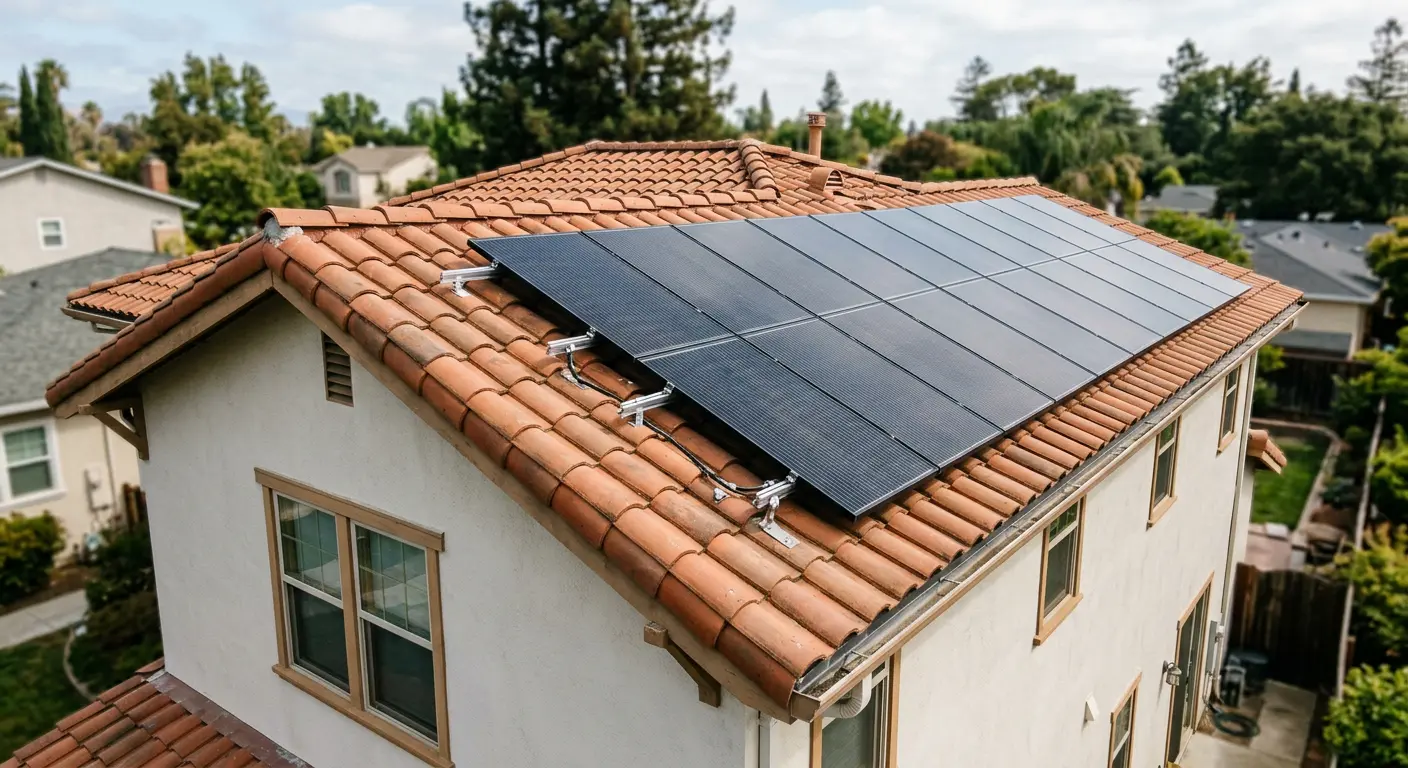
Yes. Solar panels can generally be installed on residential tile roofs, including clay and concrete tile. The key is choosing an attachment system that matches the tile profile, connecting it appropriately to the roof structure, and preserving the roof’s weatherproofing.
A good solar plan starts with the roof rather than the panel layout. The installer should review the roof’s condition, age, slope, shade, available space, structural support, tile arrangement, and local requirements before finalizing the design.
How Solar Panels Attach to Tile Roofs
Tile roofs are not all shaped the same. Flat tile, curved clay tile, S shaped tile, W shaped tile, and concrete tile can call for different hooks, brackets, flashings, or replacement components. The selected product must match both the tile and the roof assembly.
Common approaches include tile hooks, tile replacement flashing, and universal tile mounts. In each case, the attachment should be secured to an appropriate structural element and integrated with flashing and the roof’s weatherproofing layers. The exact fasteners, sealants, flashing, and installation sequence should follow the selected product’s current instructions.
| Mounting approach | How it is used | Main decision point |
|---|---|---|
| Tile hook or tile bracket | Attaches through or around the tile area, with flashing and structural fasteners below or around the attachment | It must be compatible with the tile profile and roof structure |
| Tile replacement flashing or mount | Replaces a roof tile at the attachment location with a purpose built flashing or mount | It can reduce the need for tile grinding or cutting, but still must match the roof assembly |
| Universal tile mount or flashing | Uses a base and flashing components designed to conform to flat or curved tile profiles | The installer must confirm that the product matches the tile shape and roof assembly |
These are representative approaches, not a complete list. A product designed for one tile profile is not automatically suitable for another. Ask to see the proposed mounting method and how it will preserve the roof’s weatherproofing.
Check the Roof Before Planning the Array
A tile roof may be physically suitable for solar while still needing repair or replacement first. Before signing a solar contract, ask the installer to evaluate the tile, underlayment, flashing, roof deck or framing, visible leaks, prior repairs, and remaining service life.
If the roof is near the end of its service life or has deteriorated underlayment, compare the timing and scope of reroofing before solar with installing panels first. Removing and reinstalling an array later can add disruption and cost. Our guide on whether to replace your roof before solar can help organize that decision.
Tile Handling and Roof Protection
Tile handling deserves specific attention during solar work. Cracked tiles, unnecessary cutting, and poorly integrated attachments can create practical roof problems. Some tile replacement products are designed to reduce the need for cutting or grinding around mounts.
Have the written scope address tile access, tile removal and replacement, damaged or discontinued tiles, flashing, penetrations, sealants, cleanup, and responsibility for roof repairs that result from the installation. Homeowners should not walk on or remove roof tiles themselves. That work belongs with professionals who are following the roofing and solar system instructions.
Structural Support, Roof Design, and Local Approval
Solar equipment adds weight to the roof, and the attachment must land on an appropriate structural element. Ask whether the system will connect to rafters, trusses, blocking, or another approved support, and ask how that attachment will be verified for the project.
Tile roof design also interacts with wind exposure, roof shape, slope, and applicable code criteria. Local requirements may cover structural attachments, electrical work, fire access, roof penetrations, and equipment installation. Permit and inspection responsibilities can vary by jurisdiction, so confirm them in writing before work begins.
Array Design and Solar Production
A tile roof can accept solar panels but still have limited usable space. The installer should review roof direction, slope, shade, vents, chimneys, skylights, and roof edges when creating the layout. These factors affect where panels can go and how much of the roof is practical for the array.
For more background, read about which roof direction is best for solar and review how household electricity use, shade, roof space, and production affect how many solar panels your home needs. Those resources support early planning, but they do not replace a project specific roof and structural review.
If your home has curved clay tile, you may also find our overview of Spanish tile roof basics useful for general roofing background. It is not a solar mounting guide.
Questions to Ask Before Choosing an Installer
- What is the proposed attachment method for this exact tile profile?
- Where will the fasteners land, and how will the attachment connect to the roof structure?
- How will tiles be removed, protected, replaced, or cut if needed?
- How will the flashing and weatherproofing layers be integrated?
- Are any tiles cracked, discontinued, or likely to need replacement?
- Which party covers cracked tiles, leaks at solar attachments, flashing problems, and damage found after installation?
- Who handles permits, inspections, and coordination with the local building department?
- How will roof direction, shade, vents, chimneys, skylights, and roof edges affect the final layout?
Frequently Asked Questions
Will solar panels damage a tile roof?
They do not have to. Damage risk depends on the attachment method, tile handling, flashing, structural connection, and installation quality. Ask for a written plan that explains how tiles and weatherproofing will be protected.
Is it better to replace an old tile roof before installing solar?
It may be. If the roof is near replacement, has deteriorated underlayment, or needs substantial repair, compare reroofing before solar with installing panels first. The decision should account for roof condition, remaining service life, and the disruption of removing and reinstalling panels later.
How are solar panels attached to clay or concrete tile?
Installers may use tile hooks, tile replacement flashing or mounts, universal tile mounts, or another approved system. The choice depends on the tile shape, roof assembly, structural attachment point, selected mounting system, and local requirements.
Can cracked or discontinued tiles be replaced during solar installation?
They may be, but the scope should say how replacement tiles will be handled. Ask whether the installer or roofing contractor will supply matching or suitable replacement tiles and who is responsible for damage discovered during the work.
Does installing solar on a tile roof require a permit?
Permit and inspection requirements vary by jurisdiction. They may address structural attachment, electrical work, fire access, roof penetrations, and equipment installation. Confirm the local requirements and identify who will manage permits and inspections before signing the contract.
The Takeaway
Solar panels can generally go on clay, concrete, and other tile roofs when the roof is suitable, the mounting system matches the tile, and the installation protects the roof’s weatherproofing. The most useful next step is a roof focused assessment before accepting an array design or quote.
For early budgeting, you can use the solar project cost estimate as a preliminary planning resource. Tile specific pricing and the final installation approach still require project specific review. Roof Mechanics is a roofing and solar directory that can help homeowners continue researching local contractors and planning questions.