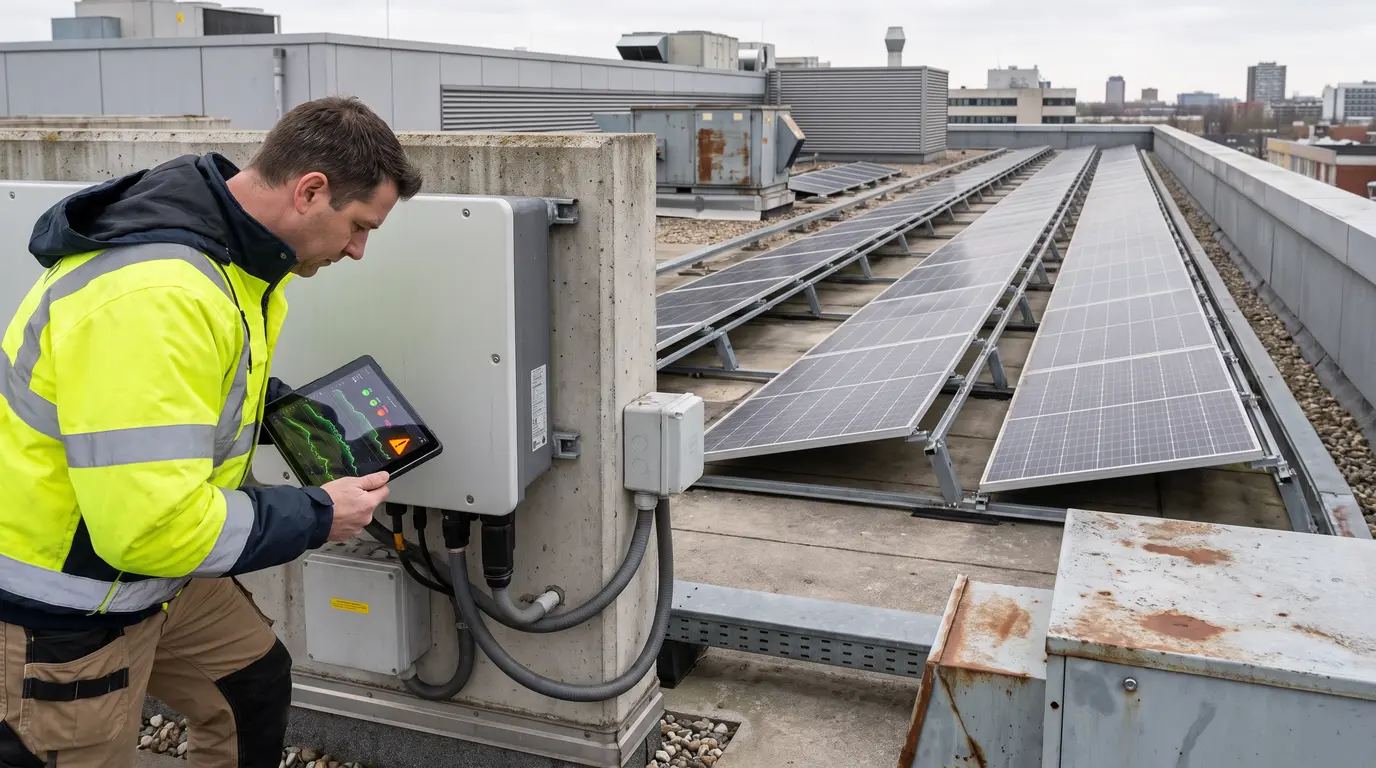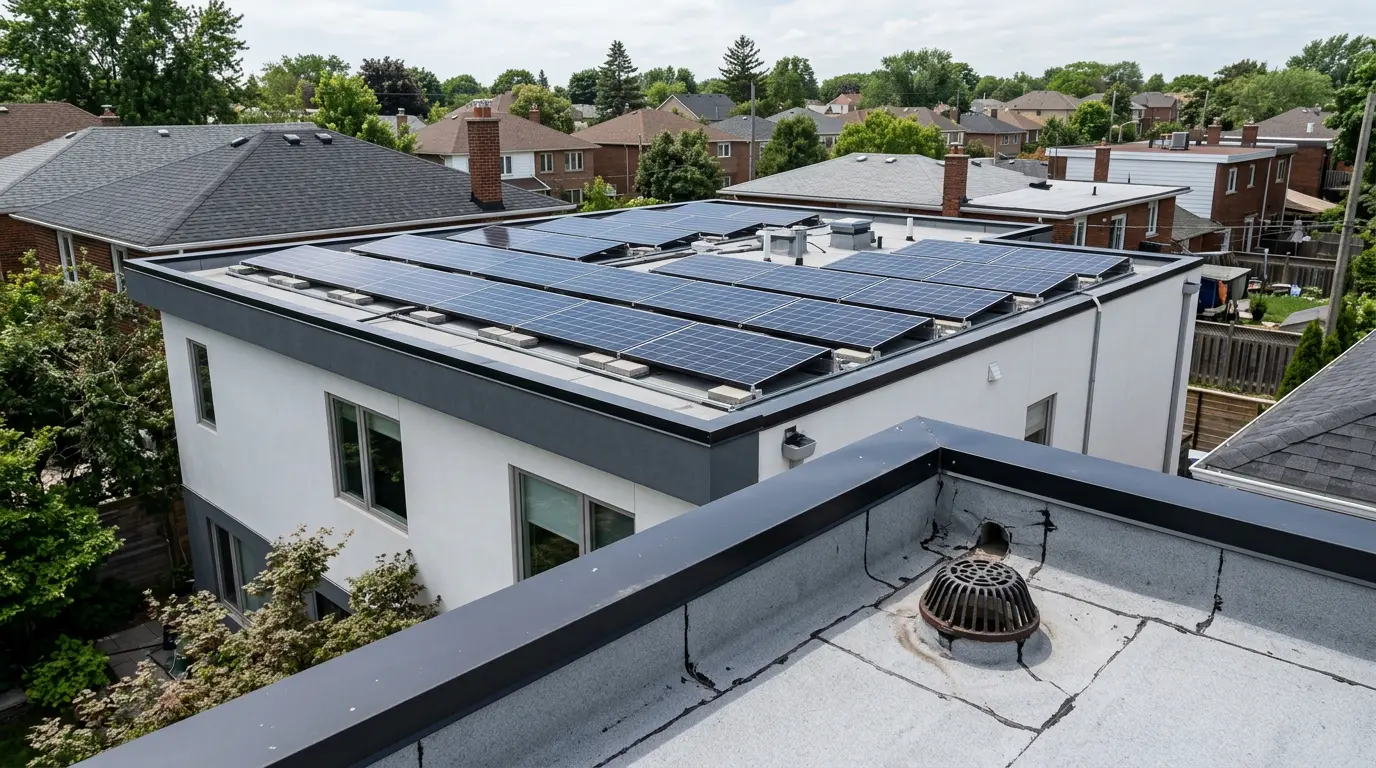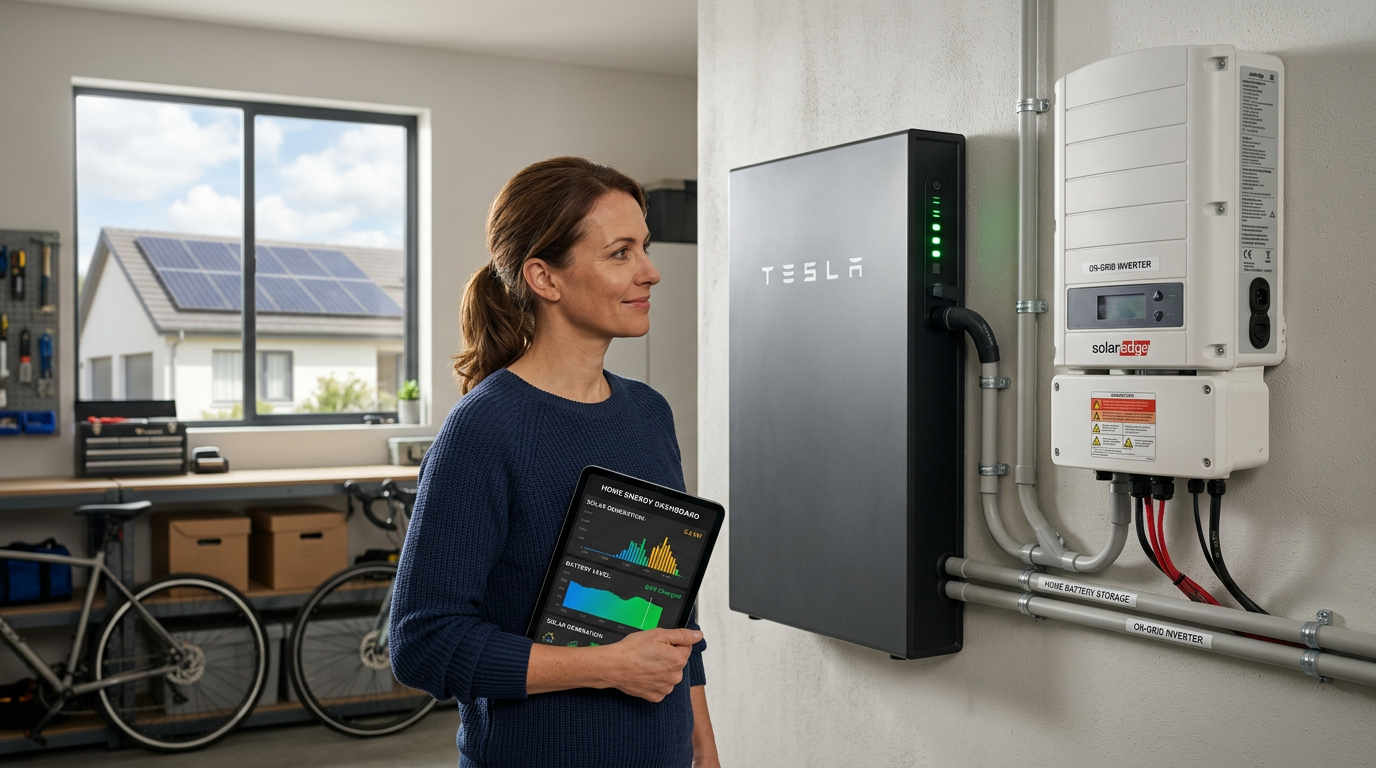
A solar battery can make sense when you want backup power, have expensive evening electricity rates, receive limited credit for exported solar, or qualify for an incentive that improves the numbers. It is not automatically the best financial choice for every home.
A battery stores excess solar electricity for use after sunset, during higher rate periods, or during some grid outages. Whether it earns its keep depends on your utility tariff, export credit rules, household energy use, solar system design, installation cost, financing, battery degradation, and how much you value keeping selected appliances running during an outage.
Two details deserve attention from the start. A battery does not automatically provide backup power for the entire house, and ordinary grid connected solar usually shuts down during an outage. Also, the former 30 percent federal Residential Clean Energy Credit is unavailable for property placed in service after December 31, 2025, according to the Internal Revenue Service. Homeowners planning an installation in 2026 should verify current incentives instead of assuming the former credit applies.
How a Home Solar Battery Works
Solar panels generate electricity during the day. When the panels produce more electricity than the home is using, the excess can charge a battery. Later, the stored electricity can supply household loads after sunset or during a higher cost period.
If the system is designed for backup, the battery can also supply selected loads during a grid outage. That requires compatible inverter controls and equipment that safely separates the home from the utility. Without that isolation function, a standard grid connected solar system generally disconnects during an outage for anti islanding safety.
Two measurements are especially important:
- Kilowatt hours, or kWh: This measures stored energy. It helps indicate how much electricity the battery can deliver over time.
- Kilowatts, or kW: This measures power. It affects how much electricity the system can deliver at one time and how many appliances can operate together.
A battery rated at a certain number of kWh will not necessarily run the whole house for that many hours. Actual runtime depends on usable capacity, appliance demand, inverter power, conversion efficiency, reserve settings, and the circuits connected to the backup system. The number on the brochure is only part of the story.
When a Solar Battery Provides the Most Practical Value
Backup Power Is a Priority
A battery may be worthwhile when keeping important circuits operating during an outage matters to you. Depending on the system design, those circuits might include a refrigerator, internet equipment, lights, or other selected loads.
Do not assume that the word “backup” means the entire house. A critical load panel may exclude heating, air conditioning, electric resistance water heating, and other high demand equipment. Whole home backup, where available, requires a system with enough power, capacity, and compatible equipment for the loads involved.
Ask the installer for a written runtime estimate based on the loads you actually want to operate. The estimate should account for realistic conditions, including cloudy weather and a low state of charge. “It should last a while” is not a specification.
The Utility Uses Time of Use Rates
Some utilities charge different rates during different parts of the day. A battery can store daytime solar generation and discharge it during more expensive evening periods. This is commonly called rate shifting.
The value depends on the actual tariff, not a generic promise about electricity prices. Review the utility’s current rate schedule, your household’s consumption during each period, and the system’s battery dispatch settings. If interval usage data is available, ask for a calculation based on your actual hourly or interval consumption.
Exported Solar Receives Less Than Full Retail Credit
When the utility gives limited credit for solar electricity sent to the grid, using more of that electricity at home can become more valuable. A battery can store excess daytime generation and make it available later instead of exporting it immediately.
The details matter. Fixed charges, credit caps, rollover rules, export rates, and other tariff provisions can change the result. A DOE hosted analysis discusses California’s NEM 3.0 example, where export compensation was substantially lower than retail and the modeled value of storage increased. That is a specific example, not a nationwide rule.
Resilience Matters Separately From Bill Savings
Not every benefit has to appear as a line item on the electric bill. Some homeowners place substantial value on maintaining selected loads during an outage, even if the system does not produce the fastest financial payback.
That resilience value is personal and should be evaluated separately from bill savings. A proposal can show estimated energy savings, but it cannot decide what uninterrupted refrigeration, lighting, or internet access is worth to your household.
When a Solar Battery May Be Less Financially Attractive
A battery may provide less additional bill savings when exported solar receives a highly favorable full retail credit. In that situation, the grid may already provide some of the bill shifting function without the homeowner purchasing storage.
That is an economic inference, not a universal rule. Fixed charges, credit limits, rollover terms, outage needs, and other utility rules can change the outcome. A battery may still be worthwhile for backup even when the export arrangement is favorable.
The sensible comparison is based on your actual tariff and household load profile. Be cautious with broad claims that batteries are always worth the cost or never worth the cost. Electricity billing is local, and the details are where the answer usually lives.
Solar Battery Costs and the Factors That Determine Value
The U.S. Department of Energy gives broad approximate consumer cost ranges of about $25,000 to $35,000 for a new residential solar plus storage system and about $12,000 to $22,000 to add storage to existing solar. These are estimates, not quotes or guaranteed current national prices. Cost can vary with battery size, system design, installation requirements, and other project details.
Compare more than the equipment price. Review the cash price, loan cost, maintenance, degradation assumptions, replacement assumptions, and any lease or power purchase agreement treatment. Evaluate expected bill savings separately from the value of outage resilience.
Adding a battery to an existing solar system may require AC coupling or DC coupling equipment, an inverter replacement, panel or service upgrades, and additional labor. Ask the installer to identify each item clearly rather than burying it in a single project total.
The Department of Energy’s battery storage guidance provides useful consumer context, but it should not replace a project specific proposal based on your home and utility account.
How to Choose the Right Battery System
Ask every installer to separate the following specifications in the proposal:
- Nominal capacity and usable capacity.
- Continuous power and peak power.
- Round trip efficiency.
- Warranty duration and throughput limits.
- Guaranteed retained capacity over the warranty period.
Usable capacity is more helpful than nominal capacity when estimating the energy available to your home. Continuous and peak power are important when several appliances operate together or when equipment with a higher starting demand is involved.
A practical sizing process starts with the circuits you want to back up. Identify their approximate simultaneous demand, estimate the desired runtime, and account for efficiency losses, reserve settings, cloudy weather, and a low state of charge. A larger battery does not automatically provide whole home backup or unlimited runtime.
Have the installer provide the runtime estimate in writing. The proposal should explain which loads are included, what operating conditions were assumed, and what happens when the battery reaches its reserve level.
Backup Equipment, Installation, and Local Requirements
Confirm whether the proposal includes the battery, inverter, automatic transfer or microgrid isolation equipment, critical load panel, monitoring, permitting, utility interconnection, and commissioning. If any item is excluded, ask for its expected cost and who is responsible for arranging it.
Local authorities may require permits, electrical inspections, utility approval, and compliance with locally adopted electrical and fire codes. Battery placement, clearances, indoor or outdoor installation, fire protection, equipment listings, and inspection requirements can vary by jurisdiction.
UL 9540, UL 9540A, and NFPA 855 are important storage safety standards and references. However, a model code or consensus standard is not automatically binding law everywhere. Ask the installer and the local authority which requirements apply to your property.
The Department of Energy’s energy storage safety plan and its solar energy guide for homebuilders provide background, but local approval remains a local matter.
Incentives and Tax Credit Timing
The former federal Residential Clean Energy Credit covered qualifying battery storage with at least 3 kWh of capacity at 30 percent for eligible property placed in service through December 31, 2025. IRS guidance says the credit is unavailable for property placed in service after that date.
Do not automatically apply that former credit to a 2026 installation. Verify current federal, state, utility, and local programs with the IRS, your utility, your state energy office, or DSIRE. Eligibility can depend on ownership, installation date, equipment specifications, income, program funding, and application deadlines.
A Practical Solar Battery Decision Checklist
Before signing a contract, work through these questions:
- What are the utility’s current time of use periods, export credit rules, fixed charges, caps, and annual rollover provisions?
- Can the installer calculate savings using your actual hourly or interval consumption instead of a generic household profile?
- Is your main goal outage protection, bill management, greater solar self consumption, or a combination?
- Which circuits must operate during an outage, and which can be excluded?
- What runtime should you expect with those loads during cloudy conditions and at a low state of charge?
- What are the usable capacity, continuous power, peak power, efficiency, warranty, throughput limits, and retained capacity guarantee?
- Does the price include the inverter, isolation equipment, critical load panel, monitoring, permits, utility approval, and commissioning?
- If you already have solar, will the project require coupling equipment, an inverter change, panel or service upgrades, or additional labor?
- What happens to the economics after financing costs, degradation, maintenance, and possible replacement are included?
Keep the contract, equipment datasheets, permits, inspection records, warranty documents, and commissioning records. Those papers are not exciting, but they are much more useful than trying to reconstruct the project from memory later.
Frequently Asked Questions
How Does a Home Solar Battery Work?
Solar panels can charge the battery with excess daytime generation. The stored electricity can later supply household loads after sunset, during higher rate periods, or during an outage when the system has compatible backup and isolation equipment.
Do Solar Batteries Work During a Power Outage?
They can, but only when the system is designed for backup operation. The equipment must safely isolate the home from the utility, and the battery may serve selected critical circuits rather than the entire house.
How Much Does a Solar Battery Cost?
DOE gives an approximate range of $12,000 to $22,000 for adding storage to existing solar and $25,000 to $35,000 for a new solar plus storage system. These are broad estimates, not quotes, and actual costs depend on the battery, installation, system design, and site requirements.
How Long Can a Solar Battery Power a House?
There is no single runtime for every home. Runtime depends on usable kWh, inverter power, appliance demand, efficiency, reserve settings, and whether the system serves selected circuits or the entire house. Ask for a written estimate based on your intended loads.
Are Solar Batteries Worth It With Net Metering?
It depends on the exact net metering or export credit rules. Full retail credit may reduce the battery’s additional bill savings, while outage protection may still make storage worthwhile. Compare the battery with your actual tariff rather than relying on a general payback claim.
Is It Better to Install Solar Panels and a Battery Together?
Neither option is automatically better for every home. Installing storage with new solar and adding it to an existing system can involve different equipment, coupling arrangements, inverter needs, and labor. Compare both project designs and their total costs if you are considering an addition to an existing system.
What Size Battery Does a Home Need?
Size the system around the circuits or appliances you want to operate, their simultaneous power demand, and the desired runtime. Review usable capacity and both continuous and peak power, not just the headline kWh rating.
What Tax Credits or Rebates Are Available for Solar Batteries?
The former 30 percent federal Residential Clean Energy Credit applied to qualifying property placed in service through December 31, 2025, and IRS guidance says it is unavailable after that date. Verify current federal, state, utility, and local programs directly because eligibility and funding can change.
The Bottom Line
A solar battery is more likely to make practical sense when you need backup power, face expensive evening rates, receive limited credit for exported solar, or place significant value on resilience. It may be less financially attractive when your utility provides highly favorable full retail credit and your household has little need for outage protection.
Start with the utility tariff, your actual load profile, and the circuits you want to protect. Then compare a detailed proposal that separates usable capacity, power output, backup equipment, installation requirements, financing, degradation, warranty terms, and current incentives. The right answer is not whether batteries are good in general. It is whether this battery, on this house, under this utility’s rules, solves a problem worth its total cost.