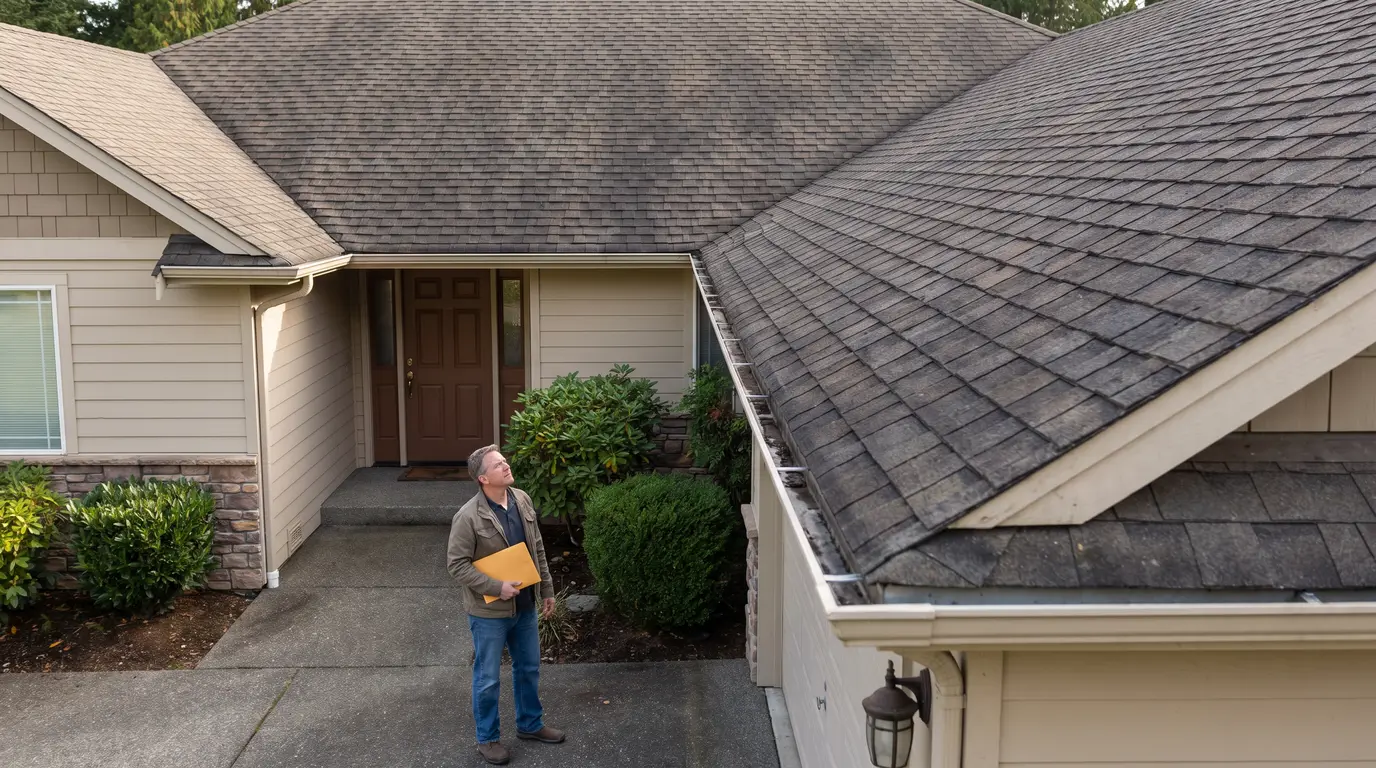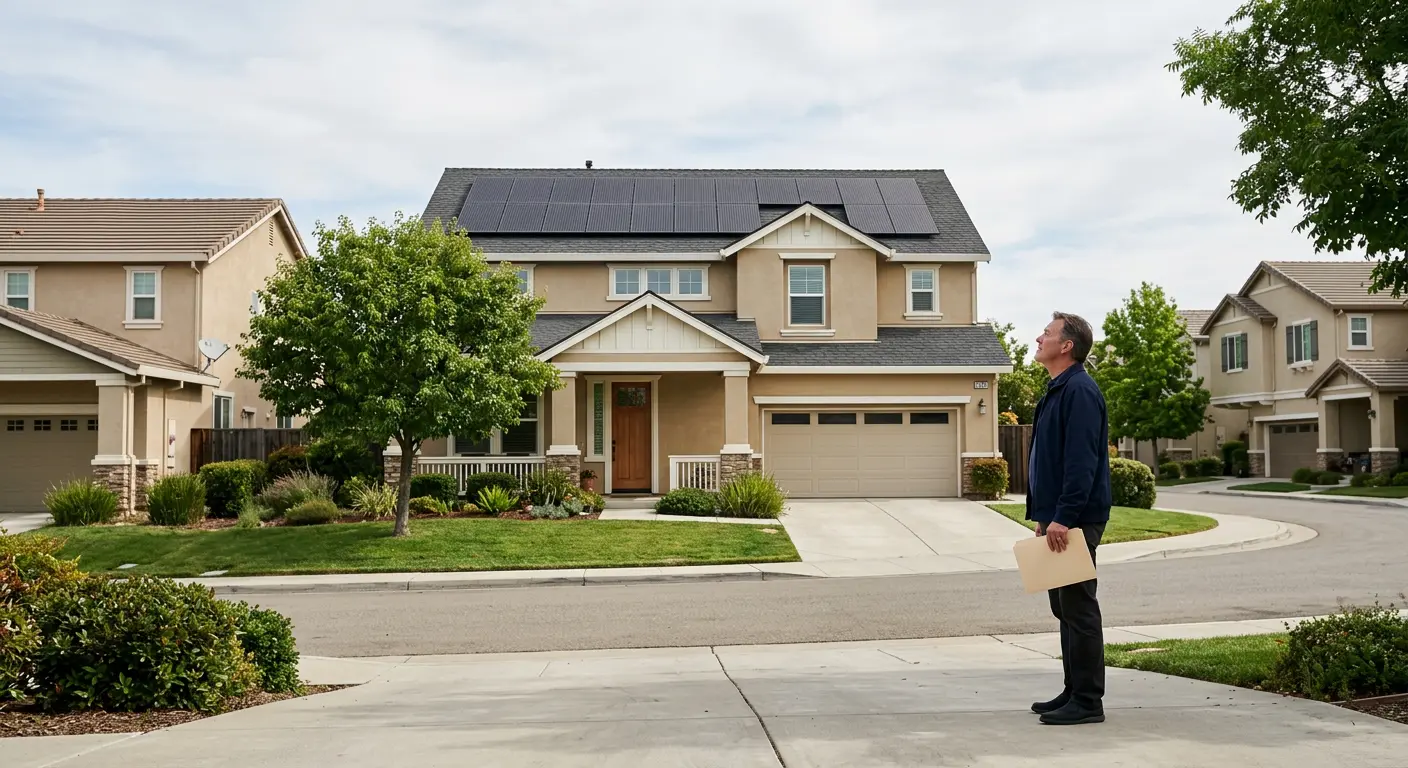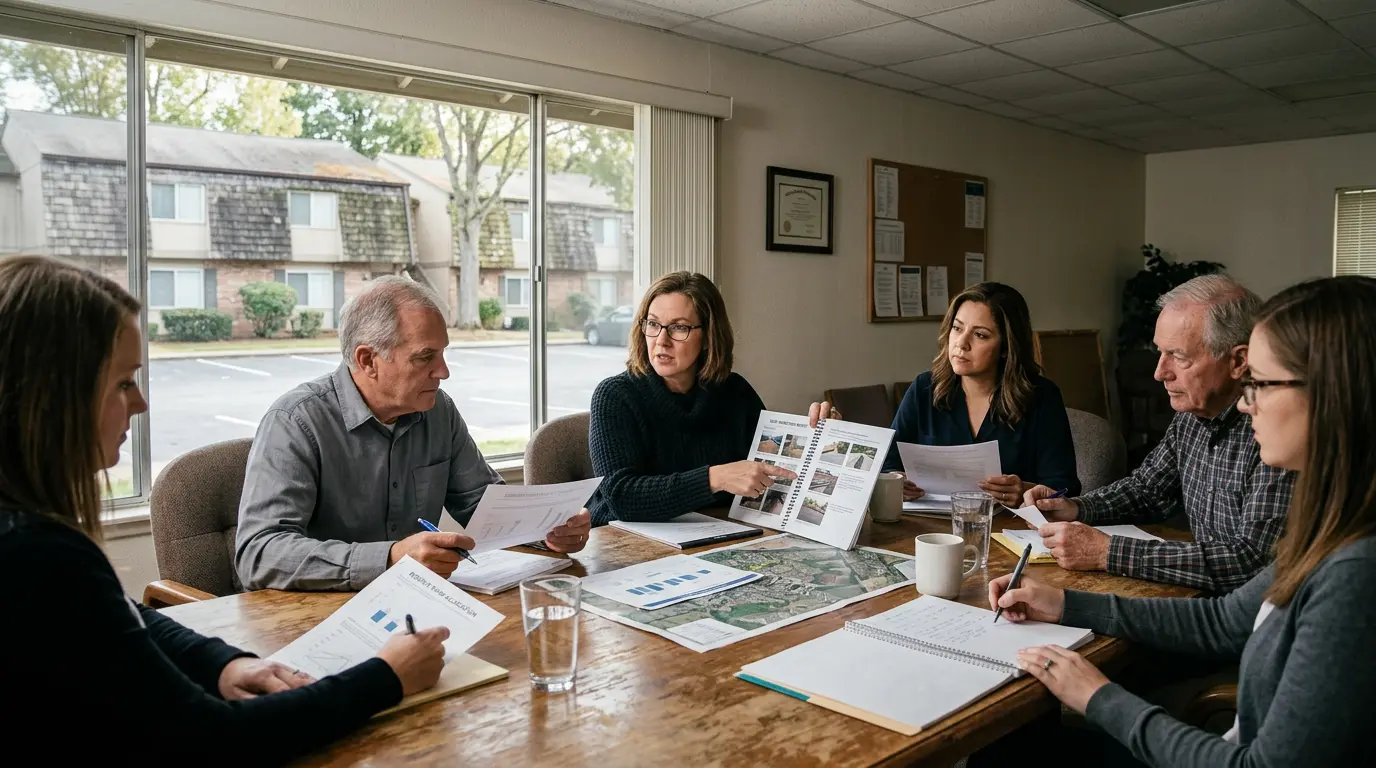
Roof replacement in an HOA is not simply a matter of choosing shingles and signing a contract. It is a governance, funding, and project planning decision. Before approving the work, the board should confirm who is responsible for the roof, understand its actual condition, compare proposals based on the same scope, reconcile the cost with the reserve plan, verify approval requirements, and explain the decision to owners.
There is no single nationwide rule governing HOA roof replacement, reserve use, owner voting, assessment limits, notice, or procurement. The controlling requirements may come from the declaration or CC&Rs, bylaws, rules, applicable state law, and local building requirements. A board should obtain local legal or professional verification before committing the association to the project.
The most reliable workflow is straightforward: verify responsibility, assess condition and scope, obtain comparable proposals, build the funding plan, confirm the approval process, and communicate the evidence to owners. The roof may be overhead, but the paperwork should not be.
Confirm Who Is Responsible for the Roof Before Planning the Project
Before discussing contractors or assessments, determine whether the association is actually responsible for the roof. A condominium, planned development, townhouse community, or mixed use association may assign roof maintenance and replacement to the association, individual owners, or both.
Review the declaration or CC&Rs, bylaws, plats, maintenance matrix, prior resolutions, and applicable state law. Look for language addressing common elements, limited common elements, exclusive use areas, attached structures, and owner maintained components. The label used in the governing documents matters because responsibility affects who pays, who approves the work, and whether reserve funds may be used.
- Confirm whether the roof is an association maintained common element.
- Determine whether certain roofs or portions of roofs are limited common elements or owner responsibilities.
- Review prior board resolutions and maintenance records for interpretations or obligations already adopted by the association.
- Check whether the proposed work is maintenance, repair, replacement, restoration, or an improvement.
A project that changes the existing component may not be treated the same as restoring it. Different materials, added insulation, solar equipment, drainage changes, ventilation work, or structural upgrades can affect approval, reserve eligibility, permits, and owner consent. Do not assume that every cost associated with a roofing project belongs in the same funding category.
This responsibility analysis requires property specific review. A reserve study or contractor proposal cannot override the governing documents or applicable law.
Use the Reserve Study to Evaluate Timing and Funding Needs
A current reserve study should be the central planning tool for an association preparing for a major roof project. It combines a physical analysis of association maintained components with a financial analysis of reserve balances and a multiyear funding plan. The board should review the current study alongside prior studies, reserve bank statements, reserve contribution history, and the roof’s repair records.
For the roof, the study should address the component inventory, condition, age, useful life, remaining useful life, estimated replacement cost, and the assumptions used in the funding plan. The Community Associations Institute Reserve Study Standards describe the reserve study as a planning tool, not as a universal formula for how much every association should keep in the bank.
Adequate reserves are not defined by one percentage or account balance. They involve the reserve fund together with a stable and equitable multiyear funding plan that supports timely major repairs and replacements without relying on supplemental funding. The appropriate amount depends on the association’s component inventory, condition, remaining life, costs, and funding assumptions.
The board should also compare the study’s assumptions with current roof information, including:
- Leak and repair records.
- Maintenance history and prior roof work.
- Roof materials, installation history, and environmental conditions.
- Concerns about concealed damage or water intrusion.
- Current replacement pricing and expected project timing.
Roof age alone does not establish that full replacement is required, and a manufacturer’s nominal life does not guarantee that the roof will last until the year shown in the reserve study. Condition, maintenance, environment, materials, installation, repairs, concealed damage, and project requirements all affect the decision.
Finally, reconcile the reserve study with a current project estimate. Account for timing, inflation, contingencies, projected contributions, cash flow, borrowing or financing, and any possible assessment. A reserve percentage, whether used for association planning or lender review, is not proof that the project is fully funded.
Know When a Separate Roof Evaluation Is Needed
A reserve study can identify expected replacement timing and budget needs, but it does not establish the final construction scope. It does not automatically determine whether the association needs localized repair, a roof recover, full tear off, structural remediation, code related work, or an investigation of water intrusion.
When the reserve study does not answer the condition or scope questions, obtain a written evaluation from a qualified roof professional. Ask the evaluation to distinguish maintenance, localized repair, recover, full replacement, concealed damage, code related work, and optional improvements where those issues apply.
Intrusive or destructive testing, structural and safety evaluations, design review, and construction evaluation may require a separate roof consultant, engineer, architect, or contractor. The CAI reserve study standards identify these types of work as outside the ordinary scope of a reserve study.
That distinction protects the board from treating a planning estimate as a construction specification. It also prevents the common mistake of declaring a full replacement solely because a roof has reached a certain age.
Obtain Comparable Roofing Proposals
Once the board has a defensible understanding of the roof’s condition and likely scope, issue the same written scope and bid instructions to each qualified contractor. Comparable proposals are much easier to evaluate when contractors are pricing the same work rather than several slightly different versions of it.
Ask each proposal to address the following items:
- Itemized pricing.
- Materials and roofing system specifications.
- Tear off assumptions.
- Unit prices for deck repairs.
- Flashing and drainage details.
- Warranty terms.
- Project schedule and payment milestones.
- Exclusions and change order rules.
- Licensing and insurance documentation.
- References and relevant project information.
Compare scope as carefully as price. A lower proposal may use different materials, assume less tear off, exclude deck repairs, or omit drainage and flashing work. The board should identify those differences in a written comparison instead of treating the lowest number as the automatic winner.
Keep the reserve study, roof evaluation, bid instructions, proposals, comparison materials, and board rationale in the project record. The research does not establish a universal number of proposals or a nationwide procurement requirement, so the board should verify any bid, contracting, licensing, insurance, or permit requirements that apply to its association.
Build a Funding Plan Before Approving the Work
Before approving a roof contract, compare the current project estimate with the association’s reserves, projected contributions, expected timing, inflation assumptions, contingencies, and cash flow. The key question is not simply whether the reserve account contains money. It is whether the association has a workable plan to pay for the project when the obligation comes due.
Depending on the governing documents and applicable law, the board may need to evaluate continued reserve contributions, reserve use, borrowing or financing, and a special assessment. Reserve funds generally relate to major common area repair and replacement obligations, but whether a particular roof expense may be paid from reserves depends on the documents, law, and whether the work is classified as maintenance, repair, replacement, or an improvement.
If an assessment may be needed, model the amount, payment schedule, owner allocation method, timing, and consequences of delaying the work. Those figures should be tied to the project estimate and funding plan, not presented as a surprise bill with a roofing attachment.
Roof funding can also affect financing and resale. Lender standards may consider reserve funding, deferred maintenance, insurance, and special assessments. Those standards concern financing eligibility, not universal HOA law. Fannie Mae’s announced change from a 10% replacement reserve allocation to 15% is effective for applicable loan applications on or after January 4, 2027. It was not applicable on October 1, 2026, the research date, and it is not the amount every HOA should save for its roof.
The association’s actual funding needs remain tied to its assets, costs, timing, and obligations. A lender guideline does not automatically establish a legal duty or prove that an association is underfunded.
Verify Approval, Notice, Assessment, and Permit Requirements
Before the board commits to the project or imposes an assessment, the board or manager should verify the requirements that apply to the specific association. The review may include notice, open meeting procedures, quorum, voting, assessment limits, recordkeeping, contracting, conflicts of interest, permits, and inspections.
Whether the board may approve the work, levy an assessment, borrow money, or require a membership vote depends on the governing documents and applicable jurisdiction. There is no nationwide approval rule for HOA roof replacement.
California illustrates why local verification matters. Under California Civil Code §5605, board imposed special assessments generally may not exceed 5% of the association’s budgeted gross expenses in aggregate without member approval. California Civil Code §5610 treats certain emergency situations differently, including extraordinary expenses involving court orders, threats to health or safety, or hazardous conditions, with documented findings required under the applicable statute. These are California rules, not nationwide HOA rules.
California also provides a specific reserve disclosure example. Under California Civil Code §5300, the annual budget report must state whether the board has determined or anticipates that special assessments will be needed to repair, replace, or restore a major component or provide adequate reserves. If so, the report must include the estimated amount, commencement date, and duration.
For the full California assessment provisions, review California Civil Code §5605 and California Civil Code §5610. Local building, fire, energy, storm, wind, and permit requirements may also affect the work. Association counsel or qualified management review is appropriate when the documents or law are unclear.
Communicate the Evidence and Prepare Owners for the Project
Owners should receive more than the proposed assessment amount. A transparent project explanation should show why the work is being considered, what scope is recommended, how the proposals compare, and how the association plans to pay for it.
- The basis for the roof condition assessment.
- The proposed scope and any meaningful scope alternatives.
- The proposal comparison and major differences in assumptions.
- The current reserve balance and projected funding gap.
- The payment schedule and owner allocation method for any assessment.
- Expected disruption and contingency assumptions.
- Questions that remain unresolved.
Explain whether the work is being treated as maintenance, repair, replacement, restoration, or an improvement, and why that classification matters to the plan. Owner notice and communication requirements may come from state law, the governing documents, and project specific rules, so the list above is a practical communication framework, not a universal statutory checklist.
Document owner questions, board deliberations, approvals, findings, and decisions in the minutes. A project may also receive scrutiny from lenders or insurers even when the HOA has legal authority to proceed. On the other hand, failure to satisfy a lender guideline does not automatically establish a legal violation or mean an insurance claim will be denied.
Common Misconceptions About HOA Roof Replacement
Misconception: A roof’s age alone proves that full replacement is required.
Correction: Remaining life and project scope depend on condition, maintenance, environment, materials, installation, repairs, concealed damage, and project requirements. A reserve study provides planning information, while a qualified roof professional may be needed to determine actual condition and scope.
Misconception: A reserve study is a construction inspection or specification.
Correction: A reserve study is a physical and financial planning tool. Construction evaluation, design review, intrusive testing, and structural or safety evaluation may require separate qualified professionals.
Misconception: Every HOA can impose the same roof assessment without a homeowner vote.
Correction: Assessment authority and voting requirements depend on state law and the governing documents. California’s assessment limits and emergency exception illustrate jurisdictional variation rather than creating a nationwide rule.
Misconception: A lender reserve percentage is the amount every HOA should save for its roof.
Correction: Lender standards concern financing eligibility. Actual reserve needs depend on the association’s component inventory, condition, costs, timing, and obligations.
Frequently Asked Questions
Who is responsible for replacing the roof in an HOA or condominium?
Responsibility depends on the declaration or CC&Rs, bylaws, plats, maintenance provisions, and applicable law. The roof may be an association maintained common element, a limited common element, an exclusive use area, or an owner responsibility. Confirm the documents before planning the project.
Can an HOA use reserve funds for a roof replacement?
Reserve funds generally relate to major common area repair and replacement obligations, but eligibility for a particular roof expense depends on the governing documents, applicable law, and whether the work is maintenance, repair, replacement, restoration, or an improvement.
Does a roof replacement require a homeowner vote?
Not every roof replacement follows the same approval process. Board authority, member voting requirements, assessment limits, and project classification vary by jurisdiction and governing documents. Local association counsel or qualified management should verify the requirements.
When can an HOA levy a special assessment for a roof?
The answer depends on the governing documents and applicable state law. The board should verify the assessment authority, any limit, required notice, member approval, allocation method, and possible emergency provisions before acting.
What should a roof replacement reserve study include?
It should address the association maintained roof component, condition, age, useful life, remaining useful life, estimated replacement cost, reserve balances, and the assumptions supporting the multiyear funding plan. It is a planning tool, not a substitute for a specialized roof or structural evaluation.
How many roofing proposals should an HOA obtain?
The supplied guidance does not establish a universal number. The board should verify any applicable procurement requirements and give qualified contractors the same written scope and bid instructions so the proposals can be compared fairly.
What should homeowners receive before a roof assessment is approved?
Where permitted and appropriate under the governing documents and applicable law, owners should be given the condition basis, recommended scope, proposal comparison, reserve position, funding gap, payment schedule, allocation method, expected disruption, contingency assumptions, and unresolved questions. Required notice and disclosure items must be verified locally.
Can an HOA delay roof replacement if reserves are insufficient?
The board should evaluate the roof’s condition, project timing, funding options, and the consequences of delay. A reserve shortfall does not by itself answer whether delay is appropriate. The association may need to evaluate continued contributions, borrowing or financing, or an assessment under the governing documents and applicable law.
A well planned HOA roof replacement begins long before the first roofing crew arrives. Confirm responsibility, use the reserve study as a funding and timing tool, obtain a separate roof evaluation when scope is uncertain, compare proposals on equal terms, verify approval and assessment rules, and communicate the evidence to owners. The final process must be tailored to the association’s governing documents and jurisdiction, but disciplined preparation gives the board a far better chance of making a defensible decision.