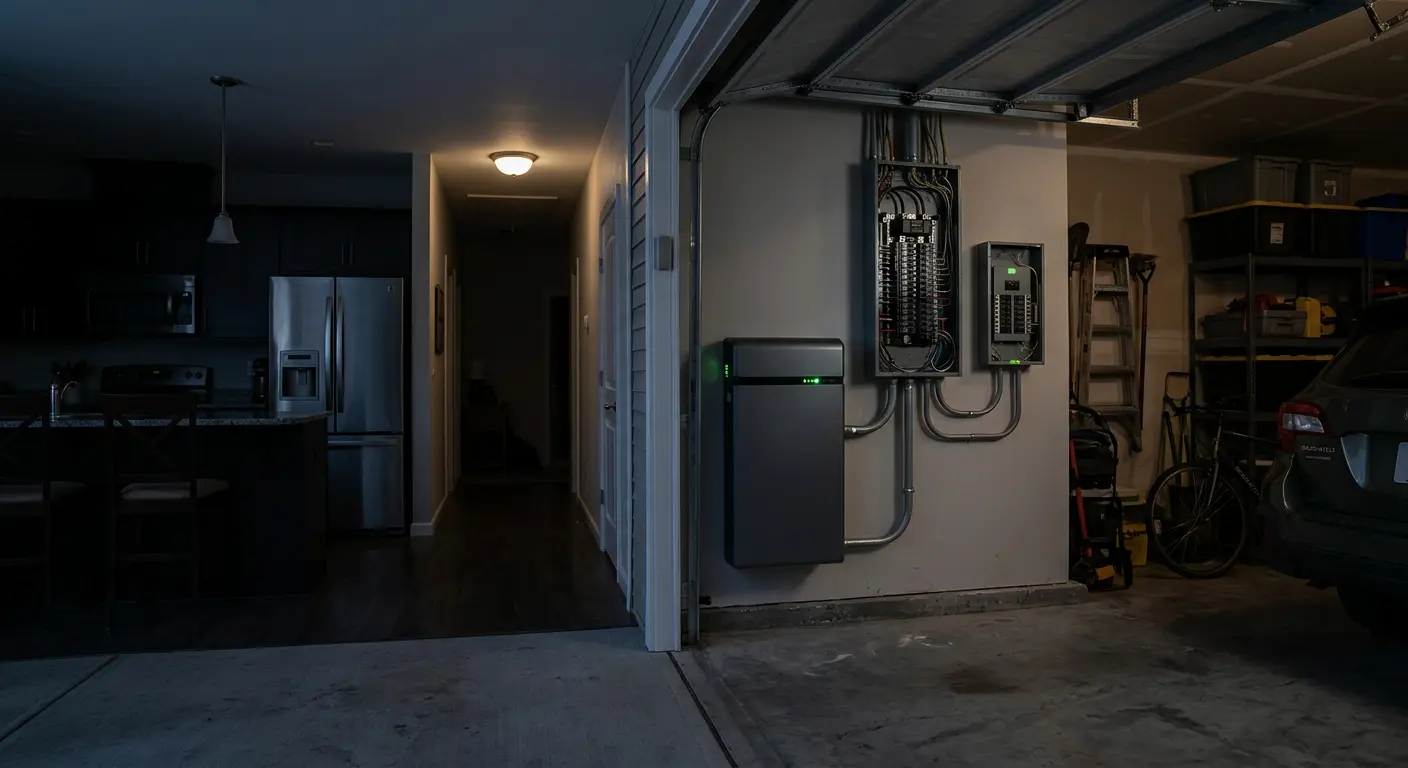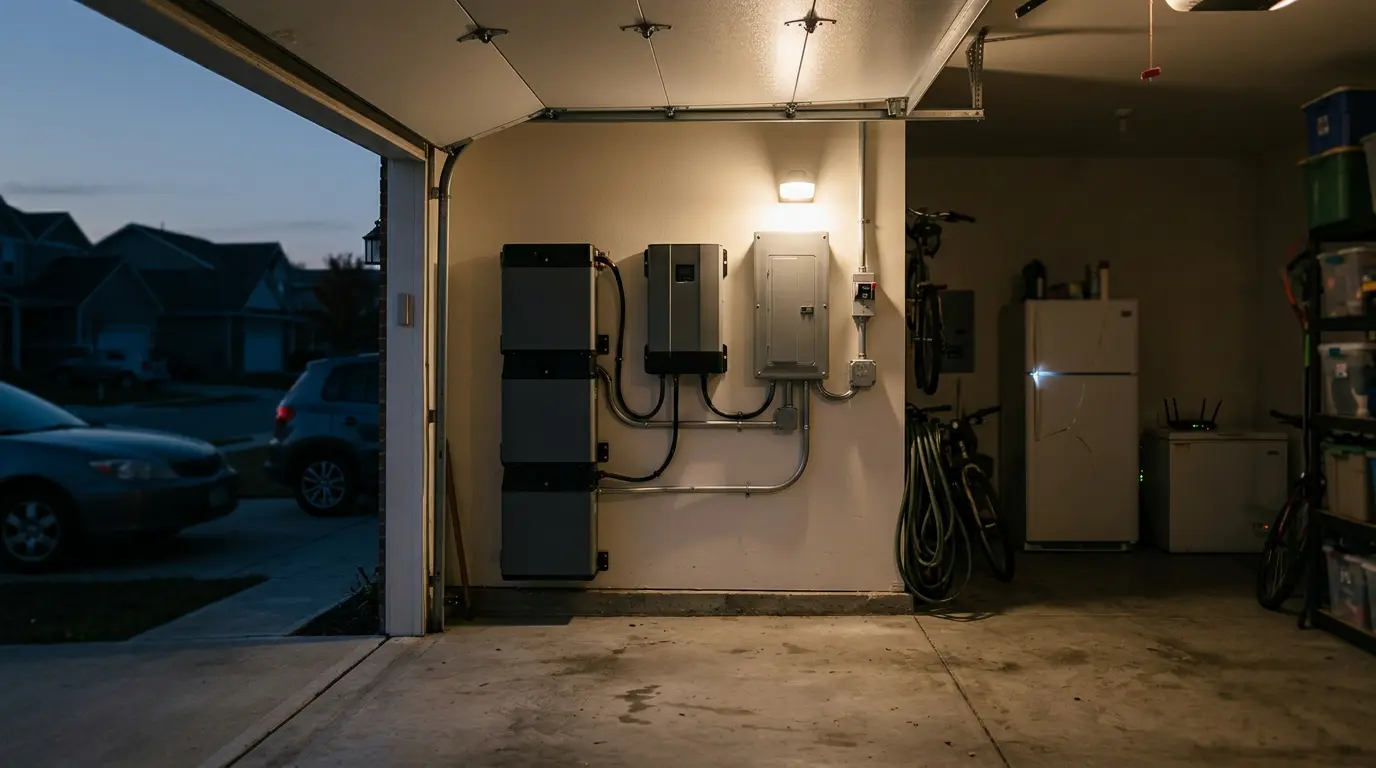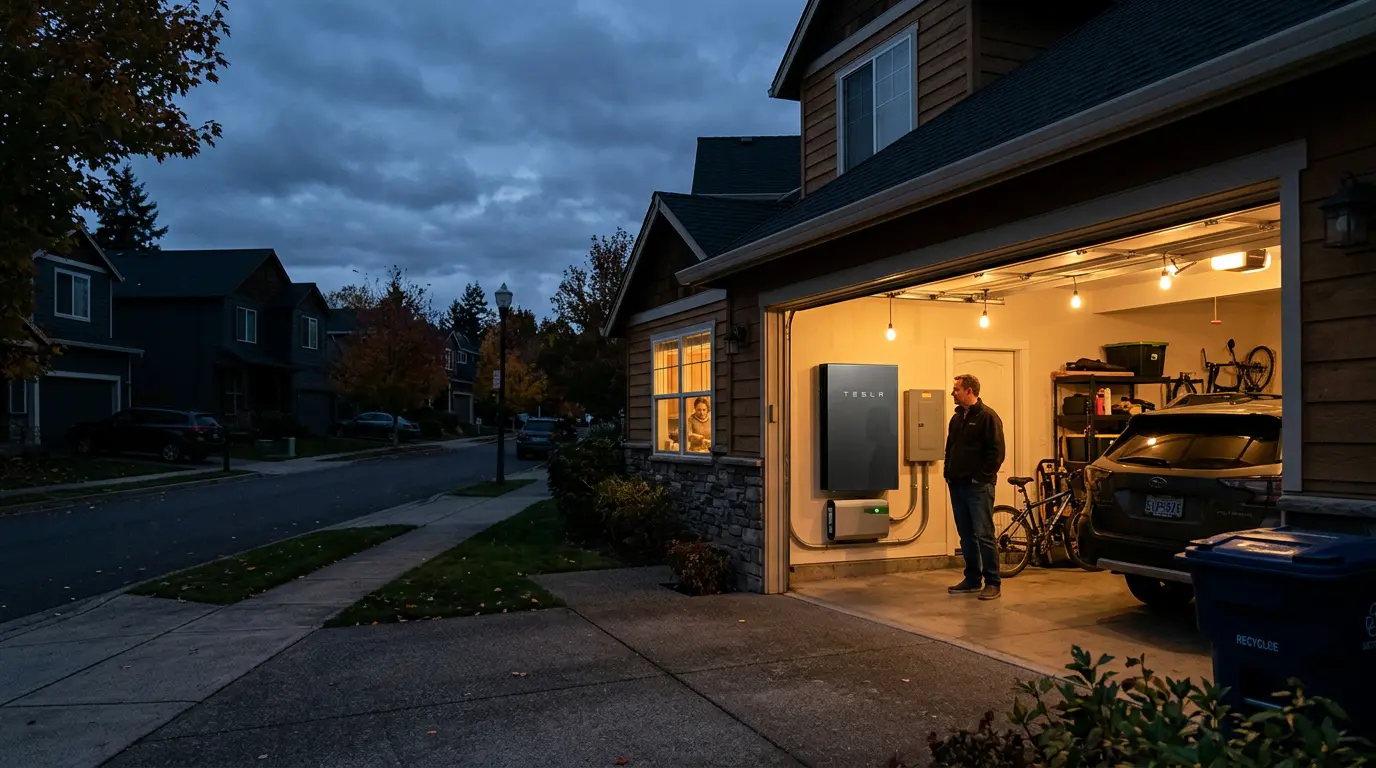
Yes, a compatible home battery can work without solar panels. It can charge from the utility grid and provide stored electricity during an outage, as Tesla documents for a Powerwall installed without solar. The important limitation is that the battery is a finite reserve unless another compatible charging source is available.
That means a battery only system may provide backup power, help manage electricity purchases, or do both. Whether it is a good fit depends on the system design, usable capacity, power output, supported circuits, utility rules, local installation requirements, and the value you place on outage protection. A battery can be useful without solar, but it is not a magic box that creates electricity indefinitely.
How a Home Battery Works Without Solar
A standalone battery energy storage system stores electricity and discharges it later. Without solar panels, the battery may charge from the utility grid through a process commonly called grid charging. It can then supply electricity to connected loads when the system is operating as designed.
The key phrase is “as designed.” A battery that charges from the grid while utility power is available is not automatically a backup system. Backup operation requires equipment and controls that can safely separate the home, or selected circuits, from the utility when the grid fails. This separation is often described as islanding.
A permanently installed system may include several parts beyond the battery cells:
- Battery modules that store electrical energy.
- An inverter or other power conversion equipment.
- Controls, disconnects, and monitoring equipment.
- A backup gateway, transfer switch, or comparable equipment that manages the connection between the home, battery, and utility.
- Wiring and load management equipment that determines which circuits receive backup power.
The exact architecture varies by product. Tesla documentation establishes that a Powerwall can charge from the grid and provide backup without solar in the cited configuration. That does not prove every battery model supports grid only installation, whole home backup, or the same charging options. The proposed model and installation design need to be verified in writing.
It is also important to separate grid only backup from off grid capability. A battery may provide power when the utility is unavailable, yet still depend on the utility for recharge during normal operation. If the grid goes down and no solar, generator, vehicle, or other approved charging source is connected, the stored energy eventually runs out.
For general background on storage and inverter functions, see the U.S. Department of Energy guidance on solar integration, storage, and inverters.
What Happens During a Power Outage Without Solar
During an outage, a backup capable battery can supply stored electricity to the circuits included in the installation. The battery does not need solar panels to discharge that stored energy. It does need an inverter and isolation equipment designed to keep the backed up circuits operating safely while the utility is unavailable.
Without another charging source, the battery eventually runs down. There is no universal runtime because the result depends on usable battery capacity, the connected loads, operating reserve, conversion losses, and system controls. A battery supporting a small group of carefully selected circuits will behave differently from one asked to serve numerous large loads.
Recharging during an outage is a separate question from discharging during an outage. Ask the installer to identify every approved charging source and whether the proposed system can use it while the grid is down. Generator compatibility is product specific. For example, the cited Tesla support information says a Powerwall installed without solar charges from the grid and does not charge from a generator. That limitation should not automatically be applied to other battery systems.
Backup scope also matters. Some installations serve a critical loads panel or selected circuits instead of the entire home. Large heating equipment, pumps, water heaters, air conditioning equipment, and other motor or high demand loads may exceed the inverter’s continuous or surge capability. “Whole home backup” is a design outcome, not an automatic feature included with every battery.
In practical terms, a battery without solar can be excellent at carrying stored energy through an outage, but it should not be described as an indefinitely renewable power source. For a prolonged outage, ask what happens after the stored energy is depleted and what equipment, if any, can recharge the system.
Capacity, Power Output, and Which Loads the Battery Can Run
Two ratings determine much of a battery system’s practical performance: energy capacity and power output. They are related, but they answer different questions.
- Capacity, measured in kilowatt hours or kWh: This describes the amount of stored energy available. It primarily affects how long connected loads can operate.
- Output, measured in kilowatts or kW, and sometimes kilovolt amperes or kVA: This describes how much power the system can provide at one time. It affects which loads can operate simultaneously.
A system can have substantial stored energy but still be unable to operate a particular combination of appliances if its inverter output is too low. Starting demand matters as well. Equipment with motors or other high starting current requirements may briefly need more power than it uses while running. That is why continuous output and peak or surge output both belong in the comparison.
Do not size a system from nominal battery capacity alone. Compare the manufacturer’s usable capacity, continuous output, peak output, reserve settings, operating temperature limits, conversion losses, and warranty limits. Those details are product specific and can materially change what the system delivers in actual use.
Before asking for a proposal, prepare a critical load list. For each load you want backed up, record:
- Running watts.
- Starting or surge demand.
- Expected hours of operation during an outage.
- Whether the load must operate at the same time as other equipment.
Then compare that list with the system’s continuous and peak output. Capacity helps answer “How long?” Output helps answer “What can run together?” Confusing those two measurements is one of the easiest ways to expect more from a battery than its design can provide.
Backup, Bill Management, or Both?
A standalone battery does not have to be used only for emergencies. It may provide backup power, shift when electricity is purchased, or do both, depending on the system configuration and the utility’s rate structure.
For bill management, the battery can charge during lower price periods and discharge later when electricity costs more, if the local utility tariff and system controls support that operation. This is commonly associated with a time of use rate. Some utilities may also offer storage programs or demand response opportunities, but availability varies by utility and jurisdiction.
A battery without solar does not automatically reduce electricity bills. Bill savings depend on the difference between electricity prices, the system’s charging and discharging behavior, equipment costs, degradation, and any available utility program. A system configured only for emergency backup may provide considerable outage value while producing little or no bill management value.
Evaluate those benefits separately:
- Outage value: What are the backed up circuits, and how useful is that protection for your household?
- Bill management value: Does the local tariff create a meaningful opportunity to shift electricity purchases?
- Program value: Does the utility offer a storage, export, or demand response program that applies to the proposed system?
- Project cost: How do installed cost, financing, maintenance, warranty limits, and degradation compare with the expected benefits?
The Department of Energy’s storage guidance explains that storage can shift energy use over time and can operate with or without distributed generation. The local tariff still controls whether that opportunity is financially meaningful.
Federal Tax Credit and Other Financial Considerations
The federal Residential Clean Energy Credit information is date sensitive. The IRS source reviewed states that qualifying battery storage with capacity of at least 3 kWh was eligible for the 30 percent credit for qualifying property placed in service from 2022 through December 31, 2025.
The same IRS guidance states that the credit is unavailable for property placed in service after December 31, 2025. As of the research date used for this article, October 3, 2026, the cited federal credit should be treated as expired unless later legislation and current IRS guidance are separately verified. Do not assume that a battery installed in 2026 qualifies, and do not assume that a replacement or extension exists.
Individual eligibility also depends on tax circumstances. State, local, utility, and later federal incentives require separate verification. The IRS Residential Clean Energy Credit page is the appropriate source for the federal information described here, but it is not a substitute for tax advice about a specific situation.
For a broader financial evaluation, compare the full installed cost with expected bill savings, the value of outage protection, financing costs, maintenance, degradation, warranty limits, and verified incentives. A tax credit or utility program can affect the calculation, but it should not be treated as the calculation.
Installation, Utility Approval, and Safety Requirements
A battery only installation can still involve electrical, building, fire safety, and utility considerations. The absence of solar panels does not automatically remove those issues, especially when the battery charges from the grid or may export electricity to it.
Local electrical, building, and fire authorities determine applicable permits, inspections, siting rules, and adopted code editions. Requirements can differ based on the product, location, installation configuration, and authority having jurisdiction.
NFPA 855 and NFPA 70, including NEC Article 706, provide standards and code related resources for energy storage and electrical installations. Those standards and model codes are not automatically binding law everywhere. Their legal effect depends on local adoption and the code edition in force where the project is located. The National Fire Protection Association’s energy storage resources provide useful context, but local authorities control the requirements for a particular installation.
Utility involvement may apply even when there are no solar panels. A battery that only provides backup may be treated differently from one that exports power, participates in a utility program, or follows a tariff that controls grid charging and discharge. Ask the installer or utility to confirm whether the project involves:
- Interconnection approval.
- A new meter configuration.
- Export controls.
- Enrollment in a storage or demand response program.
- Restrictions on grid charging or battery discharge.
The Department of Energy’s discussion of storage interconnection describes challenges involving standalone storage as well as solar and storage systems. It does not establish one nationwide approval process for every homeowner.
Before work begins, verify permits, inspections, equipment listing or certification, siting and clearance requirements, fire code considerations, and installer licensing with the relevant local authorities. Indoor and outdoor placement rules, fire separation, and other installation details remain product and jurisdiction specific.
How to Evaluate a Standalone Battery System
Start by determining whether the proposed equipment is actually backup capable, rather than merely capable of operating while the utility is present. Ask for the system design and operating behavior in writing, not just a general statement that the battery can work without solar.
- Document the backup design. Identify the exact battery, inverter, backup gateway or transfer equipment, backed up circuits, automatic transfer behavior, and outage operating modes.
- Build a critical load list. Record running watts, starting demand, expected operating hours, and which loads need to run simultaneously.
- Compare the important ratings. Review usable kWh, continuous kW or kVA, peak or surge output, reserve settings, round trip efficiency, operating limits, and warranty limits.
- Confirm recharge options. Ask whether the system can recharge from the utility, solar added later, a generator, a vehicle, or another approved source. Then ask specifically whether recharge is possible during an outage.
- Check generator compatibility. Do not assume that a generator can charge every battery. Compatibility depends on the proposed model and system design.
- Confirm utility requirements. Have the installer or utility explain interconnection, meter, export, charging, discharge, and program requirements.
- Verify local approvals. Confirm permits, inspections, siting rules, fire safety requirements, equipment certification, and installer licensing before proceeding.
Portable power stations and permanently installed grid interactive batteries should not be treated as interchangeable. Their transfer equipment, output, charging inputs, permitted uses, and installation rules may differ. The system needs to be evaluated as a complete design, including how it connects to the home and what happens when utility power fails.
For financial decisions, use the actual utility tariff and verified incentives. A standalone battery may be a sensible purchase for outage protection even when bill savings are limited, or it may offer both benefits when the local rate structure supports energy shifting. The answer belongs in the project numbers, not in a generic promise.
Frequently Asked Questions
Can a home battery charge from the electrical grid without solar panels?
Yes, if the product and installation support grid charging. Tesla documents this capability for a Powerwall installed without solar, but the feature should not be assumed for every battery model.
How long will a battery only backup system run during a power outage?
There is no universal runtime. Duration depends on usable capacity, connected loads, reserve settings, conversion losses, and system controls. Without another charging source, the stored energy eventually runs out.
Can a standalone home battery recharge while the grid is down?
Only if the system has an approved charging source and the equipment is designed to use it during an outage. Verify compatibility with the proposed battery, inverter, and controls. Grid charging itself is not available while the grid is down.
What appliances can a battery only system power?
That depends on the system’s continuous and surge output, the backed up circuits, and the appliance demands. Use a load list that includes running watts, starting demand, expected use, and simultaneous operation. Whole home backup is not automatic.
Do I need a transfer switch or backup gateway for a home battery?
Backup operation requires equipment capable of safely isolating the backed up circuits from the utility. The exact equipment may be a transfer switch, backup gateway, or another product specific arrangement. Ask the installer to identify it in the written design.
Does a battery without solar reduce electricity bills?
It may, if the local utility rate structure allows electricity to be purchased at lower price periods and used later at higher price periods, or if a qualifying utility program applies. Savings are not automatic and depend on local prices, equipment costs, degradation, and program rules.
Does a standalone battery require utility approval or interconnection?
Utility involvement varies by jurisdiction and system configuration. A system that charges from or exports to the grid may have different requirements from one configured only for backup. Confirm the process with the utility or installer.
Are home batteries still eligible for a federal tax credit in 2026?
The IRS guidance reviewed for this article states that the Residential Clean Energy Credit is unavailable for qualifying property placed in service after December 31, 2025. Later legislation or other incentives would need to be separately verified, and individual tax eligibility depends on the applicable circumstances.
A home battery can work without solar, provided the battery and installation are designed for grid charging and the desired backup function. The practical questions are how much usable energy it stores, how much power it can deliver, which circuits it can support, how it recharges, and what the local utility and authorities require. Get those details documented before choosing the equipment, because “battery without solar” describes a configuration, not a guarantee of a particular result.