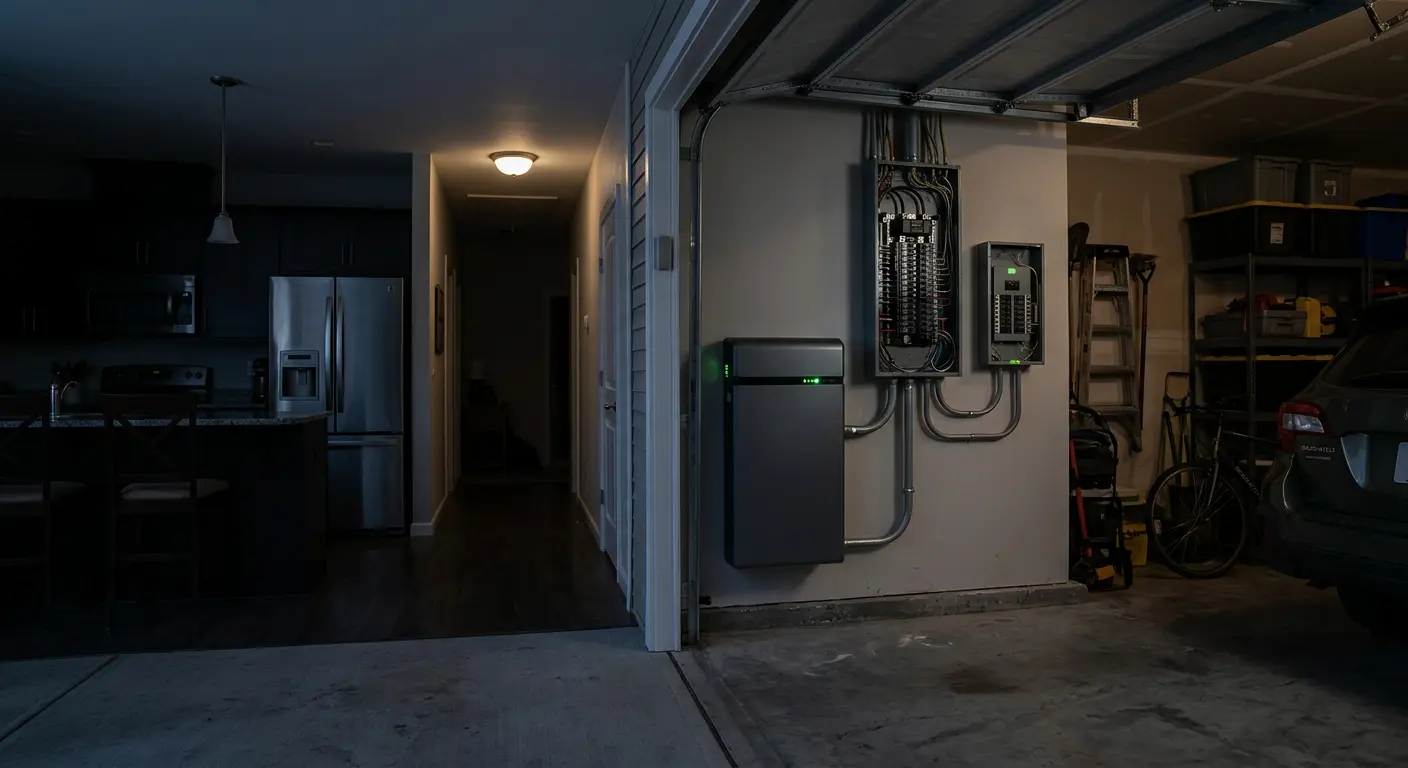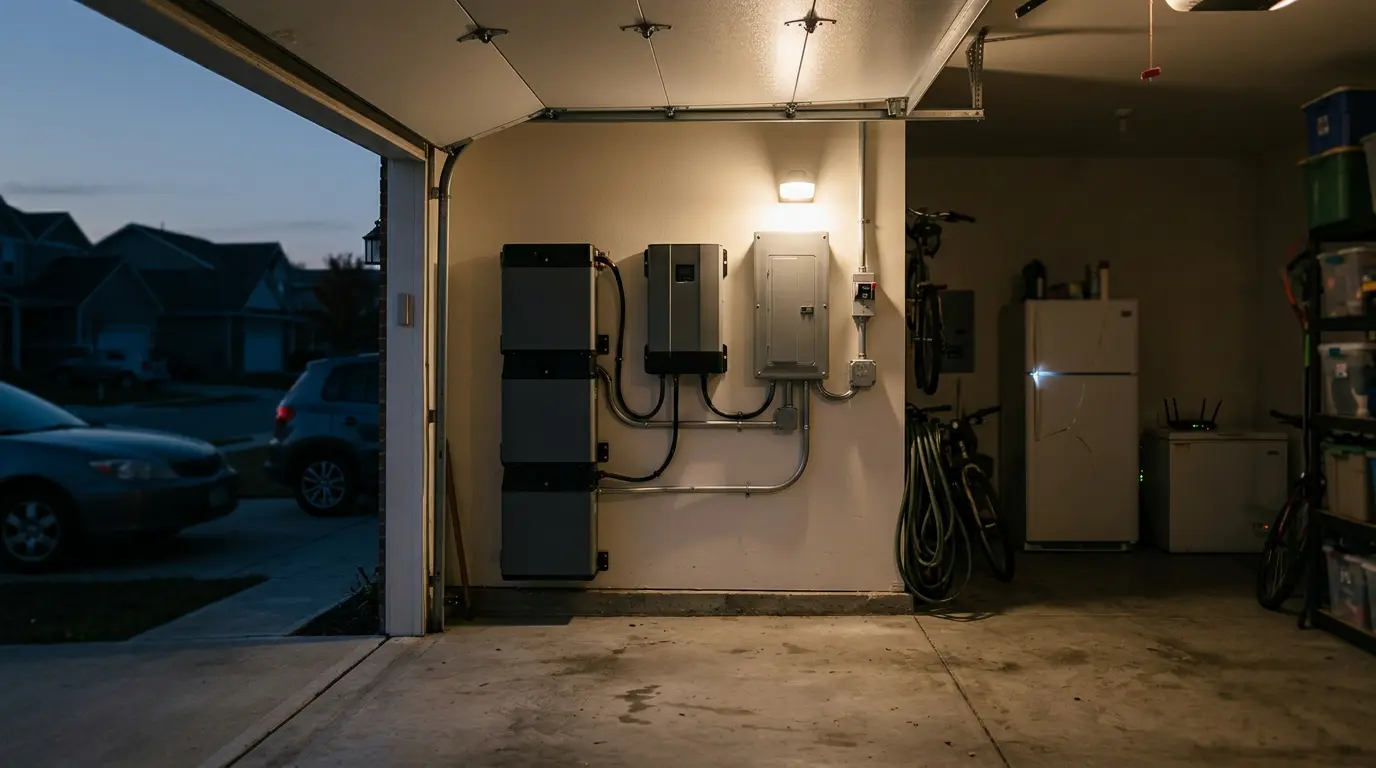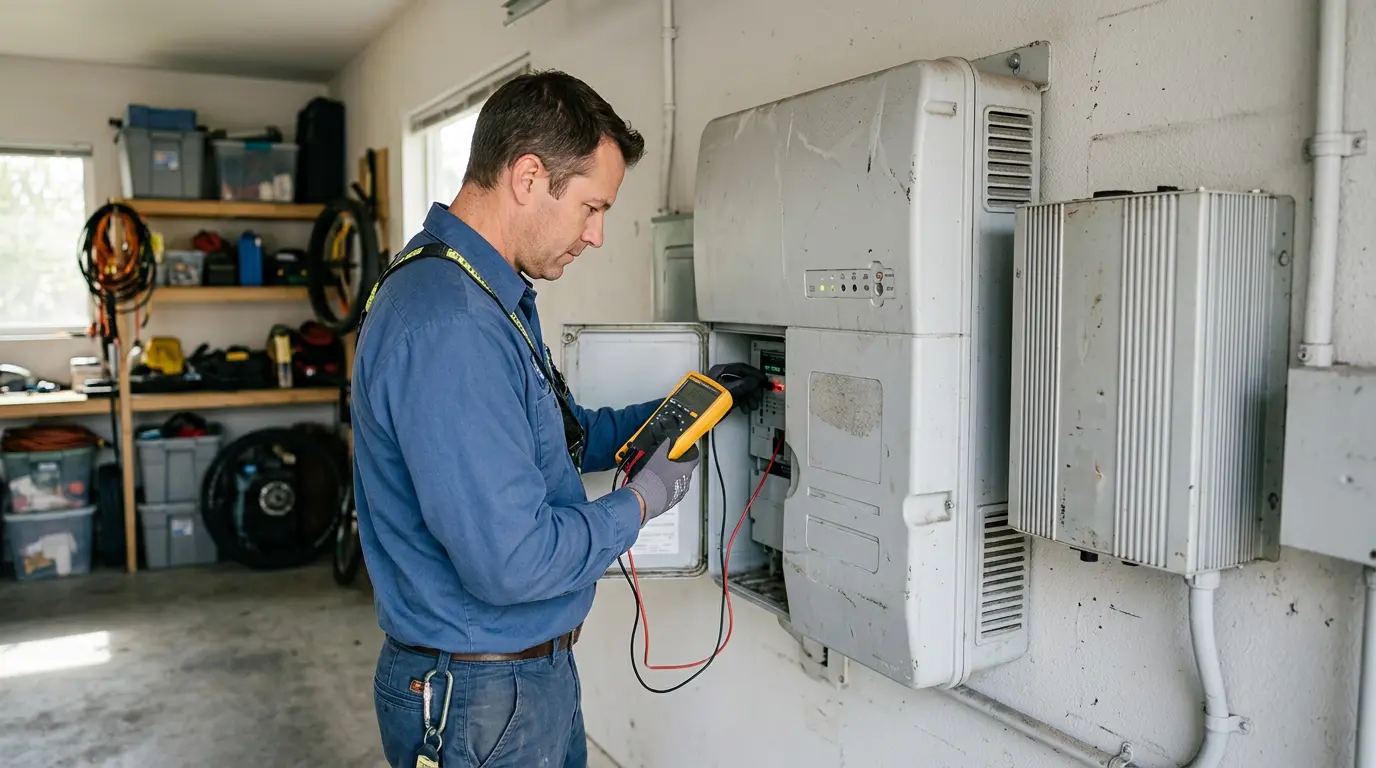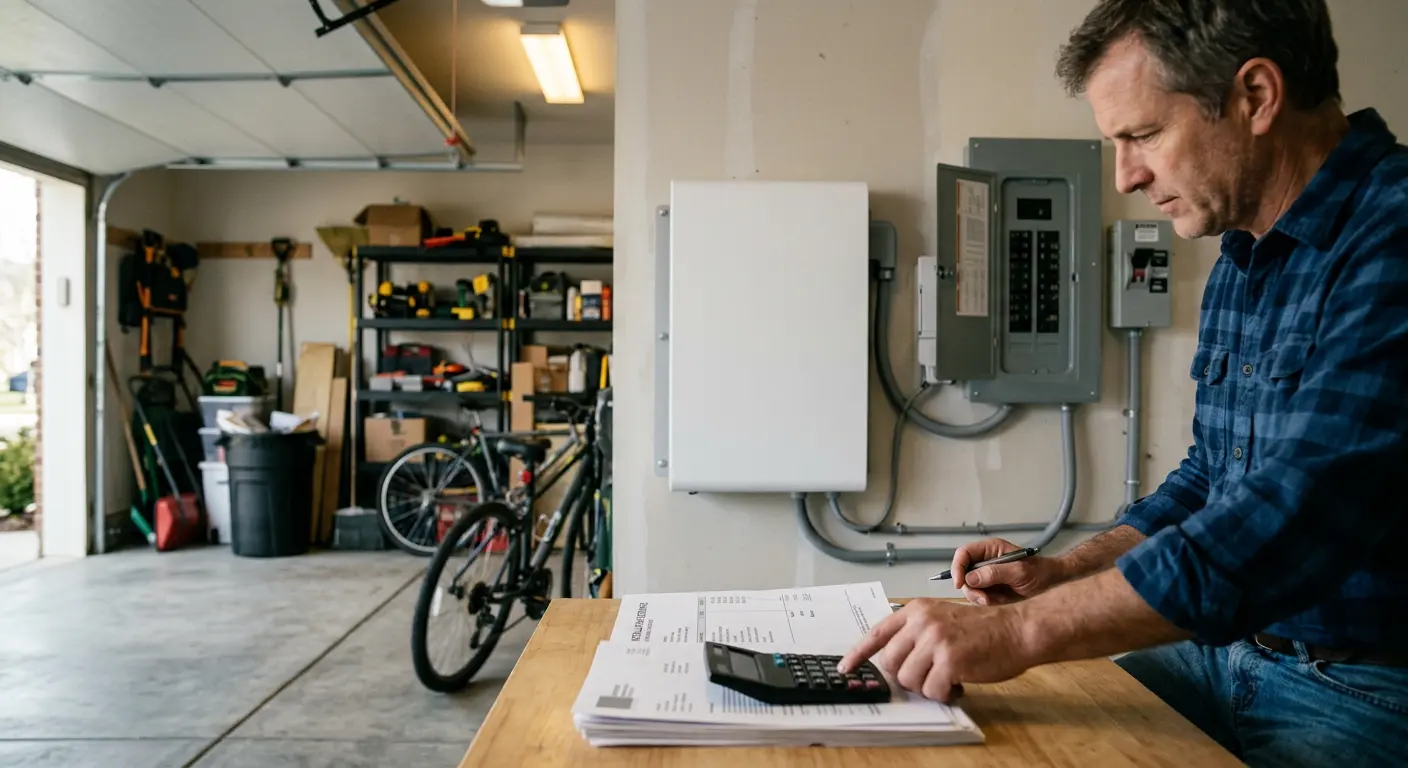
A typical U.S. home battery installation costs about $15,650 before incentives for approximately 13.5 kWh of storage, based on EnergySage quote data from the first half of 2026. That figure is a useful starting point, not a guaranteed national price. Your final cost can change substantially based on the battery’s usable capacity, power output, brand, location, backup goals, and the electrical work your home needs.
The most reliable way to budget is to compare itemized quotes that show the equipment, installation work, electrical modifications, permits, and available incentives separately. A battery for essential appliances is a different project from a system intended to back up an entire home, especially if the home includes large electrical loads.
How Much Does a Home Battery Cost?
EnergySage reports an average installed cost of approximately $15,650 before incentives for a typical 13.5 kWh residential battery installation in the first half of 2026. The data comes from marketplace quotes, so it does not represent every installer, region, home, or system configuration.
Quoted prices also vary by brand. In EnergySage’s second half of 2025 data, the 10 most quoted brands ranged from approximately $706 to $1,437 per kWh. Those figures should not be treated as a universal price list because the quoted systems differed in size, location, equipment, and installation requirements.
For current market context, you can review EnergySage’s residential battery cost data. A local written quote is still more useful for setting your actual budget.
What Determines the Price of a Home Battery?
The battery itself is only one part of the project. Two homes with similarly sized batteries can receive very different quotes because the equipment configuration and electrical work are not the same.
- Storage capacity: More usable kWh generally means more stored energy available for the home, but nominal capacity and usable capacity are not identical.
- Power output: The battery’s continuous and peak power ratings determine how much load it can serve at one time.
- Brand and system design: Battery equipment, inverters, gateways, controls, monitoring, and warranty terms vary by manufacturer and configuration.
- Location: Local labor, permitting, utility requirements, and market conditions can affect the installed price.
- Backup objective: Essential appliance backup may require a different system from whole home backup.
- Existing electrical equipment: A panel upgrade, subpanel, load management equipment, or other wiring changes may add to the project.
- Solar system configuration: Adding storage to existing solar can require different equipment and compatibility work than installing solar and storage together.
Capacity Is Not the Same as Power
A battery’s capacity is measured in kilowatt hours, or kWh. This describes the amount of energy the battery can store. Power is measured in kilowatts, or kW, and describes how much electricity the battery can deliver at a given moment.
That distinction matters when sizing backup. A battery can have enough stored energy but still lack the power rating needed to start or operate a high demand appliance. Ask the installer to state the proposed usable kWh, continuous kW, peak or surge kW, efficiency, and estimated runtime for the loads you want backed up.
Usable Capacity and Nominal Capacity
Nominal capacity describes the battery’s maximum stated storage. Usable capacity describes the energy available for discharge under the manufacturer’s measurement method. Depth of discharge, efficiency, and the way the system measures energy can affect what the homeowner can actually use.
When comparing quotes, check whether the advertised kWh figure is nominal or usable. Also ask whether the stated efficiency applies to the battery alone or to the complete path from solar panels through the battery and into the home.
What Is Included in a Home Battery Installation Quote?
A professional quote should make clear what is included and what could become an extra charge. Battery projects often involve more than placing a storage unit beside the home and connecting a few wires.
- Battery equipment
- Inverter, gateway, or related control equipment
- Installation labor
- Permits and inspection
- Interconnection work and utility coordination
- Wiring and conduit
- Critical load panel or load management equipment
- Main panel, subpanel, or other electrical upgrades
- Taxes, monitoring, and optional maintenance
Do not assume that a low equipment price represents a low project price. A quote that leaves out electrical work, permitting, or backup load equipment may look attractive until those items appear later.
How Much Does It Cost to Add a Battery to Existing Solar?
There is no single reliable price for adding a battery to an existing solar system. The project may require different equipment, wiring, controls, inverter compatibility work, permitting, or utility coordination than a new solar and storage installation.
Ask the installer to identify whether the quote includes solar panels, an inverter replacement, permits, interconnection work, and any changes needed to connect the new battery to the existing system. The quote should also explain whether the battery can provide the backup function you want with the current solar equipment.
Existing solar can simplify some parts of a project, but it should not be assumed to make every battery installation straightforward. Compatibility and electrical configuration need to be checked at the property.
Does a Home Battery Require a Panel Upgrade?
Not every home battery installation requires a main panel replacement. Some homes may be able to use the existing service, while others may need a panel upgrade, subpanel, smart panel, load management equipment, or other electrical modifications.
A California Public Utilities Commission market assessment found that roughly half of residential battery customers in the studied California market required an electrical panel upgrade. That was historical California program market evidence from primarily 2020 and 2021 projects, not a current nationwide percentage. It should not be applied automatically to every home.
Before accepting a quote, ask the installer to perform a load calculation and inspect the main service panel. Confirm whether the price includes a panel upgrade, critical load panel, load management equipment, transfer equipment, wiring, and any utility work that may be needed.
How Your Backup Goal Changes the Cost
The amount of battery storage you need depends on what you want the system to do. Backup for refrigeration, lighting, communications, and selected circuits may require less capacity than whole home backup.
Large electrical loads such as central air conditioning, electric heating, water heating, or well pumps can affect both the required capacity and the power rating. The installer should evaluate these requirements separately because stored energy and instantaneous power are different limits.
Battery value can also come from using more of your own solar energy, managing time of use electricity rates, or participating in a utility program. Whether those benefits justify the purchase depends on your utility tariff, export compensation, outage needs, cycling limits, and available incentives. There is no universal payback period supported by the available data.
Incentives and the 2026 Federal Tax Credit
State, utility, local, and tribal programs may reduce the cost of a home battery, but eligibility varies by location and program. Requirements may depend on income, utility territory, outage risk, equipment, installation date, preapproval, or available funding.
California’s Self Generation Incentive Program, commonly called SGIP, is one example of a state storage incentive. It includes different categories and incentive levels for eligible customers. California’s program is not a nationwide rule, and its terms can change.
For installations completed after December 31, 2025, the federal Residential Clean Energy Credit no longer applies to new residential battery expenditures under the supplied IRS guidance. Paying before that date does not automatically preserve the credit when the original installation is completed afterward. For a 2026 project, do not subtract the former federal 30 percent credit from your budget unless a qualified tax professional confirms that a specific prior expenditure remains eligible under applicable transition or carryforward rules.
Review the IRS guidance on the Residential Clean Energy Credit for the federal tax treatment. For state and utility programs, check the relevant energy office, utility, local government, or tribal program directly.
How to Compare Home Battery Quotes
Request written, itemized quotes from installers. Comparing only the total price can hide meaningful differences in usable storage, power output, electrical work, warranty coverage, and the equipment included.
- State your intended use, such as outage backup, solar self consumption, time of use bill management, whole home backup, or a combination.
- Ask for usable kWh, continuous kW, peak or surge kW, efficiency, and estimated runtime for named appliances.
- Confirm whether the quote includes the battery, inverter or gateway, labor, permits, inspection, interconnection, wiring, conduit, monitoring, and taxes.
- Ask whether a critical load panel, smart panel, load management equipment, panel upgrade, or utility work is included.
- Confirm whether the system is being added to existing solar and whether inverter replacement or compatibility work is required.
- Compare the warranty term, cycle or throughput limits, degradation guarantee, replacement coverage, labor coverage, and warranty provider stability.
- Verify any incentive’s application deadline, equipment rules, preapproval requirement, installation deadline, funding status, and paperwork responsibility.
Common Home Battery Cost Misconceptions
Misconception: You can estimate every battery project by multiplying the advertised kWh by one national price.
Correction: Brand, location, system size, equipment configuration, quote population, and electrical requirements create substantial variation.
Misconception: A 13.5 kWh battery can deliver 13.5 kW of power.
Correction: kWh measures stored energy, while kW measures delivery capability at a particular moment. A battery may have sufficient stored energy but still be unable to start or run a high demand appliance.
Misconception: Paying for a battery before December 31, 2025 preserved the federal credit.
Correction: The supplied IRS guidance ties the relevant expenditure date to completion of the original installation for this purpose. A payment made before the deadline does not automatically qualify an installation completed afterward.
Misconception: Every home battery installation requires a main panel replacement.
Correction: Electrical upgrades are project specific. Some homes need them, while others may use existing service or alternative load management equipment.
Misconception: A state battery rebate is available to homeowners nationwide.
Correction: Rebates come from particular states, utilities, local governments, tribal programs, or other programs with their own eligibility and funding rules.
Home Battery Cost FAQ
How much does a 10 kWh or 13.5 kWh home battery cost installed?
EnergySage reported an average installed cost of about $15,650 before incentives for approximately 13.5 kWh of storage in first half of 2026 quote data. A 10 kWh system cannot be assigned a reliable universal price from the supplied information because equipment, location, installation work, and usable capacity vary.
What is included in a home battery installation quote?
Quotes may include the battery, inverter or gateway, labor, permits, inspection, interconnection, wiring, conduit, backup load equipment, monitoring, and taxes. Ask for each item separately, including any panel upgrade or utility work.
How much does it cost to add a battery to existing solar panels?
The supplied information does not establish one universal price. Adding storage to existing solar may require compatibility work, different wiring, controls, inverter changes, permitting, or interconnection work. The quote should identify exactly what is included.
Do I need an electrical panel upgrade for a home battery?
Not necessarily. The answer depends on the home’s electrical service, load calculation, equipment, and backup design. An installer should inspect the panel and explain whether a panel upgrade, subpanel, critical load panel, or load management equipment is needed.
What is the difference between battery capacity and power output?
Capacity, measured in kWh, describes stored energy. Power output, measured in kW, describes how much electricity the system can deliver at once. Both specifications matter when deciding which appliances the battery can support.
Is the federal solar battery tax credit still available in 2026?
The supplied IRS guidance states that the former Residential Clean Energy Credit does not apply to residential battery expenditures made after December 31, 2025. A tax professional should review any specific prior expenditure or transition issue.
Are home battery rebates available through my state or utility?
Some state, utility, local, and tribal programs may offer incentives, but availability and eligibility are location specific. Confirm the rules, funding, deadlines, equipment requirements, and preapproval process with the applicable program.
How long does a home battery last, and what replacement costs should I budget for?
The supplied information does not establish a universal service life or replacement price. Compare each system’s warranty term, cycle or throughput limits, degradation guarantee, replacement coverage, labor coverage, and warranty provider stability before choosing a system.
The Bottom Line on Home Battery Cost
A reasonable starting point for a U.S. residential battery budget is about $15,650 before incentives for approximately 13.5 kWh of storage, but the number is only a market benchmark. Your actual price depends on usable capacity, power output, backup goals, brand, location, solar compatibility, and electrical work.
Before signing, compare itemized quotes and verify the system’s usable kWh, continuous and peak kW, included electrical work, warranty terms, and local incentives. Those details matter far more than a single headline price.