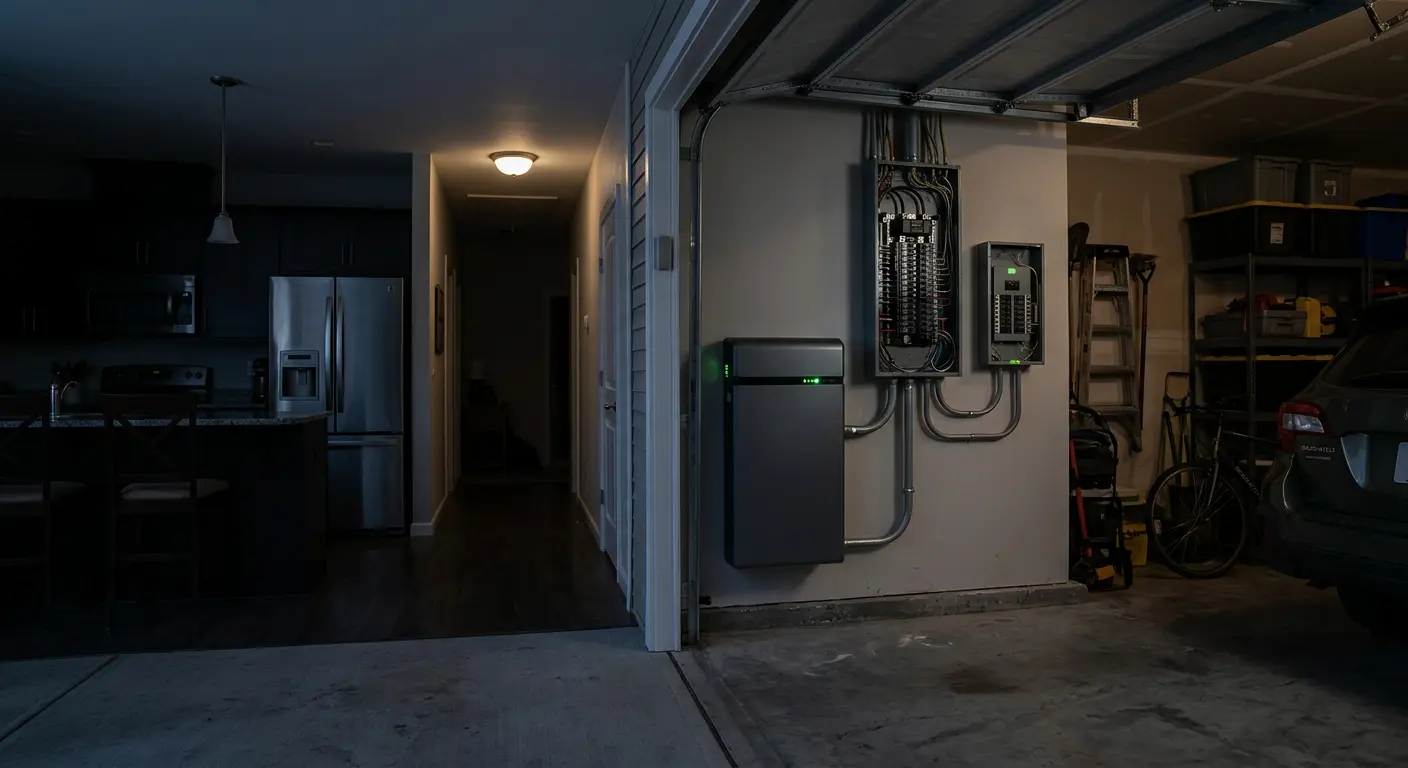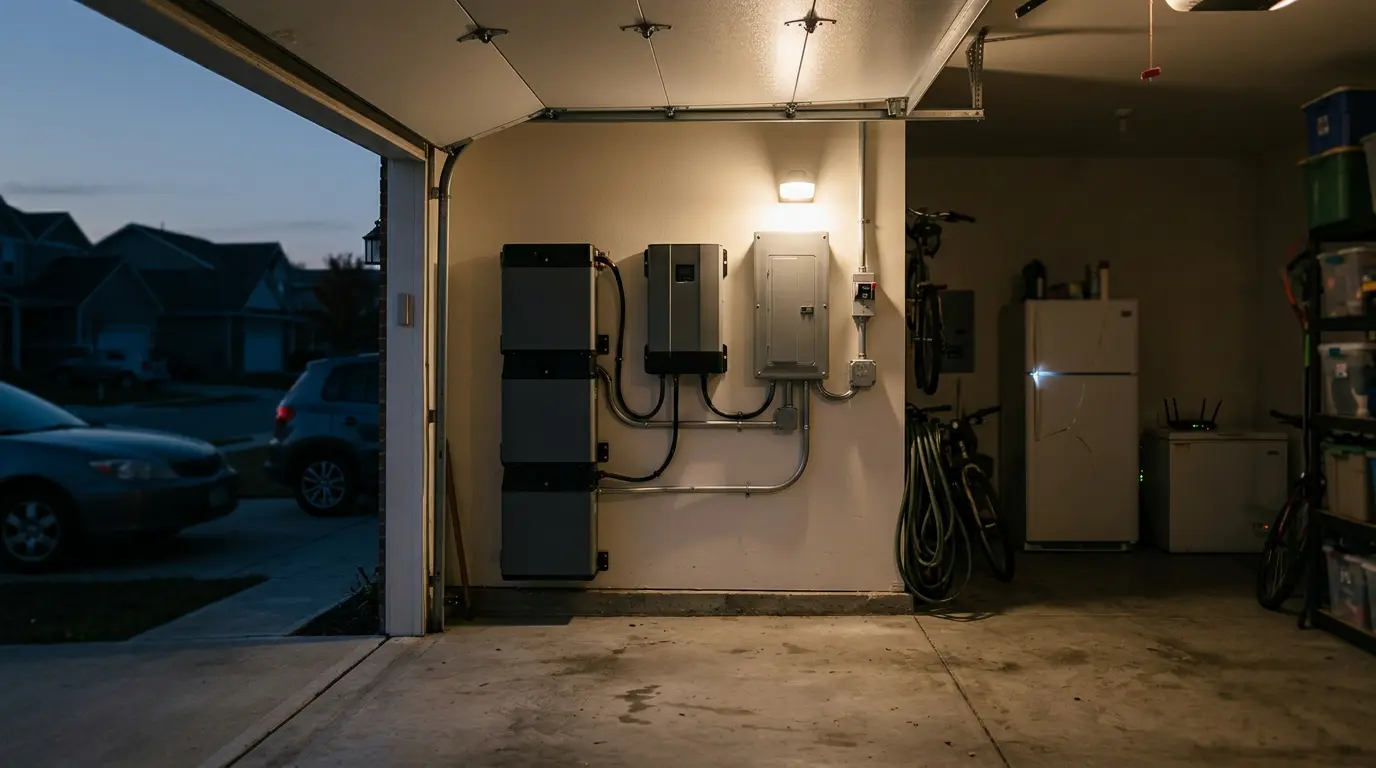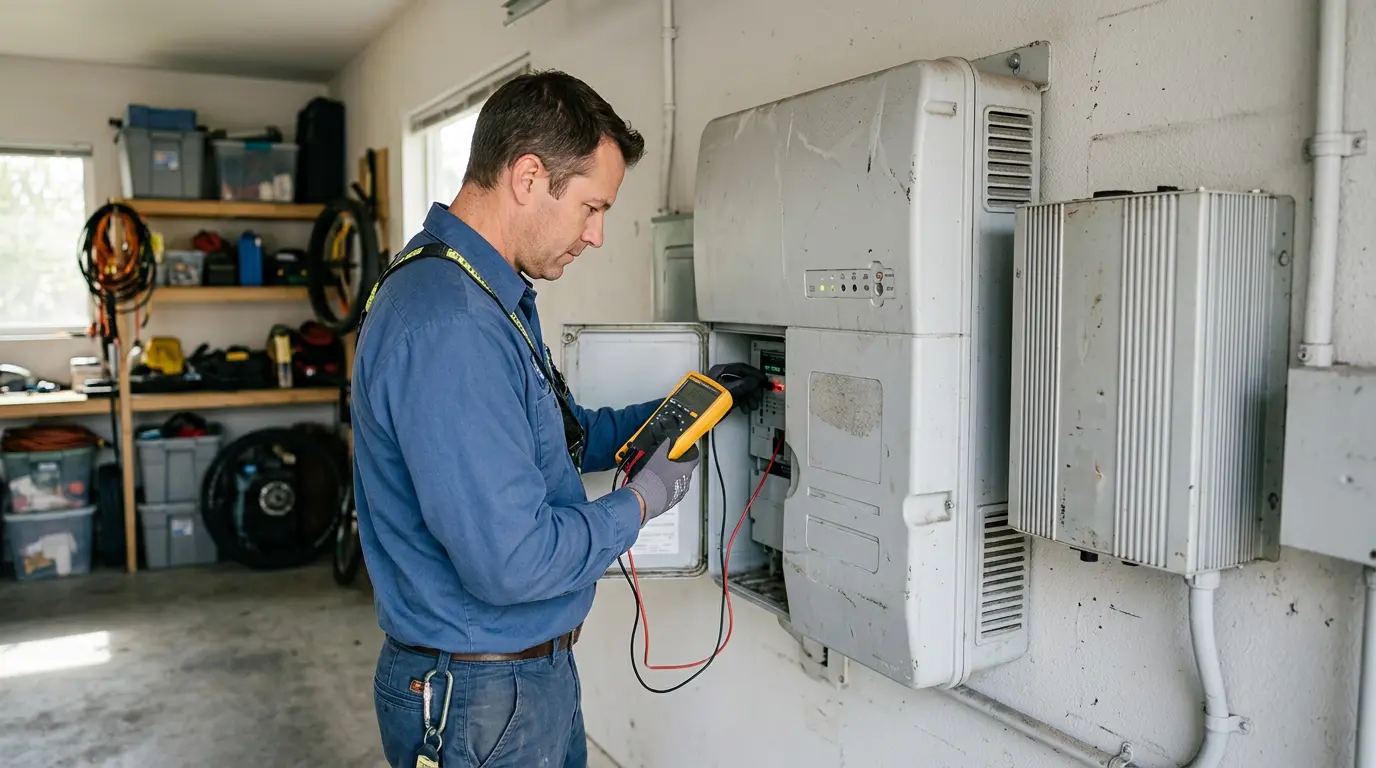
There is no universal date when every home battery needs replacing. Age matters, but it is only one part of the decision. Replacement usually becomes relevant when the battery no longer provides the usable energy or power your household needs, develops a safety critical fault, or reaches the applicable warranty or usage limit.
A battery can continue operating after its capacity has declined or its warranty has expired. The practical question is whether it remains safe, reliable, and useful for your backup circuits and energy management goals. Before approving a replacement, check capacity, power delivery, fault history, warranty terms, and the condition of the rest of the system.
The Short Answer: A Home Battery Needs Replacing When It No Longer Meets the Need
A home battery is generally due for replacement when one or more of these conditions applies:
- It no longer stores enough usable energy for the circuits, appliances, or outage duration you expect.
- It cannot deliver the power needed by your backup loads, even if it still holds a reasonable amount of energy.
- It has a safety critical fault or physical damage.
- It has reached the time, cycle, or discharged throughput limit that applies under its warranty.
Those triggers are not interchangeable. A battery may provide adequate power for a short period but not enough energy to keep essential loads running through the intended outage. It may also retain substantial energy capacity while failing to deliver the required instantaneous power because of the inverter, battery management system, thermal conditions, or internal resistance.
Reduced backup runtime does not automatically prove that the battery cells need replacing. The inverter, transfer equipment, controls, firmware, communications equipment, wiring, solar array, settings, or load configuration could be responsible. A written diagnosis of the complete system is more useful than treating a disappointing app reading as a verdict.
The U.S. Department of Energy describes battery degradation as a loss of rated energy capacity caused by wear and chemical changes. That loss does not create a universal consumer replacement threshold. A battery may remain serviceable below its original rating if its actual performance still meets the household’s needs, its condition is safe, and continued operation is permitted by the manufacturer. The Energy Storage Grand Challenge Roadmap provides the underlying framework for these storage concepts.
How Long Residential Home Batteries Usually Last
Residential lithium ion systems are commonly covered by warranties lasting roughly 10 to 15 years. That range describes common warranty periods, not a guaranteed service life or an automatic replacement date. The exact terms depend on the model, country, activation date, installation, application, and operating conditions.
A warranty may end at the earliest of several limits, such as a stated number of years, a cycle count, a discharged throughput limit, or a required capacity retention level. In other words, a “10 year battery” does not necessarily provide unlimited daily cycling for 10 years.
Manufacturer warranties show why the exact document matters:
- Tesla’s U.S. Powerwall warranty provides 10 years of defect coverage and warrants 70 percent energy retention at 10 years, subject to the product’s application and throughput terms. For certain applications outside the listed solar self consumption, time based control, and backup uses, or combinations involving other uses, the warranty includes a 37.8 MWh aggregate throughput limitation.
- Enphase’s U.S. IQ Battery 10C warranty ends at the earlier of 15 years or 6,000 discharged cycles. Its stated warranty terms specify 60 percent capacity at the applicable warranty endpoint, under the stated operating conditions.
These are product specific U.S. examples, not universal standards. Tesla’s 70 percent figure and Enphase’s 60 percent figure are contractual minimums for the identified products and conditions. They do not define the point at which every battery has failed, nor do they tell every homeowner when replacement makes practical sense. The applicable documents are the Tesla Powerwall Limited Warranty and the Enphase Energy Limited Warranty for IQ Battery 10C and 10CS.
A warranty endpoint can limit contractual protection without making the battery instantly unusable or unsafe. The reverse is also true: a battery may need attention before the warranty ends if it no longer supports essential loads or develops a serious fault.
Capacity Loss, Power Loss, and Battery Aging
Usable energy capacity is the amount of energy the system can actually provide for the homeowner’s intended use. It is not necessarily the same as the battery’s nameplate capacity, which is the rated figure shown for the product. Capacity retention describes how much of that original capability remains.
Capacity loss is normally gradual rather than an automatic end of life event. A battery can continue operating below its original rating. The important question is whether the remaining usable capacity covers the circuits, appliances, outage duration, and energy management tasks the system is supposed to handle.
Battery aging has two connected parts. Calendar aging occurs with time, even when cycling is limited. Cycle aging is associated with charging and discharging. Temperature, average state of charge, depth and frequency of cycling, charging and discharging rate, chemistry, and system controls can all affect the result. They do not affect every system in exactly the same way, which is why age alone is a poor prediction tool.
Depth of discharge, cycle life, calendar life, and degradation factor are related but distinct concepts. A generic cycle number cannot reliably predict how much usable energy remains in a particular installation. The National Laboratory of the Rockies discussion of battery lifespan addresses how calendar time, cycling, temperature, state of charge, and operating profiles interact in battery life modeling.
Do not apply residential lithium ion expectations to lead acid or older off grid systems. Chemistry, maintenance needs, depth of discharge limits, cycle life, and replacement timing can differ substantially.
Warning Signs That Require Immediate Safety Action
Some symptoms are not ordinary signs of gradual capacity loss. Abnormal or excessive heat, swelling, bulging, a changed shape, leakage, unusual odor, hissing, cracking, popping, smoke, visible damage, or water exposure can indicate a potentially dangerous battery failure.
If any of these signs are present, stop using the system if it is safe to do so and follow the product manual and qualified service guidance for shutdown steps. If there is a fire or dangerous active failure, leave the area and contact emergency services where appropriate.
Do not charge, open, puncture, or attempt to repair a damaged or submerged lithium ion battery. Exact shutdown procedures vary by permanently installed system, so a universal sequence should not be improvised. The U.S. Fire Administration and NFPA battery fire safety guidance provides general lithium ion safety information, but it does not replace the installed system’s instructions or local emergency direction.
Safety symptoms should never be placed on a “monitor it for now” schedule. Capacity planning can wait. Smoke and swelling should not.
How to Check Whether the Battery Really Needs Replacing
Before approving a replacement, gather information about both the battery and the rest of the backup system. Start with the exact product name, model, serial number, installation or activation date, and warranty document for the installed unit.
Ask an installer or manufacturer qualified technician to document the system’s actual performance. Useful information may include:
- Usable energy capacity
- Delivered power
- State of charge behavior
- Backup runtime during the relevant operating conditions
- Fault codes and fault history
- Cycle or discharged throughput history, when available
- Temperature and communication alarms
An app estimate can be useful for spotting changes, but it should not automatically be treated as a definitive capacity test. Compare measured performance with the circuits and appliances the battery is expected to support. Include both starting and running power needs, along with the intended outage duration.
Also investigate the complete system. Poor backup performance could originate in the battery, inverter, transfer equipment, controls, firmware, wiring, solar array, or load configuration. Obtain a written diagnosis before approving work when the cause is not clear.
Review the warranty for its capacity endpoint, cycle or throughput cap, exclusions, transferability, and coverage for labor, shipping, removal, and disposal. A warranty capacity percentage can help establish what the manufacturer promised, but it does not by itself prove that replacement is required.
Warranty, Compatibility, and Replacement Planning
Use the warranty for the model and jurisdiction already installed. A newer version of the same product family may have different capacity, throughput, service, or replacement terms. Product names can look reassuringly familiar while the fine print quietly changes seats.
Replacement may involve more than swapping battery modules. Before selecting a unit, check compatibility among the battery, inverter or power conversion equipment, battery management system, backup gateway, firmware, monitoring platform, wiring, mounting, and electrical service.
Do not assume that every associated component must be replaced, and do not assume that every component can remain. Confirm whether the existing inverter, controls, communications equipment, and transfer equipment can continue in service under the proposed configuration.
Ask for the full scope before approving the work. It should identify applicable labor, shipping, removal, disposal, and any local permits or inspections that must be verified for the installation. Requirements vary by product and location, so the manufacturer, installer, local authority, or approved recycling program should clarify the applicable process.
For the removed battery, confirm how it must be isolated, transported, and recycled. The replacement should be evaluated against your current backup needs rather than purchased solely as a like for like capacity swap.
Common Misconceptions About Home Battery Replacement
Misconception: A battery must be replaced immediately when its 10 year warranty ends.
Correction: Warranty expiration ends or limits contractual protection, but it does not by itself prove that the battery is unusable or unsafe. Continued operation depends on condition, performance, manufacturer instructions, and household needs.
Misconception: A battery rated for 10 or 15 years retains its original capacity throughout that period.
Correction: Warranty documents specify minimum retention levels under stated conditions. The cited Tesla example specifies 70 percent at 10 years, while the cited Enphase IQ Battery 10C terms specify 60 percent at the applicable endpoint. Neither figure is a universal standard.
Misconception: The number of years installed is enough to predict replacement timing.
Correction: Calendar aging and cycle aging work together. Temperature, state of charge, depth of discharge, and the operating profile also affect degradation.
Misconception: Reduced backup runtime always means the battery cells need replacement.
Correction: The inverter, controls, settings, communications, wiring, and load configuration can also affect backup performance. Diagnose the complete system first.
Misconception: Swelling, smoke, odor, or leakage should be monitored until complete failure.
Correction: These are potentially dangerous warning signs. Stop using the equipment when safe to do so and follow emergency, manufacturer, and qualified service guidance.
Frequently Asked Questions
How many years do residential solar batteries usually last?
Residential lithium ion systems are commonly warranted for roughly 10 to 15 years, but the exact warranty may also include cycle or discharged throughput limits. That period is not an automatic replacement date, and actual usefulness depends on condition and performance.
Is a battery still usable after it falls below its warranty capacity?
It may be, if it remains safe, performs adequately for the household’s needs, and continued operation is permitted by the manufacturer. A warranty capacity is a contractual minimum, not a universal definition of failure.
What is the difference between battery capacity loss and power loss?
Capacity loss means the battery provides less usable energy, which can shorten backup runtime. Power loss means it cannot deliver the required instantaneous output, even if it still stores a reasonable amount of energy.
How can I measure my home battery’s remaining usable capacity?
Ask an installer or manufacturer qualified technician to document usable energy capacity, delivered power, state of charge behavior, runtime, faults, and relevant alarms. An app estimate alone should not be treated as a definitive capacity test.
Do battery warranties end based on years, cycles, throughput, or whichever comes first?
That depends on the exact warranty. Some terms use a time limit and a cycle or throughput limit, with coverage ending at the earlier applicable boundary. Check the document for the installed model and jurisdiction.
Can a replacement battery use the existing inverter and backup gateway?
Possibly, but compatibility must be confirmed. The battery, inverter, battery management system, gateway, firmware, monitoring platform, wiring, mounting, and electrical service may all matter.
What should I do if a home battery is hot, swollen, leaking, or making noise?
Stop using it if safe to do so and follow the product manual and qualified service guidance. Leave the area and contact emergency services for a fire or dangerous active failure. Do not charge, open, puncture, or repair a damaged or submerged lithium ion battery.
Does a battery need replacing if backup runtime has decreased but no fault is displayed?
Not necessarily. Capacity loss may be involved, but the inverter, controls, settings, communications, wiring, solar array, or load configuration could also be responsible. Have the complete system diagnosed before deciding.
The most useful replacement decision is based on evidence, not the calendar alone. Verify usable capacity, power delivery, safety condition, fault history, warranty status, and compatibility with the rest of the system. If the battery still meets your needs safely, warranty expiration by itself does not settle the question. If it no longer does, a documented diagnosis can help you replace the right equipment rather than simply replacing the most visible box.