What a Pre Purchase Roof Inspection Should Cover
A roof inspection before buying a home should examine more than the shingles or other visible roof covering. It should address the roofing materials, drainage system, flashing, skylights, chimneys, roof penetrations, and accessible attic or roof structure.
The inspection is usually a visual evaluation of conditions that can be seen and safely accessed at the time of the inspection. It is not a guarantee of remaining service life, future leak free performance, code compliance, structural adequacy, or repair cost. The inspection method also matters, because an inspector is not universally required to walk every part of the roof.
The ASHI Home Inspection Standard of Practice requires the inspector to describe the roof type and the method or methods used. That information helps you understand what the report actually assessed and what remained outside the inspection scope.
What the Inspector Checks
A roof inspection should identify the roof system and document visible conditions across its accessible components. The exact scope depends on the roof design, weather, safety, visibility, and access.
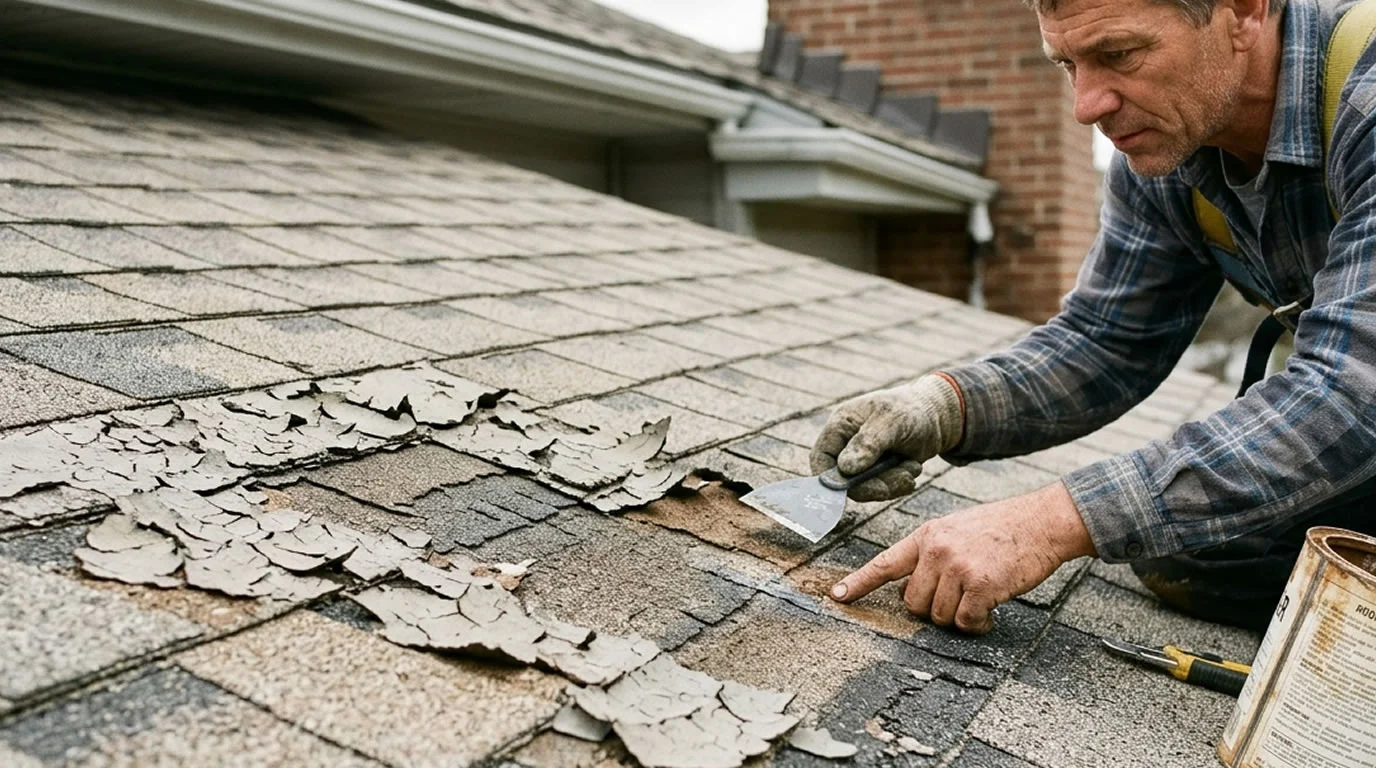
- Roof covering: The inspector looks for visible damage, displacement, deterioration, or worn areas in the shingles, tiles, metal, membrane, or other covering.
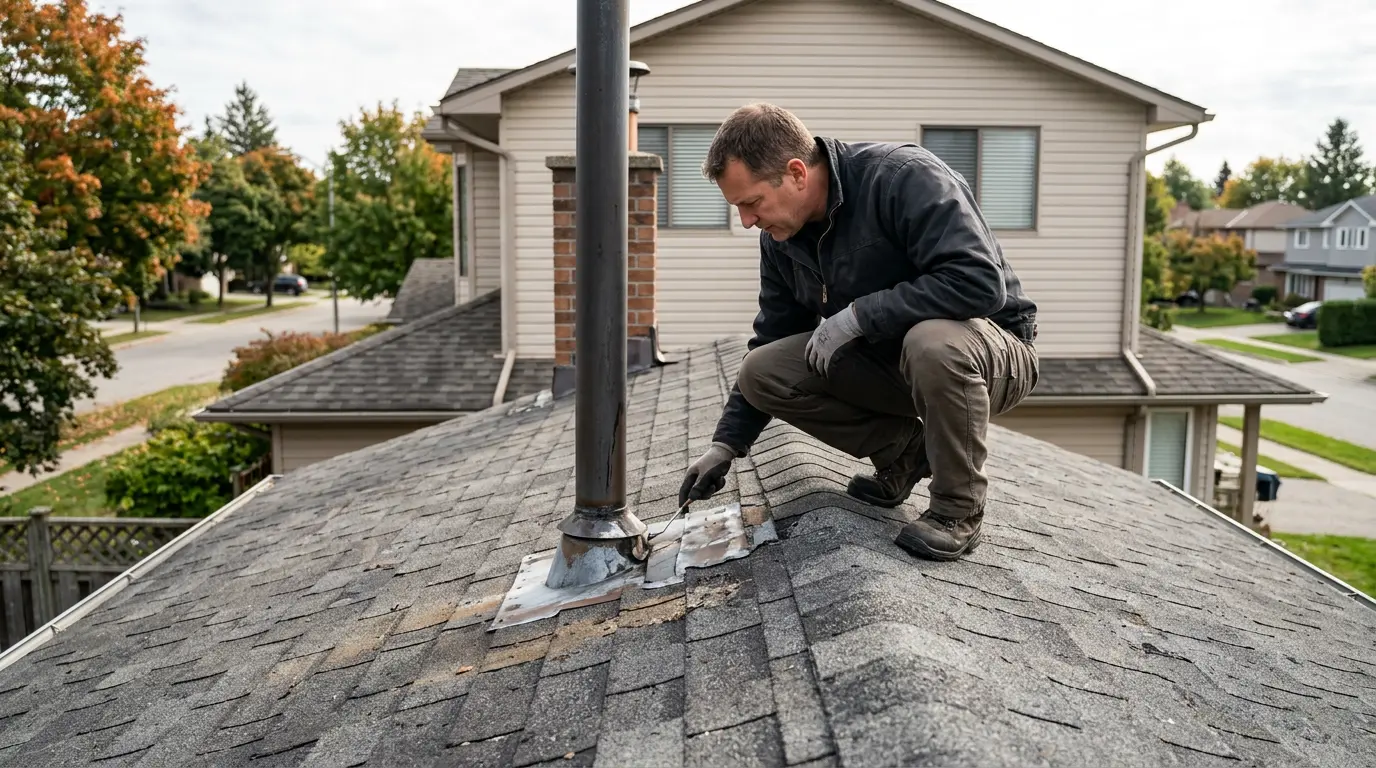
- Flashing: Flashing protects transitions and openings where water could enter. Deteriorated, missing, or displaced flashing deserves attention, especially around roof edges, walls, chimneys, skylights, and other transitions.
- Roof penetrations: Vents, pipes, skylights, chimneys, and similar openings are checked for visible conditions that may allow water intrusion.
- Drainage: The inspection should consider gutters, downspouts, drains, scuppers, ponding where visible, and other parts of the drainage system. Flat and low slope roofs may require different inspection methods and expertise than steep slope roofs.
- Roof structure: Accessible framing, sheathing, or other structural components may be reviewed for visible sagging, movement, or deterioration. A general inspection does not automatically establish structural adequacy.
- Attic and interior evidence: Stains, discoloration, dampness, damaged sheathing, moisture related deterioration, or daylight visible where it should not appear can point to concerns that are not obvious from outside.
Attic evidence can be useful, but a dry attic does not prove that the roof has never leaked. Seasonal or intermittent intrusion may not be visible during a particular inspection. The U.S. Environmental Protection Agency’s moisture guidance identifies roof leaks and insufficient insulation as possible sources of moisture in roof materials, but a stain alone does not establish an active leak or mold condition.
How the Roof May Be Inspected
Do not assume that a standard home inspection includes walking the entire roof. An inspector may use the roof surface, a ladder, the eaves, the attic, ground level observation, binoculars, a pole camera, a drone, or another method selected for the property and conditions.
A steep, wet, fragile, obstructed, snow covered, or otherwise unsafe roof may be inspected from another vantage point. That can be an appropriate safety decision, but the report should state the method used and identify areas that could not be accessed.
A ground level observation can identify some visible concerns, but it cannot establish the condition of concealed areas beneath intact coverings, inside inaccessible assemblies, under insulation, or within concealed flashing. A limited view is still useful when its limitations are understood. The California Real Estate Inspection Association guidance on roof inspection methods also describes selecting an inspection method based on circumstances and safety.
Before hiring the inspector, ask these questions:
- Will the roof be observed from the surface, attic, ladder, eaves, ground, drone, or another vantage point?
- Which roof areas, if any, will be inaccessible?
- Will the report identify the roof material and inspection method?
- Will photographs and written limitations be included?
Findings That Deserve Prompt Attention
Some roof findings should move quickly from the inspection report to a qualified professional evaluation. The most consequential concerns include active leaks, significant water intrusion, deteriorated or missing flashing, roof sagging, damaged or displaced coverings, and conditions that make the roof unsafe or inaccessible.
- Active leaks or substantial water intrusion: These may affect the roof system and interior materials, and the source may not be obvious from a visual inspection alone.
- Sagging or suspected structural movement: A general inspector can report visible conditions, but suspected framing or load concerns may require evaluation by a structural engineer.
- Missing, loose, or damaged coverings: Displaced materials can expose the roof system to further weather exposure and may require a roofer to determine the repair scope.
- Failed or deteriorated flashing: Flashing problems around penetrations and transitions can be important even when the main roof covering appears serviceable.
- Unsafe or inaccessible areas: A limitation is not proof of a defect, but it does mean the condition remains unresolved until it can be evaluated safely.
These concerns can matter in a financed transaction when they involve safety, soundness, structural integrity, active leaks, or worn coverings. Fannie Mae guidance allows appraisal conditions involving repairs or qualified professional inspection in certain circumstances, but that is lender and investor specific. It is not a universal rule that every roof concern will stop every loan from closing.
A general inspection report should not be treated as a repair specification. If a material concern appears, request a written evaluation from a qualified roofing contractor. Use a structural engineer when sagging, framing movement, or load concerns are suspected, and consider a moisture or building envelope specialist when water intrusion is difficult to trace.
Roof Age and Remaining Service Life
An old roof does not automatically need replacement before closing. Age is one piece of information, not a stand alone replacement decision.
Material, installation quality, climate, maintenance, storm exposure, ventilation, repairs, and visible condition can all affect how a roof performs. Manufacturer life estimates and common replacement intervals are not universal thresholds for every property.
Ask the inspector to separate the roof’s reported age from its observed condition. Also ask whether the report identifies visible damage, prior repairs, active or historic water intrusion, drainage concerns, and limitations that prevent a meaningful assessment of remaining service life.
Records, Permits, and Local Requirements
Roof records can help explain what work was performed, but they do not replace a current condition assessment. Ask the seller for invoices, warranties, repair records, storm claims, contractor information, and any available inspection documents.
Permit requirements and inspection practices vary by jurisdiction. Contact the local building department to verify permits and final inspections, including the applicable code edition and local amendments. A permit or final inspection can document an administrative and code process, but it does not prove that the roof is currently defect free or establish its future performance.
Model codes should be treated carefully. The 2021 International Residential Code contains provisions addressing roof coverings, flashing, drainage, and installation according to manufacturer instructions, but it is a model code. Its legal force depends on adoption and amendment by the relevant state or local authority. The International Residential Code provisions for roof assemblies are not automatically binding law for every home.
Ask the lender, insurer, and real estate professionals whether they require a roof certification, remaining life statement, contractor report, completed repairs, or an additional inspection. Requirements can differ by contract, policy, lender, insurer, and jurisdiction.
Common Misconceptions About Roof Inspections
Misconception: A home inspection always includes walking the entire roof.
Correction: Inspectors are not universally required to walk on roofs. The method depends on safety, accessibility, roof design, weather, and the inspection scope.
Misconception: A roof inspection guarantees that the roof will not leak after closing.
Correction: Inspection standards address observable conditions at the inspection time. They do not guarantee future performance or detect every concealed or intermittent defect.
Misconception: A permit or final inspection proves that the roof is currently sound.
Correction: Permit records document a local administrative and inspection process. They do not replace current condition evidence or establish remaining service life.
Misconception: A model code is automatically the law for every home.
Correction: A model code becomes legally applicable through adoption, amendment, and enforcement by the relevant jurisdiction.
Misconception: An appraiser, general inspector, roofer, and engineer provide the same evaluation.
Correction: Their roles differ. A general inspector reports observable conditions, an appraiser addresses valuation and applicable lender criteria, a roofer evaluates roofing work, and an engineer may analyze structural adequacy within the engineer’s licensed scope.
Questions Buyers Should Ask
Use the inspection report as a decision tool, not as a simple pass or fail label. Ask the inspector to distinguish observed facts, suspected causes, recommended further evaluation, and items outside the inspection scope.
- What roof areas were actually observed, and by which method?
- Were any areas unsafe, obstructed, concealed, or otherwise inaccessible?
- What conditions were found in the roof covering, flashing, penetrations, drainage system, and attic?
- Is there evidence of active or historic water intrusion, and what evidence supports that conclusion?
- Does the concern call for a roofing contractor, structural engineer, moisture specialist, or another qualified professional?
- What records, permits, warranties, repairs, or seller disclosures should be verified before closing?
Keep the complete inspection report, photographs, specialist reports, estimates, permits, warranties, and written seller disclosures. Preserving the documentation helps separate what was observed from what still needs investigation.
Frequently Asked Questions
What exactly is included in a pre purchase roof inspection?
It generally includes visible and accessible roofing materials, drainage systems, flashing, skylights, chimneys, other roof penetrations, and accessible attic or roof structure. The exact scope depends on visibility, access, safety, and the inspection method.
Does the inspector have to walk on the roof?
No. Inspectors are not universally required to walk on roofs. They may use another method when the roof is unsafe, inaccessible, or otherwise unsuitable for walking, and the report should identify that method and its limitations.
What does it mean if the roof was inspected only from the ground?
It means the evaluation was limited to conditions visible from that vantage point. It may not reveal concealed damage, conditions beneath the roof covering, or problems in inaccessible flashing and assemblies.
How can a buyer tell whether a roof leak is active or historical?
Stains, discoloration, dampness, damaged sheathing, and other attic or interior evidence can raise concern, but a visual inspection may not establish when the intrusion occurred or whether it is still active. A qualified roofing or moisture specialist may be needed when the source is unclear.
When should a homebuyer hire a roofing contractor after the general inspection?
Consider a separate roofing evaluation when the general inspection identifies a material concern involving leaks, flashing, damaged coverings, drainage, significant deterioration, or an unclear repair versus replacement decision. The contractor’s written evaluation can address roofing scope and cost more specifically.
Does an old roof automatically need to be replaced before closing?
No. Age alone does not establish that replacement is required. Material, installation quality, climate, maintenance, storm exposure, repairs, and visible condition also matter.
Can roof problems affect mortgage approval or appraisal conditions?
They can affect a financed transaction when they involve safety, soundness, structural integrity, active leaks, or worn coverings. The result depends on the lender, loan program, appraisal, and circumstances. There is no universal rule that every roof problem automatically prevents closing.
How do I verify roof permits, repairs, warranties, and inspection records?
Ask the seller for available invoices, warranties, repair records, contractor information, storm claims, and inspection documents. Contact the local building department about permits and final inspections, then confirm any additional requirements with the lender, insurer, and real estate professionals.
The Practical Takeaway
A pre purchase roof inspection is most useful when you know exactly what was observed and what was not. Focus on visible condition, water intrusion, flashing, drainage, structural warning signs, attic evidence, and inspection limitations rather than treating roof age as an automatic replacement verdict.
When a material concern appears, preserve the report and obtain the right specialist evaluation before making a repair, negotiation, financing, or closing decision. The goal is not a promise that the roof will perform forever. It is a clearer understanding of the roof you are considering buying.