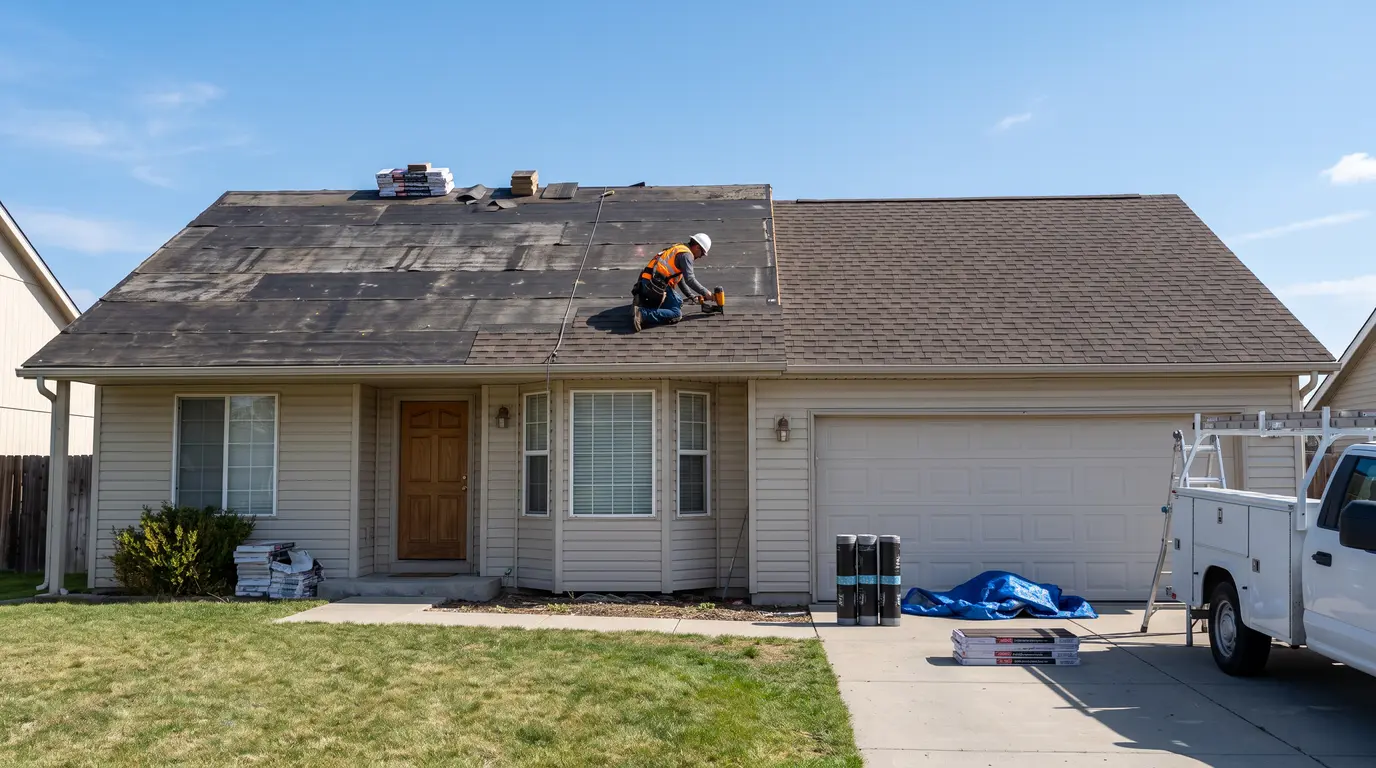
Field-applied liquid coatings are sometimes promoted as a way to extend the service life of existing asphalt shingle roofs. These products are applied directly to the exposed shingle surface, with promotional materials often emphasizing improved weather resistance, reduced water absorption, enhanced appearance, or delayed roof replacement.
However, coating an asphalt shingle roof is a technically complex practice. Its suitability depends on the existing roofing assembly, the coating’s chemical composition, and the roof system’s original design.
Major roofing industry authorities have raised concerns about the potential consequences of these applications. Claims of extended service life must be weighed against risks involving moisture management, shingle deformation, manufacturer warranties, and material degradation.
A coating that performs adequately on one roofing substrate may not be suitable for asphalt shingles. Independent technical guidance and manufacturer-specific approval are therefore essential before any application is considered.
The Official Stance of the NRCA
The National Roofing Contractors Association (NRCA) is a leading trade association that provides technical guidance and educational resources for roofing professionals.
Its position on field-applied coatings over asphalt shingle roof systems reflects the importance of evaluating the entire roofing assembly rather than relying solely on the performance claims of an individual product.
The association has specifically cautioned that applying coatings to existing asphalt shingles can introduce conditions that may adversely affect roof performance. The following statement, attributed to the NRCA’s director of technical services, summarizes the industry’s concerns about this practice:
“The roofing industry is aware of a number of issues that could have negative consequences for field application of coatings over asphalt shingle roof systems. Anyone considering this type of application should be aware of the concerns so they can weigh them against the benefits claimed in coating product promotional materials.”
— National Roofing Contractors Association (NRCA)
This caution highlights an important distinction between a product’s advertised capabilities and its demonstrated suitability for a specific roofing system.
A coating may exhibit favorable properties in laboratory testing or perform successfully on an approved substrate without necessarily being compatible with installed asphalt shingles.
Roof assemblies are engineered systems in which water shedding, ventilation, material flexibility, and the interaction between individual components all influence long-term performance.
Consequently, claims that a liquid coating can extend roof life should be assessed against documented compatibility data, applicable installation requirements, and evidence of performance under representative service conditions.
The NRCA’s caution should not be interpreted as proof that every coating will cause damage. Rather, it underscores the need to understand the potential risks before proceeding.
Primary Technical Concerns
Four principal technical concerns warrant particular attention when evaluating field-applied liquid coatings for asphalt shingle roofs.
The severity of each risk depends on factors such as coating formulation, application thickness, roof geometry, existing material condition, moisture exposure, and the specific construction of the roof assembly.
The following table summarizes the underlying mechanisms and their potential consequences.
| Technical Issue | Description & Industry Impact |
|---|---|
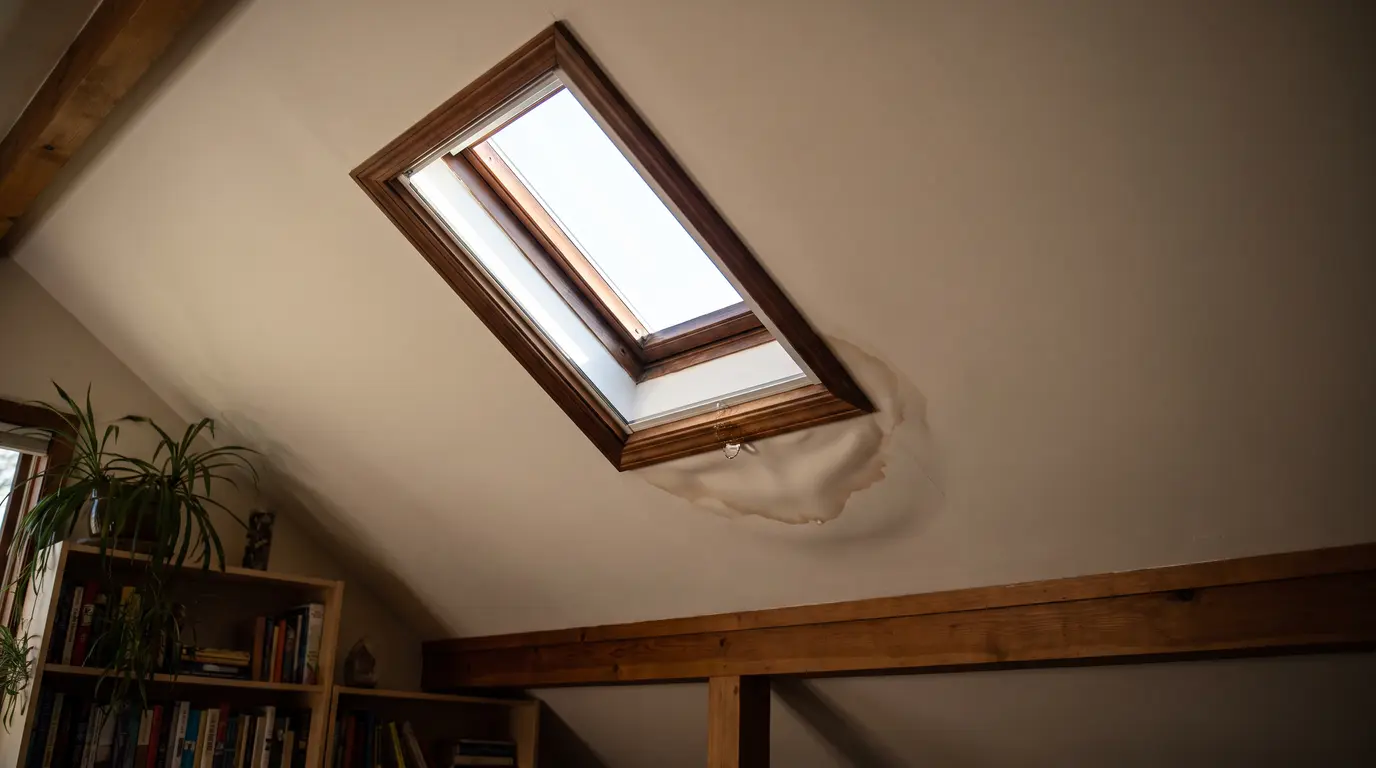
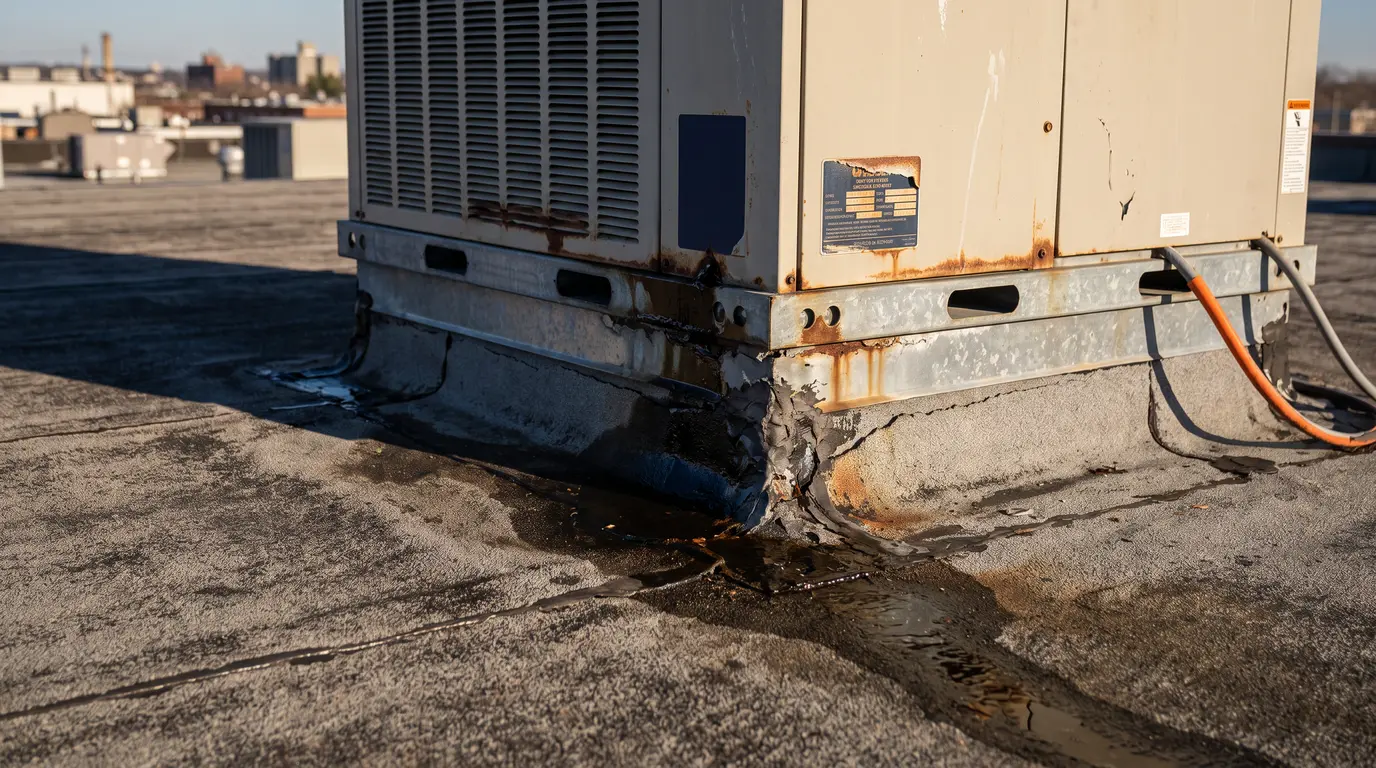
| Moisture Entrapment | Asphalt shingle roofs depend on properly configured overlaps, drainage paths, flashing details, and underlayment to manage water and limit intrusion. Depending on its formulation and application method, a liquid coating may bridge shingle courses, seal intended drainage paths, or interfere with the ability of the roof assembly to dry. If water enters through existing defects, flashing failures, fastener penetrations, or other openings, an altered surface may complicate drainage or slow drying in affected areas. Persistent moisture within the assembly can contribute to wood deck deterioration, fungal decay, corrosion of susceptible metal components, and degradation of adjacent materials. The degree of risk depends on the coating’s permeability, the roof’s existing condition, and the availability of effective drainage and drying pathways. Moisture entrapment is a potential failure mechanism rather than an inevitable outcome of every coating application. |
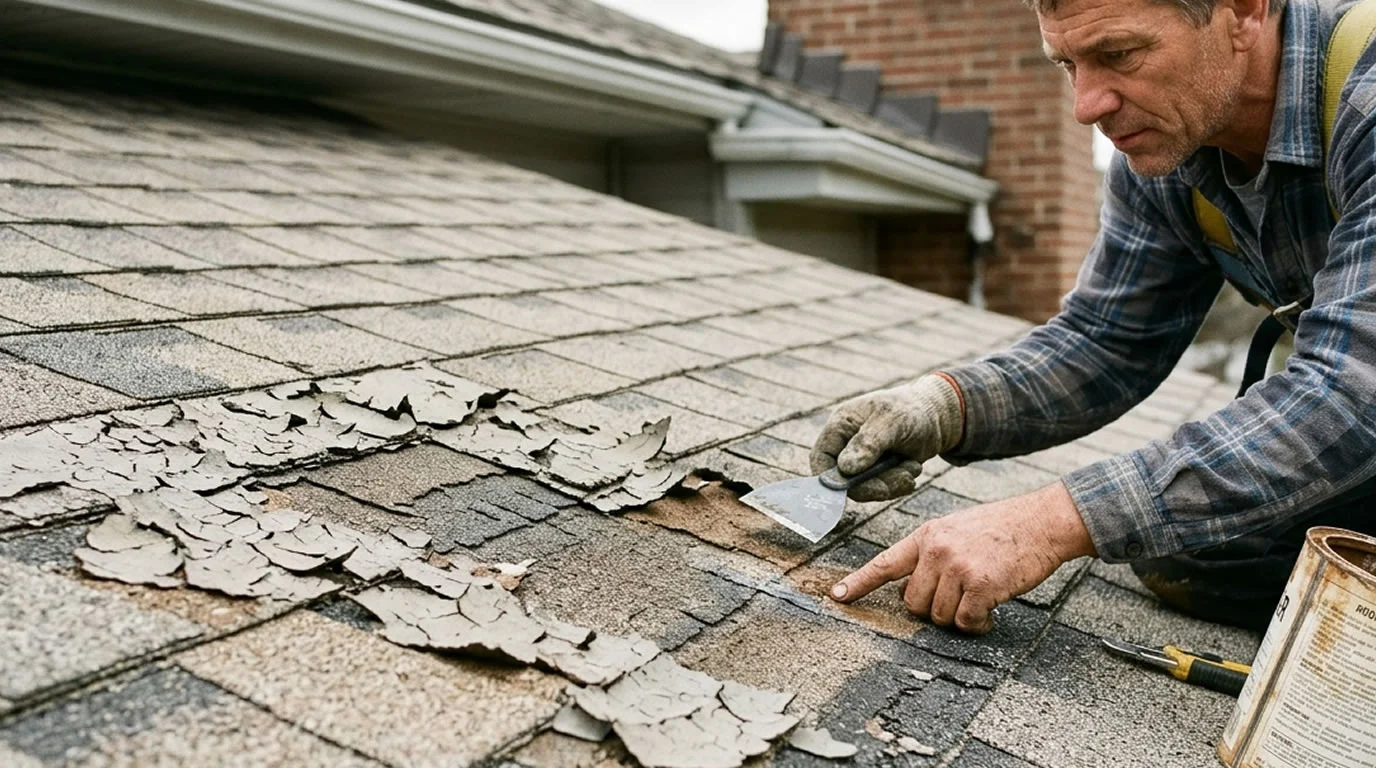
| Shingle Distortion | Asphalt shingles are manufactured with specific dimensional and mechanical characteristics intended to accommodate normal environmental exposure. Some liquid coatings form a continuous film that contracts during curing or changes stiffness as it ages. If the coating adheres strongly to the shingle surface, curing shrinkage and subsequent thermal movement may impose stresses on the underlying material. Depending on the coating’s flexibility, adhesion, thickness, and compatibility with the shingles, these stresses may contribute to curling, cupping, buckling, or other forms of distortion. Existing shingle deterioration, temperature fluctuations, and uneven application can further influence the outcome. Distorted shingles may disrupt water shedding, expose vulnerable areas, and create additional maintenance concerns, although the likelihood and severity of distortion vary by product and installation conditions. |
| Warranty Voidance | Roofing manufacturers establish warranty conditions based on specified products, installation methods, approved accessories, and maintenance practices. Applying an unapproved third-party coating may fall outside those conditions and could invalidate coverage, limit available remedies, or complicate a future warranty claim. The exact consequences depend on the manufacturer’s written warranty, the applicable exclusions, the coating involved, and the circumstances of the installation. An outside coating does not automatically void every warranty in every situation. Nevertheless, modifying the original roofing surface without written manufacturer guidance can create substantial uncertainty about coverage for shingle defects, premature deterioration, and related damage. Reviewing the applicable warranty and obtaining written confirmation of compatibility before application are essential steps in evaluating this risk. |
| Accelerated Aging | Asphalt shingles contain asphalt, reinforcing materials, mineral granules, and other components that collectively determine their weathering performance. A coating’s solvents, plasticizers, curing agents, or other chemical constituents may interact adversely with the asphalt binder, granule interface, or existing surface treatments if the formulation is incompatible. Potential consequences include softening, swelling, loss of adhesion, changes in flexibility, or increased brittleness over time. In some circumstances, an incompatible coating may interfere with the protective function of the granules or contribute to premature surface deterioration. These outcomes depend on the coating chemistry, exposure conditions, and condition of the existing shingles. Chemical incompatibility should be established through appropriate technical evidence rather than assumed for every product. Long-term compatibility data are particularly important because short-term appearance improvements do not necessarily demonstrate resistance to aging. |
Evaluating Long-Term Performance
Evaluating these risks requires more than examining the immediate appearance of a coated roof. A surface that looks uniform after application may conceal changes in drainage behavior, adhesion, material flexibility, or the assembly’s ability to dry.
Likewise, a coating that initially adheres well may respond differently after repeated cycles of solar heating, cooling, moisture exposure, and seasonal movement.
Technical assessments should consider the full range of anticipated service conditions, including:
- The condition and remaining service life of the existing shingles.
- The integrity of the underlying roof deck.
- Roof ventilation and moisture-drying pathways.
- Flashing details, penetrations, and drainage characteristics.
- The history of leakage, previous repairs, and existing material deterioration.
- The coating’s chemical compatibility, application requirements, and documented weathering performance.
Where performance claims are presented, the supporting evidence should be reviewed for the specific asphalt shingle type, coating formulation, application method, and duration of testing.
Results obtained on metal roofs, concrete, or other substrates should not be treated as direct evidence of suitability for asphalt shingles.
Coatings and Existing Roof Defects
An important consideration is the distinction between restoring an existing roof and modifying its surface with an additional material.
A liquid coating cannot be assumed to correct deteriorated shingles, compromised flashing, damaged decking, inadequate ventilation, or underlying water intrusion.
If these conditions are present, coating the surface without first identifying and addressing their causes may obscure visible warning signs or complicate subsequent inspection and repairs.
A qualified roofing professional should evaluate the existing assembly and determine whether localized repairs, continued maintenance, or replacement is the technically appropriate course of action.
Any proposed coating system should be assessed against documented installation instructions, relevant building requirements, and independently supportable evidence of long-term performance.
Manufacturer Guidance and Technical Verification
Before applying any field-applied liquid coating to an asphalt shingle roof, consult the original shingle manufacturer’s current technical documentation and written warranty terms.
Request explicit, product-specific confirmation of compatibility, including any restrictions on coating chemistry, surface preparation, application thickness, and approved installation procedures.
Where the manufacturer does not approve the proposed application or cannot substantiate its suitability, that uncertainty should be treated as a material factor in the decision.
Coating manufacturers’ technical data sheets and performance claims should also be examined carefully, with particular attention to testing methods, substrate limitations, weathering data, and any stated exclusions.
Conclusion
The most defensible approach is to prioritize the integrity of the complete roofing system over unverified claims of extended service life.
Extreme caution is warranted because an incompatible coating may introduce moisture-management problems, contribute to shingle distortion, complicate warranty coverage, or accelerate material deterioration. The likelihood and severity of these outcomes vary by product and roof conditions, so they should be evaluated using reliable technical evidence rather than generalized promotional claims.
A coating should never be presumed to extend the service life of asphalt shingles without adequate, product-specific evidence. Consulting the original manufacturer, reviewing written warranty conditions, and obtaining a professional assessment of the existing roof are essential steps in determining whether a proposed treatment is appropriate.