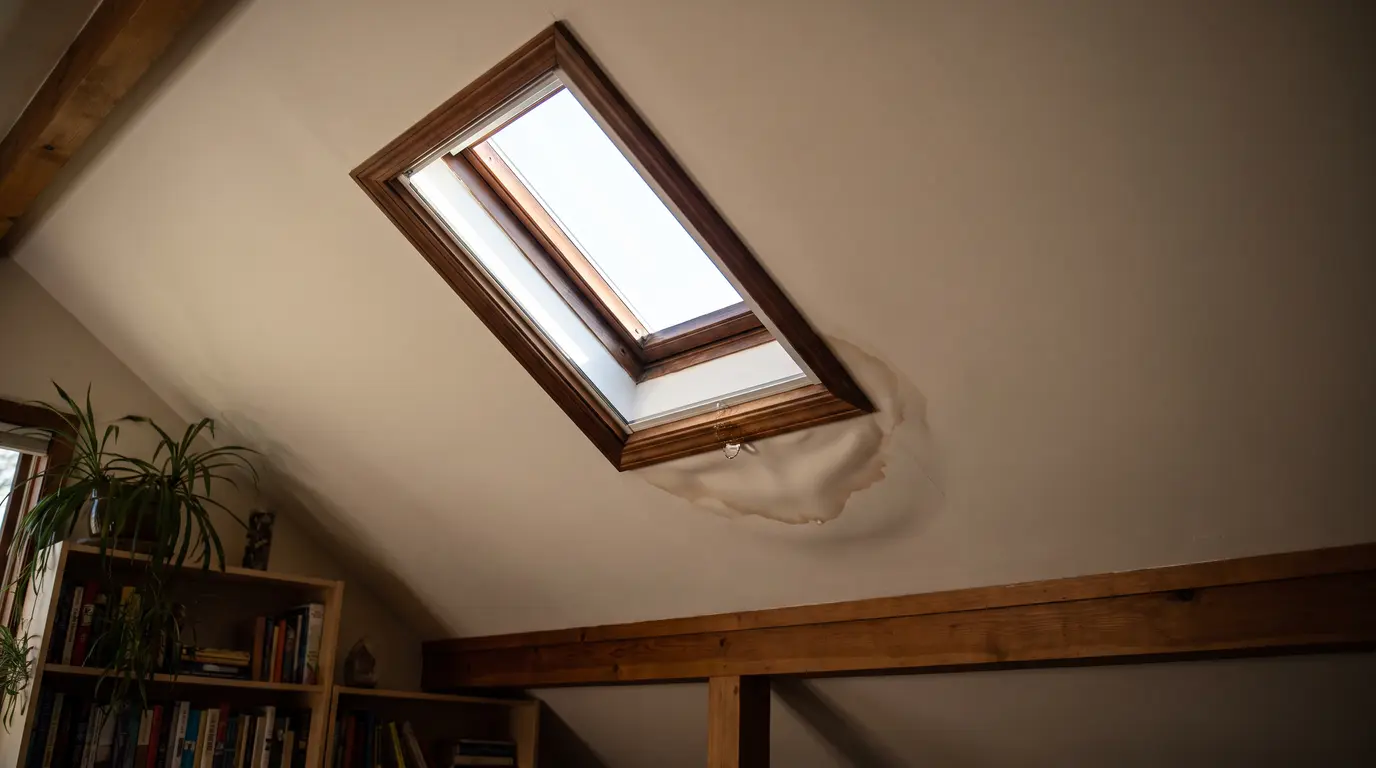
If your roof is leaking around a skylight, the next step is usually an inspection rather than an immediate replacement. Failed flashing, deteriorated skylight parts, nearby roofing, and condensation can all create moisture in this area. Finding the actual source matters because water may travel before it appears on the ceiling, allowing hidden damage to develop above the finished surface.
Common reasons a skylight area leaks
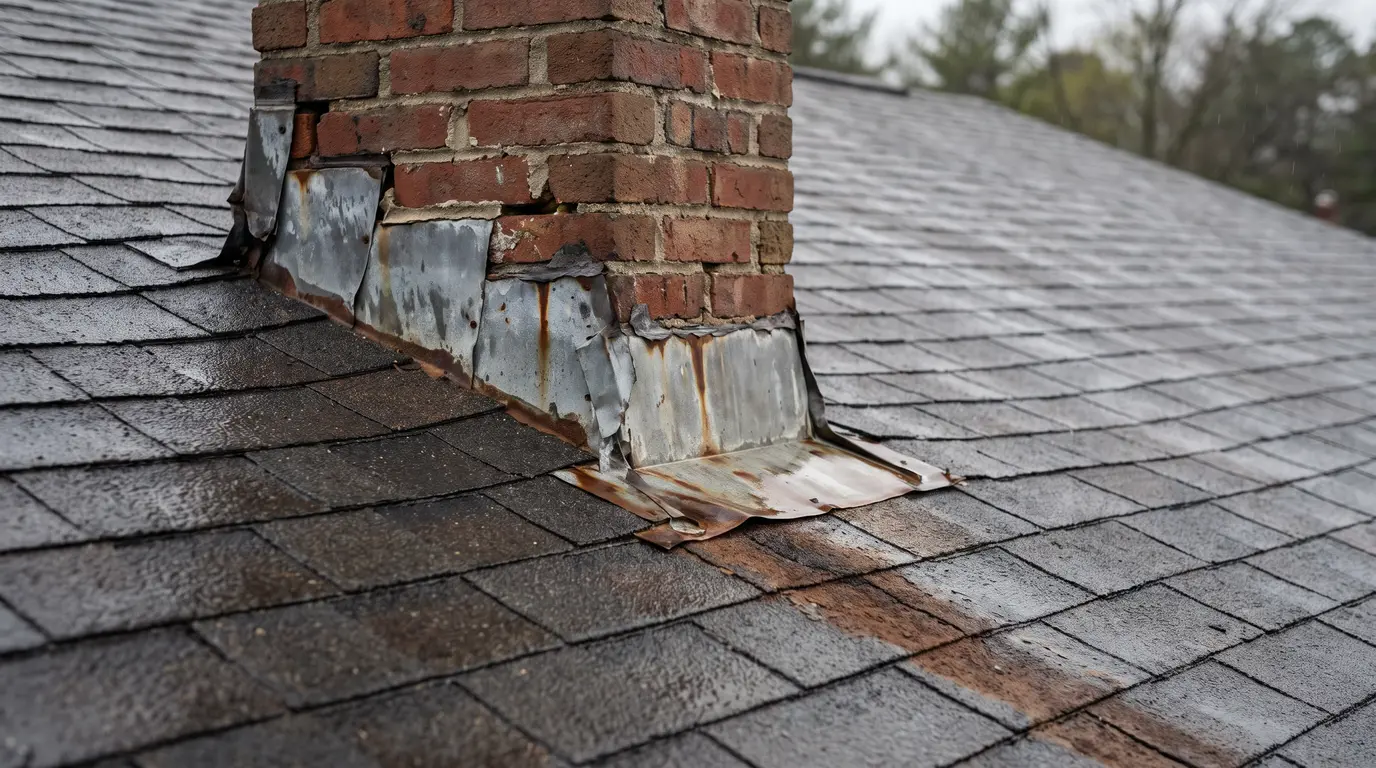
Flashing is one of the first areas a roofing professional should examine. Flashing directs water around a roof opening and needs to be integrated with both the skylight and the surrounding roof covering. It may fail because it is damaged, improperly installed, poorly integrated, or no longer compatible with the roofing system. The correct design depends on the skylight type, roof covering, roof slope, and manufacturer instructions.
Residential roof requirements generally call for flashing around roof openings. The 2021 International Residential Code says flashing should be installed around roof openings and in accordance with applicable manufacturer instructions. That is a model code, however, and the legally applicable requirements depend on the code edition and amendments adopted by your local jurisdiction. You can review the relevant code language through the 2021 International Residential Code roof assemblies section.
The skylight itself may also be part of the problem. A frame, curb, glazing component, or other part can deteriorate or develop a failure. Fogging between insulated glass panes may indicate a failed glazing seal. That symptom does not, by itself, prove that water is entering through the roof.
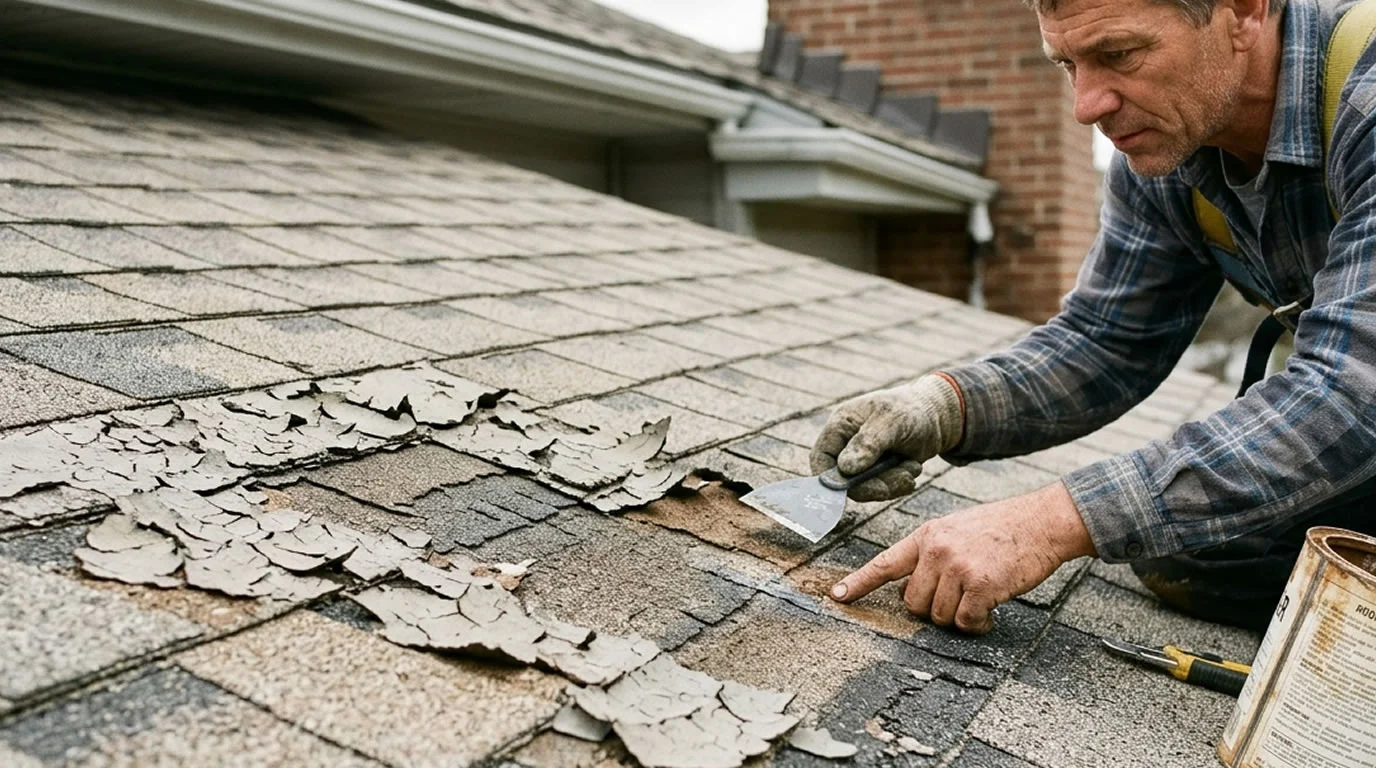
Nearby shingles or another roof covering can allow water to enter above or beside the skylight. Water may then move through roofing layers, framing, insulation, or the skylight shaft before becoming visible inside. This is why the location of a ceiling stain does not always identify the entry point.
Is it a roof leak or condensation?
The timing and pattern of the moisture can provide a useful first clue. Drips during rain or snowmelt point more toward water entry. Beads of moisture on a dry day, especially after bathing, cooking, or using a humidifier, are more consistent with condensation. Warm, humid indoor air can collect on a cold skylight surface.
These clues are not a complete diagnosis. Condensation and a roof leak can occur at the same time, and moisture on the glass or frame does not rule out a separate problem in the roof assembly. Manufacturer guidance about skylight condensation and maintenance is available from VELUX America skylight FAQs. The guidance is directly relevant to its products and symptoms, but skylight designs vary by brand and model.
| Moisture pattern | More consistent with | What to check | Qualification |
|---|---|---|---|
| Drips during active rain or snowmelt | Roof or skylight water entry | Skylight flashing, roof covering above and beside the skylight, underlayment, roof deck, and interior shaft | The visible location may not be the entry point |
| Water beads on dry days or after showers or cooking | Interior condensation | Indoor humidity, cold glazing or frame surfaces, ventilation, and insulation or air sealing conditions around the skylight shaft | Condensation and a roof leak can occur at the same time |
| Persistent fogging between glass panes | Failed insulated glass seal or glazing problem | Whether moisture is between panes rather than on the room facing surface | A failed glass seal does not by itself prove that the roof is leaking |
| Ceiling stain, peeling paint, or damp drywall | Possible concealed moisture damage | Attic or ceiling cavity, insulation, wood framing, and mold or material damage | The extent of damage requires inspection and should not be inferred from stain size alone |
This comparison is a starting point, not a homeowner repair test. Roof access and technical inspection should be handled safely by a qualified professional.
What damage can occur above the ceiling?
A small stain can represent moisture in places you cannot see. Water around a skylight may affect drywall, insulation, wood framing, the roof deck, or the shaft around the opening. Prolonged moisture can weaken wet building materials and contribute to mold growth. The U.S. Environmental Protection Agency guide to mold, moisture, and homes explains why prompt moisture control matters.
If drywall, insulation, or wood is wet, address the water source promptly and begin appropriate drying. EPA guidance states that wet or damp materials dried within 24 to 48 hours will, in most cases, avoid mold growth. This is a general moisture control benchmark, not a guarantee. The right drying or remediation approach depends on how long the area was wet, which materials were affected, and whether mold is present.
What should you do when a skylight leaks?
Start by observing when the moisture appears and what it looks like. From the ground or another safe location, you may be able to notice debris around the skylight, visible damage, or water marks. Do not climb onto a wet or steep roof. For a safer preliminary observation, see how to check your roof without climbing. A ground level check cannot replace an inspection of the skylight and flashing.
Keep accessible debris clear when it can be done safely, but do not treat that as a repair. Ask a roofing professional to inspect the skylight frame or curb, flashing, surrounding roof covering, underlayment where accessible, roof deck, and the ceiling or attic area below. The inspection should also consider whether the skylight is correctly matched to the roof slope and roofing system.
It can help to distinguish the proposed scope before work begins. A flashing repair, roof covering repair, skylight or glazing repair, full skylight replacement, and interior water damage work are different tasks. If the skylight is old, has cracked or deteriorated components, has failed insulated glass, or needs extensive flashing reconstruction, compare the expected service life and cost of repair with replacement rather than assuming one option is always best.
- Can you show where water entered and explain how the proposed repair will redirect water around the skylight?
- Was the visible staining caused by rainwater, condensation, or both?
- Does the inspection show wet insulation, roof decking, framing, or mold that needs separate attention?
For more context about how intense rainfall can expose weaknesses around flashing and roof openings, read why your roof leaks in heavy rain. You can also review the inspection elements discussed in what a roof inspector checks, using only the portions relevant to an active leak.
Frequently asked questions
How can I tell whether skylight moisture is condensation or a roof leak?
Moisture during rain or snowmelt points more toward water entry. Moisture on a dry day, especially after bathing, cooking, or humidifier use, points more toward condensation. The two conditions can occur together, so dripping, staining, or recurring moisture should still be inspected.
Can water enter above the skylight and appear somewhere else?
Yes. Water can travel through roofing layers, framing, insulation, or the skylight shaft before it becomes visible. The stain or drip location is therefore useful evidence, but it may not be the point where water entered.
Does a leaking skylight always need to be replaced?
No. The needed work may be a flashing repair, roof covering repair, glazing repair, skylight replacement, or separate interior drying and repair. The right comparison requires identifying the entry point, the condition of the skylight and roof assembly, and the extent of concealed damage.
A leaking skylight deserves prompt attention, but it does not automatically mean the entire skylight must be replaced. Begin with a safe observation of when the moisture appears, then arrange an inspection that evaluates the skylight, flashing, surrounding roof, and area below. That approach gives you a clearer basis for choosing between repair, replacement, and interior moisture work before a small problem becomes harder to resolve.