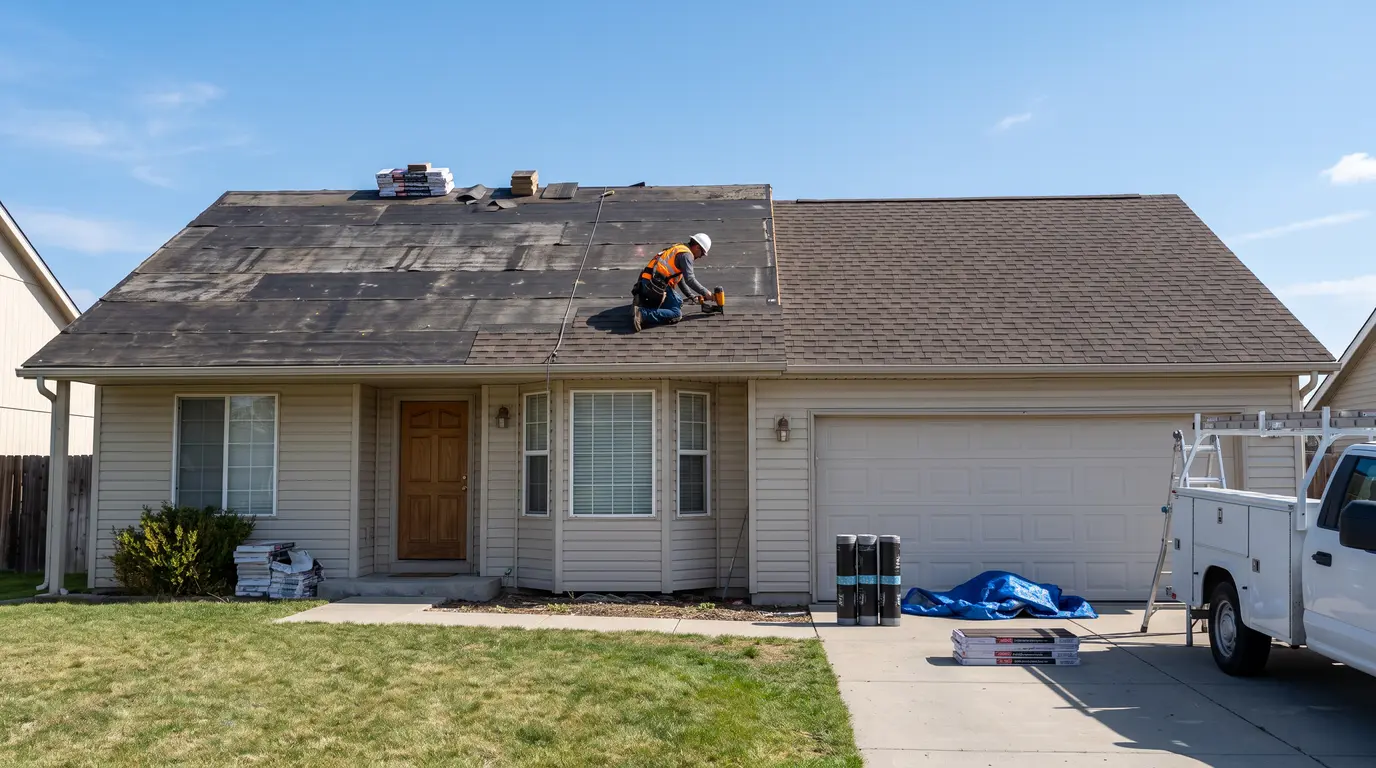
For most homes with a standard asphalt shingle roof, the replacement usually takes about one to two days. This assumes the materials are ready, the weather cooperates, and there are no major issues once the old shingles come off. The actual work may only take a couple of days, but the entire process can take longer from the initial estimate to the final cleanup.
Some roofs take longer than others. A larger or steeper roof, extra features, or damaged roof decking can add time to the job. Weather can also cause delays, along with material shortages, permits, or required inspections. Your roofer should be able to give you an estimated start date and a realistic idea of when the work will be finished.
What happens during a roof replacement
Replacing a roof involves more than just installing new shingles. The crew first prepares the property and removes the old roofing materials. Once the roof is exposed, they check the decking for damage and make any necessary repairs before installing the new roofing system. After the installation, they clean up the work area and check that everything is finished properly.
The exact process depends on the condition of your roof and the work involved. If everything goes smoothly, the job may be done in a day or two. If repairs are needed or the weather causes delays, it could take longer.
| Stage | What usually happens | Scheduling effect |
|---|---|---|
| Pre installation planning | Inspection, measurements, material selection, contractor scheduling, and any required approvals | Can add calendar time before the crew arrives |
| Site preparation and tear off | Protecting property and removing existing roofing down to the roof deck | Usually the most disruptive phase and exposes concealed deck conditions |
| Deck inspection and repairs | Checking exposed decking and replacing damaged or rotten sections when necessary | May add several hours or up to an additional day |
| New roof installation | Installing underlayment, roofing material, flashing, and related components | A straightforward asphalt shingle roof often takes about one to two working days overall, while size and complexity can extend the work |
| Cleanup and final review | Removing debris, checking completed work, and conducting a homeowner walkthrough | Required before the project is considered complete, with exact timing varying by contractor |
These are planning descriptions rather than guaranteed durations. Weather, temperature, roof complexity, concealed damage, material availability, and local approvals can change the schedule.
What can make roof replacement take longer
Roof size and design
The size and shape of your roof can affect how long the replacement takes. A larger roof usually takes more time because there’s more material to remove and replace. Steep roofs can also slow things down because the crew may need extra safety equipment and precautions. Roofs with multiple angles, valleys, skylights, or other features often take longer, too, since they require more detailed work.
When getting an estimate, ask your contractor how long the job is expected to take based on your roof’s layout and condition, not just the size of your home.
Damaged roof decking
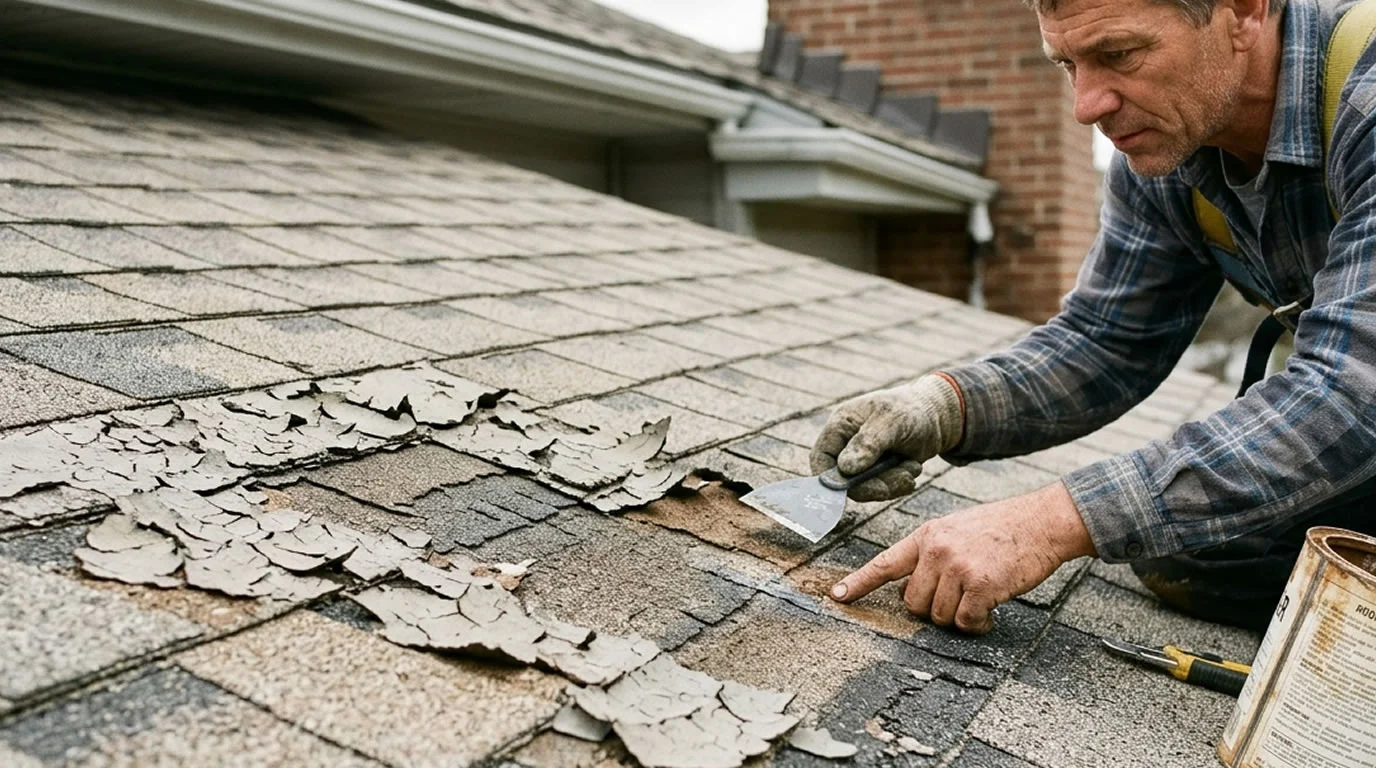
The roof deck is the layer of wood underneath your shingles. Once the old roofing is removed, the contractor can check for problems like water damage or rotting plywood that may not have been visible before. If any sections need to be replaced, the extra work could add a few hours or even another day to the project, depending on how much damage is found.
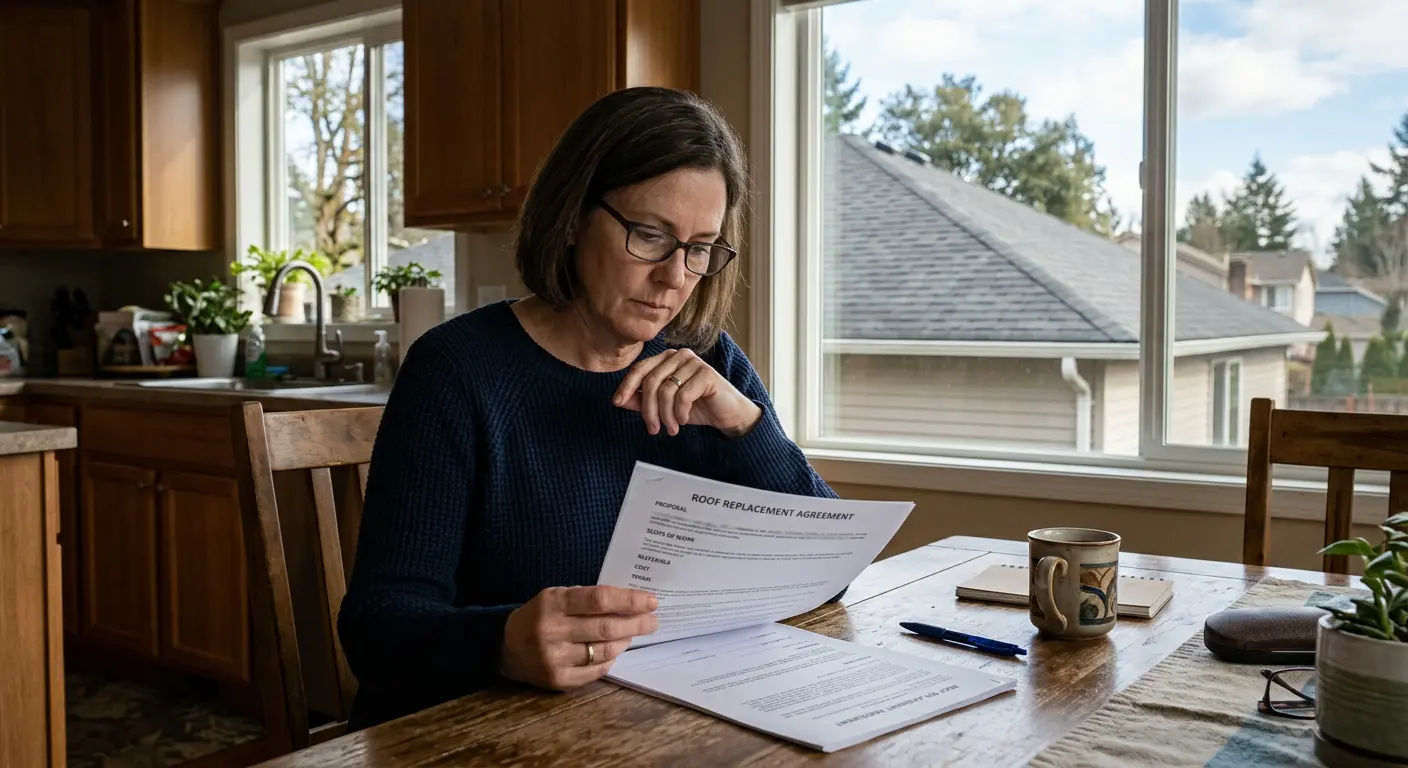
The estimate may not include every concealed deck repair unless the contract addresses that possibility. Before work begins, ask how damaged areas will be documented, how the added work will be priced, and how approval will be obtained. The guide to what your roof replacement contract should include can help you review scope, permits, cleanup, warranties, payment timing, and unexpected work.
Weather and temperature
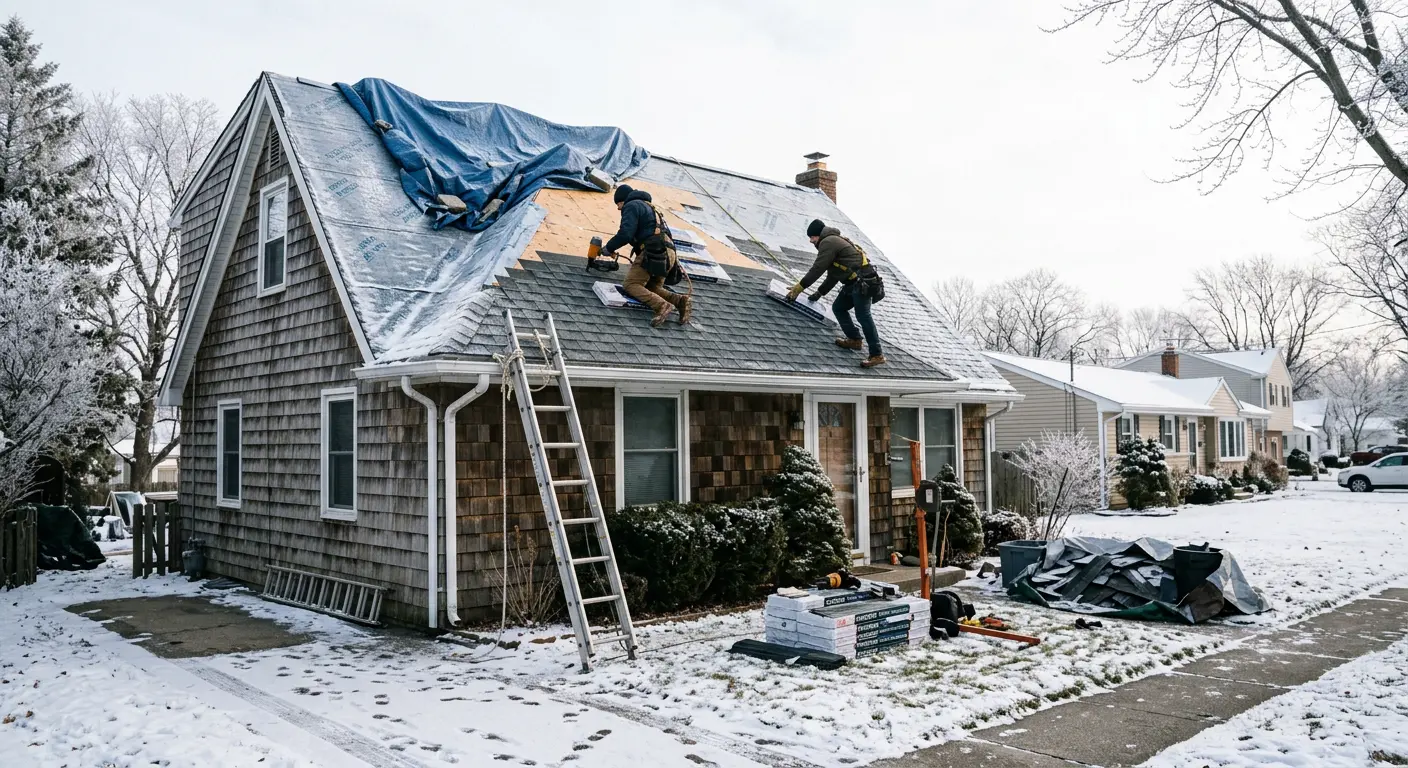
Weather can have a big impact on how long a roof replacement takes. Rain, snow, and strong winds can force the crew to stop work or delay the installation. Cold temperatures can also affect how shingles are handled and how well they seal.
Roofing work can still be done in some cold conditions, but it depends on the materials being used and the manufacturer’s recommendations. Your contractor may need to adjust the schedule if the weather isn’t suitable for installation.
Ask what weather conditions would move the completion date and how the contractor will protect the home if work is interrupted. If winter weather is part of your planning, the article on whether you can replace a roof during winter provides related guidance without treating one temperature or schedule as universal.
How to plan for the work at home
Roof replacement can be noisy and messy, especially when the crew is removing the old shingles and installing the new ones. If you have children or pets, it’s a good idea to plan where they’ll stay during the work. You should also ask the contractor where to park your vehicles and whether you’ll need to keep the driveway clear.
You usually don’t have to stay home for the entire job, but the crew should be able to reach you if they find unexpected damage or need your approval for additional repairs. Before work starts, make sure you know who to contact with questions. It’s also worth confirming whether the contractor will handle the permits and inspections required for your project.
Questions to ask before choosing a contractor
A short installation estimate is useful only when the bids cover comparable work. Check whether each proposal describes a complete tear off or an overlay, deck inspection and repairs, flashing, ventilation, cleanup, permits, warranties, and the process for unexpected work. You can use this guide to compare roof replacement estimates by written scope rather than comparing only the number of days or the upfront cost.
- What is your expected installation window, and what conditions would move the completion date?
- Does the schedule assume a complete tear off or an overlay?
- If damaged decking is found, how will you document the affected area and obtain approval for additional work?
- Who handles permits and inspections, if they are required for this project?
- How will you protect the home if rain, wind, or another weather condition interrupts the work?
- What work is included in the quoted schedule, including cleanup and the final homeowner walkthrough?
Frequently asked questions
Can a roof be replaced in one day?
Sometimes, but one day should not be treated as a guarantee. A straightforward asphalt shingle replacement on an average sized home often takes about one to two working days. A larger or more complex roof, damaged decking, weather interruption, or required approvals can extend the schedule.
Can rain delay a roof replacement?
Yes. Rain and wet surfaces can prevent crews from working, while wind, snow, and cold conditions can also affect scheduling and material handling. Ask for a weather contingency plan and confirm how the exposed portions of the home will be protected if the work pauses.
Will damaged roof decking make the project take longer?
It can. Once the existing roofing is removed, damaged or rotten decking may need to be replaced. That repair may add several hours or up to an additional day, depending on the amount of damage and whether replacement materials and labor are available.
Plan around the completion window, not just the installation days
For many residential asphalt shingle projects, one to two working days is a reasonable starting point for the hands on replacement. The more useful commitment is a written schedule that also accounts for material ordering, approvals, weather, concealed deck repairs, cleanup, and the final review.
Before selecting a contractor, compare what each estimate includes and ask how schedule changes will be handled. If you are still budgeting, the roof cost calculator can provide a preliminary planning estimate, while project specific scope and timing still need to be confirmed with the contractor.