Can You Replace a Roof in Winter?
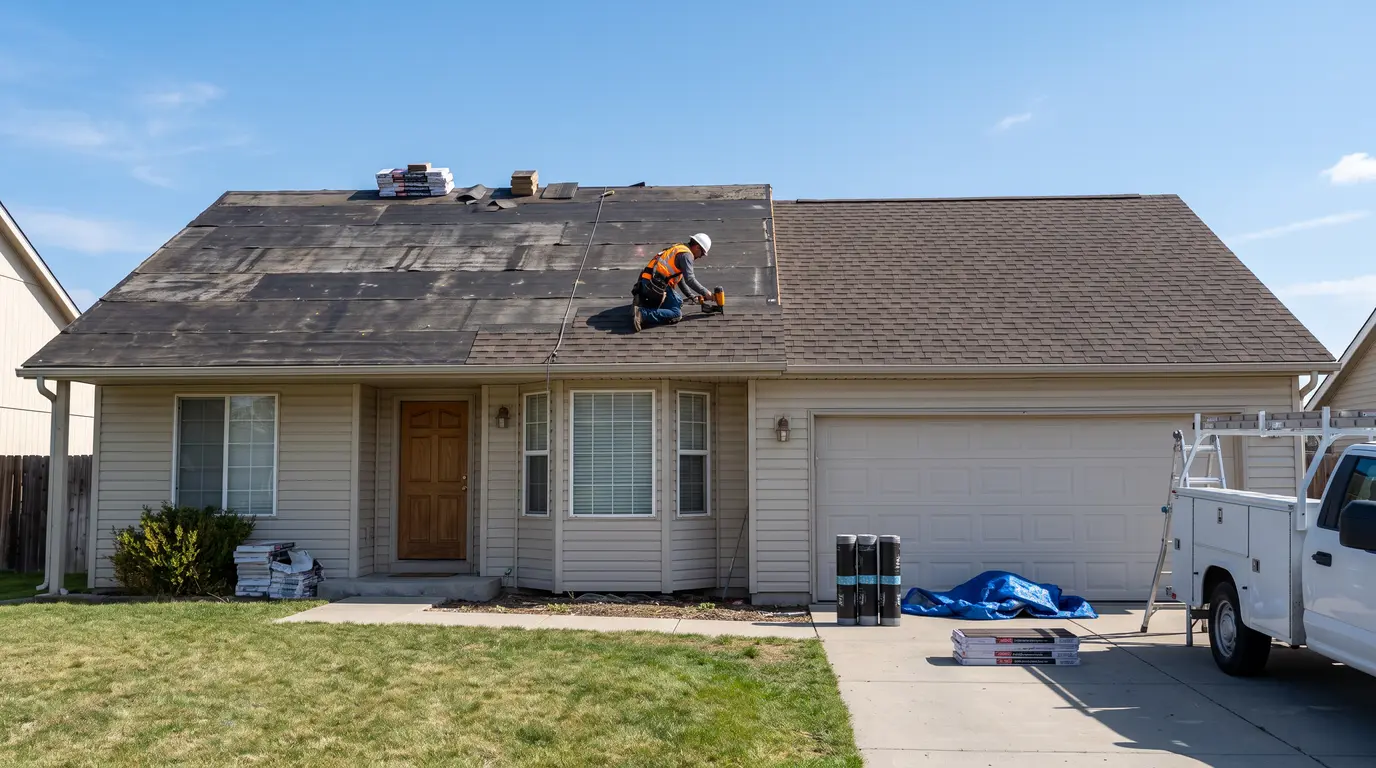
Yes, a roof can be replaced in winter, but the answer depends on more than the outdoor temperature. The roofing material, product instructions, precipitation, wind, roof condition, crew safety, and local building requirements all affect whether the work is practical.
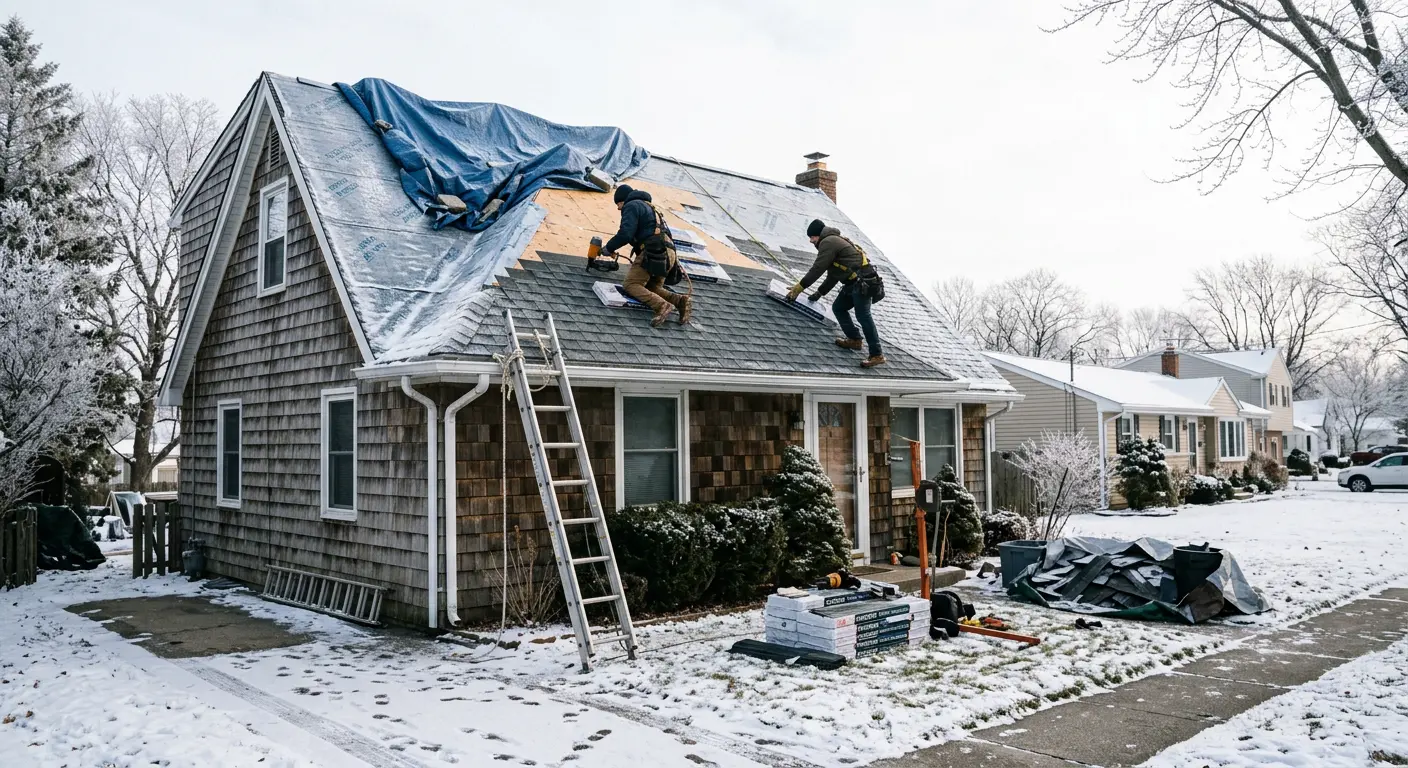
Winter replacement is often more manageable during a reliable stretch of dry, calm weather. Snow, ice, wet surfaces, high winds, poor visibility, or temperatures that interfere with the roofing product can make the project unsafe or affect how the system performs. A contractor should also have a written plan for protecting the home if weather changes or the work cannot be completed in one day.
For asphalt shingles, cold weather creates two main installation concerns: the shingles can become brittle, and the factory applied sealing strips may not activate properly until they receive enough warmth and sunlight. There is no universal temperature that makes every asphalt shingle installation impossible, but the exact manufacturer instructions control.
When Winter Roof Replacement Is Practical
A winter roof replacement is most practical when the roof can be accessed safely, the roof deck can remain dry, and the roofing product can be installed within its specified conditions. The crew also needs enough time to protect the building if rain, snow, freezing conditions, or strong winds arrive unexpectedly.
A dry forecast helps, but it does not make an unsafe roof safe. Snow and ice may still be present on the roof, ladders, staging areas, or walkways. The roof surface must be suitable for installation, and the crew must be able to remove winter accumulation and work without uncontrolled fall or cold exposure hazards.
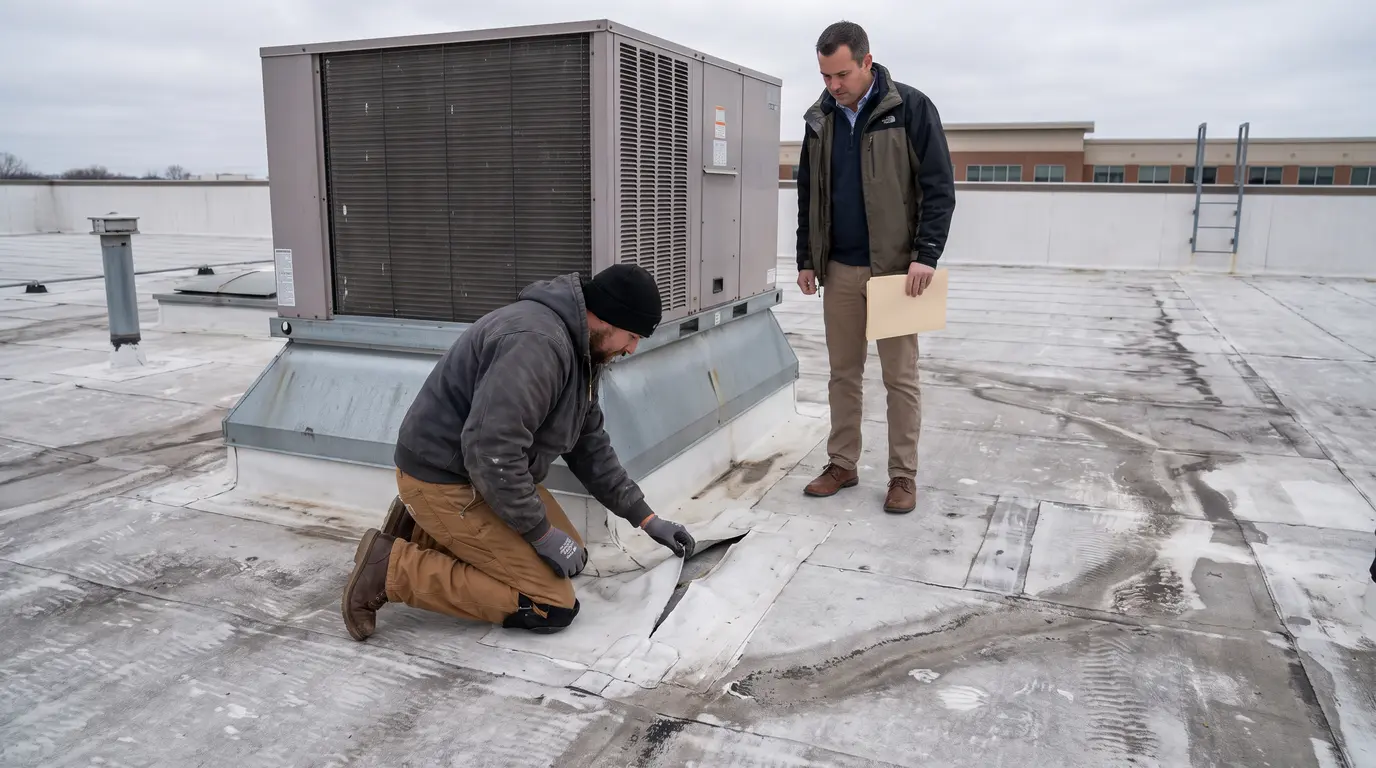
The roofing material matters as well. Guidance about brittleness, sealing strips, hand sealing, and a 40°F temperature recommendation applies primarily to asphalt shingles. Metal roofing, tile, slate, wood products, low slope membranes, coatings, adhesives, and self adhered underlayments have different installation requirements.
- A reliable period of dry weather is available.
- The roof deck and work surfaces can be kept dry and clear of snow and ice.
- The exact roofing product permits installation under the expected conditions.
- Materials can be stored, transported, and handled as the manufacturer requires.
- The contractor has fall protection, cold weather safety procedures, and a plan for stopping work when conditions deteriorate.
- Temporary weather protection is available if the project is paused after tear off.
If the existing roof is leaking or damaged, emergency work may need to happen before a complete replacement is practical. Temporary protection or limited repairs can help protect the home while the full project waits for safer conditions. Emergency necessity does not eliminate the need to follow applicable safety, code, and manufacturer requirements.
How Cold Weather Affects Asphalt Shingles
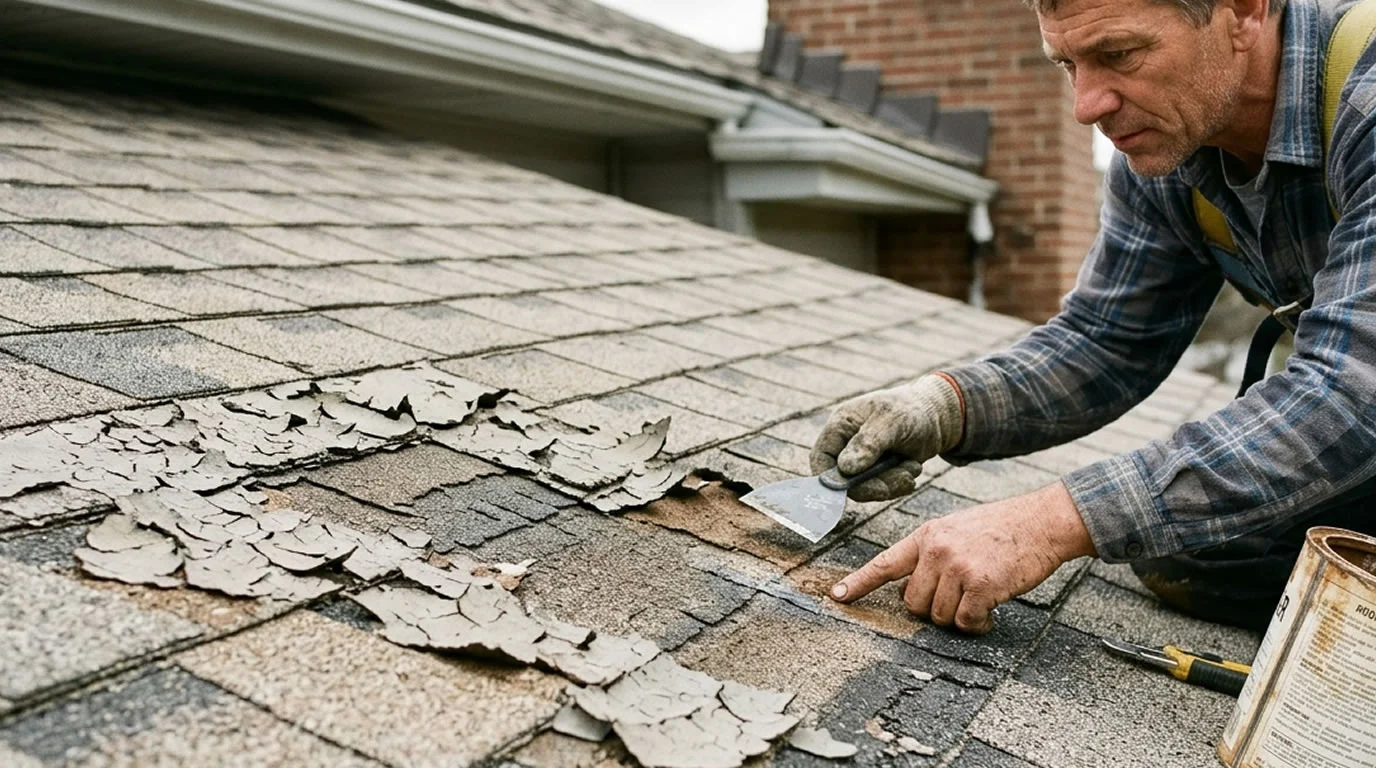
Asphalt shingles become less flexible as temperatures fall. That makes them more likely to crack or break while bundles are moved, shingles are carried across the roof, or pieces are positioned during installation. The Asphalt Roofing Manufacturers Association recommends following the specific product instructions and choosing conditions in which the shingles remain sufficiently flexible.
Cold storage can add to the problem. Roofing materials should be stored and staged according to the product instructions, and bundles should not be handled in a way that increases the risk of breakage. The National Roofing Contractors Association also advises warm storage when appropriate and loading only a few bundles at a time.
What 40 Degrees Means for Shingle Installation
The frequently mentioned 40°F threshold is not a universal legal minimum for all roof replacements. GAF identifies 40°F, or 4°C, as its normal installation recommendation for its asphalt shingles, while also describing procedures for installation below that temperature. Other manufacturers and roofing materials may have different limits.
That distinction matters. A temperature below 40°F is not automatically prohibited, but it is also not automatically acceptable. The contractor should identify the exact shingle line and accessory products, then follow the current manufacturer instructions rather than applying one number to every roofing system.
Why Shingles May Not Seal Right Away
Many asphalt shingles use a factory applied sealing strip that is activated by warmth and sunlight. In cool conditions, the strip may not bond immediately even when the shingles have been mechanically fastened. Until the seal develops, the shingles may be more vulnerable to wind uplift and water infiltration.
This does not mean a winter installation will automatically leak or fail. It means the contractor may need to use hand sealing, also called hand tabbing, or another procedure specified by the manufacturer. The required adhesive, placement, temperature range, and timing must come from the product instructions.
A roof can look complete while still needing later warmth and sunlight for its factory sealing strips to bond. Ask the contractor to explain how the system will be sealed during cool weather and what temporary measures will be used if the roof cannot bond normally before colder conditions return.
Winter Roofing Safety Risks
Cold temperatures are only one part of the winter safety problem. Snow, ice, wet surfaces, strong winds, poor visibility, unsafe ladders, hidden skylights, electrical hazards, transportation conditions, and cold stress can all affect roof work.
Workers may also have more difficulty carrying materials or maintaining stable footing when surfaces are wet or frozen. Wind can affect both people and roofing materials, while cold exposure can reduce the ability to work safely. The Occupational Safety and Health Administration’s winter weather guidance recommends planning to avoid roof or elevated work when hazardous conditions are present, along with appropriate fall protection, equipment, and worker training.
- Do not treat a forecasted temperature as permission to work on an icy or snow covered roof.
- Confirm how snow and ice will be removed using safe methods.
- Ask how ladders, access paths, and equipment will be kept stable.
- Confirm that fall protection and procedures for hidden roof hazards are part of the work plan.
- Ask when the crew will stop work if wind, precipitation, visibility, or cold exposure becomes unsafe.
A careful contractor should be willing to postpone work rather than force a crew onto a hazardous roof. Winter is not the season for winning an argument with gravity.
How to Plan a Winter Roof Replacement
Before signing a winter roofing contract, get specific answers in writing. The goal is not simply to find out whether the contractor is willing to work in winter. The goal is to confirm that the roofing system, schedule, safety procedures, and backup plan all make sense for the conditions.
- Confirm the roofing product. Ask for the exact shingle, membrane, underlayment, adhesive, and accessory products that will be used.
- Review the manufacturer instructions. Ask about minimum application temperature, storage temperature, material handling, hand sealing, adhesive requirements, and warranty conditions.
- Require a weather contingency plan. The plan should address rain, snow, freezing conditions, high winds, overnight exposure, incomplete tear off, and temporary waterproofing.
- Confirm the roof deck will stay dry. Ask how the roof will be protected if weather changes after the old roofing is removed.
- Verify local requirements. Contact the building department about permits, inspections, ice barriers, underlayment, flashing, ventilation, and the adopted code edition.
- Review the winter safety plan. Confirm procedures for fall protection, ladders, equipment, worker cold stress, site access, overhead electrical hazards, and stopping work.
- Document weather related changes. The contract should explain temporary protection, change orders caused by weather, cleanup, and responsibility for damage if work is paused.
Ice barrier requirements deserve particular attention in cold or ice dam prone areas. The 2024 International Residential Code includes ice barrier provisions for certain locations and conditions, including areas where the average January daily temperature is 25°F, or negative 4°C, or less. The International Residential Code is a model code, not an automatically binding nationwide rule, so the applicable requirement depends on the code adopted and amended by the local jurisdiction.
Ask the building department or contractor to identify the local rule that applies to the property. A model code edition should not be assumed to govern unless the relevant authority has adopted it.
Common Winter Roofing Misconceptions
Misconception: You cannot replace a roof during winter.
Correction: Winter replacement can be feasible when the roofing system, weather window, roof condition, product instructions, and safety conditions all support the work.
Misconception: 40°F is a universal legal minimum for roof replacement.
Correction: 40°F, or 4°C, is a commonly cited manufacturer recommendation for certain asphalt shingles, including GAF products. It is not a universal legal threshold for every brand, shingle line, roofing material, or jurisdiction.
Misconception: If shingles are nailed down, they are fully sealed immediately.
Correction: Many asphalt shingles use thermally activated sealing strips that may need warmth and sunlight. Cool weather may require hand sealing or another manufacturer specified procedure.
Misconception: Cold weather is the only winter installation problem.
Correction: Snow, ice, wind, wet surfaces, poor visibility, transportation conditions, hidden roof hazards, and worker cold stress may be just as important as temperature.
Misconception: The International Residential Code automatically applies everywhere in the United States.
Correction: The International Residential Code is a model code. The applicable rule depends on the local authority’s adopted code edition and amendments.
Winter Roof Replacement FAQ
Can you install asphalt shingles below 40°F?
Sometimes. There is no universal industry temperature cutoff for every asphalt shingle, and some manufacturer instructions permit installation below 40°F with additional procedures. Other products may have stricter limits, so the exact product instructions and warranty terms control.
What happens if roof shingles do not seal during winter?
The factory sealing strip may remain inactive until it receives enough warmth and sunlight. Until the shingles bond, they may be more vulnerable to wind uplift and water infiltration. The manufacturer may require hand sealing or another temporary procedure.
Does installing a roof in cold weather void the manufacturer’s warranty?
That cannot be answered for every product. Review the exact manufacturer instructions and warranty conditions before work begins, and ask the contractor how the planned winter procedures comply with them.
How should shingles be stored before a winter installation?
Shingles should be stored, transported, and staged according to the product instructions. Cold temperatures can make asphalt shingles less flexible and more likely to crack or break, so ask the contractor how bundles will be protected and handled.
Can a roof be replaced while snow or ice is on it?
Snow and ice should not be treated as acceptable work surfaces. The roof deck and access areas must be suitable for installation, and the crew must be able to work safely. OSHA recommends avoiding roof work when winter conditions create uncontrolled hazards.
Are metal roofs or rubber membranes better suited to winter installation?
The supplied guidance does not establish that one of these systems is universally better for winter installation. Metal roofing, membranes, adhesives, and other systems have their own product specific temperature and handling requirements.
What should a contractor do if rain or snow begins after tear off?
The contractor should follow the project’s weather contingency plan, protect the exposed structure, and keep the roof deck dry. Ask in advance what temporary waterproofing will be used and who is responsible if the project is paused.
Does my local building code require an ice barrier under a replacement roof?
It may, depending on the local climate, adopted code edition, amendments, and site conditions. The 2024 International Residential Code contains ice barrier provisions, but the model code is not automatically binding everywhere. Confirm the requirement with the local building authority.
The Practical Answer
You can replace a roof in winter, but a calendar date is not enough to decide whether the project should proceed. The critical questions are whether the roofing product can be installed correctly, whether the roof and deck can remain dry, whether the crew can work safely, and whether the contractor has a clear plan for changing weather.
Before approving the work, verify the exact product instructions, local permits and code requirements, winter safety procedures, material storage plan, sealing method, temporary protection, and warranty conditions. If those details are clear and the weather window is suitable, winter replacement may be practical. If the roof is wet, icy, snow covered, or unsafe, waiting or using temporary protection may be the more responsible choice.