How to Check Your Roof Without Climbing
You can perform a useful preliminary roof check without climbing onto the roof. Walk the full perimeter, view the roof from several safe angles, use binoculars or camera zoom, and inspect accessible ceilings and attic areas from inside.
This is a visual screening, not a complete roof inspection. Ground level viewing cannot reliably reveal concealed damage to the underlayment, roof deck, flashing, or other areas that are not visible. If you see damage, signs of water intrusion, or conditions you cannot confidently interpret, arrange a professional evaluation instead of reaching for a taller ladder.
The National Roofing Contractors Association recommends inspecting roofs at least twice each year, in spring and fall, and after severe storms. Its storm guidance also supports assessing damage from ground level and leaving closer evaluation and repairs to professionals.
What to Do Before You Start
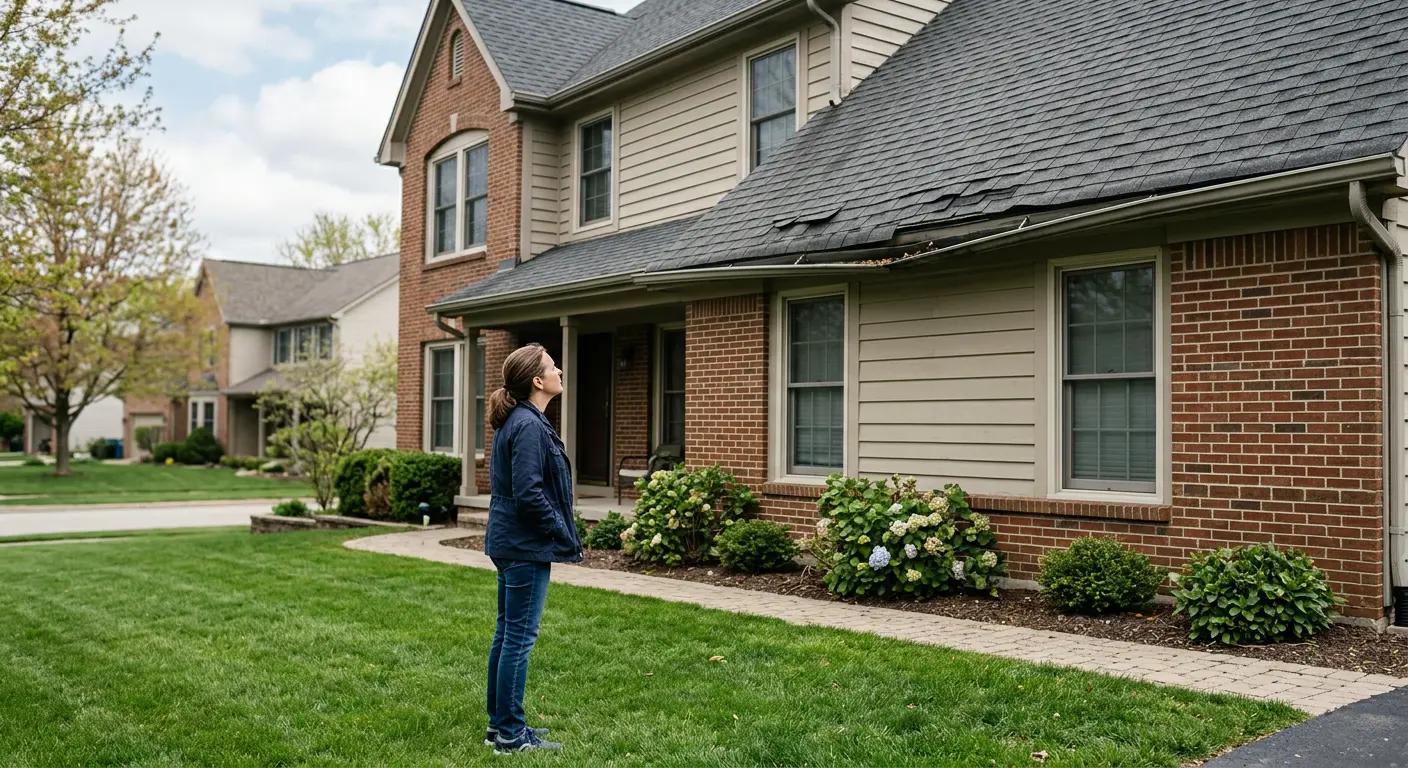
Choose a dry, calm period with good visibility. Stay on the ground and walk around the entire property. You can also view the roof from the street or another location where you have permission, as long as you remain in a safe position.
- Use binoculars or a phone camera with zoom.
- Take photographs from several angles and record the date and location of anything that looks unusual.
- Inspect each visible roof plane, along with the ridge, valleys, edges, vents, skylights, chimneys, and other roof penetrations.
- Look at the roof covering, flashing, gutters, downspouts, fascia, and eaves.
- Do not climb onto the roof after a storm, even if the roof appears stable.
Binoculars and camera zoom can help document visible conditions, but they cannot turn a distant view into a close inspection. Think of them as useful screening tools, not a substitute for professional access and judgment.
What to Look For From the Ground
Move slowly around the home and compare what you see from different viewpoints. A single angle may hide a lifted shingle, damaged flashing, or a sagging gutter.
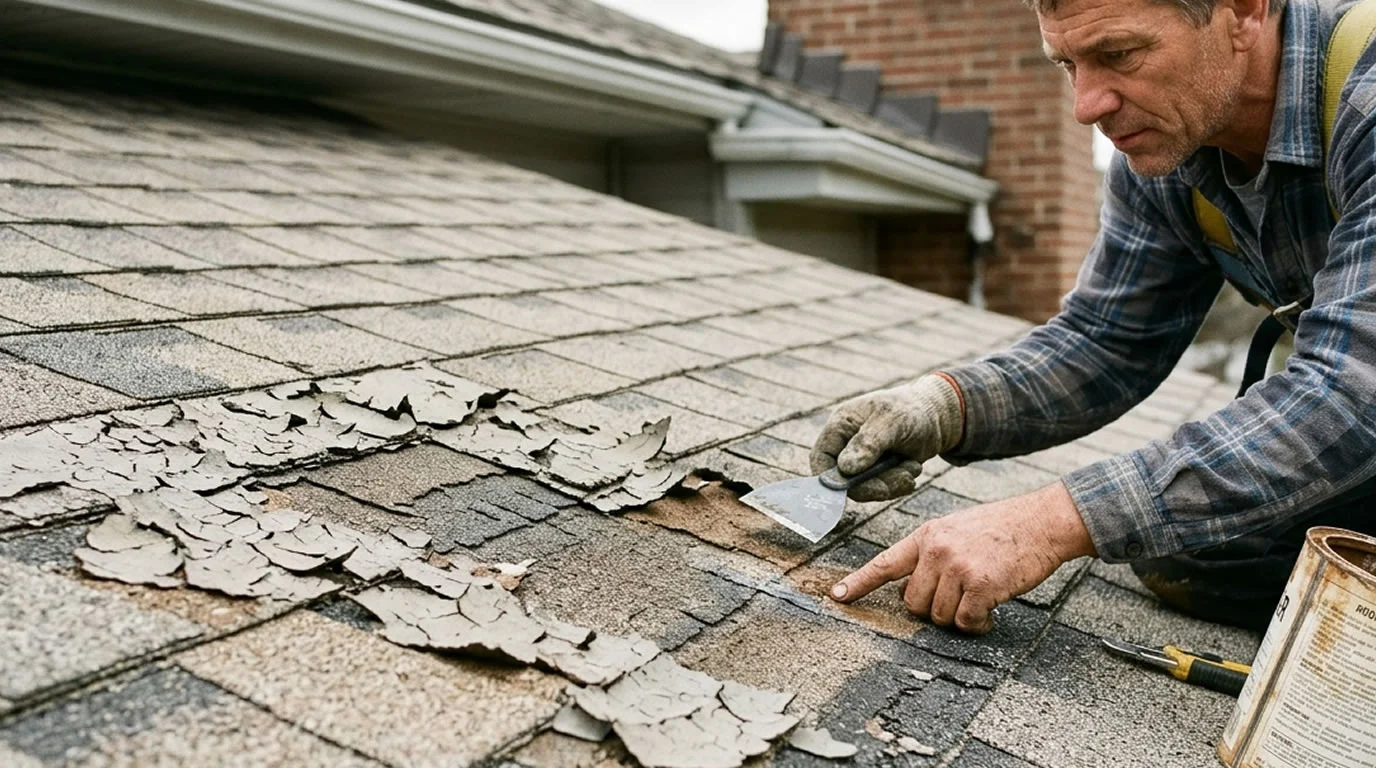
- Roofing materials: Look for missing, loose, lifted, cracked, curled, warped, or visibly damaged shingles and other displaced roof materials.
- Flashing: Check visible flashing around roof penetrations, edges, valleys, chimneys, and skylights for movement or damage.
- Roof lines: Look for sagging or an uneven roofline. A sagging area deserves professional attention rather than continued observation.
- Debris and vegetation: Note branches, leaves, plant growth, or other debris resting on visible roof areas or collecting around drainage components.
- Gutters and downspouts: Look for clogging, leaks, loose or sagging sections, damaged joints, detached downspouts, and visible granule accumulation.
- Fascia and eaves: Look for deterioration, damage, or signs that water may be affecting the roof edges.
- The ground around the home: Check for fallen shingles, roofing fragments, displaced metal, or unusually large amounts of granules.
These signs show that something may need attention, but appearance alone does not establish the cause, severity, or repair scope. For example, granules in a gutter may indicate roof covering wear, but a professional must determine what it means for that particular roof.
Check the Ceilings, Walls, and Attic
A ground view is more useful when paired with an interior check. Look at accessible ceilings, upper walls, and attic areas for signs that water or moisture may be entering the building.
- Water stains or damp areas on ceilings and walls
- Mold or mildew
- Wet insulation
- Daylight visible through the roof deck
- Dark spots, cracks, or sagging sheathing
- Moisture around roof penetrations
No ceiling stain does not prove that the roof is free of problems. Concealed damage may not be visible inside, and an interior sign does not necessarily identify the exact source of a leak. Do not enter an attic that has unsafe flooring, poor lighting, electrical hazards, pests, heavy insulation that prevents safe movement, or another obvious safety concern. Do not disturb suspected asbestos containing materials.
When to Call a Professional
Arrange a professional evaluation when you see missing or displaced materials, visible storm damage, sagging, water intrusion, deteriorated flashing, repeated granule loss, or drainage components that are damaged or not functioning properly.
Professional judgment is especially important when the roof is steep, slippery, fragile, high, inaccessible, or complex. Slate, tile, metal, low slope, and multilevel roofs may require material appropriate evaluation. Roofs with skylights, valleys, chimneys, or numerous penetrations can also have areas that are difficult to assess from the ground.
The American Society of Home Inspectors recognizes that roof walking is not required when a roof is too high, steep, slippery, fragile, or otherwise not readily accessible. A professional report should identify the inspection method and any areas that were not inspected.
When arranging an inspection, ask whether it will include the exterior roof system, accessible attic and interior areas, flashing, drainage, and a written photo report. The appropriate professional and inspection method can depend on the roof’s accessibility and materials.
Ladder Safety and Roof Access
A ladder is not necessary for a ground level roof check. If you use one only to observe an eave or gutter, inspect the ladder first, place it on a stable surface, follow the manufacturer’s instructions, and use appropriate safety guidance.
OSHA guidance for portable ladders includes inspecting ladders, using them on stable surfaces, securing them against displacement where applicable, and setting them at approximately a four to one angle. For an extension ladder used to access an elevated surface, the guidance says it should extend at least three feet above the landing.
Those are occupational safety requirements and guidance. They do not establish that transitioning from a ladder onto a residential roof is safe for a homeowner, and they are not a universal residential legal rule. A properly positioned ladder is still not an invitation to walk on a damaged, steep, slippery, or fragile roof.
What to Do After a Storm
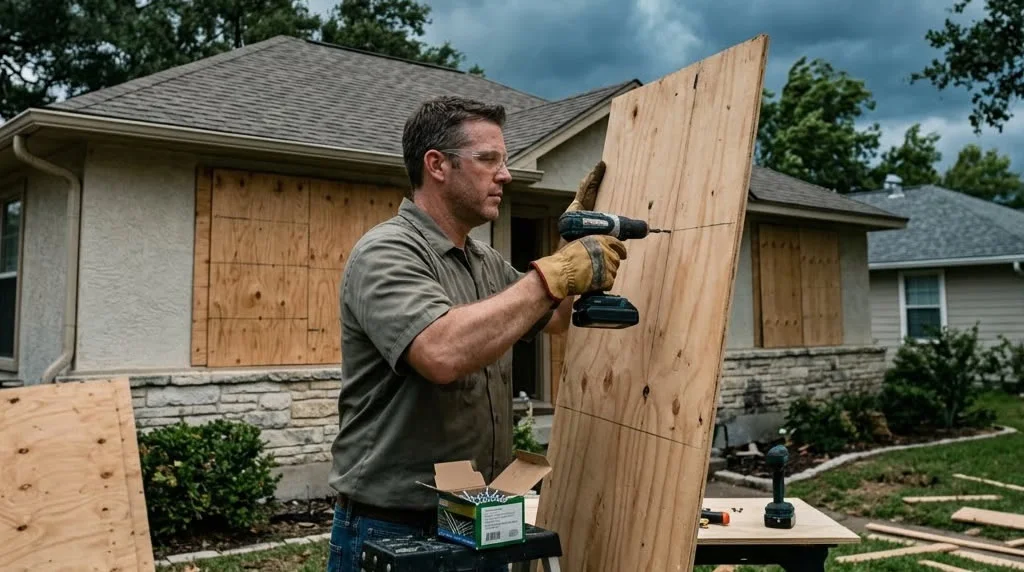
Check the roof from the ground after severe weather, even when the roof looks intact and the yard is free of debris. Wind, hail, heavy rain, or another severe event can leave damage that is not obvious from below.
- Photograph visible conditions before cleanup when it is safe to do so.
- Record the date, viewpoint, and location of apparent damage.
- Check accessible ceilings, walls, and attic areas for moisture evidence.
- Contact a qualified roofing professional for closer evaluation when damage is visible or suspected.
- Review the applicable insurance policy and local requirements before authorizing repairs.
Photographs can document what was visible, but they do not prove the full extent or cause of damage. Keep relevant maintenance records and preserve the dates associated with your observations.
Common Misconceptions
Misconception: A roof that looks intact from the yard does not need a professional inspection.
Correction: Ground viewing identifies visible conditions only. Attic areas, decking, underlayment, flashing, and concealed storm damage may remain unobserved.
Misconception: A homeowner must climb onto the roof to perform a meaningful check.
Correction: A ground level visual assessment can identify many visible concerns, and roof walking may be inappropriate or unnecessary when the roof is steep, fragile, slippery, high, or otherwise inaccessible.
Misconception: Correct ladder setup makes it safe to walk onto the roof.
Correction: Ladder guidance addresses ladder use and fall hazards. It does not establish that moving from a ladder onto a residential roof is safe for a homeowner.
Misconception: A roof inspection and a roof repair are the same task.
Correction: Homeowners can perform a ground level screening, but closer assessment and repairs should be left to qualified roofing professionals.
Frequently Asked Questions
How often should I check my roof from the ground?
Use a ground level check at least twice each year, in spring and fall, and after severe storms. This is general maintenance guidance, not a jurisdiction specific legal requirement or warranty term.
Should I inspect my roof after wind, hail, heavy rain, or a hurricane?
Yes. Check visible areas from the ground after severe weather, but do not assume that an intact looking roof or clean yard rules out concealed damage. Arrange professional assessment when damage is visible or suspected.
Can binoculars or a phone camera reveal roof damage accurately?
They can help reveal and document visible conditions from safe viewpoints. They cannot confirm concealed damage or replace a close professional inspection.
What roof problems can be seen from the ground but not confirmed from the ground?
You may see missing or damaged shingles, deteriorated flashing, sagging roof lines, granule accumulation, or damaged drainage components. Ground viewing generally cannot confirm the condition of the underlayment, roof deck, concealed flashing, or other hidden areas.
Should I inspect the attic if the ceiling has no water stain?
An accessible attic check can add useful information because some signs are not visible from the rooms below. Look for dampness, wet insulation, daylight, dark spots, cracks, sagging sheathing, and moisture around penetrations, but do not enter an unsafe attic.
Is it safe to use a ladder to look at the roof edge?
A ladder is not necessary for the ground level check. If you use one only to observe an eave or gutter, follow the ladder instructions and safety guidance, and do not use it as an improvised route onto the roof.
When does a roof inspection require a roofing contractor rather than a home inspector?
The appropriate professional and inspection method depend on the roof’s accessibility, materials, condition, and the scope of the concern. Ask what areas will be inspected, which areas cannot be accessed, and whether the report will document the method and limitations.
What should I photograph and ask for in a professional roof inspection report?
Photograph visible roof planes, edges, flashing, vents, skylights, chimneys, gutters, downspouts, fascia, eaves, and any fallen materials. Ask whether the professional will address the exterior, accessible attic and interior areas, flashing, drainage, areas that were not inspected, and a written photo report.
The Practical Takeaway
A ground level roof check is a safe and useful way to screen for visible problems. Walk the full perimeter, use binoculars or camera zoom, inspect accessible interior areas, and check again after severe weather.
Do not treat a clean looking roof as proof that every part of the system is sound. Missing materials, sagging, water intrusion, damaged flashing, repeated granule loss, unsafe access, or uncertainty about what you see are good reasons to stop observing and arrange a professional evaluation.