For most homes in the Northern Hemisphere, a south facing roof usually provides the strongest annual solar production. It receives favorable sun exposure across the day, making it a preferred starting point for panel placement. However, a south facing roof is not a requirement for solar.
An east or west facing roof may still support a practical residential solar system. In some cases, a mostly unshaded roof with an imperfect direction can produce more useful electricity than a south facing roof that is heavily shaded. Roof pitch, usable area, obstructions, and the home’s location all belong in the evaluation.
Which Roof Direction Is Best for Solar?
These general comparisons apply to homes in the Northern Hemisphere. They describe relative potential rather than guaranteed production. Actual results depend on the roof’s exact orientation, pitch, shading, available area, equipment, location, and household conditions.
| Roof direction | General solar potential | Practical interpretation |
|---|---|---|
| South facing | Usually the strongest annual production orientation | Preferred when the roof is reasonably unshaded and has usable area. |
| East facing | Can support a viable residential system | May favor more morning production than a south facing roof. |
| West facing | Can support a viable residential system | May favor more afternoon production than a south facing roof. |
| North facing | Generally less favorable than south, east, or west | Requires careful site specific modeling before consideration. |
Direction is only one part of a solar assessment. The U.S. Department of Energy’s Renewable Energy Ready Home Solar Photovoltaic Specification, Checklist and Guide identifies orientation, roof pitch, roof area, and shading as factors to consider when planning a residential array.
How Roof Pitch Affects Solar
Roof pitch describes how steeply a roof rises. It affects the angle at which panels receive sunlight, but an imperfect pitch does not automatically make a roof unsuitable for solar. The pitch should be included in the production analysis rather than treated as an automatic pass or fail condition.
Direction is generally more important than the exact roof angle, although the two factors work together. Ask the installer to show the assumed pitch and orientation for each roof plane in the proposed production model. This makes it easier to understand how the existing roof shape affects the estimate.
Is a Flat or Low Pitch Roof Suitable for Solar?
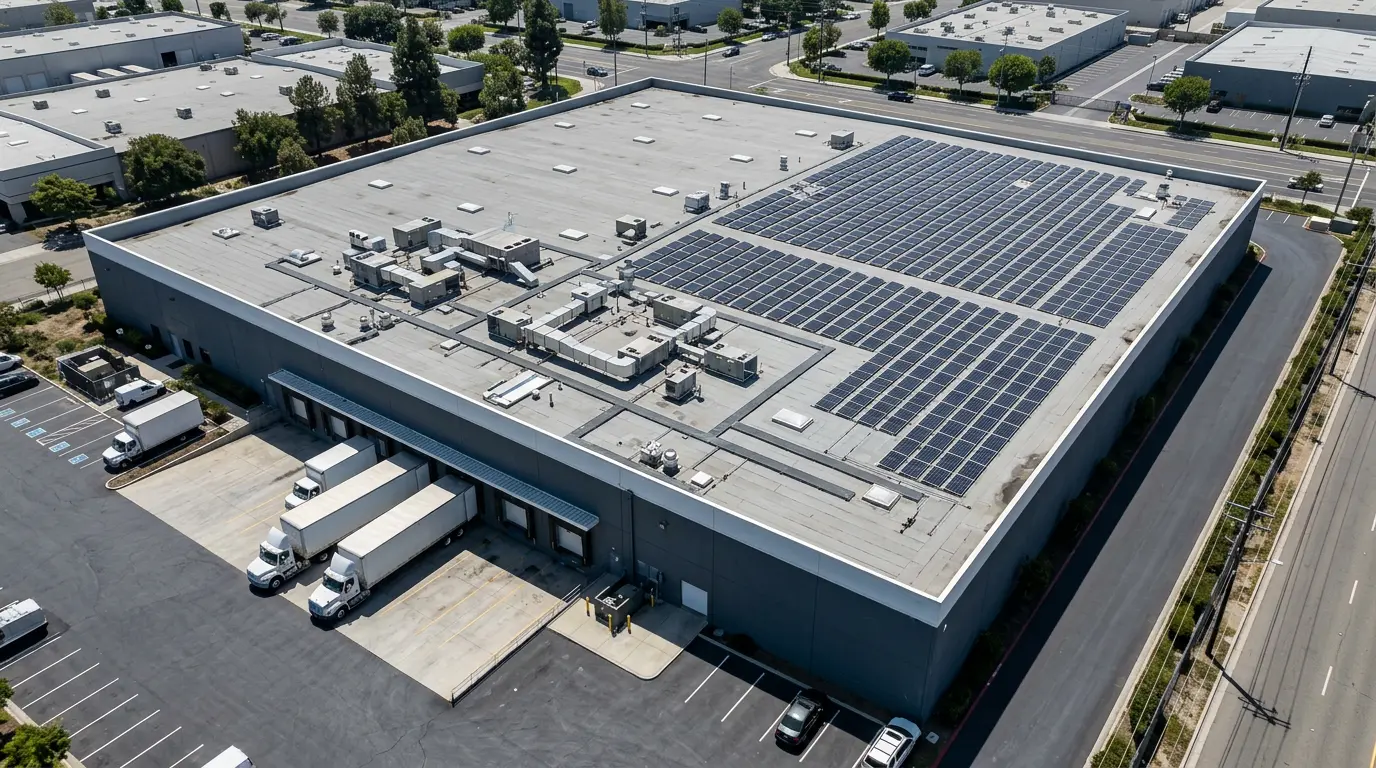
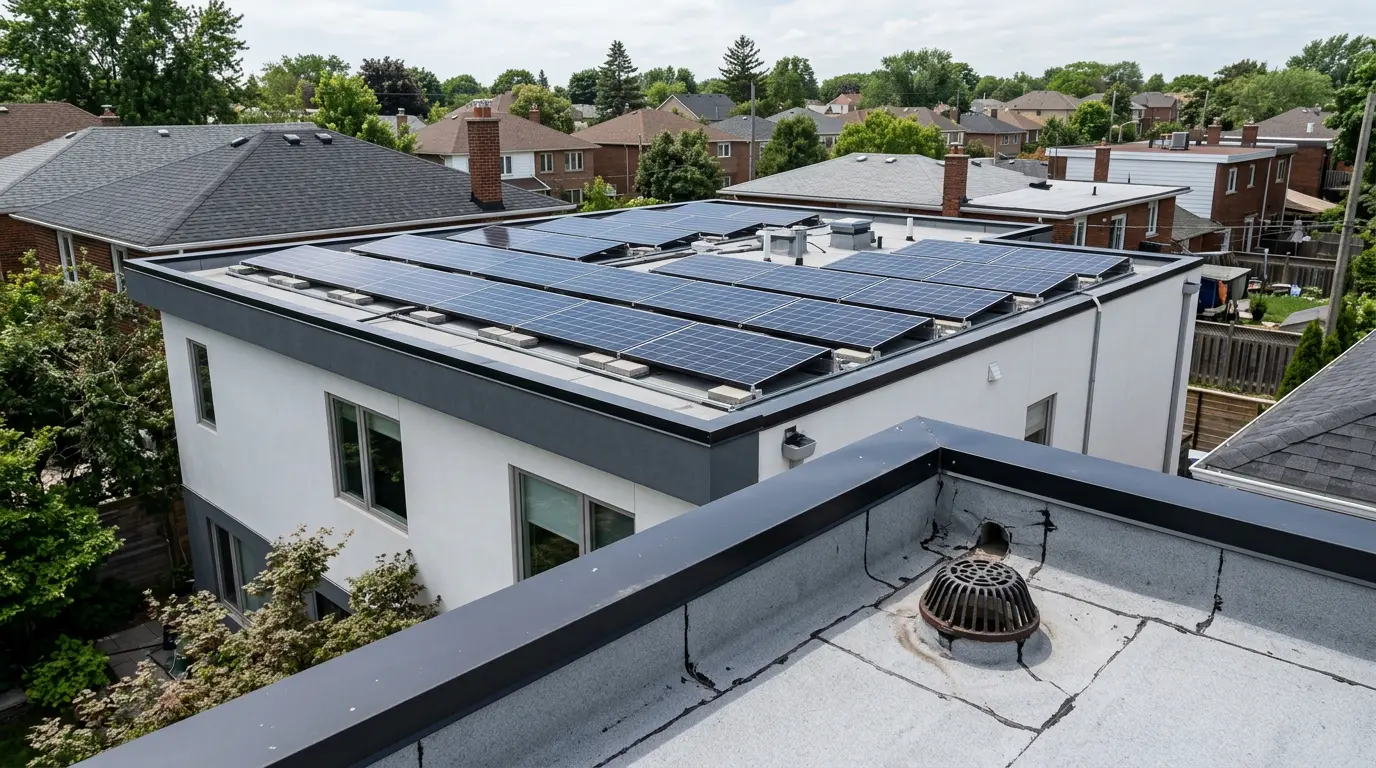
A flat or low pitch roof may still be usable, but the final decision depends on the roof’s specific design, usable area, shading, construction, and proposed panel layout. A production estimate should account for the actual roof conditions instead of relying on a general rule about pitch.
Why Shading May Matter More Than Direction
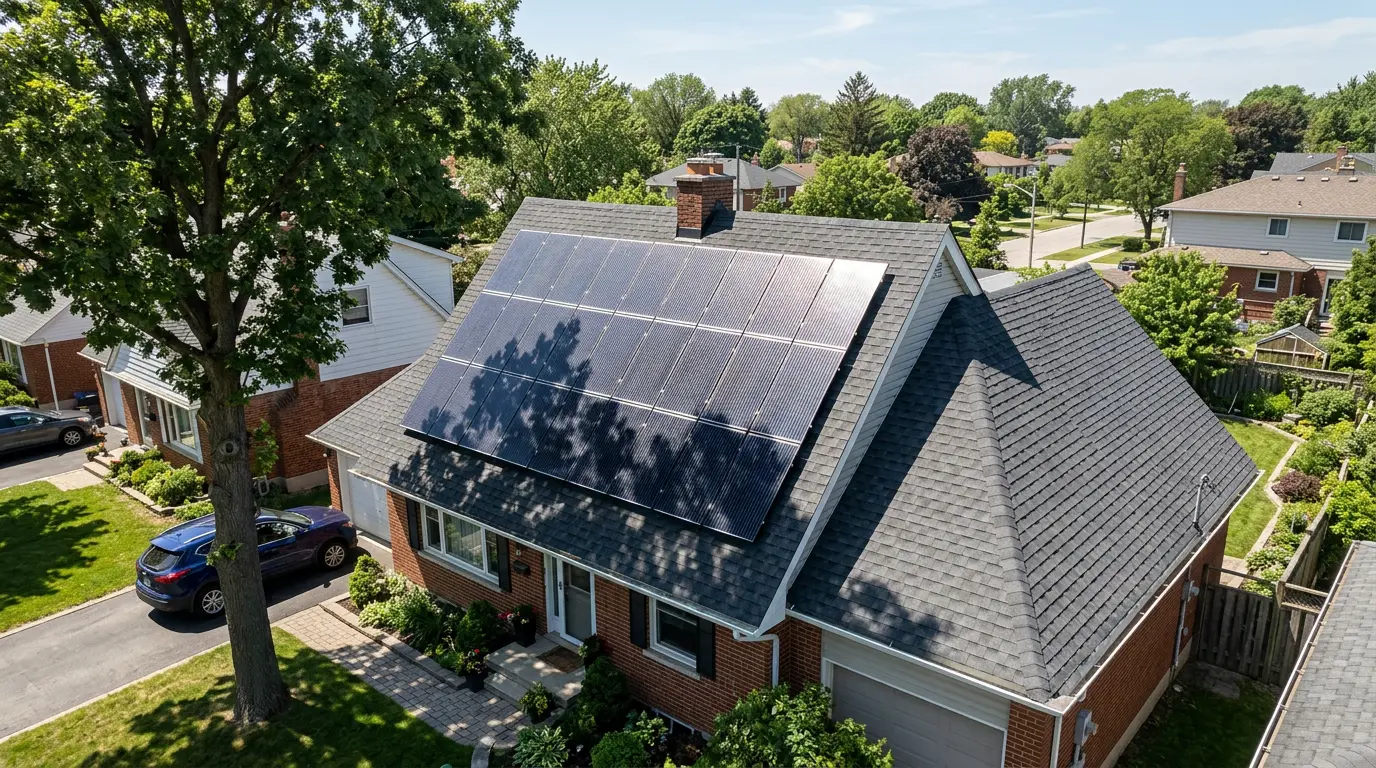
Shade can materially reduce solar production. Trees, nearby buildings, chimneys, vents, dormers, and other roof features can block sunlight or reduce the area available for panels. As a result, a mostly unshaded east or west facing roof may be more useful than a shaded south facing roof.
A proper evaluation should consider shading across the roof areas being considered. Ask the installer to identify the expected shading losses for each roof plane and explain whether the proposed panel layout avoids or limits those losses.
Do not assume that removing vegetation is always the right solution. Tree trimming may require separate consideration, and an installer should first evaluate alternate panel placement or other design options for the specific property.
If your home has multiple roof directions or partial shading, learning about microinverters versus a string inverter may help you understand one of the equipment decisions that can arise during system planning. The appropriate configuration still depends on the proposed design.
How Much Roof Area Do You Need?
Total roof size does not equal usable solar area. Roof sections with poor sun exposure, vents, skylights, dormers, chimneys, roof edges, access needs, and other installation constraints can reduce the space available for panels.
A home may appear to have plenty of roof area but still have limited space on the best oriented, unobstructed roof planes. Have the installer show how much area remains usable after the proposed layout accounts for these features. The layout should also identify which panels are planned for each roof plane.
The U.S. Department of Energy explains that rooftop solar potential depends on factors including roof size, shading, tilt, direction, location, and construction. Its solar rooftop potential guidance also points to PVWatts as a tool for estimating production from site and system inputs.
Check Roof Condition Before Installing Solar
Roof direction should not be the only property condition you review. Confirm the roof’s current condition and remaining service life before installing panels. If the roof needs work, solar may complicate future roof repairs or replacement because the panels may need to be removed and reinstalled.
For planning guidance, review whether you should replace your roof before solar. That information can help frame the roof condition question, but it does not replace a roof inspection or the installer’s structural review of the proposed project.
Questions to Ask a Solar Installer
A proposal is easier to compare when it shows how each roof plane contributes to the design. Consider asking:
- Can you provide the production estimate separately for each roof plane and identify the assumed shading losses?
- How much roof area remains usable after accounting for vents, skylights, access requirements, and the proposed panel layout?
- What azimuth and pitch did you use for each roof plane in the production estimate?
- Would east or west facing panels better match our household’s morning or afternoon electricity use?
- Does the roof’s current condition and remaining service life affect the project timing?
These questions do not make one roof direction universally correct. They help you compare the expected production, layout, shading assumptions, and roof condition for your specific home.
Frequently Asked Questions
Can Solar Panels Work on an East or West Facing Roof?
Yes. East and west facing roofs can support a viable residential solar system. East facing panels may favor morning production, while west facing panels may favor afternoon production. The actual result depends on the roof’s pitch, shading, location, equipment, and available area.
Is a Flat or Low Pitch Roof Suitable for Solar?
It may be suitable. The roof’s actual pitch, construction, orientation, shading, usable area, and panel layout should be included in a site specific production analysis.
Does Shade Matter More Than Roof Direction?
Shade can have a major effect on production, so an unshaded east or west facing roof may be more useful than a heavily shaded south facing roof. The installer should model shading losses for the specific roof planes instead of evaluating direction by itself.
Should I Install Solar on an Older Roof?
Review the roof’s condition and remaining service life before installation. If roof work may be needed, consider whether addressing the roof first would improve project timing. A roof inspection and the installer’s structural review are still needed for a property specific decision.
Evaluate the Whole Roof, Not Just Its Direction
A south facing roof is usually the strongest starting point for annual solar production in the Northern Hemisphere, but east and west facing roofs can also work. The most useful evaluation compares each roof plane’s direction, pitch, shading, usable area, roof condition, and expected production.
Once you understand the roof layout and have a production estimate, you can estimate your solar project cost as an initial planning step. Treat that estimate as preliminary and compare it with the site specific proposal and roof review.