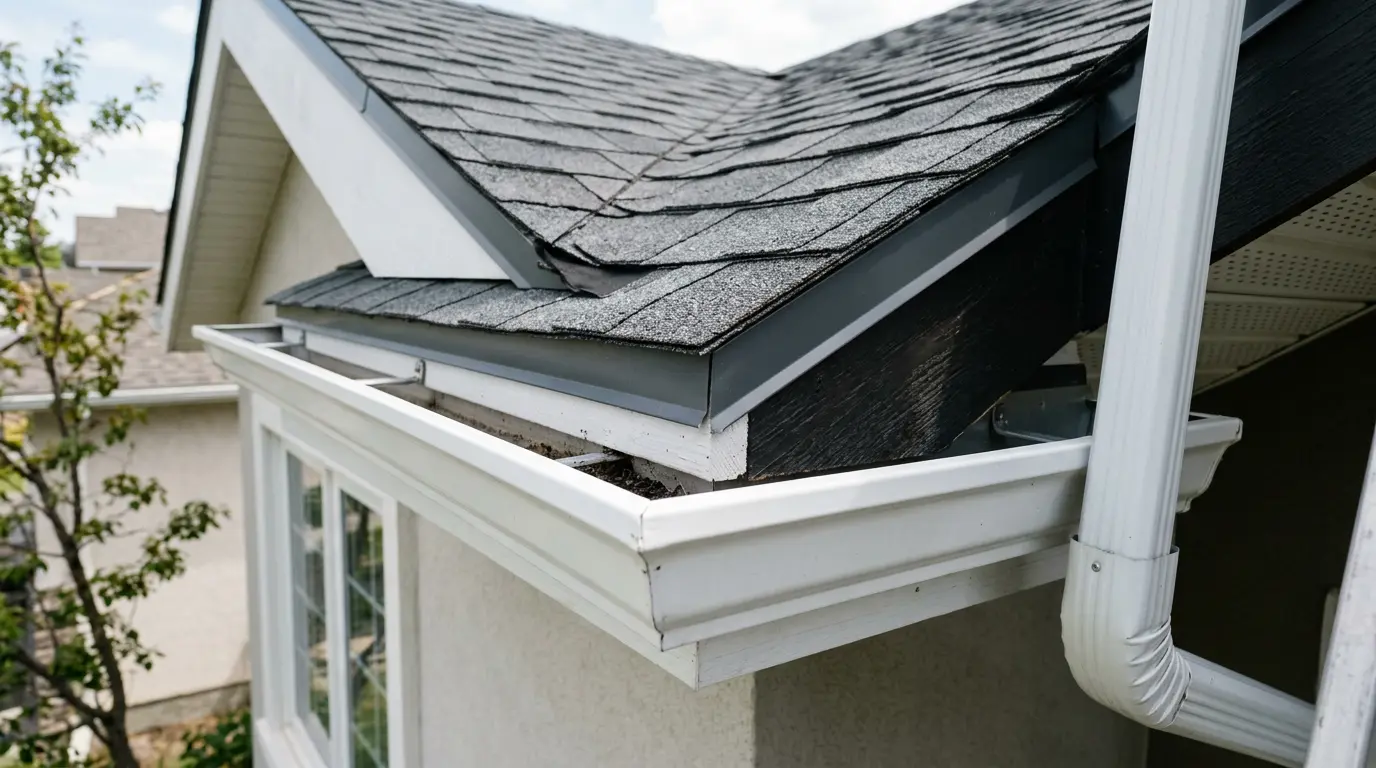
A roof drip edge is metal flashing installed along the edges of a residential roof. It helps guide water away from the roof edge and fascia, supports drainage into the gutter or beyond the wall edge, and helps limit moisture exposure at the roof perimeter.
Drip edge is commonly installed along both the lower horizontal edges, called eaves, and the sloping sides of a gable roof, called rakes. If sections are missing, loose, corroded, or installed in the wrong position, water management at the roof edge can become less reliable. During a roof repair or replacement, the drip edge should be evaluated rather than simply covered with new shingles.
What a Roof Drip Edge Does
Drip edge creates a metal transition at the roof perimeter. Part of the flashing extends below the roof sheathing, while another portion extends back onto the roof deck. This helps direct water away from the fascia and toward the gutter or beyond the outside wall edge.
The gutter and drip edge perform different jobs. A gutter collects water after it leaves the roof, while drip edge helps manage the transition from the roof covering and underlayment to the roof edge. A gutter does not automatically replace properly installed edge flashing.
For asphalt shingle roofs, the 2021 International Residential Code includes drip edge provisions for eaves and rake edges, including minimum extensions and mechanical fastening. However, that code is a model code. The rule that applies to your home depends on the code edition and amendments adopted by your local building department, as well as the roofing material and project conditions. You can review the model provisions in Chapter 9 of the 2021 International Residential Code.
Where Drip Edge Is Installed
The two primary locations are the eaves and rakes. They are both part of the roof perimeter, but the installation sequence can differ. The roofing material, underlayment, drip edge profile, local code, and manufacturer instructions all need to be considered together.
| Roof edge location | What it is | Main water management purpose | Installation consideration |
|---|---|---|---|
| Eave | The lower horizontal edge of a sloped roof, commonly above the gutter | Helps manage water leaving the lower roof edge and protect the roof edge and fascia transition | General guidance commonly places drip edge under the underlayment. Self adhering underlayment and local code may change this detail. |
| Rake | The sloping edge along the side of a gable roof | Helps control water at the side perimeter and protect the roof edge | General guidance commonly places drip edge over the underlayment. Manufacturer instructions and corner detailing apply. |
This comparison applies primarily to residential asphalt shingle roof systems. Exact dimensions, fastening, overlaps, and sequencing depend on the locally adopted code, roofing material, underlayment, and manufacturer instructions. The Asphalt Roofing Manufacturers Association guidance on drip edge also identifies local code and manufacturer instructions as important factors.
Does Missing or Damaged Drip Edge Matter?
A visible problem with the drip edge can leave the roof perimeter and fascia more exposed to water management problems. Warning signs may include flashing that is loose, bent, separated at joints, corroded, or visibly allowing water behind the gutter. Staining on the fascia or soffit can also be a reason to arrange an evaluation, although staining alone does not prove that the drip edge is the source.
A damaged metal strip does not automatically show how far moisture may have traveled. The fascia, roof edge decking, underlayment, or gutter attachment area may need to be evaluated after the assembly is exposed. A visible drip edge issue also does not, by itself, prove that concealed wood, roof decking, or interior areas are damaged.
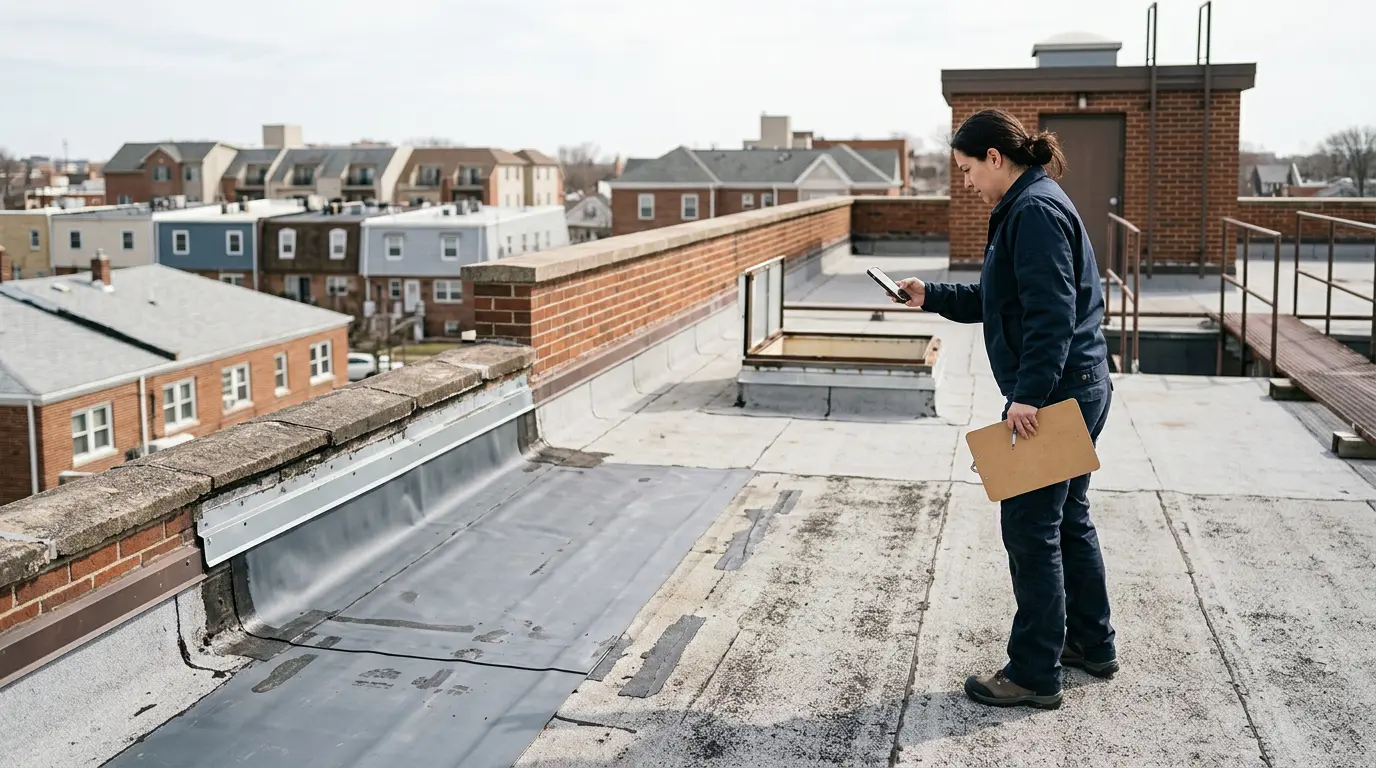
For a preliminary look, homeowners can check your roof without climbing. A ground level review can help you spot missing or visibly loose sections, but it is not a complete roof inspection or a diagnosis. Avoid climbing onto the roof to investigate the problem.
If you want a broader evaluation, review what a roof inspection should cover. The supplied inspection resource addresses areas such as drainage, flashing, roof covering, penetrations, and accessible attic areas, rather than looking at shingles alone.
Drip Edge During Roof Repair
A repair may involve replacing a visible section of drip edge, but the appropriate scope depends on what the contractor finds. If water has affected nearby fascia, roof edge decking, underlayment, or the gutter attachment area, replacing only the exposed metal may not address the full issue.
Ask the contractor to explain whether the existing drip edge is properly fastened, undamaged, and compatible with the planned repair. Also ask how the repair will connect with the underlayment, starter shingles, gutters, and nearby roof to wall or corner details.
Drip Edge During Roof Replacement
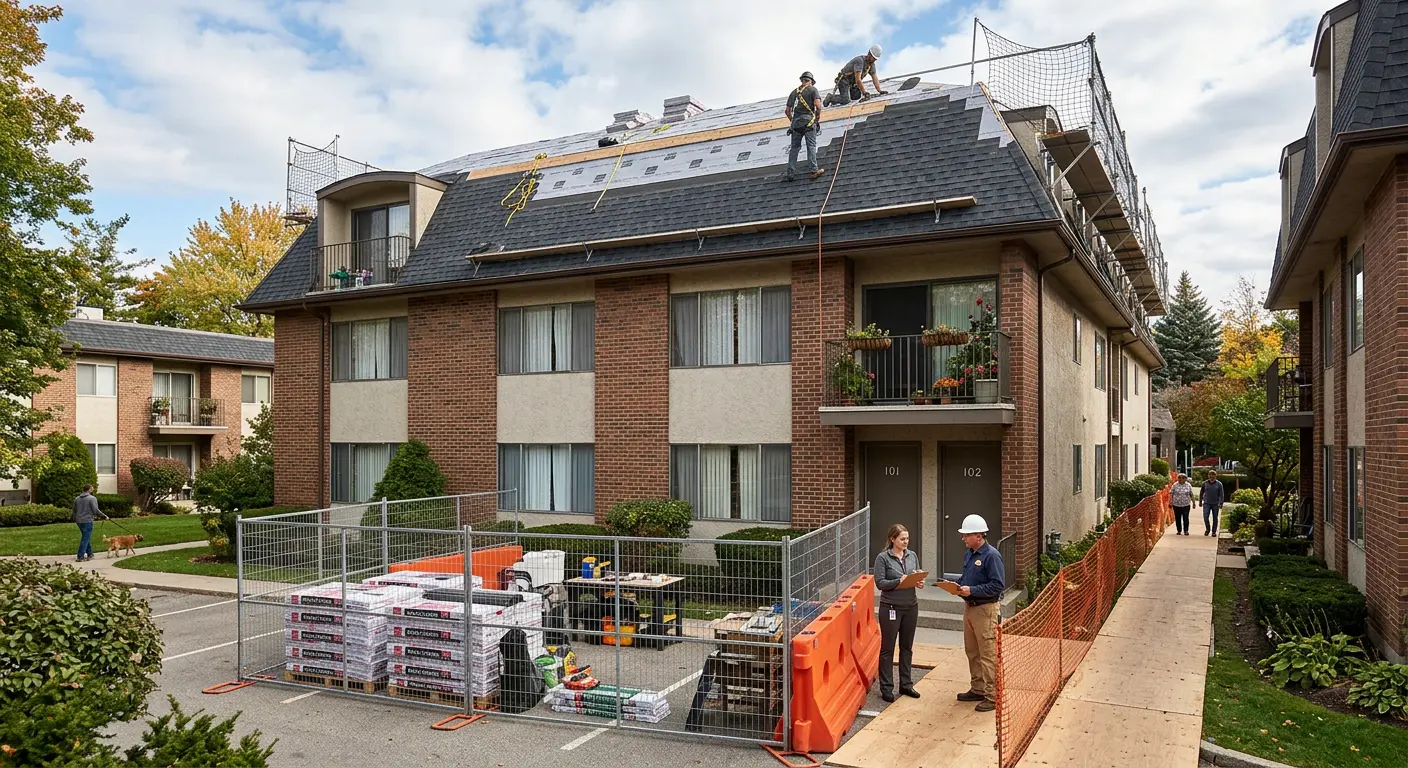
New shingles do not automatically correct missing or poorly positioned edge flashing. Before approving a replacement, ask whether the estimate includes new drip edge at all applicable eaves and rakes, along with removal of damaged or missing sections.
Installation order can differ between eaves and rakes. General industry guidance often places drip edge under the underlayment at eaves and over the underlayment at rakes, but self adhering underlayment, ice dam protection, local code, and product instructions can change the eave detail. Manufacturer instructions can also specify how the starter course should align with or overhang the drip edge.
Useful questions to ask include:
- Which local code and manufacturer instructions are you using for the eave and rake drip edge installation?
- Does the estimate include new drip edge at all applicable roof edges?
- If the existing drip edge is being kept, how was it confirmed to be properly fastened, undamaged, and compatible with the new roof covering?
- How will the drip edge integrate with the underlayment, starter shingles, gutters, and corner details?
Keep the answers in writing with the rest of the project scope. You can use this guide to understand what a roof replacement contract should include and this resource to compare roof replacement estimates. Estimates may differ because one contractor includes flashing replacement or related edge work while another does not.
If a drip edge problem is part of a broader roof decision, you can use the roof cost calculator to estimate your roof project cost. Treat any calculator result as a preliminary planning figure, not a substitute for an evaluation of the roof assembly or a project specific contractor estimate.
Frequently Asked Questions
Is Drip Edge Required on Every Residential Roof?
Not under one universal rule for every home and roofing material. Model residential code provisions address drip edge for asphalt shingle roof edges, but the enforceable requirement depends on the code adopted by your local building department, local amendments, roofing material, and project conditions.
Does Drip Edge Go Over or Under the Underlayment?
The sequence can differ by location. General guidance commonly places it under the underlayment at eaves and over the underlayment at rakes. Self adhering underlayment, ice dam protection, local code, and the roofing manufacturer’s instructions may change the detail.
Can Damaged Drip Edge Be Repaired Without Replacing the Entire Roof?
That depends on the location and condition of the flashing and any concealed damage around it. A contractor may find that a localized repair is appropriate, or may identify related problems involving the fascia, roof edge decking, underlayment, or gutter attachment area. The roof should be evaluated before the repair scope is decided.
Should Drip Edge Be Replaced When New Shingles Are Installed?
Missing, loose, corroded, damaged, or poorly positioned drip edge should be addressed during the replacement rather than simply covered with new shingles. If existing flashing is being kept, ask how its condition, fastening, compatibility, and connection with the new roof covering were confirmed.
The Main Point About Roof Drip Edge
Roof drip edge is a small but important part of residential roof edge drainage. It helps guide water away from the fascia and roof perimeter at both eaves and rakes, but the correct installation detail depends on local code, the roofing system, underlayment, and manufacturer instructions.
If sections are missing or damaged, have the roof edge evaluated before repair or replacement. Confirm in writing what the contractor will do with the drip edge and how it will connect with the rest of the roof drainage and flashing system.