Commercial buildings should add battery storage when it solves a specific operating or financial problem. That may mean reducing demand charges, using more solar electricity after sunset, keeping selected operations running during an outage, or supporting a broader resilience plan. Solar alone may be the better fit when outages have limited consequences, evening electricity use is low, demand charges are not significant, or the site lacks suitable space and budget.
The right answer comes from the building’s load profile, utility rate structure, outage priorities, battery controls, project cost, and permitting requirements. A site specific financial and resilience review is more useful than assuming every commercial solar project needs storage.
When Battery Storage May Make Sense
Battery storage can provide several different types of value, and the strongest reason for one building may not matter as much at another. Commercial solar and storage economics vary by building type, climate, utility tariff, load profile, technology cost, and available value streams. A commercial analysis from the National Renewable Energy Laboratory considers factors such as demand charge reduction, energy shifting, grid services, and resilience rather than treating storage as a universal financial win.
| Primary goal | How storage may help | What must be verified | Main caution |
|---|---|---|---|
| Reduce demand charges | The battery discharges during selected high demand periods to reduce the building’s measured peak | Utility tariff, demand interval, peak timing, battery power rating, and control strategy | Savings are specific to the tariff and load, and the battery may miss the relevant peak |
| Use more solar on site | The battery stores excess solar for later building use | Solar production timing, building load, export compensation, usable capacity, and efficiency | Storage adds cost and energy losses, and solar alone may be preferable where exports are well compensated |
| Maintain critical operations during outages | The battery supplies designated backed up circuits and may recharge from solar when designed for islanded operation | Critical load list, outage duration, reserve settings, inverter capacity, transfer equipment, and solar controls | It may not support the entire building or equipment with high starting power |
| Meet broader resilience or operating goals | Storage can be evaluated with solar, generators, controls, and other measures as part of a resilience plan | Required uptime, fuel availability, building operations, and acceptable capital cost | Resilience value may justify storage even when bill savings alone do not |
These categories are decision points, not guarantees of savings or backup performance. The result depends on the building, utility territory, equipment, controls, and project design.
Start With the Building’s Outage Priorities
A battery is not automatically a backup system for every circuit in a commercial building. Begin by identifying the operations that cannot tolerate interruption. Depending on the property, that list may include life safety systems, security, refrigeration, communications, data equipment, pumps, or selected tenant operations.
The design should then match those priorities with the battery’s power rating, usable energy capacity, transfer equipment, reserve settings, and solar controls. A system may hold enough energy for several hours but still be unable to start or support high power equipment operating at the same time. Solar can extend outage support when the system is designed to operate safely without the utility grid, but solar availability, battery reserve, and outage duration still matter.
Ask the project team: Which specific circuits will remain energized during an outage, for how long under the stated assumptions, and what happens if the outage lasts longer than expected?
Review the Building’s Electricity Use
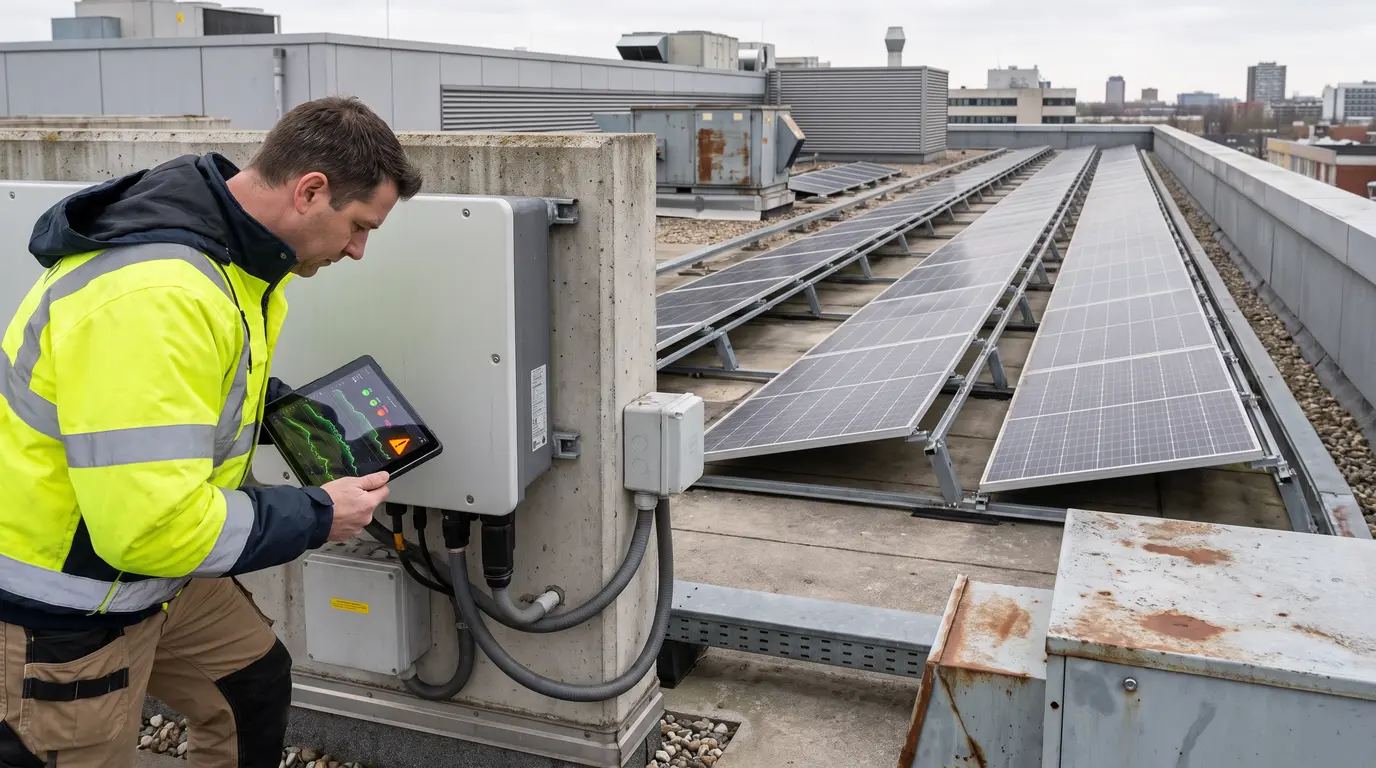
Before sizing storage, review at least 12 months of interval electricity data, utility bills, demand charges, time of use periods, solar production, and outage history. This helps show whether the battery is mainly being considered for demand reduction, energy shifting, backup power, or several services at once.
Demand charges deserve special attention. A battery may reduce a building’s measured peak even when total monthly energy use changes very little. That opportunity depends on the utility’s tariff, how demand is calculated, the timing of the peak, the battery’s power rating, and the control strategy. A model that uses the wrong tariff or misses the building’s actual peak can make storage look more valuable than it is.
Ask this question: What utility tariff and demand charge calculation does the financial model use, and how sensitive are the projected savings if the tariff changes?
Consider the Roof and Site Feasibility
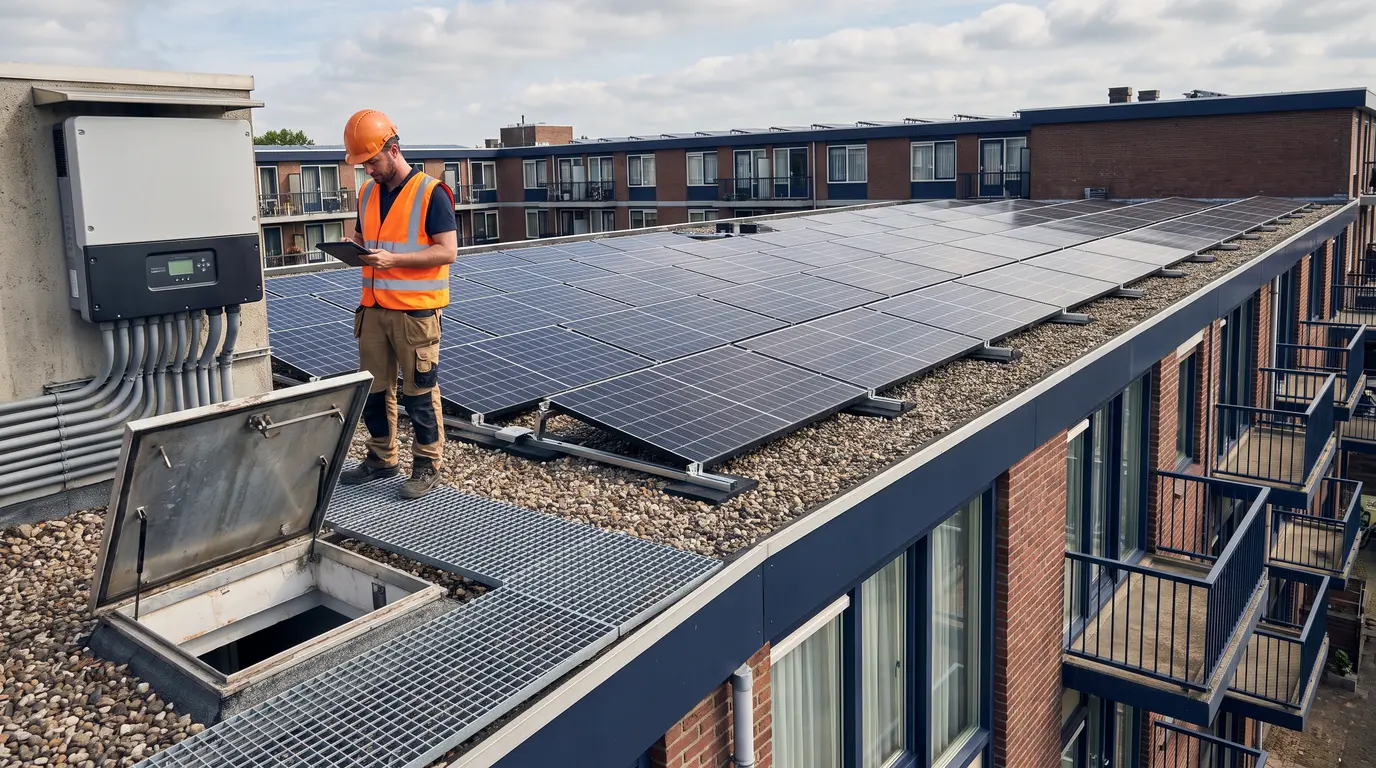
Solar and storage planning begins with the physical site. Usable roof area, structural capacity, roof condition, electrical service, equipment placement, and available space for storage all affect the project. The guide to how much solar a commercial roof can support can help organize those early questions. It addresses commercial solar capacity and roof constraints, but it does not determine battery sizing or storage economics.
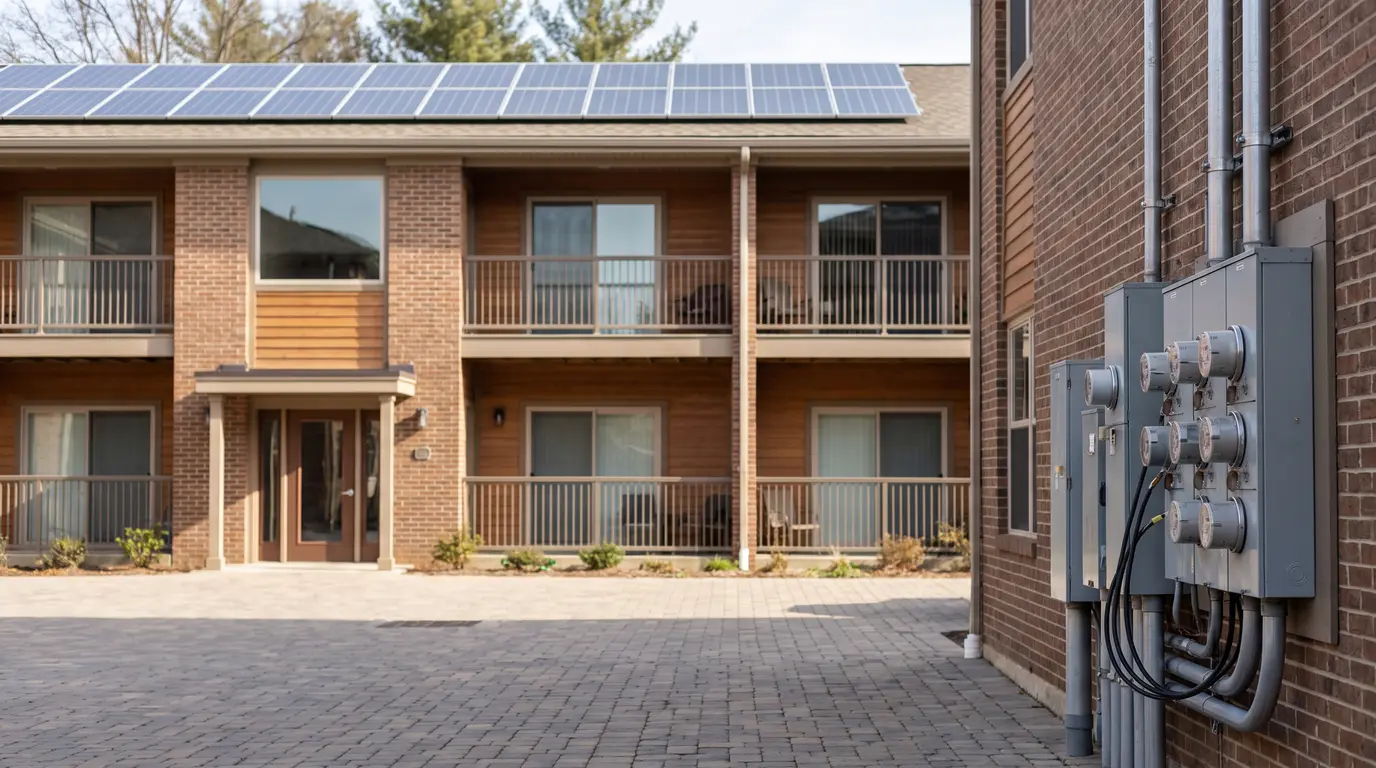
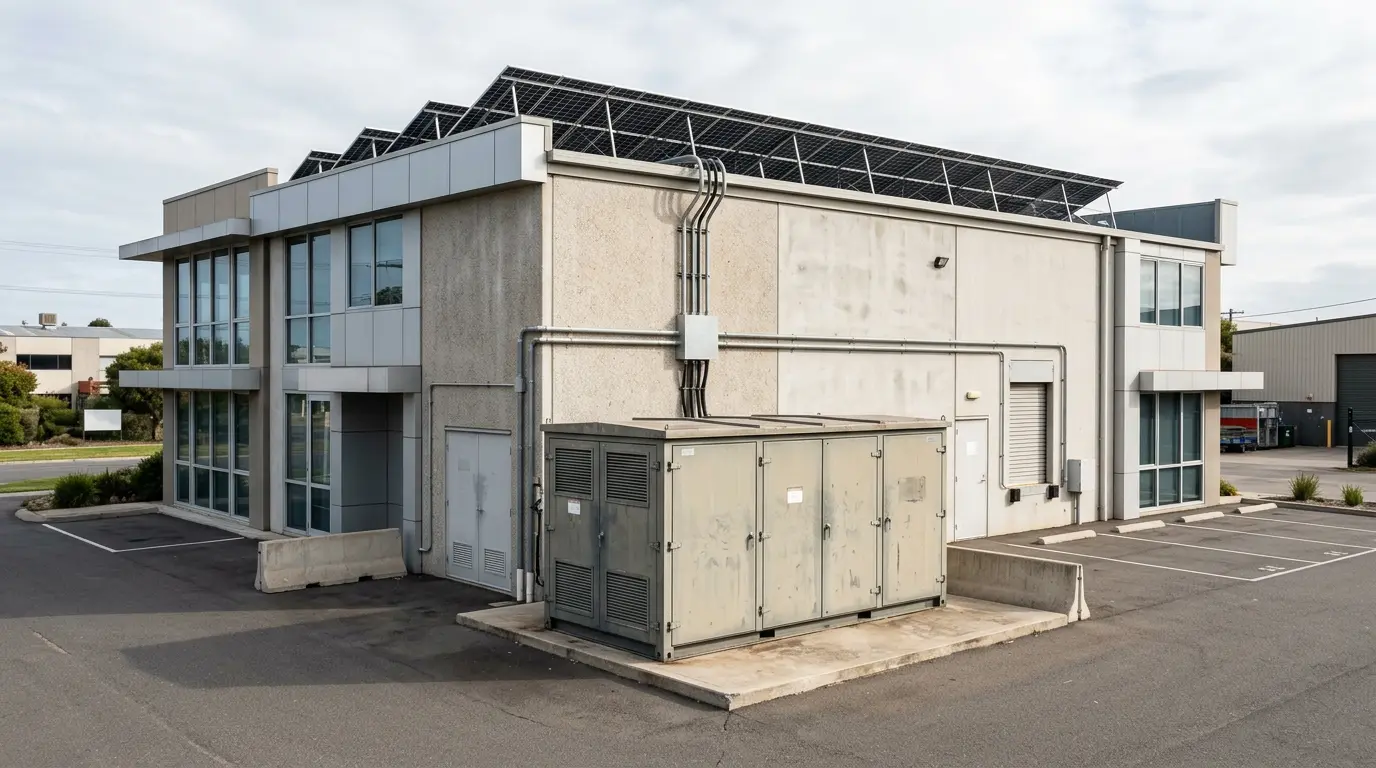
Battery projects may involve building, electrical, fire, zoning, and interconnection approvals. Requirements vary by location, technology, installation type, and whether equipment is inside or next to the building. Confirm the applicable requirements with the authority having jurisdiction, utility, fire official, and qualified project team before finalizing a layout.
Compare the Full Ownership Picture
Storage adds more than equipment to a solar project. Compare the initial project cost with expected value from demand reduction, solar self consumption, energy shifting, and resilience. Include maintenance, monitoring, warranty limits, degradation, software and controls, insurance, permitting, and eventual replacement planning.
Battery operation also affects lifecycle economics. Sizing, state of charge, daily energy throughput, controls, and degradation costs can all influence the result. Equipment life, usable capacity, warranty terms, and replacement costs vary by product and operating strategy, so a generic service life should not be used in place of product specific information.
For a preliminary starting point, you can review commercial solar cost or estimate commercial solar costs. These resources can support early planning, but they are not battery design tools, utility bill models, incentive eligibility checkers, or project quotes.
As of the research date, the Internal Revenue Service identifies the Clean Electricity Investment Credit as potentially available to taxpayers with qualified facilities and energy storage technology placed in service after December 31, 2024. The base credit described by the IRS is 6 percent of qualified investment, with possible increases subject to applicable requirements. Eligibility and credit value can depend on ownership, timing, labor requirements, domestic content, prohibited foreign entity restrictions, and other details. Ask a tax professional to confirm how the rules apply to the proposed project.
You can review the Internal Revenue Service information on the Clean Electricity Investment Credit when discussing eligibility with the project’s tax professional.
Compare Storage With Other Project Options
If resilience is the main goal, compare solar only, battery only, solar and storage, and a generator or other backup alternatives. Normal utility bill savings and outage support are related but distinct parts of the decision. A configuration that performs well during normal grid connected operation may not provide the outage duration or critical load support the building requires.
Controls deserve a clear explanation. Ask how the system prioritizes demand charge reduction, solar self consumption, outage reserve, time of use shifting, and possible grid services. A strategy that saves money during normal operation may leave less energy available for an outage unless a reserve is maintained.
Questions to Ask Before Approving a Project
- Which specific circuits will remain energized during an outage, and what assumptions determine the duration?
- What utility tariff and demand charge calculation does the financial model use?
- How does the system respond when demand reduction, solar use, and outage reserve compete?
- What are the battery’s power rating, usable energy capacity, reserve settings, and inverter limits?
- What maintenance, monitoring, warranty, degradation, insurance, and replacement costs are included?
- Which building, electrical, fire, zoning, and interconnection approvals may apply?
- Which incentives apply to this owner, project structure, and placed in service date, and who will confirm eligibility?
Frequently Asked Questions
Can a commercial battery power the entire building during an outage?
Not automatically. Commercial storage is often designed around selected critical loads rather than every circuit. The answer depends on the load list, battery energy capacity, inverter power rating, transfer equipment, reserve settings, solar availability, and outage duration.
Is battery storage worthwhile if the utility does not charge for demand?
It may still be useful for shifting solar electricity into later hours or supporting selected operations during outages. Without demand charges, one potential value stream is absent, so the comparison should focus on the building’s electricity timing, export compensation, resilience priorities, project cost, and available alternatives.
Should a commercial owner compare batteries with a generator?
Yes, when resilience is a primary goal. Compare the required uptime, critical loads, fuel availability, controls, operating needs, capital cost, and the role of solar. The best comparison is specific to the building’s outage priorities rather than based on one technology in isolation.
What information does an installer need to size commercial battery storage?
Provide at least 12 months of interval electricity data, utility bills, demand charges, time of use periods, solar production if available, outage history, and a list of critical loads. The project team also needs to understand equipment power requirements, desired outage duration, site space, electrical service, operating goals, and the controls that will manage competing priorities.
A Practical Next Step
Commercial buildings should add battery storage when the system delivers a measurable benefit that matters to the owner, whether that is demand charge reduction, better use of solar electricity, selected outage support, or a broader resilience objective. Solar alone may be the better choice when those benefits are limited or the project constraints outweigh them.
The most useful next step is to gather the building’s electricity and outage information, define the critical loads, and request a comparison of solar only, solar and storage, and other backup options. Roof Mechanics is a roofing and solar directory that can help you continue planning and find local contractors for project discussions without treating a preliminary calculator or general article as a final design.