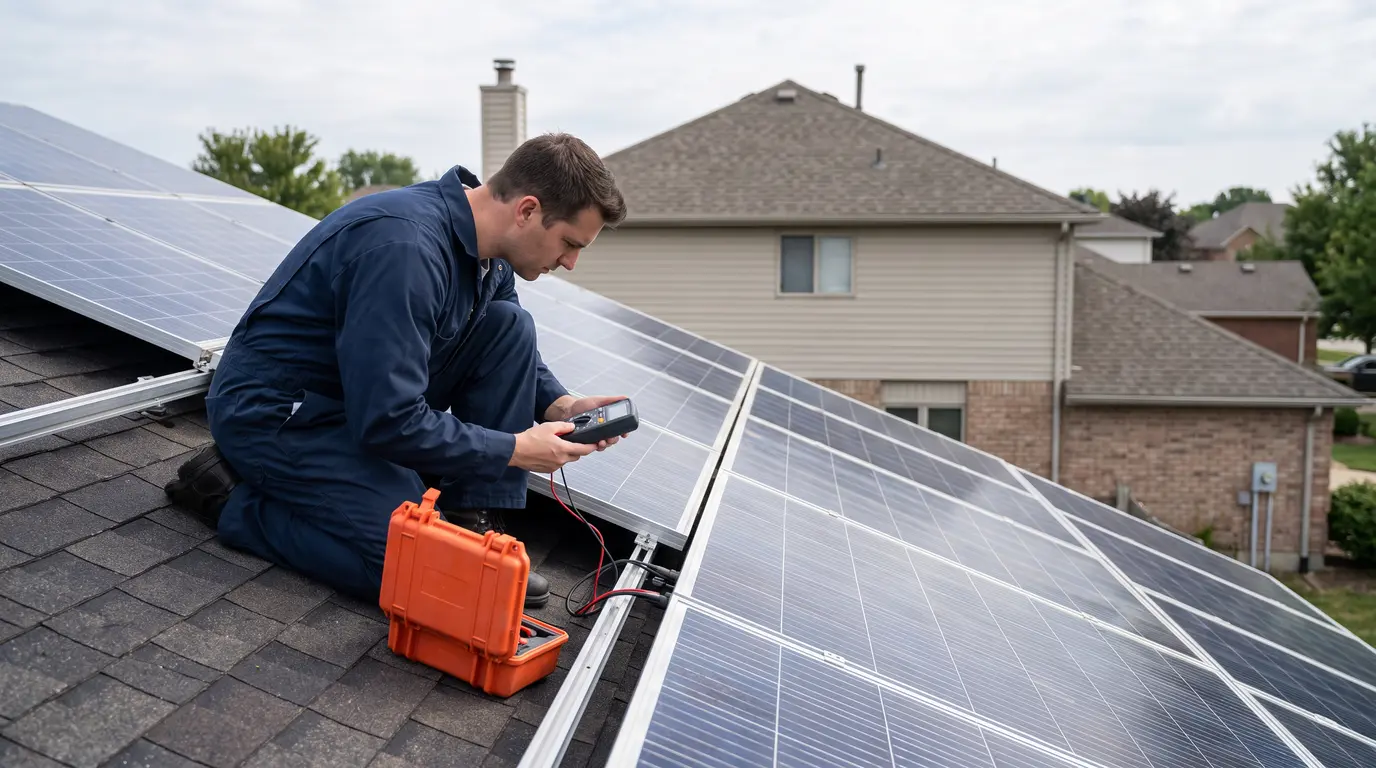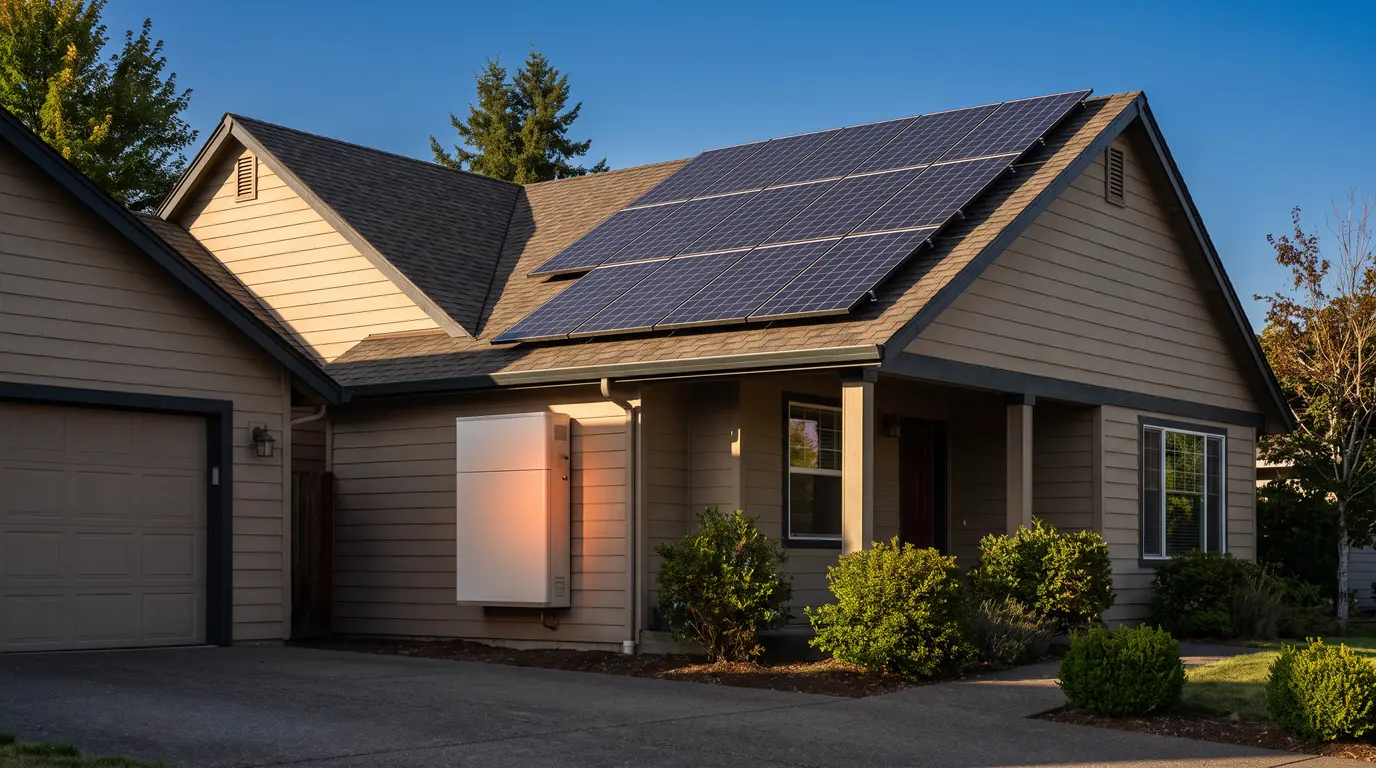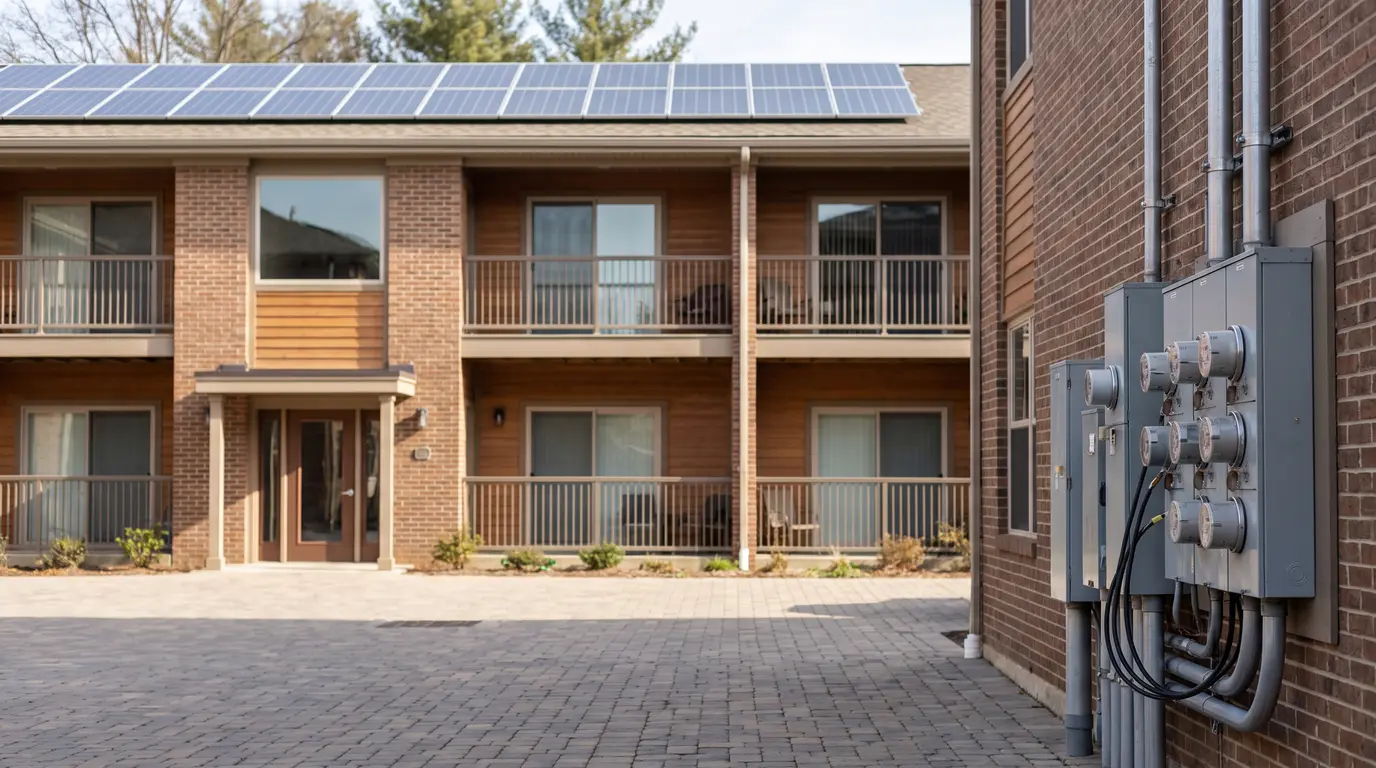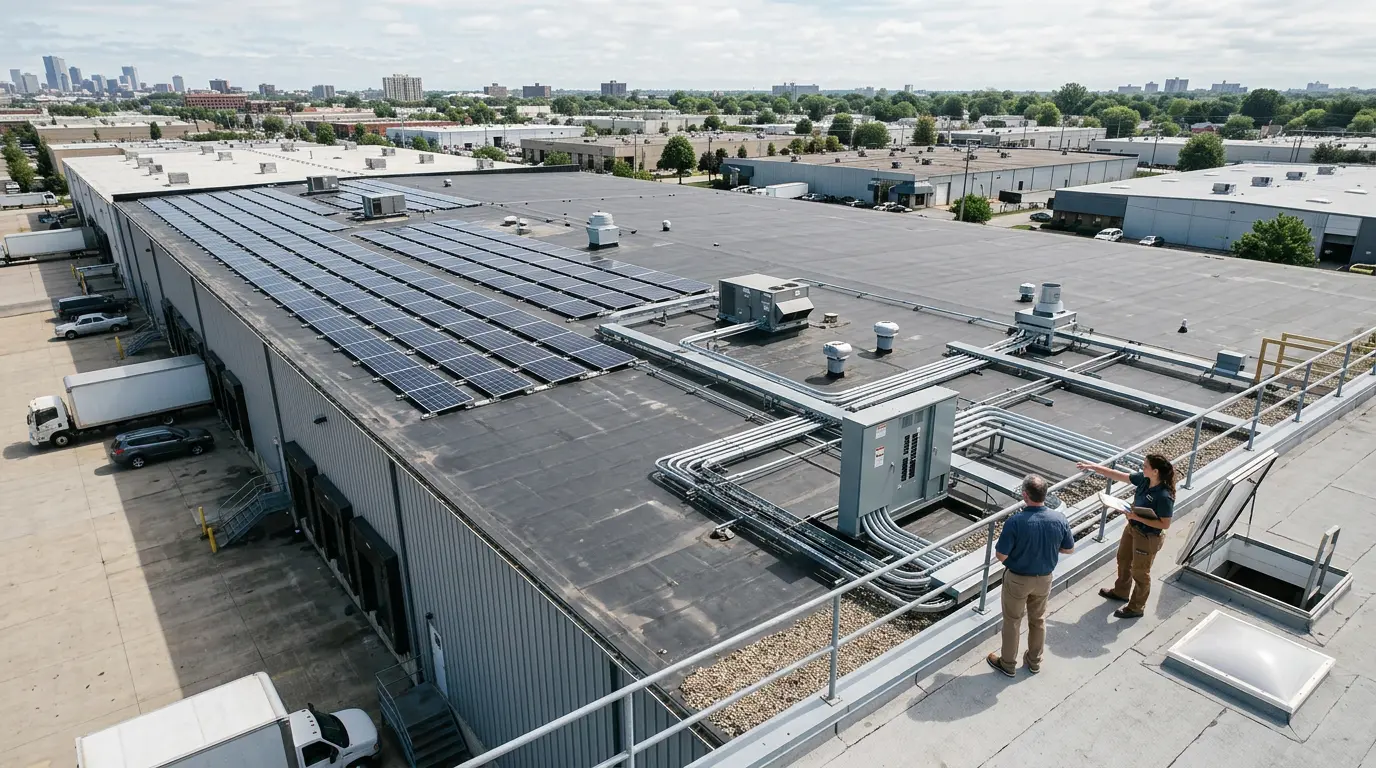
Commercial solar does not have one universal price. For an initial United States planning benchmark, nonresidential solar pricing was approximately $2.00 to $3.60 per watt during the first half of 2025, according to the U.S. Department of Energy’s Quarterly Solar Industry Update.
That range is a starting point, not a guaranteed quote for a particular commercial building in 2026. The installed price can change with system size, roof and site conditions, electrical work, permitting, utility interconnection, financing, and project specific requirements. A written proposal that clearly separates these costs is the most useful budget for evaluating a project.
For an early estimate, you can use the commercial solar cost calculator. It can help with preliminary planning, but it is not a quote, incentive eligibility check, production guarantee, or replacement for a site specific commercial proposal.
What commercial solar pricing includes
The panels are visible, but they are only one part of an installed solar project. The U.S. Department of Energy identifies design, siting, permitting, installation, interconnection, and financing as important solar soft cost categories. Related business costs can also influence pricing, including customer acquisition, workforce training, supply chain and inventory control, and end of term obligations.
| Cost category | What it may include | Budgeting note |
|---|---|---|
| Solar equipment | PV modules, inverters, racking, wiring, monitoring, and related system equipment | Require the proposal to identify equipment assumptions and system capacity. |
| Design and siting | Site assessment, system design, engineering, and layout work | Scope may vary with roof layout, shading, structural review, and electrical design. |
| Permitting and interconnection | Permit processing, inspections, utility application, studies, and connection related work | Requirements and charges depend on the local authority and utility. |
| Installation | Labor, construction, roof attachment or ballast work, wiring, commissioning, and related site work | Confirm whether difficult access, occupied building coordination, or special safety measures are included. |
| Financing | Interest, lender or provider charges, and other financing related costs | Compare cash purchase, loan, lease, and power purchase agreement terms using total cost and ownership consequences. |
| Decommissioning or end of term obligations | Costs or responsibilities addressed in the contract | Review ownership, removal, roof restoration, and end of term language. |
These categories do not represent fixed percentages of a commercial solar project, and every proposal may group them differently. Ask whether each item is included, listed as an allowance, excluded, or assigned to the building owner.
What can change the installed price
System size and equipment scope
A proposal should state the system capacity and explain whether that capacity is measured in direct current or alternating current. It should also identify the equipment assumptions, including modules, inverters, racking, wiring, monitoring, and related components. Two proposals can appear similar while covering different equipment or system scopes.
Roof condition and related work
Roof work deserves its own line in the budget. Confirm whether the proposal assumes the existing roof is suitable, includes repairs or replacement, or excludes roof work altogether. The roof’s remaining service life can affect capital planning, but the research does not establish a universal replacement rule or roof cost.
If you are still evaluating the building’s roof, the Roof Mechanics guide on whether to recover or replace a commercial roof can help frame that decision. It discusses roof suitability for recovery versus replacement and does not replace solar specific engineering or pricing review.
Electrical work and utility interconnection
Interconnection requirements vary by utility and location. A project may also require electrical or service upgrades. Ask the solar provider to explain the utility process, any studies or applications, and which connection related costs are included before treating projected savings as final.
Battery storage
Do not assume battery storage is included in the solar price. Request separate pricing for batteries or other storage, along with a clear description of the equipment and ownership arrangement. Qualified energy storage technology may fall within the federal Clean Electricity Investment Credit framework, but the applicable requirements still need to be reviewed for the project.
Building operations and coordination
Installation proposals should clarify whether they account for difficult access, an occupied building, coordination with building operations, or special safety measures. These details can affect the installation scope and should not be left to assumptions.
Incentives and financing
Incentives may reduce the effective cost of a commercial solar project, but eligibility and the value of a tax benefit must be confirmed for the specific owner and project.
For qualified facilities and energy storage technology placed in service after December 31, 2024, the federal Clean Electricity Investment Credit under Section 48E may provide a base credit of 6 percent of qualified investment. A possible 30 percent rate may apply when prevailing wage and apprenticeship requirements are met. This is not an automatic 30 percent discount for every commercial project. Project timing, technology, compliance, tax status, ownership, and other eligibility details matter.
The credit may be eligible for elective payment or transfer in qualifying circumstances. The IRS generally identifies Form 3468 as the form used with the annual tax return for the first taxable year in which the credit is reported. A tax professional should review the ownership and financing structure, particularly when the project involves a lease, power purchase agreement, partnership, transfer, or elective payment arrangement. A taxpayer cannot claim both the investment credit and production credit for the same facility.
Financing also changes the project economics. Compare a cash purchase, loan, lease, or power purchase agreement using total project cost, cash flow, ownership, tax treatment, and long term obligations rather than looking only at the monthly payment. Financing is one of the soft cost categories identified by the Department of Energy.
How to compare commercial solar proposals
Once you have proposals, compare the scope before comparing the headline price. A lower number may exclude roof work, utility charges, design, or other owner responsibilities that another proposal includes.
- Confirm whether capacity is stated in direct current or alternating current.
- Ask whether equipment, labor, design, permitting, inspections, interconnection, monitoring, warranties, and commissioning are included.
- Require roof repairs, roof replacement, or other roof related work to be identified separately.
- Request separate pricing for batteries or other storage.
- Ask which costs are allowances, exclusions, or owner responsibilities.
- Confirm who owns the system and who receives available tax credits, depreciation benefits, renewable energy certificates, or other incentives.
- Review the utility interconnection process and any required electrical or service upgrades.
Two questions can quickly expose gaps in a proposal:
- “Which costs are included in the quoted price, and which are allowances, exclusions, or owner responsibilities?”
- “Who owns the system and receives any available tax credit, depreciation benefit, renewable energy certificate, or other incentive?”
For an initial production and cost of electricity estimate, the Department of Energy describes PVWatts as a tool that can use an address or user supplied data. It is useful for preliminary screening, but it does not replace commercial engineering, permitting, utility review, interconnection approval, or financial analysis.
Frequently asked questions
What is included in a commercial solar installation price?
It may include equipment, design, permitting, installation, interconnection, monitoring, commissioning, and financing related costs. Proposals may group these items differently, so ask for inclusions, exclusions, allowances, and owner responsibilities in writing.
Does commercial solar pricing include roof repairs or replacement?
Not necessarily. Confirm whether the proposal assumes the existing roof is suitable, includes roof work, or excludes it. Roof related work should be shown separately from the solar system price.
Does battery storage significantly change the project budget?
Storage should be priced separately rather than assumed to be included. Its equipment, ownership, and applicable incentive treatment need to be identified in the project proposal.
Can a commercial building owner claim the federal Clean Electricity Investment Credit?
Some qualified facilities and energy storage technology may qualify, including projects placed in service after December 31, 2024. The available rate and eligibility depend on project, ownership, timing, tax, technology, and compliance details. A tax professional should review the specific arrangement.
What information should be included in competing solar proposals?
Look for system capacity and measurement basis, equipment assumptions, design and installation scope, roof work, permitting, interconnection, monitoring, warranties, commissioning, financing terms, storage pricing, exclusions, and ownership of available incentives.
A practical starting point
For commercial solar, approximately $2.00 to $3.60 per watt is a useful United States planning benchmark based on nonresidential pricing from the first half of 2025, not a guaranteed quote for a particular building. The most useful next step is to request an installed project estimate that separates equipment, design, permitting, interconnection, installation, financing, roof work, and storage.
Use the commercial solar cost calculator for preliminary planning, then compare written proposals with the same questions and scope. Roof Mechanics is a roofing and solar directory that can help readers explore local contractor options as they move from an initial budget to project specific review.