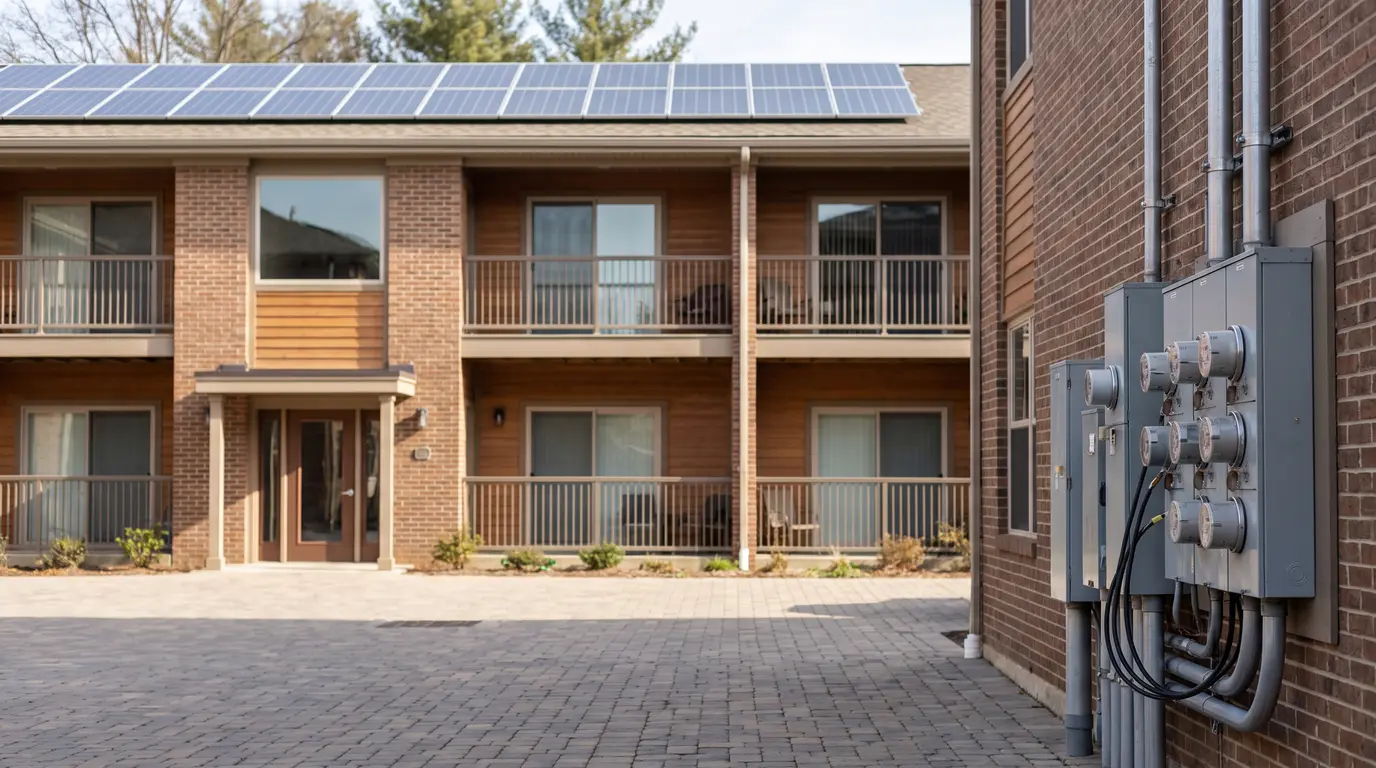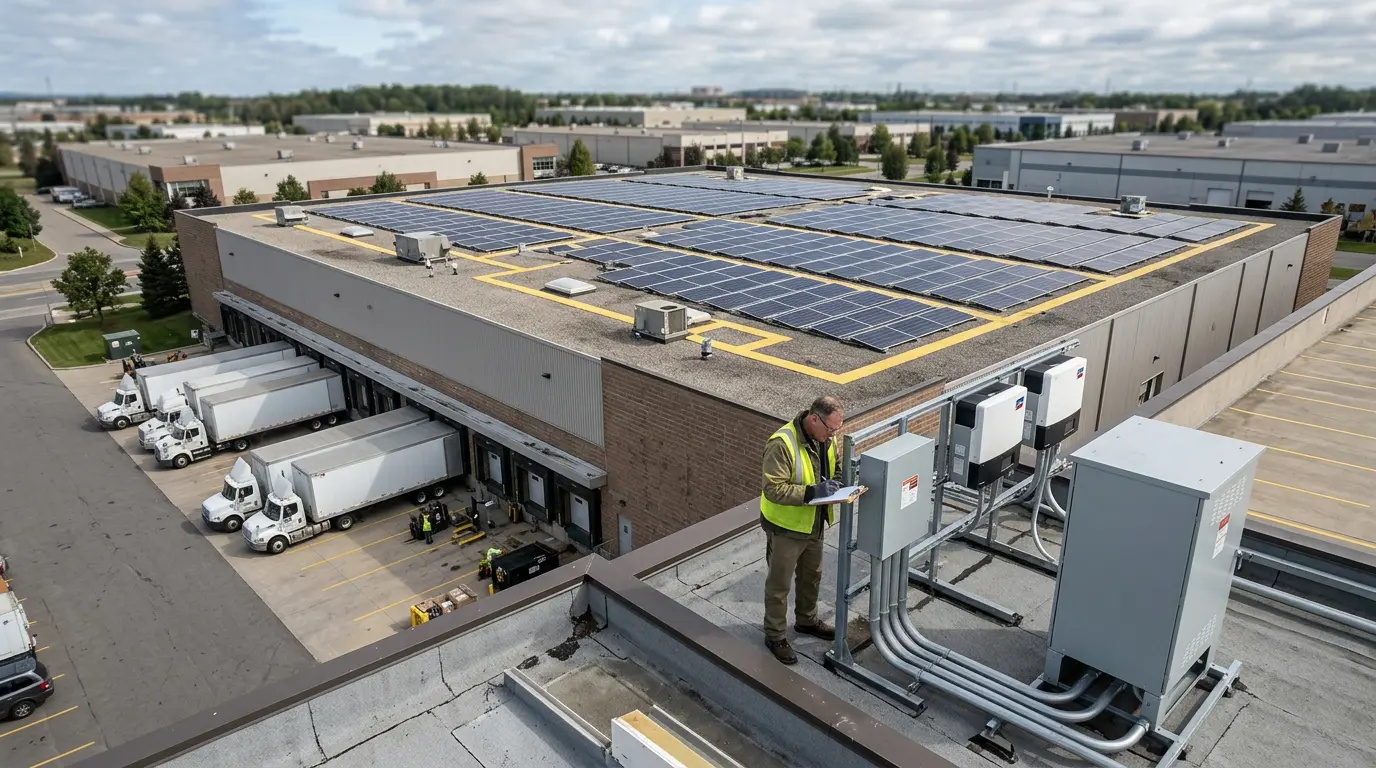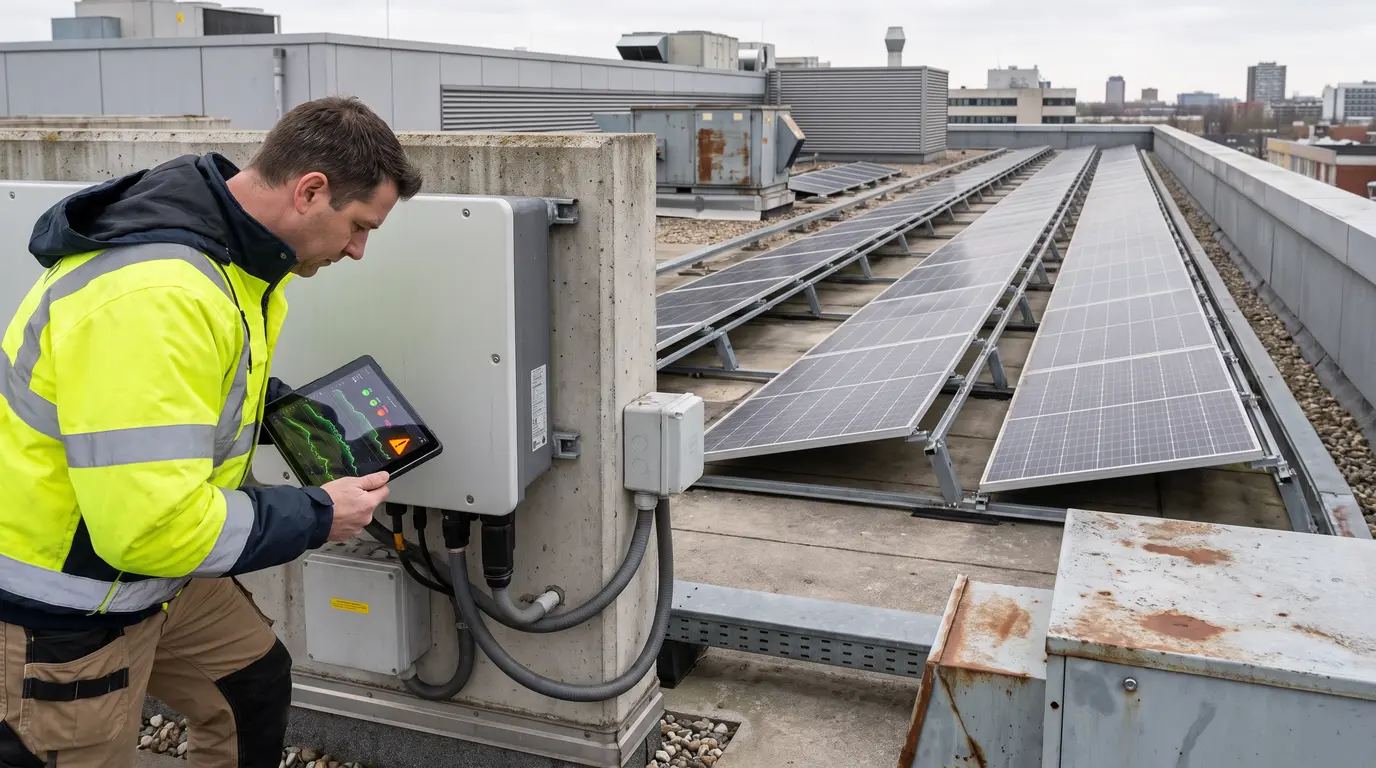
A commercial solar system does not need constant hands on attention, but it does need a dependable review process. Property managers can usually spot meaningful problems by checking system data, reviewing alerts, comparing production with available sunlight, and keeping vendor work records together. The goal is not to react to every low production day. It is to recognize patterns that deserve investigation while separating weather, planned downtime, communication issues, and equipment problems.
The most useful monitoring program confirms that data is arriving, compares actual production with a documented baseline, reviews alerts promptly, and follows corrective work through completion. Your system design, monitoring platform, O&M agreement, warranty documents, and project baseline should define the specific reporting intervals and response expectations.
Start With a Documented Baseline
Before deciding that a system is underperforming, gather the original production estimate, commissioning report, system size, equipment list, meter definitions, expected yield, and any contractual performance guarantee. Keep these documents associated with the monitoring account and maintenance records. They give your team and the solar O&M provider a shared reference point.
A fixed kilowatt hour target is not enough by itself. Production changes with sunlight, daily weather, temperature, shading, soiling, module age, severe weather, equipment configuration, and planned outages. A cloudy day can produce a low number even when the system is operating normally, so meaningful review also considers weather or irradiance conditions.
The U.S. Department of Energy explains practical monitoring and documentation considerations in Monitoring Platforms for Solar Photovoltaic Systems. The guidance is aimed at federal systems, but its principles are useful for commercial property records.
Review the Right Data at Several Time Scales
A monitoring portal should provide more than a cumulative energy total. Depending on the equipment and platform, useful information can include whole system production, inverter level production, operating status, alarms, downtime, irradiance, temperature, and utility meter data. Review the information at time scales that match the decision you need to make.
- Daily or near real time review can reveal a major outage, communication loss, or active inverter alarm.
- Monthly review can show production trends, recurring alerts, downtime, weather context, and open work orders.
- Annual review can support degradation review, budget planning, warranty tracking, and comparison with the expected project output.
These reviews do not need to become a lengthy technical exercise. A regular dashboard check followed by a more organized monthly review can give property managers a clear view of whether the system is producing, whether data is complete, and whether unresolved issues are accumulating.
What to Monitor and What It Can Reveal
| Monitoring item | What it helps identify | Practical review or response |
|---|---|---|
| Production data | Hourly, daily, monthly, and since inception output can show outages, trends, and production changes. | Compare it with weather, irradiance, expected yield, and planned downtime. |
| Inverter and equipment status | Active faults, shutdowns, communication loss, or differences between inverter sections. | Confirm whether the condition is active, planned, temporary, or recurring. Notify the responsible vendor when appropriate. |
| Performance ratio or performance index | A weather adjusted or model adjusted view of whether the system is converting available sunlight as expected. | Use the project defined metric and its assumptions rather than a universal pass or fail value. |
| Weather and irradiance data | Cloud cover, temperature, soiling conditions, and other environmental effects that may affect output. | Check sensor quality and data completeness when these inputs are used. |
| Maintenance and alert records | Whether issues were acknowledged, diagnosed, repaired, and closed. | Preserve records with project documents and monitoring access to support warranty, budgeting, and vendor reviews. |
| Long term trend data | Gradual degradation compared with sudden underperformance. | Compare the trend with the system technology, warranty terms, and documented baseline. |
Monitoring data is only as reliable as the meters, sensors, communications, system configuration, and model assumptions behind it. A difference between the solar portal and the utility bill may also reflect different measurement points rather than a failed system. Confirm that the system boundaries and meter point match the information used in the utility bill, performance guarantee, and financial model.
Use Weather Adjusted Performance Measures Carefully
Performance ratio can help normalize production by comparing measured system yield with the available solar resource. Performance index compares measured energy with energy predicted by a photovoltaic performance model. These measures can make it easier to identify changes that are not explained simply by a cloudy day or seasonal sunlight pattern.
The metrics require suitable meters, irradiance measurements, system information, and model assumptions. Use the measure defined in the project reporting package or contract instead of treating one universal percentage as a pass or fail rule. The PV Performance Modeling Collaborative explanation of performance ratio provides technical background on these concepts.
Treat Alerts as Work Management Inputs
An alert is a prompt to investigate, not automatic proof that a component has failed. First confirm whether it represents an active fault, a communication interruption, a planned shutdown, a grid event, or a temporary condition. Then check whether production was affected and whether the condition is recurring.
Vendor follow up becomes more appropriate when an alert persists, production remains below the documented baseline after weather is considered, one inverter or array section diverges from comparable equipment, data stops updating, or a repair is repeatedly deferred. The response time and escalation threshold should come from the O&M agreement and system design rather than an invented universal percentage.
Monitoring can identify an abnormal pattern, but it usually cannot prove the physical cause. Do not send untrained staff onto a roof or into electrical equipment to investigate. Property managers can review the dashboard, records, invoices, and safe ground level observations, then coordinate qualified personnel for physical diagnosis.
Keep Records That Support Follow Through
A useful record shows what happened from the first alert through the return to service. For each significant issue, record the date and time, affected equipment, observed production impact, vendor notification, diagnosis, repair, parts or warranty action, return to service time, and supporting invoices or reports.
Keep those records with the monitoring account, as built drawings, equipment list, commissioning information, O&M agreement, warranty documents, and maintenance history. Also confirm who receives alerts when property staff change, the building changes ownership, or the vendor relationship changes. The owner should retain access to historical data and be able to export records if the platform or O&M provider changes.
Ask the O&M provider whether the agreement defines the production baseline, alert response time, data availability expectations, weather and grid outage exclusions, and the documentation required after corrective work. Clear answers make budgeting and vendor discussions easier.
Connect Monitoring With Maintenance and Budgeting
Monitoring and maintenance work together. Production data can show that output has changed, while inspections, cleaning, corrective maintenance, and qualified diagnosis help determine why. The U.S. Department of Energy provides related solar operations and maintenance resources for plant operators.
A documented history also helps distinguish a sudden fault from gradual aging. An analysis of nearly 19,000 inverters reported a median fleet performance loss of about 0.75 percent per year across commercial, industrial, and utility scale systems. That is a fleet level finding, not a forecast for a particular rooftop system, a warranty limit, or a required annual allowance.
For planning purposes, you can review commercial solar maintenance costs after clarifying what your O&M agreement includes. The discussion provides a planning benchmark for a representative 250 kilowatt direct current commercial system, not a quote or universal price. If monitoring points to future replacement, expansion, or other capital work, the commercial solar cost calculator may provide preliminary planning context. Its ability to model a particular monitoring, storage, roof, or electrical configuration is not established here.
Remember the Monitoring System Is Part of the Operation
A solar monitoring platform depends on network connections and internet connected equipment. Access control, user permissions, responsibilities, and cybersecurity should fit the way the platform connects to the building network and whether it allows remote equipment control. Coordinate these decisions with the property owner’s information technology and cybersecurity policies.
Also check that the account is still receiving data and that the right people can access it. A communications outage can make a healthy system appear invisible, while a missing user account can delay response even when the dashboard is working.
Frequently Asked Questions
What should a property manager check first when a solar dashboard shows low production?
Check whether the data is current, then review weather or irradiance conditions, planned outages, inverter status, communications alerts, and comparable inverter or array sections. Compare the result with the documented baseline before requesting diagnosis.
How often should commercial solar performance be reviewed?
Use daily or near real time checks for major outages, communication loss, and active alarms. Complete a more organized monthly review of trends, downtime, weather, recurring alerts, and open work orders. An annual review can address degradation trends, warranty status, budget planning, and expected output.
Can a monitoring alert prove that a solar component has failed?
No. An alert can indicate an active fault, communication issue, planned shutdown, grid event, or temporary condition. A qualified solar O&M provider may need to diagnose the physical cause and document the repair.
Make the Next Review Routine
Effective commercial solar monitoring is a repeatable management process rather than a search for one perfect dashboard number. Confirm that data is available, compare production with sunlight and the documented baseline, review alerts in context, and preserve the record until each issue is closed. That approach gives property managers a clearer basis for vendor follow up, maintenance planning, and financial review. To connect those records with project economics, you can also review the commercial solar payback period discussion, which explains why production value, incentives, financing, project cost, and ongoing costs all matter.