Commercial solar maintenance does not have one universal price. For initial planning, the U.S. Department of Energy lists a modeled operations and maintenance benchmark of $40 per kWdc per year for a representative 250 kWdc commercial photovoltaic system. For that example, the benchmark works out to $10,000 per year.
That figure is a planning reference, not a guaranteed service contract price or a complete budget for every commercial rooftop. Your actual cost may be higher or lower based on system size, roof access, layout, soiling, monitoring needs, equipment condition, repair response, and whether replacement of inverters or other components is included.
For a useful starting point, review the U.S. Department of Energy solar photovoltaic system cost benchmarks, then request a proposal based on your building and system. It also helps to separate recurring service costs from a reserve for corrective repairs.
What commercial solar maintenance costs cover
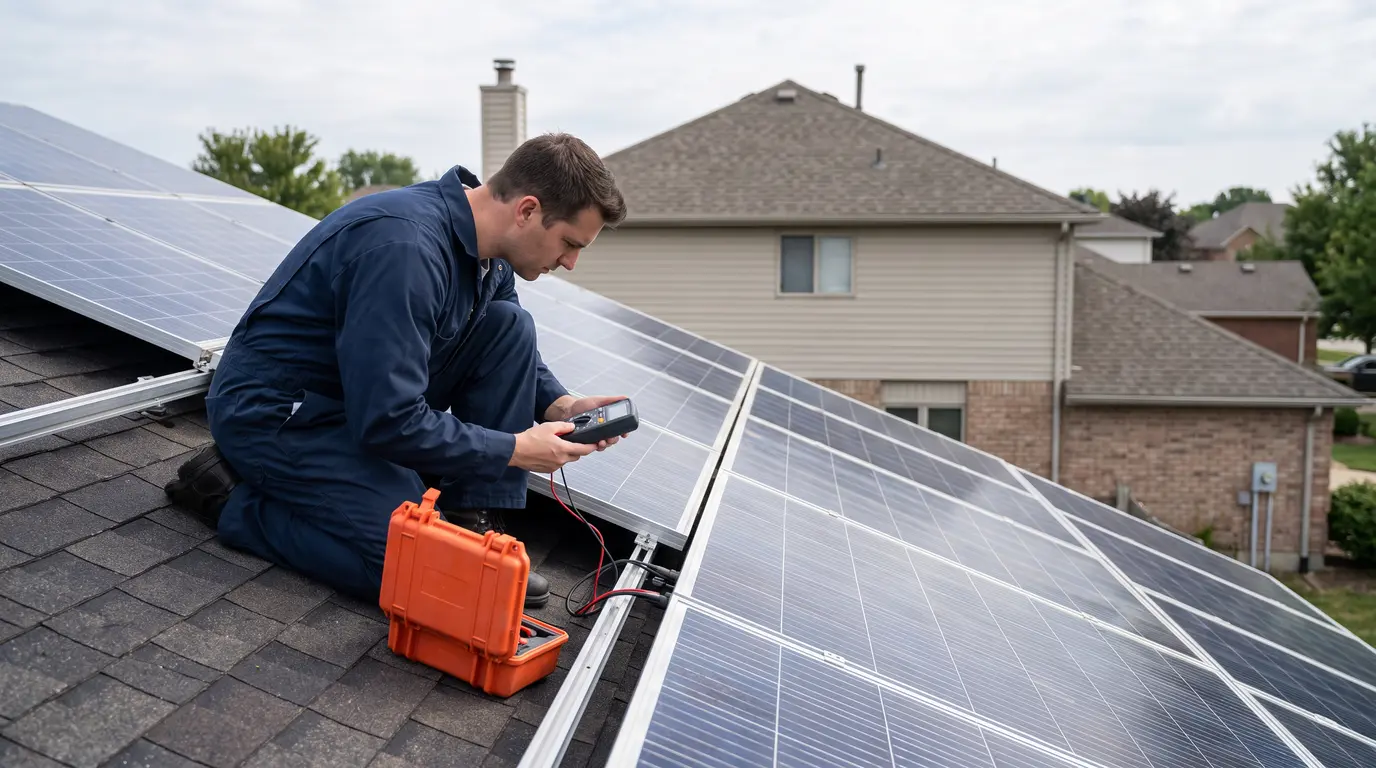
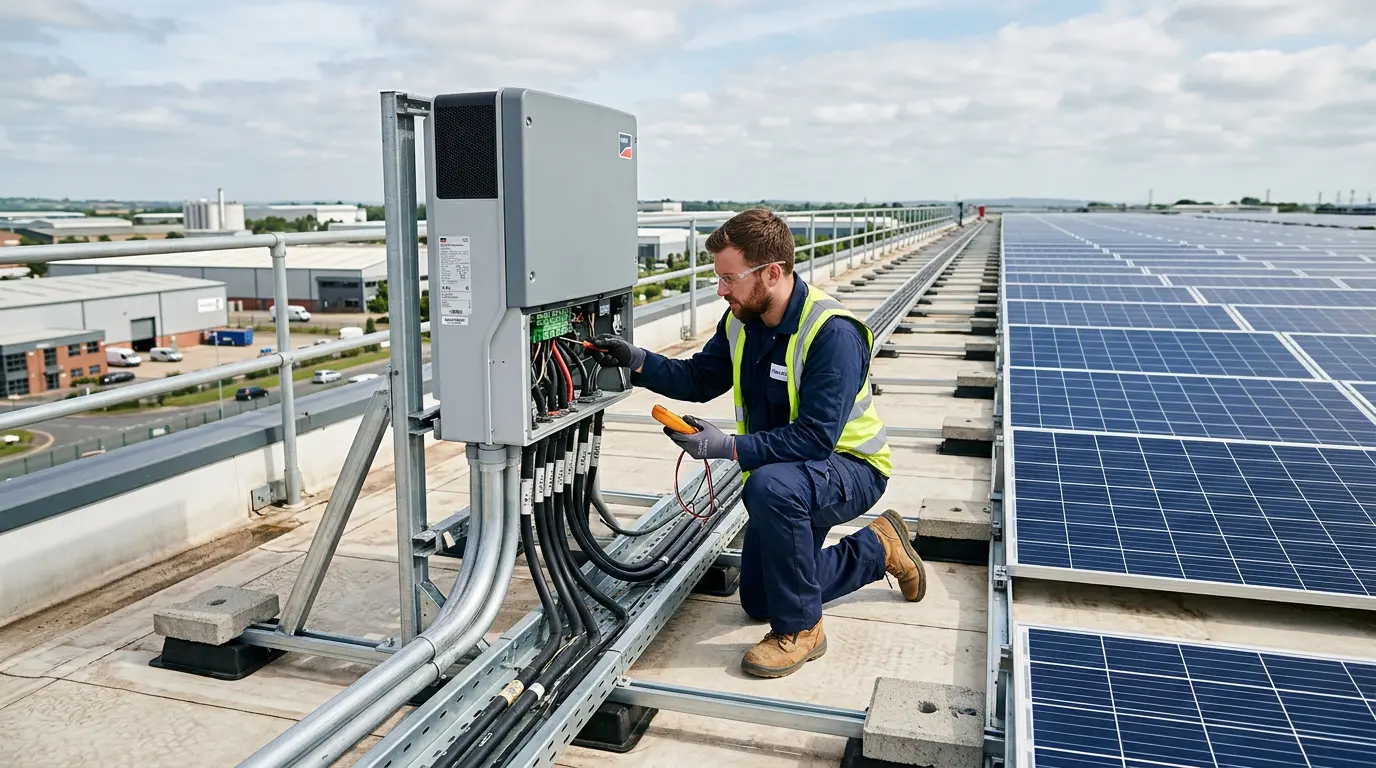
Commercial solar operations and maintenance can involve much more than washing panels. Depending on the agreement, the scope may include the modules, support structures, disconnects, inverters, monitoring equipment, and other components needed to keep a grid connected system operating.
The following breakdown can help property managers sort expected operating expenses from less predictable repair costs.
| Budget category | Typical scope | Budget treatment | Qualification |
|---|---|---|---|
| Monitoring and reporting | Production tracking, alerts, and service documentation | Recurring operating expense | Exact software and reporting scope varies. |
| Inspections and testing | Visual, electrical, equipment, and system condition checks | Recurring operating expense | Frequency and test depth should be stated in the contract. |
| Cleaning and site upkeep | Cleaning when soiling affects performance, plus related access or site tasks when included | Variable recurring expense | Site conditions determine the need. Do not assume every system requires the same cleaning schedule. |
| Corrective repairs and component replacement | Failed or damaged equipment and troubleshooting | Separate repair reserve or contingency | DOE examples show component replacement can be a material share of annual maintenance cost, but those percentages are not universal. |
| Roof and solar coordination | Access, attachments, penetrations, leaks, or panel removal during roof work | Separate scope or coordinated service | Responsibility should be assigned between roofing and solar contractors. |
The DOE’s $40 per kWdc per year figure is a modeled operations and maintenance benchmark for a representative 250 kWdc commercial system. It is not a value for each table row or a guaranteed contract price.
Why commercial solar maintenance prices vary
Two buildings with similar system sizes can still need different maintenance budgets. A rooftop with difficult access, multiple roof sections, ridges, or a sloped surface may require more planning and labor than a simpler layout. Monitoring requirements, soiling, system age, equipment condition, and the desired response time for service calls can also affect the proposal.
The written scope matters just as much as the headline price. One provider may include routine monitoring and inspections while excluding corrective repairs, major equipment replacement, roof work, vegetation control, or emergency response. Another may offer a broader package. Comparing proposals is much easier when each one uses the same service and reporting requirements.
Build a recurring budget and a repair reserve
Recurring expenses may include performance monitoring, scheduled inspections, reporting, cleaning when needed, and routine testing. A separate reserve can cover failed inverters, electrical components, damaged modules, storm related issues, wiring faults, and roof related work.
This separation gives your operating budget a clearer structure. It also recognizes that component replacement can represent a meaningful part of annual maintenance costs in DOE example systems. Those examples are useful support for maintaining a reserve, but they should not be treated as a fixed percentage for every commercial building.
Coordinate roofing and solar responsibilities
Roof and solar work can overlap when a leak, attachment, penetration, flashing issue, or roof repair requires access beneath the array. Before a problem arises, confirm whether the solar contractor or roofing contractor handles each responsibility. Also ask who coordinates temporary panel removal if roof work requires it.
Clear responsibility can make maintenance planning more orderly, particularly for property managers overseeing several buildings. The goal is not to assign blame in advance. It is to make sure the right contractor and the right budget line are identified before an urgent repair is needed.
What to ask before approving a maintenance proposal
Ask each provider to describe the service scope in writing. Useful questions include:
- How often will the system be inspected, and what testing is included?
- Does the price include monitoring, alerts, reporting, and documentation?
- Is cleaning included, and what site conditions would make it appropriate?
- Are service call fees, emergency response, troubleshooting, and corrective repairs included?
- Is thermographic or other diagnostic work included?
- Who coordinates warranty claims and replacement components?
- Who is responsible for roof penetrations, attachments, flashing, leaks, and panel removal during roof work?
Before approving a plan, review the system’s monitoring records as well. Persistent production loss may point to a diagnosis or repair need rather than cleaning alone. Monitoring is part of the broader maintenance scope, but the packet does not establish one universal production loss threshold for deciding when service is required.
If you manage multiple buildings, request proposals with matching scope, inspection frequency, reporting requirements, and exclusions. Consistent proposals make annual budgets easier to compare across the portfolio.
Commercial solar maintenance FAQ
What should a commercial solar maintenance contract include?
It should clearly state the monitoring, reporting, inspection frequency, testing, cleaning, diagnostic work, service call fees, emergency response, documentation, and warranty coordination included. It should also identify exclusions such as corrective repairs, major equipment replacement, and roof work when those items are outside the contract.
Are solar panel cleaning and inverter repairs usually included in the maintenance price?
Not necessarily. Cleaning may be a variable service based on site conditions, while inverter repairs may be handled as corrective work or under separate warranty terms. Confirm both items in writing rather than assuming they are included in the advertised maintenance price.
Who is responsible when a roof leak involves solar attachments?
Responsibility should be assigned between the roofing and solar contractors. Confirm who handles attachments, penetrations, flashing, leak investigation, and any panel removal needed for roof work.
Should property managers budget separately for inverter replacement?
Yes, treat potential component replacement as a separate repair reserve or contingency unless the maintenance agreement clearly includes it. DOE example systems show that failed component replacement can be a material share of annual maintenance costs, although the examples do not establish a fixed percentage for every system.
Plan your commercial solar maintenance budget
A practical starting point is the DOE modeled benchmark of $40 per kWdc per year for the representative 250 kWdc commercial system, followed by a site specific proposal. Keep recurring operations and maintenance costs separate from a reserve for corrective repairs, component replacement, and roof related coordination.
For background on the upfront side of the decision, review commercial solar installation costs. For an initial project estimate before reviewing long term maintenance, the commercial solar cost calculator may help organize preliminary planning. A local contractor proposal is still needed to confirm the maintenance scope for your building.