Yes, solar panels can recharge a home battery during a utility outage, but only when the complete system is designed to operate independently from the grid. The battery, inverter, transfer equipment, controls, wiring, and backed up circuits all have to work together in an isolated local system.
A conventional grid tied solar array usually shuts down during a blackout, even when the sun is shining. Panels alone do not normally provide outage power. The key distinction is whether the installed solar and storage system can form and control its own local grid, often called island mode.
Whether charging actually occurs depends on sunlight, solar production, household loads, battery state of charge, inverter limits, system settings, and available charging capacity. A battery runtime estimate answers a different question. It describes how long stored energy may support connected loads; it does not prove that the solar array can recharge the battery while utility power is unavailable.
When Solar Can Recharge a Battery During an Outage
Solar recharge during an outage is possible when a solar and storage system disconnects from the utility grid, creates a stable local microgrid, and uses available solar energy inside that isolated system. Guidance from the U.S. Department of Energy and Oak Ridge National Laboratory describes this general solar plus storage approach for outage operation.
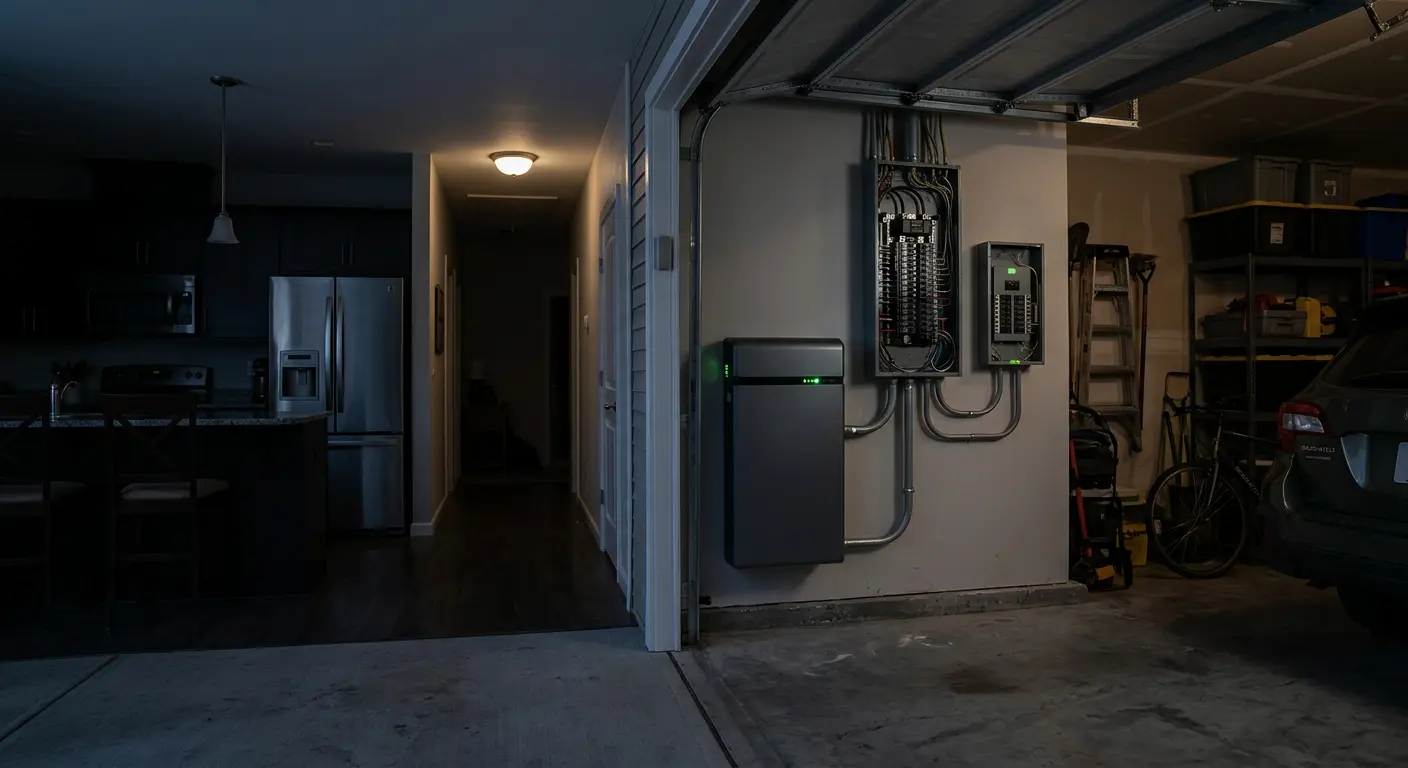
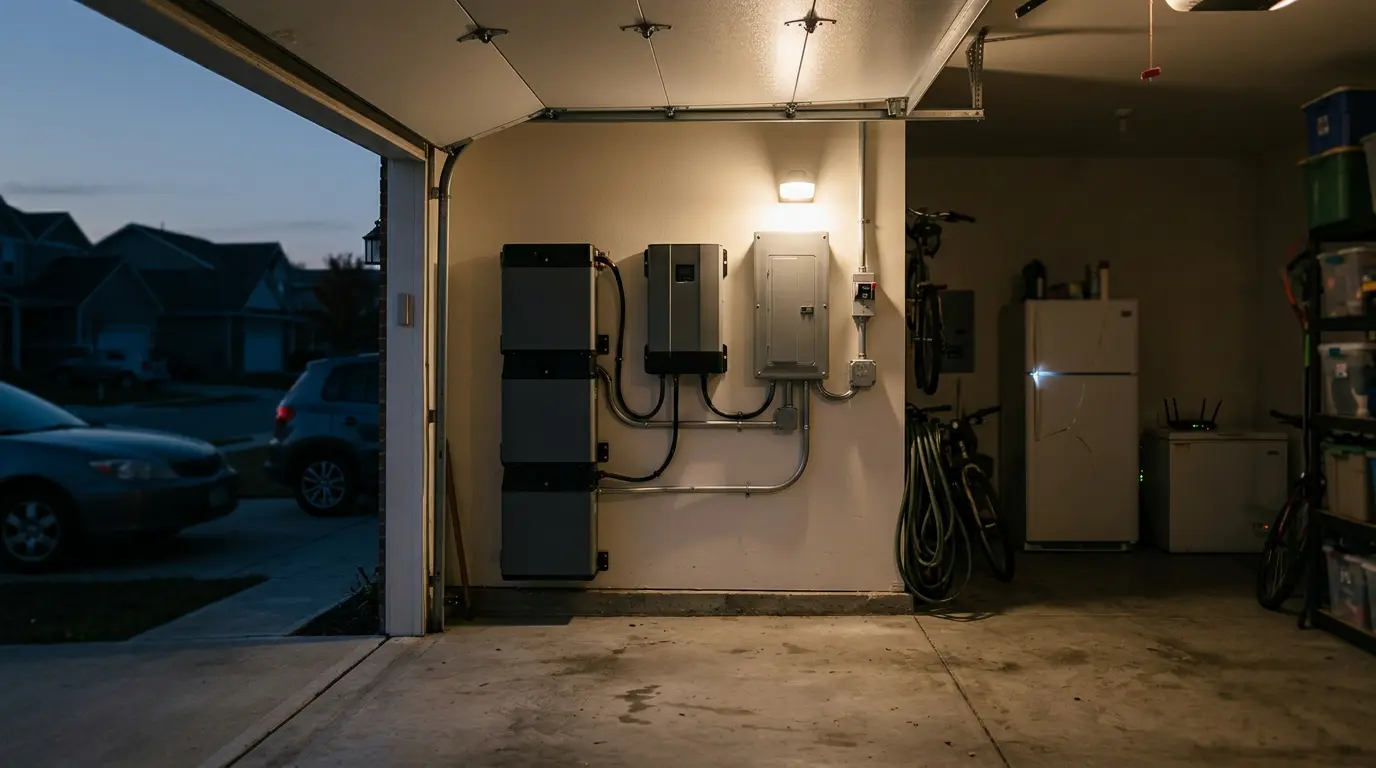
The equipment that makes this possible is more than the panels. Depending on the design, it may include a battery or hybrid inverter capable of forming a local grid, a transfer switch, a backup gateway, a system controller, and a backed up loads configuration. The isolation equipment prevents the home system from sending power onto utility lines while the grid is down.
That distinction matters when someone describes a battery as “backup capable.” Backup capability may mean the battery can supply stored energy to selected circuits. It does not automatically mean the battery can accept energy from the existing solar array during an outage. Solar charging requires compatible equipment and controls for both functions.
Why Conventional Grid Tied Solar Shuts Down
A conventional grid tied solar system generally disconnects during an outage through anti islanding protection. This helps prevent the array from energizing utility lines while utility work is taking place. The result can be surprising to homeowners: full sunlight does not necessarily mean a standard solar array will keep producing usable power inside the home.
Traditional grid following inverters depend on an outside grid signal. When that signal disappears, the inverter normally stops operating. An advanced grid forming inverter can create the signal needed for an isolated local system, allowing compatible solar and storage equipment to operate without the utility grid.
The home or the selected backed up circuits must also be separated from the utility before local operation begins. A battery added to an existing solar installation does not automatically convert a conventional grid tied system into an outage capable system. The inverter architecture, gateway or transfer equipment, wiring, controls, and configuration all matter.
For a useful explanation of this distinction, see the supplied guidance on islanding and batteries and the overview of how solar batteries work.
What Determines How Much Solar Charging Occurs
During an outage, solar energy charges the battery only when the system has production available, the battery has room to accept energy, and the system controls permit charging. Solar production first has to work within the local system’s operating limits. Household loads can also use that production before any surplus reaches the battery.
- Sunlight and actual solar production affect how much energy is available.
- Connected loads consume solar energy as they operate.
- The battery’s state of charge determines how much charging capacity remains.
- Inverter limits and system controls determine how power moves through the system.
- The backed up circuit configuration determines which loads participate in the outage system.
Large loads such as HVAC equipment, electric water heating, pumps, ranges, or electric vehicle chargers may consume solar production faster than the battery can charge. If only selected circuits are backed up, solar recharge and available outage power apply to those protected circuits, not necessarily to the entire home.
The battery also cannot keep absorbing energy indefinitely. When it is full, or when solar production exceeds what the loads and battery can use, the system may curtail, throttle, or stop solar production. Rated panel output is not the same as the amount of power that will always reach the battery. The sun may be working overtime while the inverter politely declines the extra electricity.
A very low state of charge can create another limitation. Some systems enter standby or use a controlled recovery sequence before solar charging resumes. That behavior is manufacturer specific and should not be treated as a universal rule for every battery system.
AC Coupled and DC Coupled Systems
Solar and battery systems can use different energy paths. In an AC coupled design, solar production passes through a solar inverter and then interacts with a separate battery inverter. In a DC coupled design, solar power can move through a shared hybrid inverter or charging path.
Either architecture may support solar charging during an outage when the installed equipment is designed and configured for isolated operation. Architecture by itself does not establish compatibility. A particular combination of a solar inverter, battery, inverter, gateway, wiring, and controls still has to support the required outage functions.
This is especially important when an existing grid tied array is being retrofitted with storage. The fact that the panels already produce power does not confirm that they can operate inside a local microgrid during an outage. Existing inverter compatibility and backup isolation capability must be verified for the specific equipment combination.
The supplied overview of AC and DC solar battery coupling explains the general energy paths, but it does not establish whether any particular model combination will provide outage charging.
Solar Recharge Is Not the Same as Battery Runtime
A battery runtime estimate concerns stored energy and how quickly connected loads consume it. The estimate may depend on battery capacity, usable state of charge, output limits, and the loads connected to the backup system.
Solar recharge during an outage requires additional functions. The solar array must be operating, the inverter and control system must be capable of forming an isolated local grid, the wiring and settings must be compatible, sunlight must be available, and the battery must have charging headroom.
For that reason, a system can provide backup runtime without accepting energy from an existing solar array during an outage. An app that shows several hours of runtime is not, by itself, evidence that solar recharge will occur. Unless the specific system documentation says otherwise, do not assume a runtime estimate includes future solar production.
Product Settings and Manufacturer Specific Behavior
Settings can affect whether a system attempts to recharge and how it behaves during an outage. Relevant controls may include the backup reserve, minimum state of charge, operating mode, and outage or storm settings.
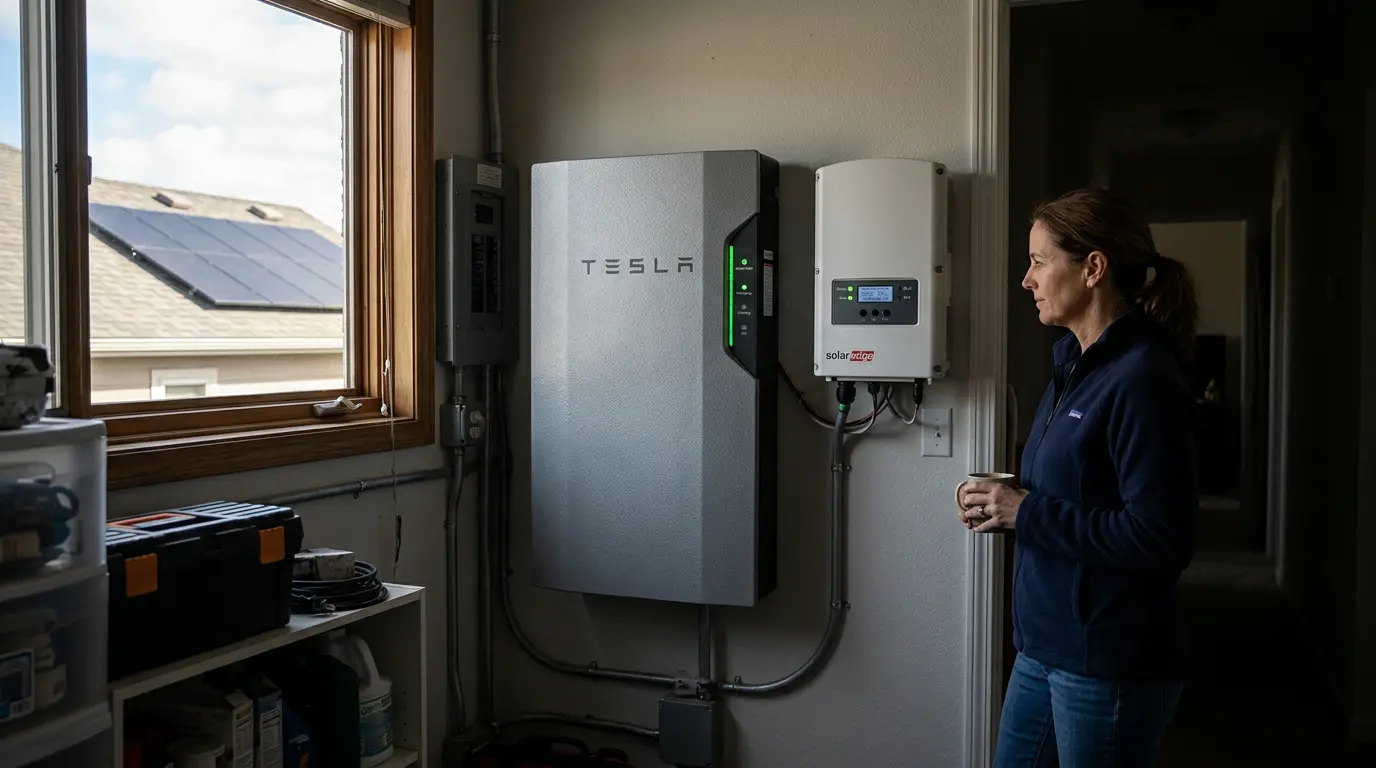
For example, Tesla documents automatic solar recharge attempts for Powerwall during outages when paired with solar, along with controls related to backup reserve. Tesla also documents situations in which excess solar can cause the system to reduce or turn off solar production, including when the battery is full or available demand is insufficient.
Enphase documents solar charge recovery and specific state of charge behavior for particular Enphase Energy System configurations. Its recovery procedures and thresholds apply to the specified equipment and configuration, not to every battery system from every manufacturer.
These examples show why a general statement such as “the battery charges from solar during outages” needs more detail. Behavior can depend on the model, firmware, configuration, location, and current manufacturer instructions. Review the documentation for the exact system rather than relying on a feature description for a different product.
How to Verify Whether a Specific System Can Recharge During an Outage
The most reliable answer will come from the equipment list, manufacturer documentation, commissioning records, and the installer who configured the system. Ask a specific question: can this system charge the battery from solar while the utility grid is unavailable?
- Record the exact model numbers for the battery, inverter, gateway or system controller, transfer equipment, and solar inverter.
- Check those model numbers against the manufacturer’s outage operation documentation.
- Confirm that the system forms an isolated local microgrid and identify the equipment that prevents power from reaching the utility during an outage.
- Review the backup reserve, minimum state of charge, operating mode, and outage or storm settings in the app or commissioning documentation.
- Confirm which circuits are backed up and whether major loads could consume solar production faster than the battery can charge.
- Ask how the system handles excess solar when the battery is full.
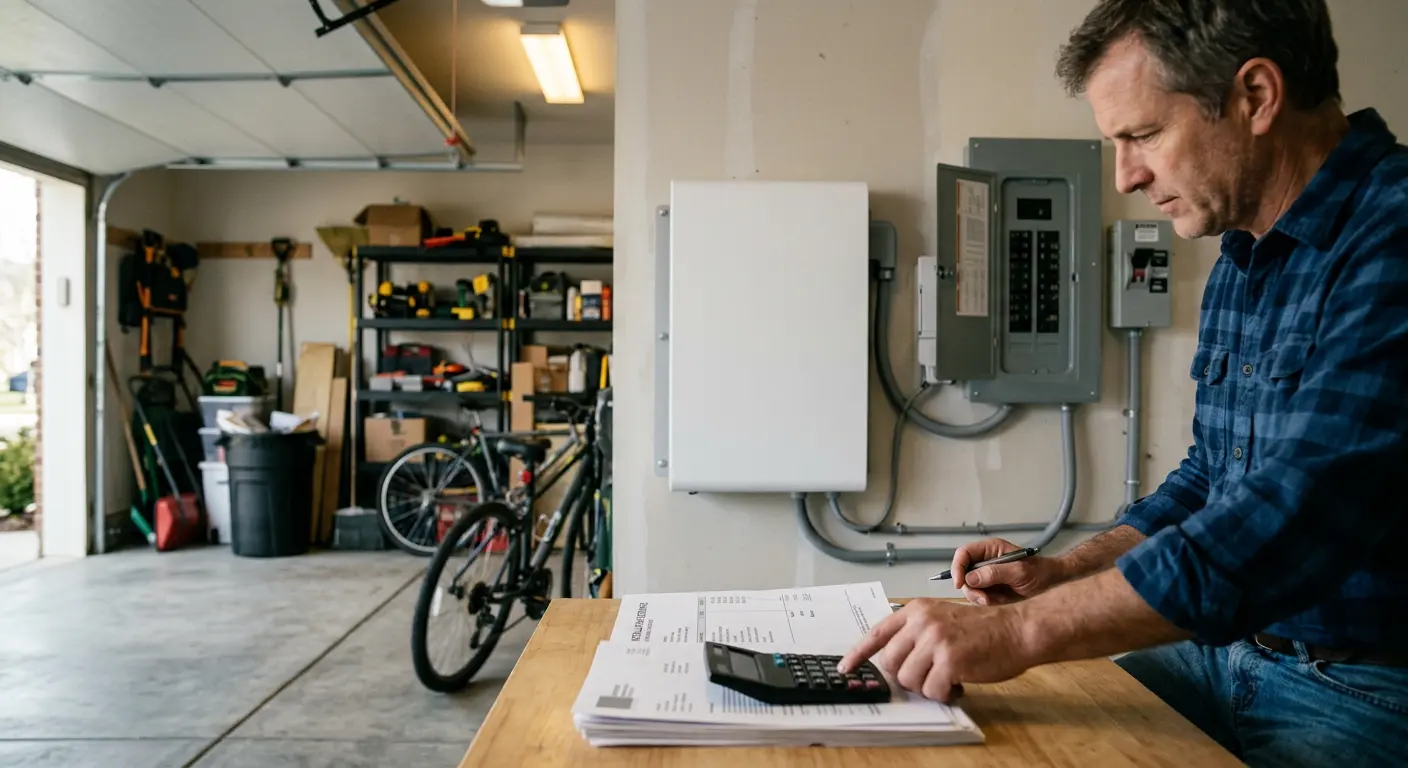
- Obtain the commissioned one line diagram, equipment list, operating manual, and warranty information.
Do not change inverter, transfer, or battery settings beyond the manufacturer’s instructions. A qualified installer can demonstrate or document the outage sequence and solar recharge behavior. Permitting, inspection, utility interconnection, and locally adopted electrical code requirements can vary by jurisdiction, so those details need local verification.
Frequently Asked Questions
Can solar panels charge a home battery when the utility power is out?
Yes, but only when the complete solar and storage system can disconnect from the utility, form an isolated local grid, and operate with compatible inverter and control equipment. Solar panels alone generally do not provide outage charging.
Do I need a special inverter to recharge batteries from solar during an outage?
The system needs an inverter and control arrangement capable of supporting isolated operation. A grid following inverter normally depends on the utility grid signal, while a compatible grid forming inverter can create the signal needed for a local system.
Why do grid tied solar panels shut off during a blackout?
Conventional systems generally disconnect through anti islanding protection during an outage. This prevents the array from sending power onto utility lines while the utility grid is unavailable.
Can an existing solar system be retrofitted to recharge a battery during outages?
It may be possible, but existing inverter compatibility, battery equipment, gateway or transfer equipment, wiring, controls, and backup isolation capability must be confirmed. An existing grid tied array does not automatically support outage charging after a battery is added.
What happens if the battery becomes full while the solar panels are still producing?
The system may curtail, throttle, or stop solar production when the battery is full or when available loads cannot absorb the production. Exact behavior depends on the equipment and its controls.
Does a battery runtime estimate include solar recharging during the outage?
Not necessarily. Runtime describes stored energy and connected loads. Solar recharge requires separate equipment, settings, sunlight, compatible outage operation, and available charging capacity.
Will outage solar charging work with a partial home backup panel?
It can, if the installed system supports isolated operation. Solar recharge and outage power apply to the circuits included in the backed up configuration, not automatically to the rest of the home.
The Practical Takeaway
Solar panels can recharge batteries during an outage, but the capability belongs to the complete isolated solar and storage system, not to the panels by themselves. The inverter architecture, isolation equipment, system settings, battery state of charge, household loads, and available sunlight all affect what happens.
Before relying on solar recharge, verify the exact equipment models and outage documentation, confirm which circuits are backed up, and ask the installer to document the system’s outage sequence. A battery that provides runtime is useful, but that fact alone does not answer whether the sun can refill it.