Roof valleys collect water from two sloping roof planes, so their design has a direct effect on drainage, flashing, debris movement, and future repairs. For most asphalt shingle roofs, an open valley with exposed corrosion resistant metal flashing is generally the strongest option to investigate when long term serviceability and a visible drainage path matter most.
That does not make an open valley the right choice for every roof. A closed cut or woven valley may be suitable when the shingle manufacturer permits the assembly and the homeowner prefers a less visible metal detail. The best choice depends on the roof covering, manufacturer instructions, roof shape, climate, expected water volume, appearance, and locally adopted code.
Which Roof Valley Is Best?
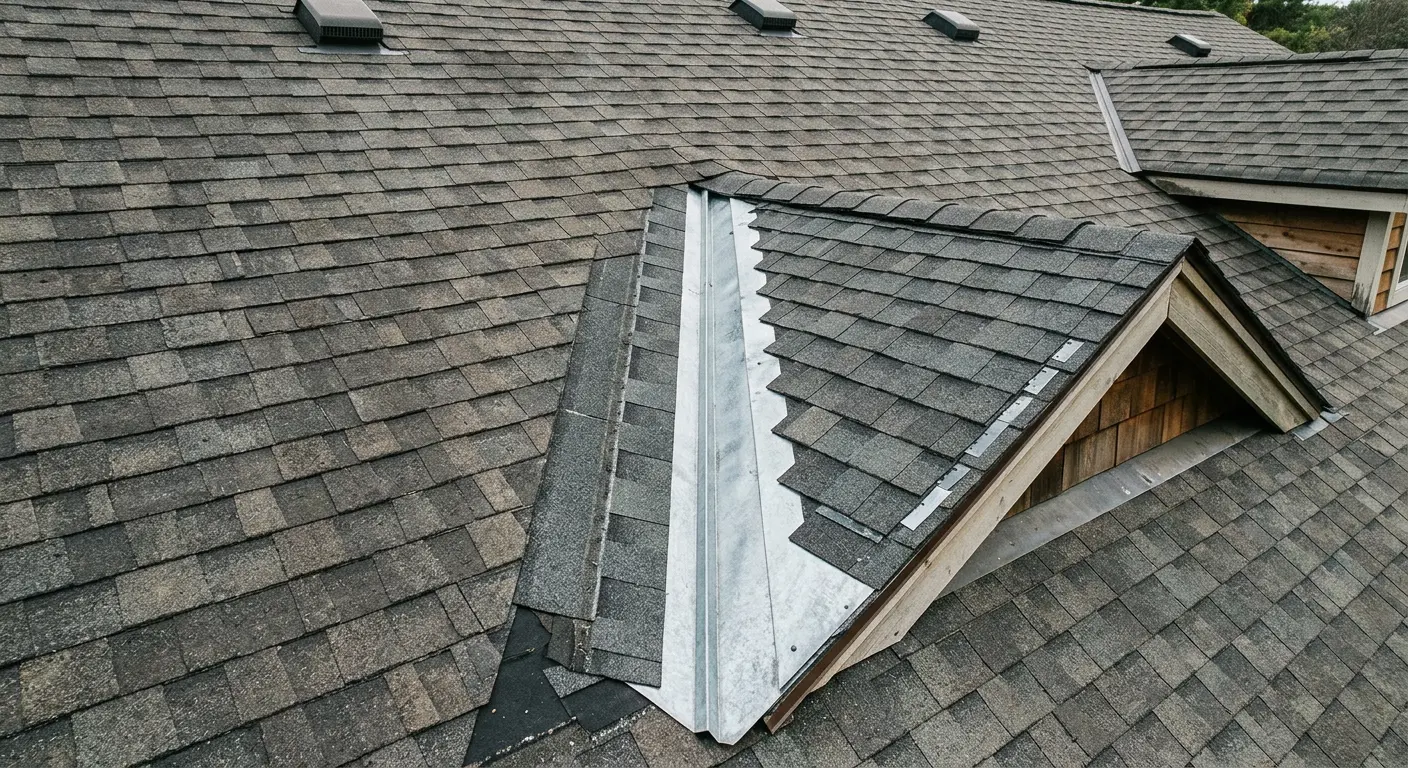
For an asphalt shingle roof, an open valley is usually the leading option when the priorities are clear water drainage, easier inspection, debris removal, and serviceability. The shingles stop on both sides of the valley, leaving the flashing channel visible so water can move across it.
A closed cut valley can be a reasonable alternative when the selected shingles and installation instructions allow it. It offers a more uniform shingle appearance, but the valley depends on water flowing over a shingle covered surface. A woven valley can also work with compatible products, although it requires shingles from both roof planes to be bent and interlaced across the valley.
Regardless of the style, the valley needs a properly prepared lining or underlayment, accurate layout, suitable flashing where required, and installation that follows the roofing manufacturer’s instructions. A visible metal channel does not guarantee a sound valley, and a concealed valley is not automatically defective.
| Valley method | Finished appearance | Water and debris path | Main advantages | Main limitations | Best fit |
|---|---|---|---|---|---|
| Open valley | Metal flashing remains visible. | An exposed channel provides a clear drainage path. | Easier to inspect and clear. Generally favorable for concentrated runoff. Suitable for thick shingles and cold weather concerns. | Visible metal may not suit every design preference. Flashing installation quality is critical. | Homeowners prioritizing drainage, serviceability, and durable valley detailing. |
| Closed cut valley | Shingles cover the valley, with one roof plane cut along the valley line. | Water flows over the shingle covered valley lining. | Provides a cleaner appearance with less visible metal. Permitted in some code and manufacturer approved assemblies. | Shingles in the valley can experience wear, debris flow limitations, or granule loss. Accurate cutting and protection below the shingles are required. | Compatible asphalt shingle systems where appearance matters and installation instructions permit the method. |
| Woven valley | Shingles from both roof planes are interwoven across the valley. | Shingle layers form the visible valley surface. | No exposed metal and no straight cut line along the valley. | Requires bending and careful interweaving. May be less suitable for thick or cold weather stiff shingles. | Compatible shingle products and installation conditions that specifically allow the method. |
All three methods require a properly prepared valley lining or underlayment and must follow the roofing manufacturer’s instructions and locally adopted code. None is leak proof if it is installed incorrectly.
How the Three Valley Designs Work
Open Valleys
In an open valley, shingles are cut back on both sides, leaving the valley flashing exposed. The flashing forms a visible channel for water from the adjoining roof planes.
This layout makes the drainage path easier to see during an inspection and can make debris easier to clear. It also avoids forcing thick shingles to bend into the valley. Guidance from the Asphalt Roofing Manufacturers Association residential asphalt roofing manual identifies open valleys as a preferred approach for heavy or very thick shingles.
The exposed metal is not a shortcut around proper installation. The flashing material, width, laps, valley lining, underlayment, and shingle layout still need to be correct. One manufacturer guide for architectural asphalt shingles also recommends open metal valleys and identifies possible concerns with placing shingles in the valley, including reduced water and debris flow and faster granule wear in that area. That is a manufacturer recommendation for a particular product category, not a universal rule for every roof.
Closed Cut Valleys
In a closed cut valley, shingles from one roof plane extend across the valley. Shingles from the other plane are cut along a defined line, leaving the finished valley covered by shingles rather than exposed metal.
The main appeal is appearance. The roof has a more continuous shingle surface, with less visible flashing. The tradeoff is that the valley’s water path is beneath or across the shingle covering, so cutting, fastening, and the protective material below the shingles become especially important.
A closed cut valley should be used only when the roofing product and installation instructions permit it. Model residential code provisions recognize closed valleys covered with shingles, but model code is not automatically the law in every location. The locally adopted code and the building official’s interpretation control the project.
Woven Valleys
In a woven valley, shingles from both roof planes are interlaced across the valley. The finished surface does not show a straight cut line or an exposed metal channel.
This method depends on shingles being flexible enough to bend and interweave without damaging them. Thick shingles, cold installation conditions, and products that are not approved for the method can make the detail less suitable.
Cold weather deserves particular attention. The Asphalt Roofing Manufacturers Association recommends considering open metal valleys in cold conditions because bending shingles can cause damage. That guidance applies to asphalt shingle installation and does not mean an open valley is required everywhere.
What Matters More Than the Valley Style
Choosing open, closed cut, or woven is only part of the decision. A valley can fail because of poor detailing even when the selected method is allowed for the roof covering.
- Manufacturer instructions: Confirm that the selected shingle product allows the proposed valley method. The product instructions should guide the assembly and may affect warranty coverage.
- Valley lining and underlayment: The protective material below the finished shingles or exposed flashing must be installed before the roof covering and according to the applicable instructions.
- Flashing details: For an open valley, ask what exposed flashing material will be used, how it will be lapped, and how the edges will be integrated with the shingles.
- Roof geometry: Valleys can receive concentrated runoff from both roof planes. The layout needs to provide a smooth, unobstructed path rather than creating a place where water or debris can collect.
- Climate and installation conditions: Shingle flexibility, installation temperature, and the possibility of cold weather bending can affect whether a woven or closed valley is appropriate.
- Local code: Ask the contractor or building department which requirements apply in your jurisdiction. Code language from a model edition should not be treated as a nationwide requirement.
If you are planning a replacement, ask the contractor to name the valley method in the written estimate instead of accepting a general description such as “install shingles.” The estimate should identify the valley approach, valley lining or underlayment, exposed flashing materials, and the applicable warranty scope.
For more guidance on documenting materials, scope, warranties, and unexpected work, review what the roof replacement contract should include. If several contractors are bidding on the project, use the same written details to compare roof replacement estimates so the valley and flashing scopes are actually comparable.
Questions to Ask Before Choosing a Valley
A contractor should be able to explain why the proposed method fits the roof covering and the roof’s layout. Useful questions include:
- Is this roof covering approved for an open, closed cut, or woven valley?
- Does the proposed method preserve the product warranty?
- What valley lining or underlayment will be installed below the finished roof covering?
- What material will be used for exposed flashing?
- How will the valley handle concentrated runoff from the adjoining roof planes?
- How will the completed valley be inspected before the work is considered complete?
For a repair, first determine whether the leak comes from the valley design or from a damaged flashing section, failed underlayment, misplaced fasteners, deteriorated shingles, debris, or an incorrect transition. Replacing only the visible shingles may not correct a concealed valley problem. A related inspection guide explains what a roof inspection should cover, including drainage and flashing areas.
Frequently Asked Questions
Is an Open Metal Valley Better Than a Closed Cut Valley?
It is generally the stronger option when visible drainage, debris movement, inspection access, and serviceability are the priorities. A closed cut valley may still be appropriate when the shingle manufacturer permits it and a less visible metal detail is preferred.
Can a Woven Valley Be Used With Architectural Shingles?
It may be compatible with some architectural shingle systems, but the product instructions and installation conditions control. Thick or cold weather stiff shingles may be less suitable because the method requires bending and interweaving them across the valley.
Does a Roof Valley Always Need Metal Flashing Underneath?
Every valley needs a properly prepared lining or underlayment, but the finished assembly depends on the roofing product, manufacturer instructions, and applicable code. An open valley uses exposed metal as the visible drainage channel, while closed and woven valleys may have the valley surface covered by shingles over the required protective material.
Should the Valley Type Be Listed in a Roof Replacement Estimate?
Yes, identifying it makes the scope easier to understand and compare. The estimate should also clarify the valley lining or underlayment, exposed flashing materials where applicable, and the relevant warranty terms.
Can a Leaking Valley Be Repaired Without Replacing the Entire Roof?
That depends on the cause and the condition of the surrounding roof. A leak may involve damaged flashing, underlayment, fasteners, shingles, debris, or a transition rather than the valley style itself. The affected assembly needs to be identified before deciding whether a localized repair is suitable.
Choosing the Right Valley for Your Roof
For many asphalt shingle roofs, an open metal valley is the best starting point when drainage, inspection, debris shedding, and serviceability matter most. A closed cut or woven valley can also be suitable when the roof covering and installation instructions allow it.
The next step is to have the proposed valley method, protective materials, flashing details, and warranty scope written into the roofing estimate. Confirm the manufacturer’s instructions and the locally adopted code before work begins, because correct installation matters as much as the valley style.