If a commercial roof needs repair or replacement, the first question is usually who must arrange the work and pay for it. The answer most often comes from the executed lease, not from a universal rule. Landlords commonly retain responsibility for structural components such as the roof, while tenants commonly handle interior work and routine maintenance. However, lease language can shift some or all roof costs to the tenant, especially in an absolute net or bondable arrangement.
Before authorizing work, review the complete lease, amendments, exhibits, maintenance provisions, operating expense language, capital expense provisions, insurance requirements, and casualty clauses. It also helps to separate four issues: who arranges the work, who pays the contractor, whether the cost can be passed through to tenants, and who pays when tenant activity caused the damage.
How Commercial Leases Usually Allocate Roof Costs
A common lease structure places major structural responsibilities with the landlord and assigns the tenant responsibility for the interior of the leased space, routine upkeep, and nonstructural items under the tenant’s control. The roof is often treated as a structural component. That pattern is common, but it is not mandatory nationwide. The lease wording and applicable law control.
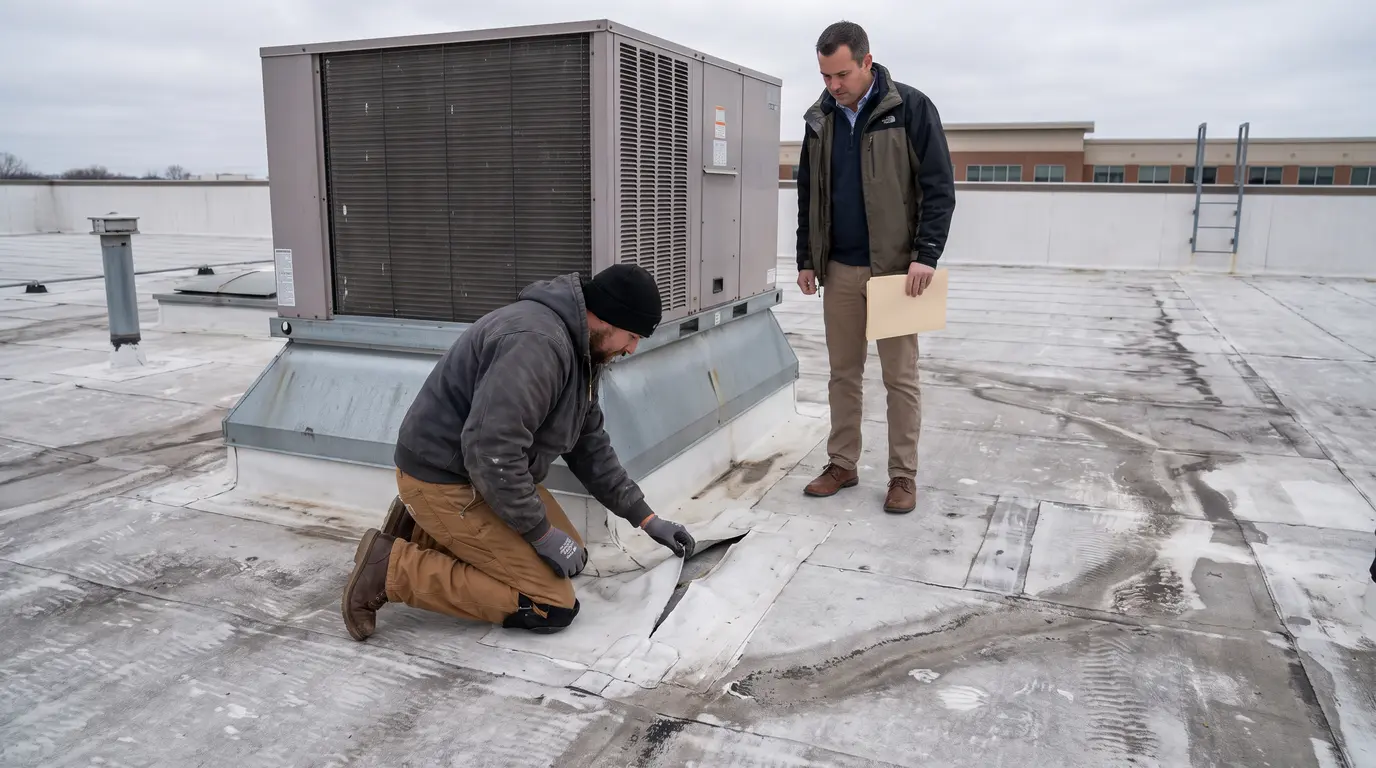
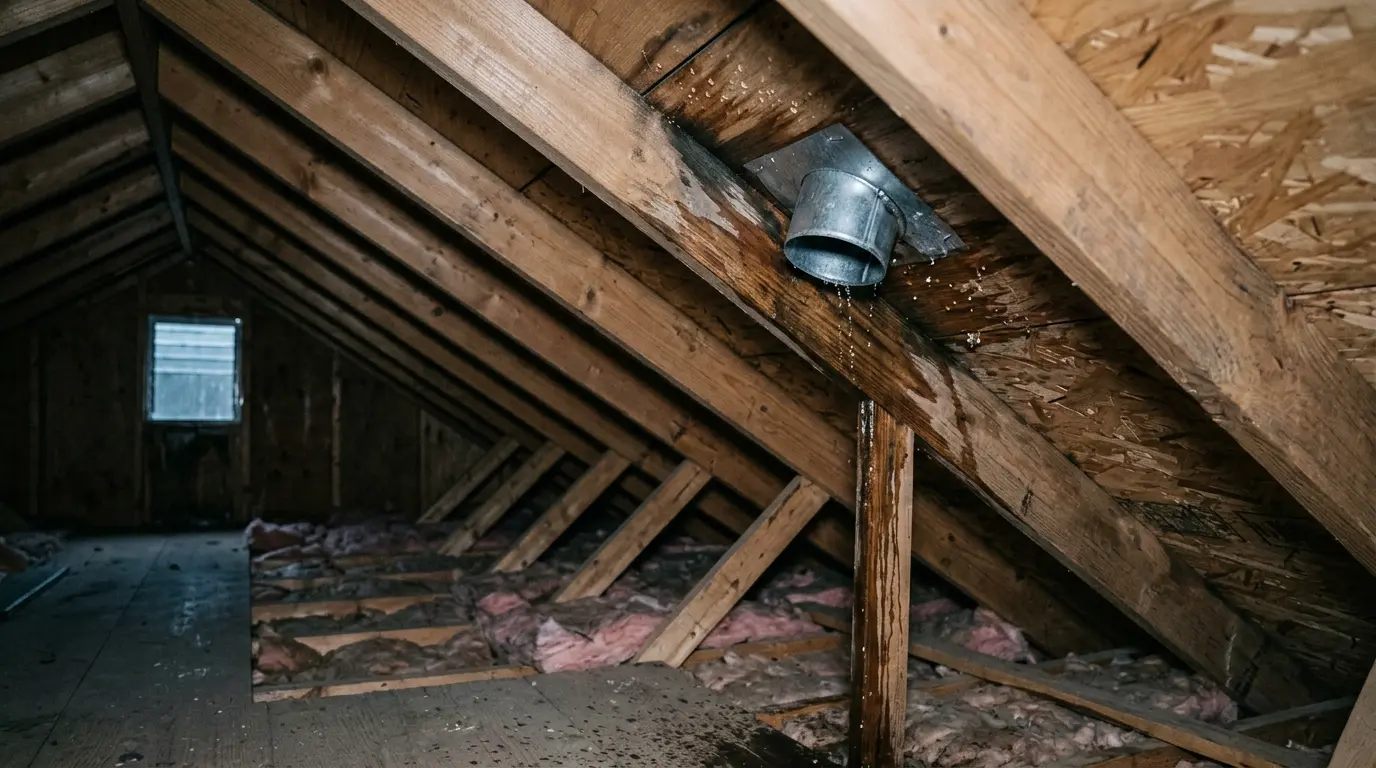
The type of work matters as well. Routine inspections, preventive upkeep, and minor patching may be treated differently from a major structural repair or full roof replacement. Damage connected to tenant negligence, tenant operations, equipment, or roof penetrations may be assigned to the tenant even when the landlord normally handles the roof.
Lease Structures and Possible Roof Responsibility
Lease labels can provide a starting point, but they do not answer the roof question by themselves. A standard triple net lease may pass taxes, insurance, and operating expenses to the tenant while leaving major structural work with the landlord. An absolute net lease may place substantially broader property costs and risks on the tenant.
| Lease arrangement | Common expense pattern | Possible roof treatment | What the owner must verify |
|---|---|---|---|
| Gross or full service lease | Landlord commonly pays building operating expenses through rent | Roof and structural repairs are commonly landlord obligations | Whether the lease separately bills tenants for excess expenses, CAM, capital work, or tenant caused damage |
| Modified gross lease | Landlord and tenant divide specified operating expenses | Roof responsibility may remain with the landlord or may be allocated under specified exclusions | Base year provisions, expense stops, capital cost language, and roof specific clauses |
| Standard triple net lease | Tenant commonly pays taxes, insurance, and maintenance or operating expenses | Major structural repairs or roof replacement may still remain with the landlord, depending on exclusions | Whether maintenance includes replacement, and whether roof or structural costs are excluded from pass throughs |
| Absolute net or bondable lease | Tenant assumes substantially all property costs and risks | Tenant may be responsible for structural repairs, roof replacement, and possibly continued rent obligations after major damage | Exact structural, casualty, insurance, restoration, and business continuity language |
These are common patterns rather than universal legal rules. The executed lease, later amendments, definitions, and governing law control. Also remember that the party responsible for performing work may not be the same party that ultimately bears the cost.
What to Review Before Approving Roof Work
Start with the repair and maintenance clause, then read the related provisions rather than relying on a lease summary or label. Look for definitions and language addressing structural repairs, roof replacement, good repair, capital expenditures, operating expenses, CAM, insurance, casualty, access, notice, and rent abatement.
- Check whether the lease distinguishes routine maintenance, repair, replacement, and improvement.
- Confirm whether roof costs can be passed through as CAM or operating expenses.
- Look for exclusions, cost caps, approval rights, deductibles, or amortization rules.
- Determine whether tenant caused damage is treated separately from ordinary deterioration.
- Review insurance and casualty procedures before assuming insurance will pay.
- Check notice, access, equipment shutdown, business interruption, and restoration provisions.
If the lease permits a cost pass through, confirm whether the expense is recoverable immediately, treated as a capital cost, amortized, limited by a cap, or excluded as a replacement or improvement. A roof replacement may also be treated differently from a repair, so wording that refers generally to maintenance may not resolve the issue.
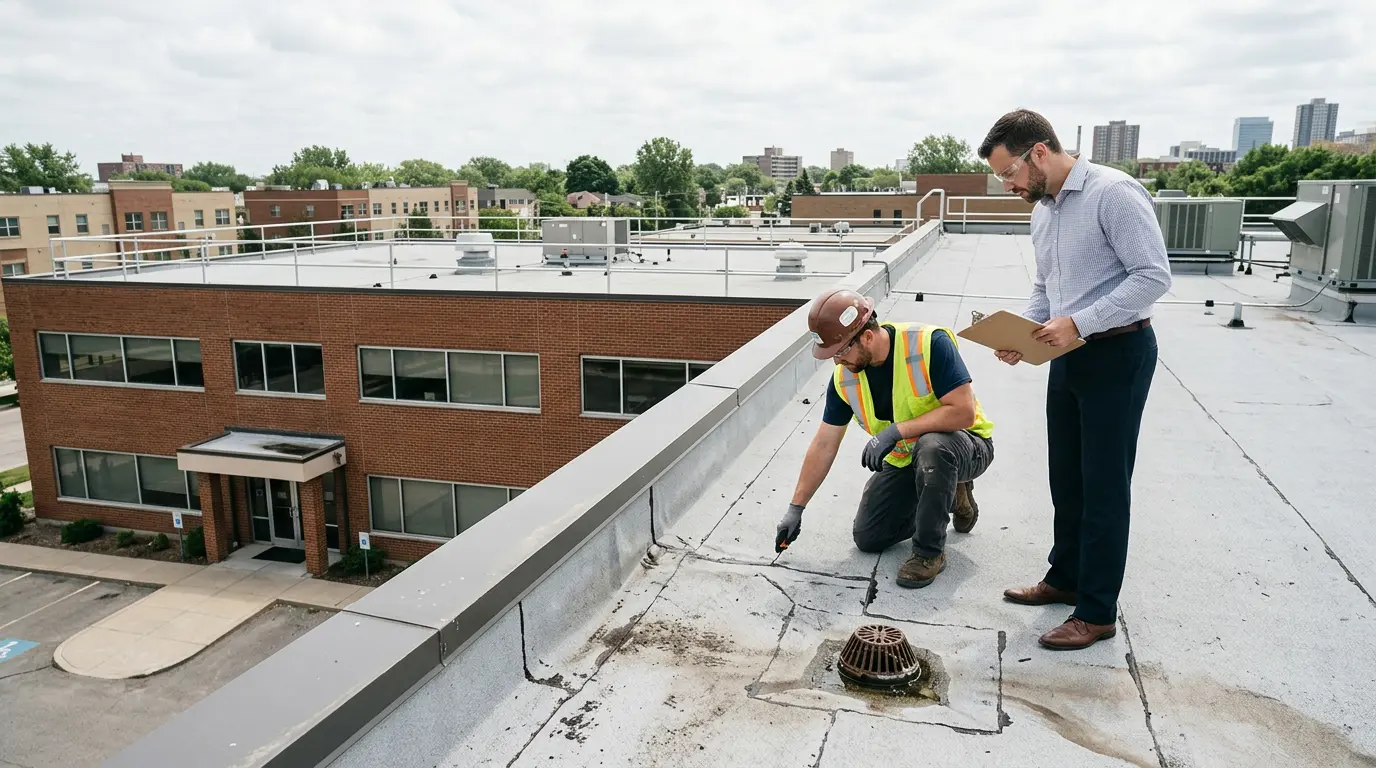
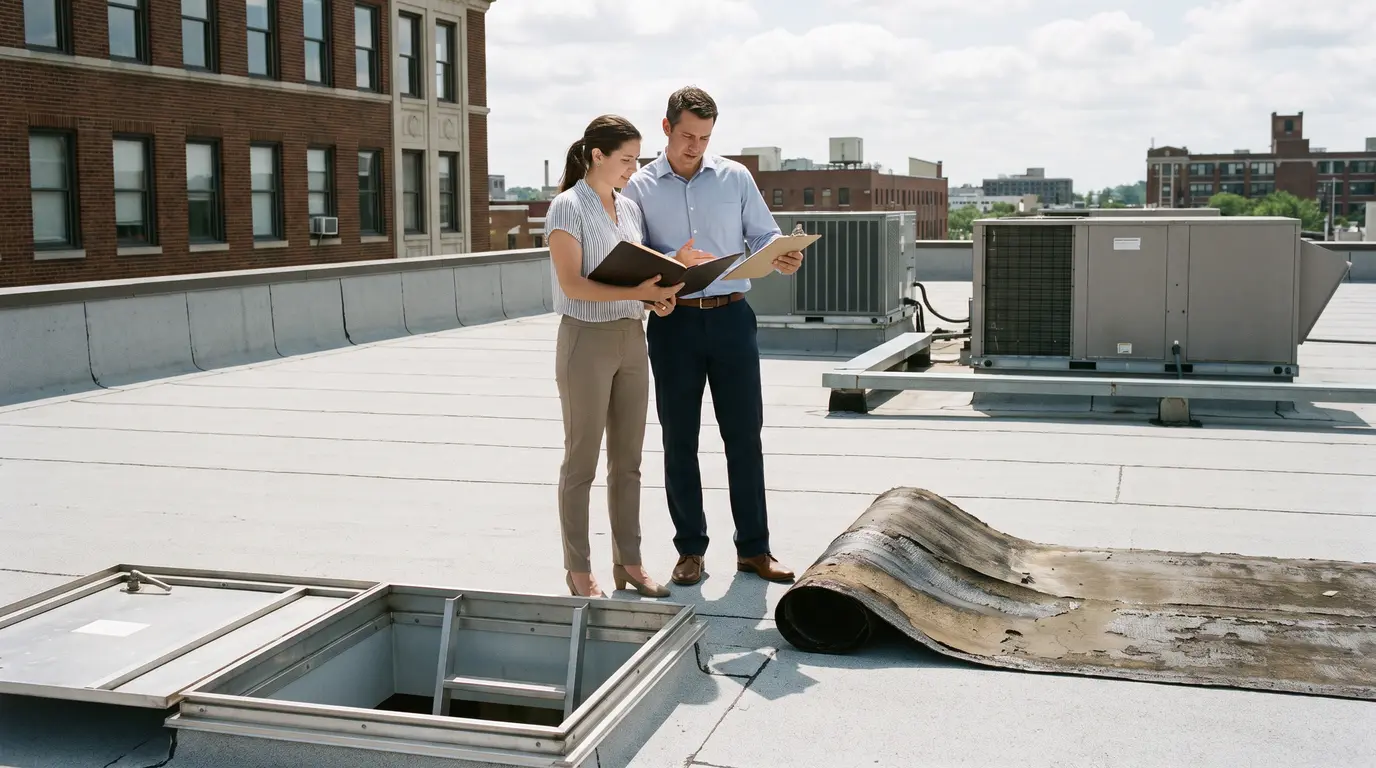
Roof records can make the lease analysis more practical. Gather inspection reports, warranties, prior repair invoices, maintenance logs, roof plans, tenant installed equipment records, and documentation of penetrations. These records can help distinguish ordinary deterioration from damage connected to tenant equipment or operations. For acquisition or ownership review, you can also evaluate a commercial roof before buying by organizing the condition and document history. That resource supports roof evaluation, not legal interpretation of lease language.
Roof Damage, Insurance, and Tenant Operations
Insurance may affect how roof damage is funded, but coverage does not automatically determine contractual responsibility. Review the lease together with property insurance, liability insurance, rent loss coverage, business interruption coverage, deductibles, and casualty procedures. The policy terms and applicable law still matter.
Tenant coordination may be necessary when roof work affects access, business operations, equipment shutdowns, noise, odors, or temporary protection. Give the lease’s notice, access, casualty, and rent abatement provisions attention before scheduling disruptive work.
Planning for Repairs and Replacement
Once responsibility is clearer, separate recurring maintenance from corrective work, emergency response, and future capital needs. You can budget for commercial roof maintenance by organizing those categories after the lease review establishes who bears each cost.
If replacement is a possibility, review the expected scope and use the supplied planning resources carefully. The guide to commercial roof replacement cost can provide scope and planning context, but it does not determine lease responsibility or replace project specific proposals. A preliminary tool can also help you estimate commercial roofing costs. Treat that estimate as an initial planning figure rather than a contractual cost determination.
For high value work or unclear language, a commercial real estate attorney can interpret disputed provisions under the applicable law. A useful question to raise is whether the lease defines roof replacement separately from roof repair and identifies whether either one is a capital expenditure.
Frequently Asked Questions
Does a triple net lease automatically make the tenant responsible for roof replacement?
No. A standard triple net lease commonly passes taxes, insurance, and maintenance or operating expenses to the tenant, but major structural repairs or roof replacement may remain with the landlord. Read the exclusions and provisions addressing replacement, structural work, capital costs, and pass throughs.
The lease may assign that cost to the tenant, particularly when the damage resulted from tenant equipment, operations, negligence, or a tenant created penetration. Review the damage, maintenance, alterations, insurance, and indemnity provisions before reaching a conclusion.
Can a landlord pass roof repair or replacement costs through CAM?
Possibly, but the lease must support the charge. Check whether the cost is included in operating expenses, excluded as a capital item or replacement, subject to a cap, or required to be amortized. Do not assume that every roof expense is a CAM expense.
A Clearer Path to the Right Answer
For a commercial building owner, the safest starting point is a document review that connects the roof condition to the lease language. Identify the type of work, determine who must arrange and pay for it, check whether the cost can be passed through, and review insurance and tenant coordination requirements. That process can turn a confusing repair question into a manageable ownership decision while preserving the need for legal review when the language or amount is disputed.