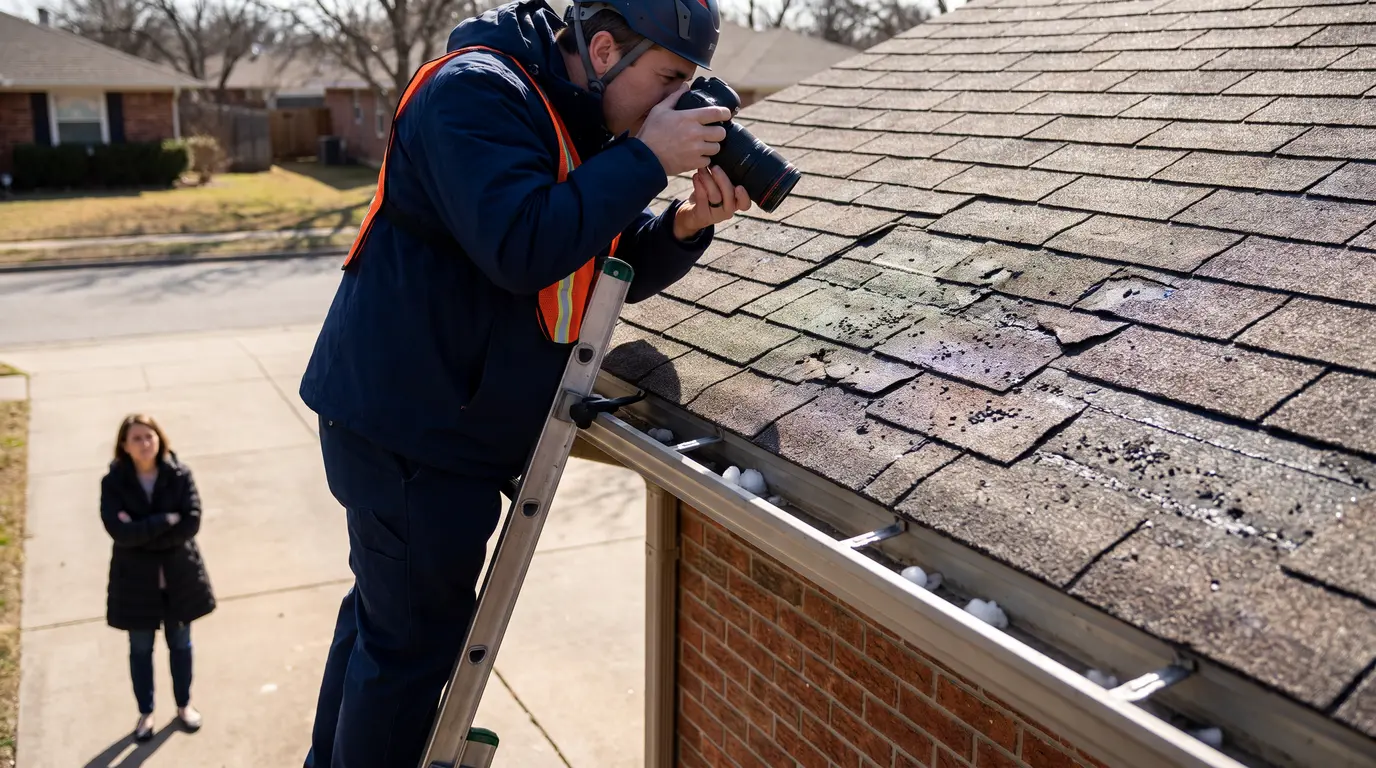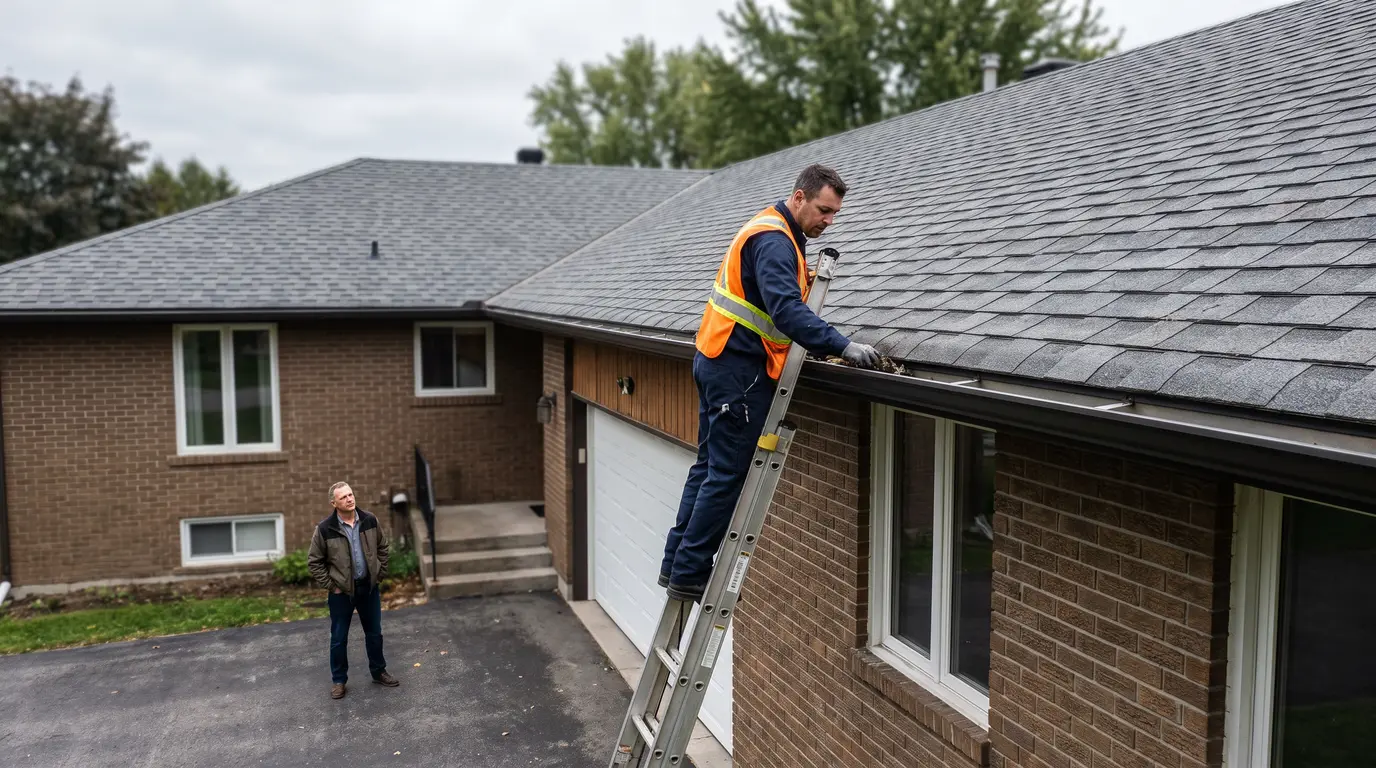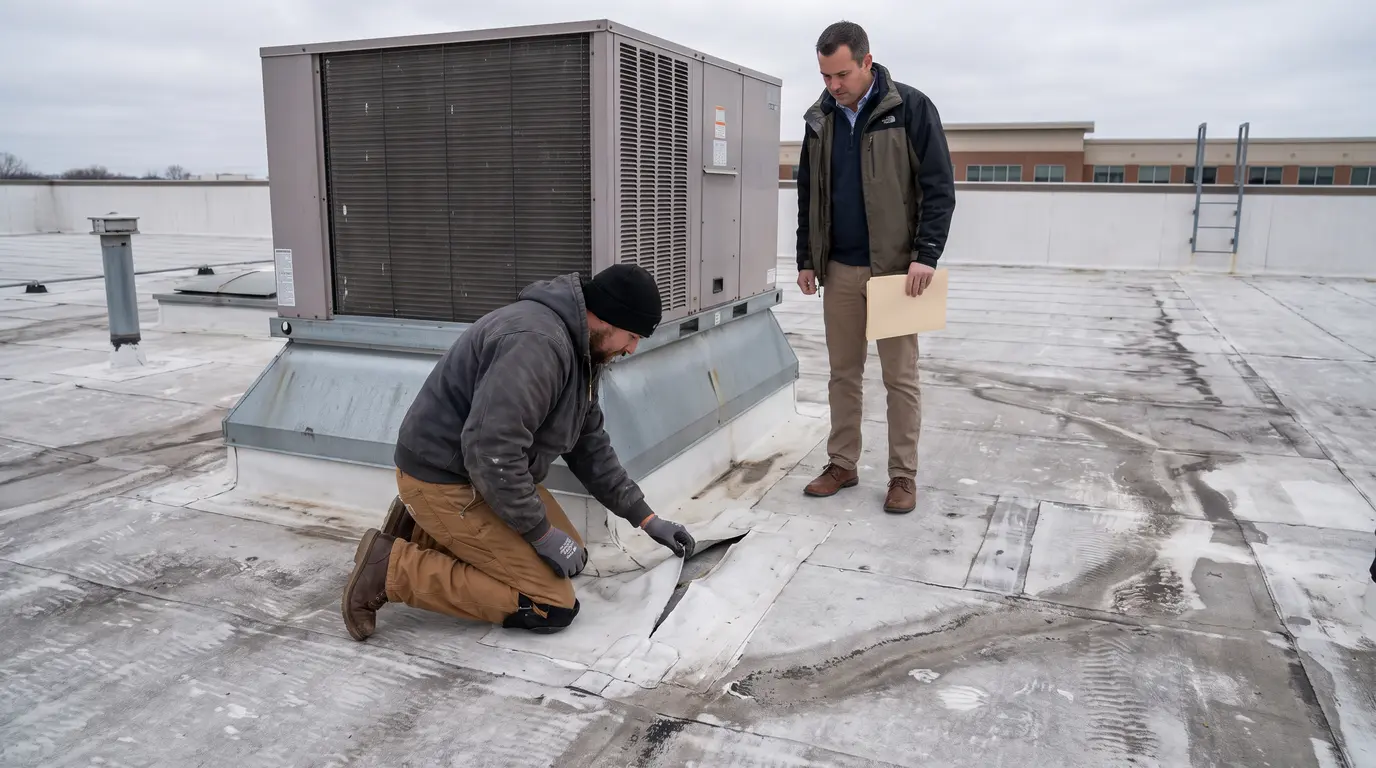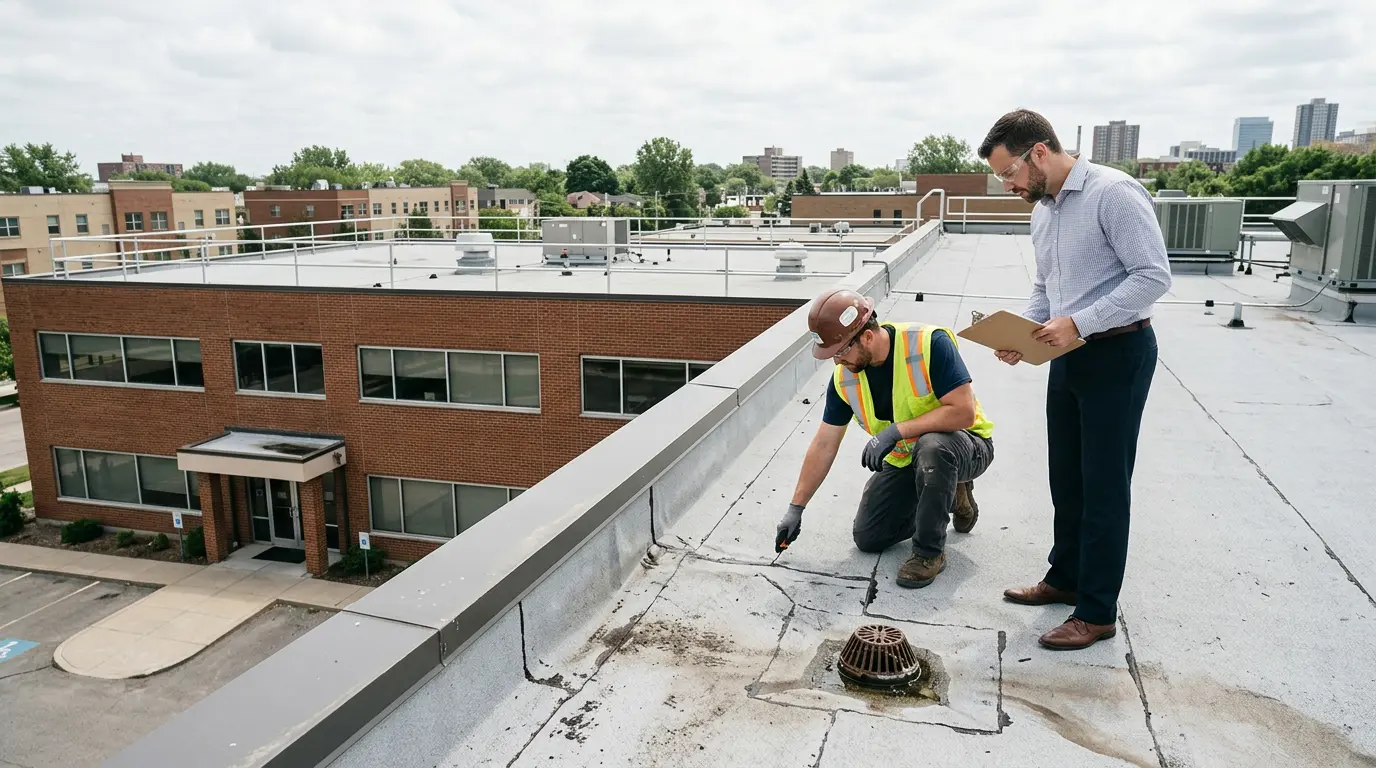
A commercial roof maintenance budget should do more than set aside money for the next leak. Property managers need a recurring plan that covers inspections, routine upkeep, corrective work, emergency response, diagnostic investigation, and future capital needs. Separating these expenses makes it easier to protect the building, explain spending, and plan work around occupied spaces.
Start with a roof inventory for each building and roof section. Record the roof system, approximate age, warranty status, drainage conditions, known deficiencies, repair history, access limitations, occupancy concerns, and expected remaining service life. Then use inspection findings and existing records to assign work to the current operating budget or to a longer term capital reserve.
Separate the Main Commercial Roof Expenses
A useful budget distinguishes recurring care from work triggered by damage or deterioration. The categories below are planning tools, not universal accounting or pricing rules. Lease terms, warranty documents, lender requirements, owner policy, and the project scope may change how an expense is classified or funded.
| Budget category | Typical purpose | Planning basis | Treatment in the plan |
|---|---|---|---|
| Recurring inspection and documentation | Scheduled visual condition reviews, record updates, and identification of deficiencies | Roof inventory, system condition, warranty requirements, access, and risk | Recurring operating expense |
| Routine preventive upkeep | Planned work intended to maintain roof performance and service life before failure | Inspection findings, manufacturer or warranty requirements, and roof specific maintenance needs | Recurring operating expense |
| Corrective and emergency repairs | Response to leaks, storm damage, failed details, or other discovered deficiencies | Documented condition and repair scope | Operating expense or other treatment according to owner accounting and lease policies |
| Diagnostic investigation | Additional assessment when a visible inspection cannot establish the source or extent of moisture or deterioration | Suspected concealed conditions and the limits of the initial inspection | Separate investigation allowance rather than an assumed part of routine service |
| Capital reserve | Major rehabilitation, recover, or replacement anticipated from condition and remaining useful life information | Property specific condition assessment, scope, timing, and cost opinion | Long term reserve or capital plan |
| Occupied building coordination and site controls | Access planning, tenant communication, barricades, debris control, equipment coordination, and work sequencing | Building occupancy and contractor work plan | Include in the relevant work scope rather than assuming it is free |
Build the Budget by Building and Roof Section
A portfolio wide allowance can hide major differences between roof areas. One building may have several roof systems, different installation ages, separate drainage patterns, or different warranty obligations. Budgeting by building and roof section gives each condition a clear place in the maintenance plan.
There is no defensible universal commercial roof maintenance cost per square foot. The useful planning basis includes the roof system, size and configuration, climate and exposure, access, building use, existing condition, vendor scope, and whether major work is approaching. Use property specific proposals or professional cost opinions instead of treating a generic allowance as a quote.
Schedule inspections and routine upkeep
Regular visual inspections help establish current roof condition and identify planned maintenance. The inspection frequency should reflect the roof, property, and risk profile rather than a single schedule applied to every commercial building. Review the National Roofing Contractors Association roofing guidance for the role of planned maintenance, then confirm the appropriate scope for each roof section.
Routine upkeep may include correcting minor deficiencies and addressing drainage or flashing related maintenance identified during inspection. Ask vendors to state exactly what the recurring service includes, including inspection records, minor repairs, cleanup, exclusions, access equipment, and warranty related obligations.
Plan for repairs, leaks, and diagnostic work
Corrective repairs should have a distinct place in the plan so routine maintenance funds are not consumed by unexpected conditions. Leak response may involve temporary protection, investigation, permanent repair, and attention to affected interior materials. A leak can originate from the roof membrane, a penetration, drainage, condensation, plumbing, or mechanical equipment, so the investigation should establish the source rather than assume every moisture problem is a roof covering failure.
When visible inspection cannot establish the source or extent of damage, budget diagnostic work separately. Ask whether the inspection scope covers only visible conditions or includes moisture testing and other diagnostic work where concealed damage is suspected. Prompt attention to water entry supports building moisture control, as described in the Environmental Protection Agency moisture control guidance.
Create a Rolling Capital Reserve
Maintenance can extend service life and address smaller deficiencies, but it is not always a durable substitute for rehabilitation, recover, or replacement. A commercial property condition assessment can help document physical deficiencies, estimate remaining useful life, and identify immediate and medium term capital needs. A baseline assessment is not a contractor proposal, complete design investigation, or guaranteed cost estimate.
For each roof section, record the observed condition, known deficiencies, estimated remaining useful life, expected year of major work, preliminary cost basis, and confidence level. Use this information to create a rolling multi year reserve schedule. Remaining useful life is a planning input, not a guaranteed replacement date. Installation quality, weather exposure, maintenance history, repairs, drainage, rooftop traffic, and concealed moisture can change actual performance.
For a separate look at the decision conditions, read how to decide whether to recover or replace a commercial roof. When testing reserve scenarios, you can also estimate future commercial roof replacement costs or use the commercial roof cost calculator as preliminary planning tools. These resources do not replace a property specific scope, proposal, or cost opinion.
Keep Complete Roof Records
Before an inspection, gather prior inspection reports, construction documents, maintenance records, repair invoices, warranty documents, and information about rooftop equipment or planned projects. Review the warranty before authorizing repairs or alterations. Confirm whether the proposed work is compatible with the roof system, whether a particular contractor or approval process applies, and what documentation the manufacturer requires.
A shared tracking system can connect each property, building, roof area, vendor, cost, status, and completion record. The guide on how to track commercial roof repairs across properties can help adapt centralized recordkeeping concepts to a commercial portfolio.
Coordinate Work in Occupied Buildings
Roof maintenance affects more than the roof surface when a building is occupied. Coordinate tenant schedules, loading areas, entrances, HVAC operations, sensitive spaces, noise restrictions, odors, deliveries, and weather exposure. Put access routes, barricades, debris control, communication responsibilities, emergency contacts, and equipment coordination in the work order or contract.
The contractor should provide a work specific safety and access plan. The Occupational Safety and Health Administration roofing safety guidance emphasizes communication and coordination where contractors share a worksite. Applicable requirements depend on the work activity and employer responsibilities, so a general budget line is not a complete safety program.
Update the Plan After Changes
Review the maintenance and reserve plan at least as part of the annual budgeting cycle, and update it after major storms, leaks, repairs, tenant changes, or new inspection information. Revisit the plan before rooftop equipment work, solar installation, façade work, tenant improvements, or access changes. These projects may affect roof access, hazards, operating costs, life cycle costs, and future maintenance responsibilities.
The Department of Energy discusses roof access, project specific considerations, regulations, operations and maintenance costs, and life cycle costs in its rooftop photovoltaic procurement guidance. Its focus is photovoltaic procurement, so apply those planning principles selectively to other rooftop projects.
Questions to Ask Before Approving Work
- Does this inspection scope cover only visible conditions, or does it include moisture testing or other diagnostic work where concealed damage is suspected?
- Which items belong in this year’s operating maintenance budget, and which should be proposed as capital work or reserve funded work?
- What roof access, tenant notification, safety, and shutdown procedures must be completed before the contractor arrives?
- Will the proposed work affect the roof warranty, future replacement plan, rooftop equipment, or a planned solar installation?
Frequently Asked Questions
What is the difference between a commercial roof maintenance budget and a roof replacement reserve?
The maintenance budget covers recurring inspections, routine upkeep, corrective repairs, emergency response, and investigation. The replacement reserve supports substantial rehabilitation, recover, or replacement identified through condition information and remaining useful life planning.
Should leak investigations and emergency repairs have their own budget line?
Yes, separating them helps distinguish unplanned response from recurring service and makes it easier to track temporary measures, diagnostic work, and permanent repairs. The final accounting treatment should follow the owner’s policy, lease terms, and project scope.
What roof records should be retained for each commercial building?
Retain the roof inventory, inspection reports, construction documents, maintenance and repair records, warranty documents, known deficiencies, access information, and records of rooftop projects. Update the file after inspections, storms, leaks, repairs, tenant changes, and major building work.
The most reliable commercial roof budget is a living plan organized by building and roof section. Begin with documented condition information, separate recurring care from corrective and capital needs, and update the plan when the building or roof changes. That approach gives property managers a clearer way to protect occupied buildings while preparing for larger work before it becomes an urgent surprise.