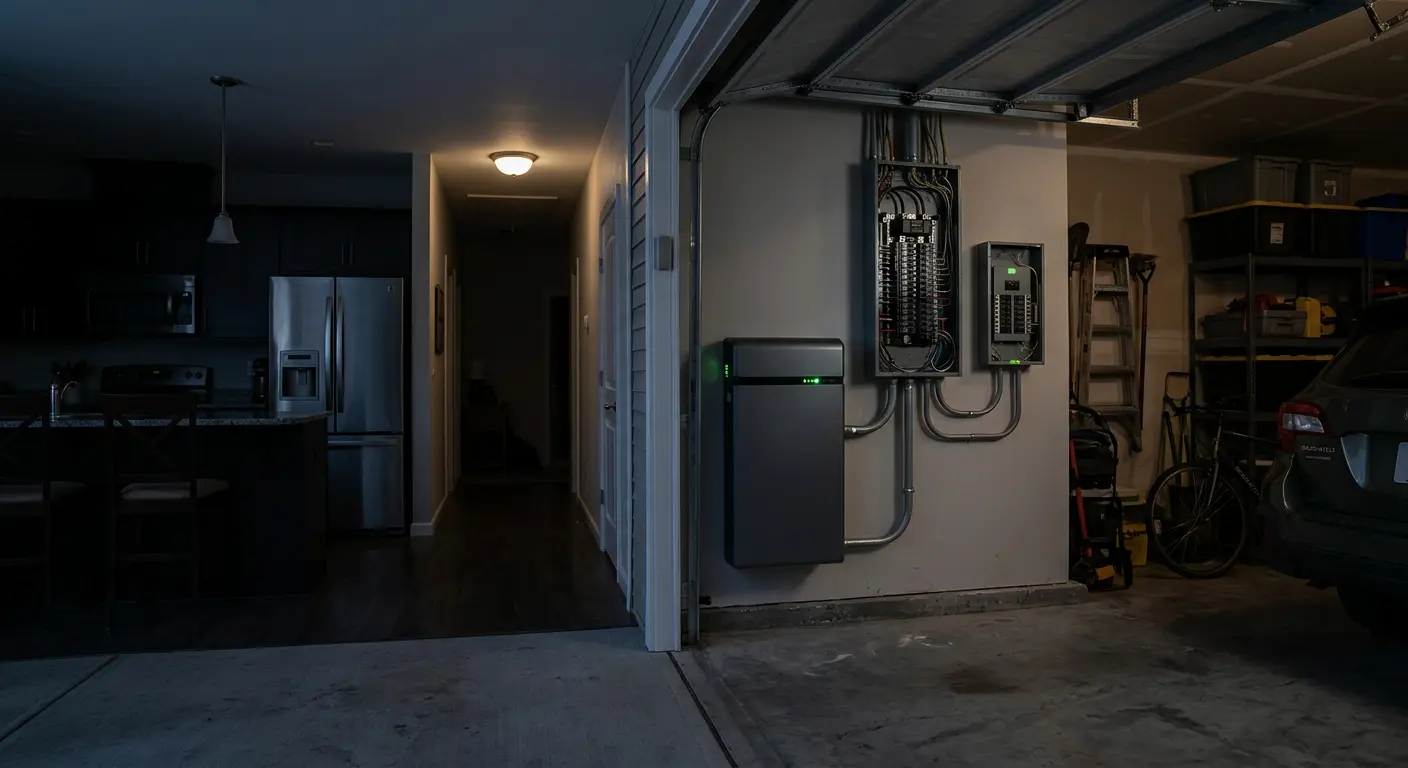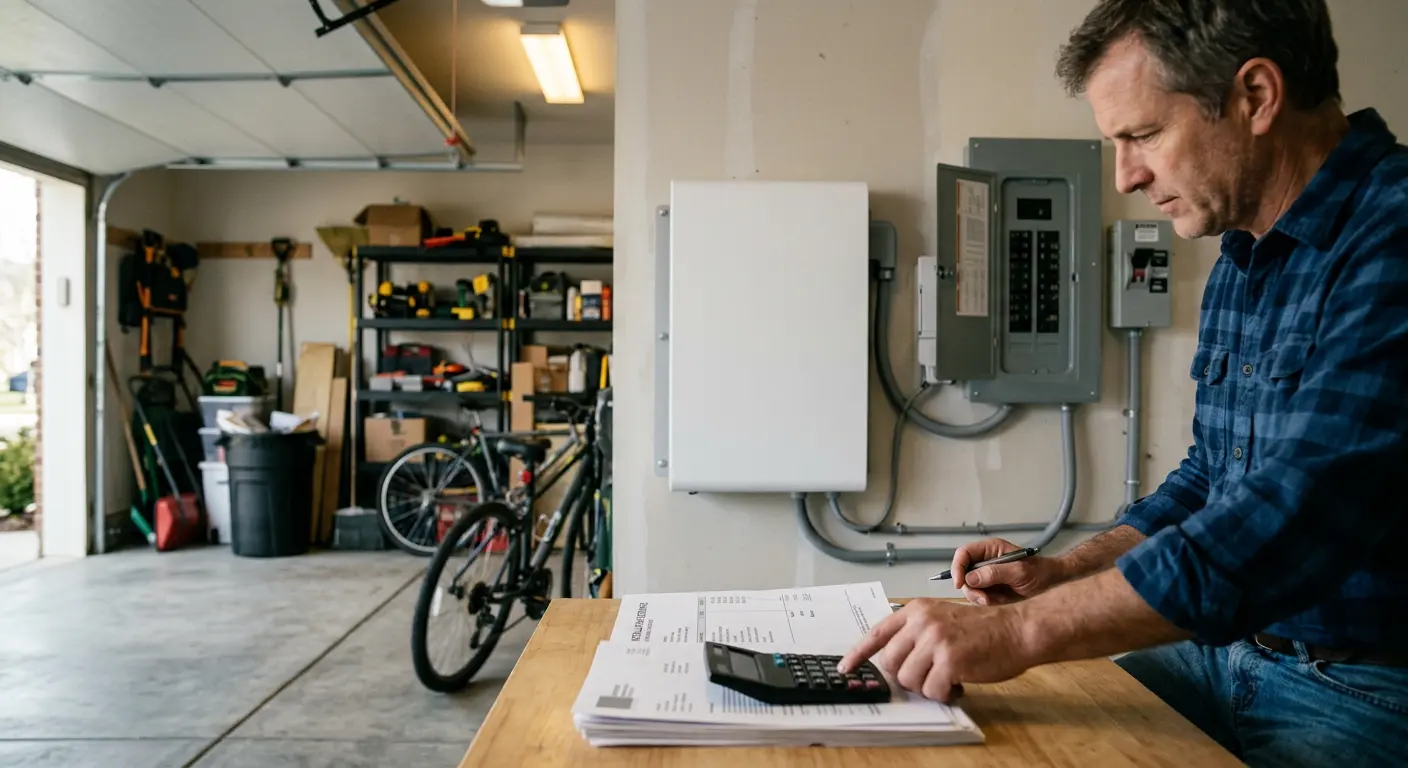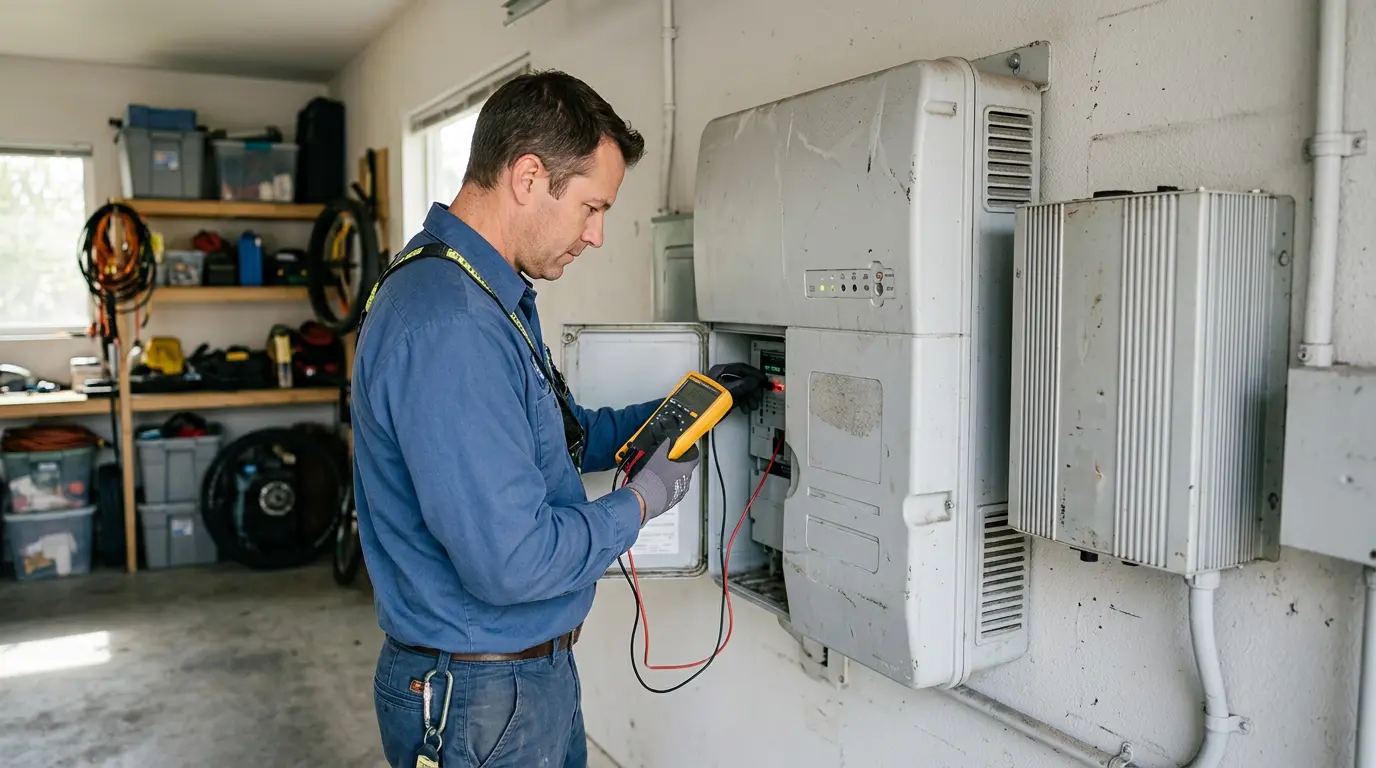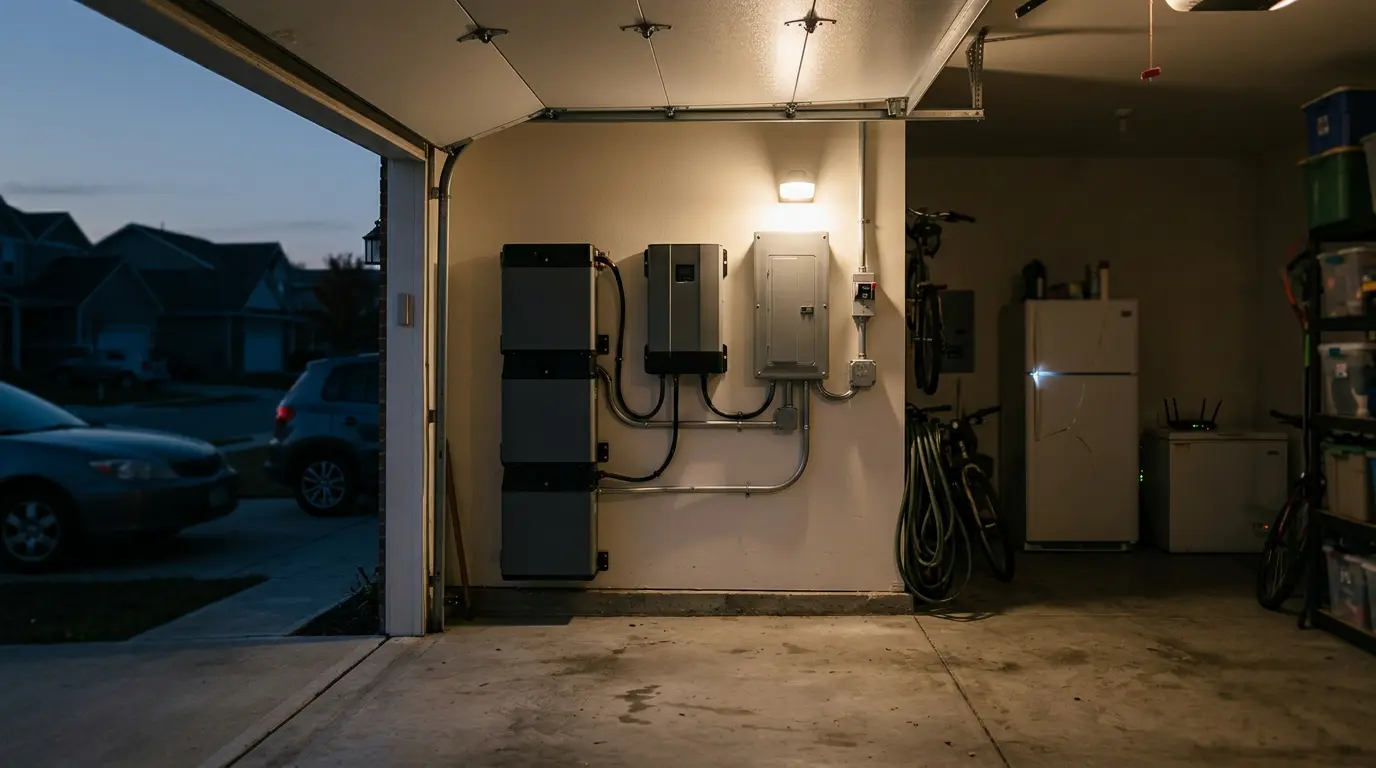
How Many Home Batteries Do You Need?
There is no universal number of home batteries that works for every house. The right quantity depends on the energy used by your essential loads, how long the outage may last, the power those loads need at the same time, the battery’s usable capacity and output rating, and whether solar can operate and recharge the system while the grid is down.
A practical starting point is to calculate the usable storage needed for your essential loads, adjust for conversion losses and reserve capacity, then round up based on the exact battery model. That calculation is only half the job. The system must also provide enough continuous and startup power for the appliances you want to run.
In other words, battery sizing is not just about filling a larger energy bucket. You also need an inverter and battery configuration capable of lifting the loads you plan to use.
The Two Numbers That Control Battery Sizing
Home battery specifications use two different measurements: energy capacity and power capacity. They answer different questions, and confusing them can lead to an undersized backup system.
- Energy capacity, measured in kilowatt hours or kWh, indicates how much energy the battery can store and deliver over time.
- Power capacity, measured in kilowatts or kW, indicates how quickly the system can deliver that energy to household loads.
Energy capacity primarily affects runtime. Power capacity affects which appliances can operate simultaneously and whether equipment with motors can start. A battery may have enough kWh for your target outage but still lack the kW needed to start a pump, compressor, air conditioner, or heat pump.
The U.S. Department of Energy explains the distinction between energy capacity and power capacity in its Energy Storage Grand Challenge Roadmap. For homeowners, the practical lesson is simple: check both numbers before deciding how many batteries you need.
A Practical Formula for Estimating Battery Quantity
Begin with the circuits and appliances you want to keep operating during an outage. Then estimate how much energy those essential loads use each day and multiply that amount by the number of outage days you want to cover.
The basic planning calculation is:
Required delivered energy = essential load energy per day × target outage days
The result needs to be adjusted for inverter and battery conversion losses, reserve capacity, temperature or operating derating, and the manufacturer’s definition of usable capacity. It is a planning framework, not a guaranteed runtime calculation or a universal code requirement.
Once you have an adjusted storage requirement, compare it with the exact battery’s published usable energy:
Battery quantity = adjusted required storage ÷ usable energy per battery
Round the result up to a whole battery. If the calculation produces less than one unit, that does not automatically mean one battery will run every desired appliance. The system still needs enough continuous and startup output for the loads, and the battery may have operating limits that affect the energy delivered to the home.
Why Total Household Energy Use Is Not Enough
Your annual household electricity use can provide useful context, but it does not show which appliances operate during an outage, how long they run, or whether several large loads operate at the same time. A measured load inventory is a stronger foundation for backup sizing.
For each circuit or appliance you plan to back up, record its running watts, expected hours of operation, startup or surge requirements, voltage, and whether it operates at 120 volts, 240 volts, or another configuration. Utility interval data, appliance nameplates, plug in meters, and a professional energy audit can help provide that information.
The U.S. Department of Energy describes an energy audit as a way to understand how much energy a home uses and identify opportunities to reduce that use. Its building analysis guidance also recommends obtaining actual appliance specifications and using measurements for certain relatively constant loads, such as refrigerators and freezers. You can review the consumer guidance in the Energy Saver Guide.
Essential Load Backup Versus Whole Home Backup
The backed up load list often changes the battery requirement more than the number of people living in the home. Essential load backup may focus on refrigeration, lighting, communications, internet equipment, medical equipment, selected outlets, and limited heating or cooling.
Whole home backup may also include central air conditioning, electric resistance heating, electric water heating, cooking appliances, laundry equipment, pool equipment, well pumps, and vehicle charging. Keeping those loads online can require substantially more energy capacity and power output.
Reducing the backed up load list can make a battery system smaller, but the right choice depends on your equipment and backup goals. A system designed for overnight operation of selected circuits is a different project from one intended to support the entire home during a multiday outage.
Why Motor Loads Need Special Attention
Refrigerators, freezers, sump pumps, well pumps, air conditioners, and heat pumps may need more power to start than they use while running. That short startup demand can exceed the system’s continuous output even when the battery has plenty of stored kWh.
Do not treat a battery’s peak or surge rating as its continuous rating. Manufacturers publish these figures separately, and actual startup capability depends on the equipment, inverter, wiring, operating temperature, and system configuration.
Solar Can Extend Backup, But Does Not Guarantee It
Solar can extend the time a battery system supports the home, but only when the system is designed to operate while disconnected from the grid. A standard grid tied solar array does not automatically keep working during an outage. Many such systems shut down when grid power disappears.
Backup operation requires compatible islanding controls, inverter equipment, wiring, and commissioning. The system must also have enough solar production to serve live loads and overcome charging losses before it can meaningfully recharge the battery.
Solar production changes with weather, season, shading, array orientation, and the timing of household loads. Nighttime, storms, smoke, snow, and winter conditions can reduce or eliminate production for a period of time. As a result, the nameplate size of the solar array alone does not establish how long the home can operate independently.
The Department of Energy explains the role of solar and storage in outage support through its Solar Integration: Solar Energy and Storage Basics and its guidance on Inverters and Grid Services Basics. Ask for a written estimate of expected solar recharge during the specific outage period you are planning for, rather than assuming the panels will provide indefinite backup.
Battery Specifications Can Change the Answer
Battery products are not interchangeable. One manufacturer may emphasize nominal or total energy, while another highlights usable energy. Continuous output, peak output, off grid limits, temperature limits, phase configuration, solar input, reserve settings, and expansion rules can also differ.
For example, Tesla’s North American Powerwall 2 documentation lists 13.5 kWh of usable energy and 5 kW of maximum continuous power, with a separate peak off grid rating. Enphase lists 5.0 kWh of usable energy and 3.84 kW of continuous power for its IQ Battery 5P, along with separate short duration peak ratings.
These figures are product examples, not a recommendation or an industry average. They demonstrate why a battery count cannot be selected from a generic number of kWh alone. Compare the exact model and configuration proposed for your home. The applicable technical information is available in the manufacturer documentation for Powerwall 2 AC Datasheet and IQ Battery 5P.
Also confirm whether the proposal uses total, nominal, or usable capacity. Published usable capacity should not automatically be treated as the same amount of alternating current energy available at the household panel. Reserve settings, inverter losses, state of charge, temperature, and battery aging can reduce the energy available to ordinary backup loads.
Some systems hold part of the battery in reserve for backup operation. Enphase describes reserve capacity in its IQ Battery 5P Owner’s Guide. The correct reserve setting is product specific and should be included in the runtime calculation.
What to Ask for in a Battery Sizing Proposal
A useful proposal should show how the recommended battery quantity was determined, not simply list a number of units. Ask the installer for a written load calculation that includes:
- Essential load energy use in kWh per day.
- Maximum expected continuous power in kW.
- Motor starting and surge assumptions.
- The exact battery quantity and usable capacity per unit.
- Expected solar production and recharge during the outage.
- Battery reserve settings and inverter losses.
- The assumed outage duration.
Confirm which circuits are backed up, whether the system can form an island, whether solar can restart or recharge during an outage, whether 240 volt loads are supported, and what happens when the battery reaches a low state of charge.
Local permitting, inspection, utility approval, interconnection requirements, equipment listing, placement, and clearance requirements vary by jurisdiction and system design. Verify those items with the authority having jurisdiction and the utility before purchase or installation. Current incentive eligibility and utility rules also depend on the date and location, so they should not be used to determine battery quantity without current verification.
Common Home Battery Sizing Misconceptions
Misconception: One home battery size works for most homes.
Correction: Battery requirements depend on the backed up loads, outage duration, simultaneous power demand, solar contribution, and product specifications. Home size alone does not establish the right battery count.
Misconception: A battery with enough kWh will automatically run every appliance in the house.
Correction: The inverter must also supply the appliances’ continuous and startup power. The backup equipment must be configured for the necessary circuits and voltages.
Misconception: Rooftop solar keeps working during every grid outage.
Correction: Solar and storage can provide outage backup when designed with compatible islanding equipment. Ordinary grid tied solar may shut down when grid power is absent.
Misconception: The battery’s advertised capacity is the amount available at the outlets.
Correction: Manufacturers distinguish nominal or total energy from usable energy. Reserve settings and conversion efficiency also affect the energy delivered to household loads.
Frequently Asked Questions
How many batteries do I need to run only my refrigerator, lights, internet, and medical equipment?
There is no fixed answer without measuring the energy use and startup demand of those specific loads. List their running watts, expected hours of operation, startup requirements, and target outage duration, then compare the adjusted energy and power requirements with the exact battery’s usable capacity and output ratings.
How many kWh of battery storage are needed for a one day or three day outage?
Multiply the essential loads’ estimated daily energy use by one day or three days, as applicable. Then account for inverter and battery losses, reserve capacity, temperature or operating derating, and the manufacturer’s definition of usable capacity. The battery system must also meet the loads’ continuous and startup power requirements.
Is one battery enough to run a central air conditioner or heat pump?
It depends on the equipment’s running power, startup demand, voltage, and the battery and inverter configuration. One battery may have enough stored energy for a calculation but still lack the continuous or startup output needed to operate the equipment.
What is the difference between battery kWh, kW, and peak or surge power?
kWh measures stored energy and helps determine runtime. kW measures the rate of power delivery and helps determine which loads can run at the same time. Peak or surge power is a separate short duration rating that may help with motor startup, but it should not be treated as continuous output.
Can rooftop solar recharge home batteries during a power outage?
It can, if the solar and storage system is designed to operate while disconnected from the grid and has compatible islanding or grid forming equipment. Solar production varies with weather, season, shading, array orientation, and load timing, so rooftop solar alone does not guarantee recharge during every outage.
Should I size batteries for whole home backup or only essential circuits?
That depends on your backup goals and the equipment you want operating. Essential circuit backup can exclude larger loads such as electric heating, central air conditioning, electric water heating, cooking, pool equipment, and vehicle charging. Whole home backup may include those loads and can require more energy and power capacity.
How do battery reserve settings and inverter losses affect runtime?
A reserve setting holds part of the battery’s energy back for backup operation, while inverter and battery conversion losses reduce the energy delivered to household loads. Runtime estimates should include the exact product’s reserve setting, efficiency, operating limits, and usable capacity rather than relying only on advertised total energy.
What should a battery installer include in a home backup sizing calculation?
The calculation should identify the backed up circuits, daily essential load energy, maximum continuous power, motor starting assumptions, battery quantity, usable capacity, reserve setting, inverter losses, expected solar recharge, and assumed outage duration. It should also explain whether the system supports islanded operation, the required voltages, and what happens when the battery state of charge becomes low.
The Bottom Line on Home Battery Quantity
The number of home batteries you need is determined by your backup plan, not by a universal household size rule. Start with the essential loads, calculate the energy needed for the target outage duration, and then check continuous and startup power separately.
Use the exact battery model’s usable capacity and output ratings. Include reserve settings, conversion losses, operating conditions, and the realistic contribution of solar. A written load calculation from the installer can turn a broad battery estimate into a system designed around the way your home actually uses electricity.