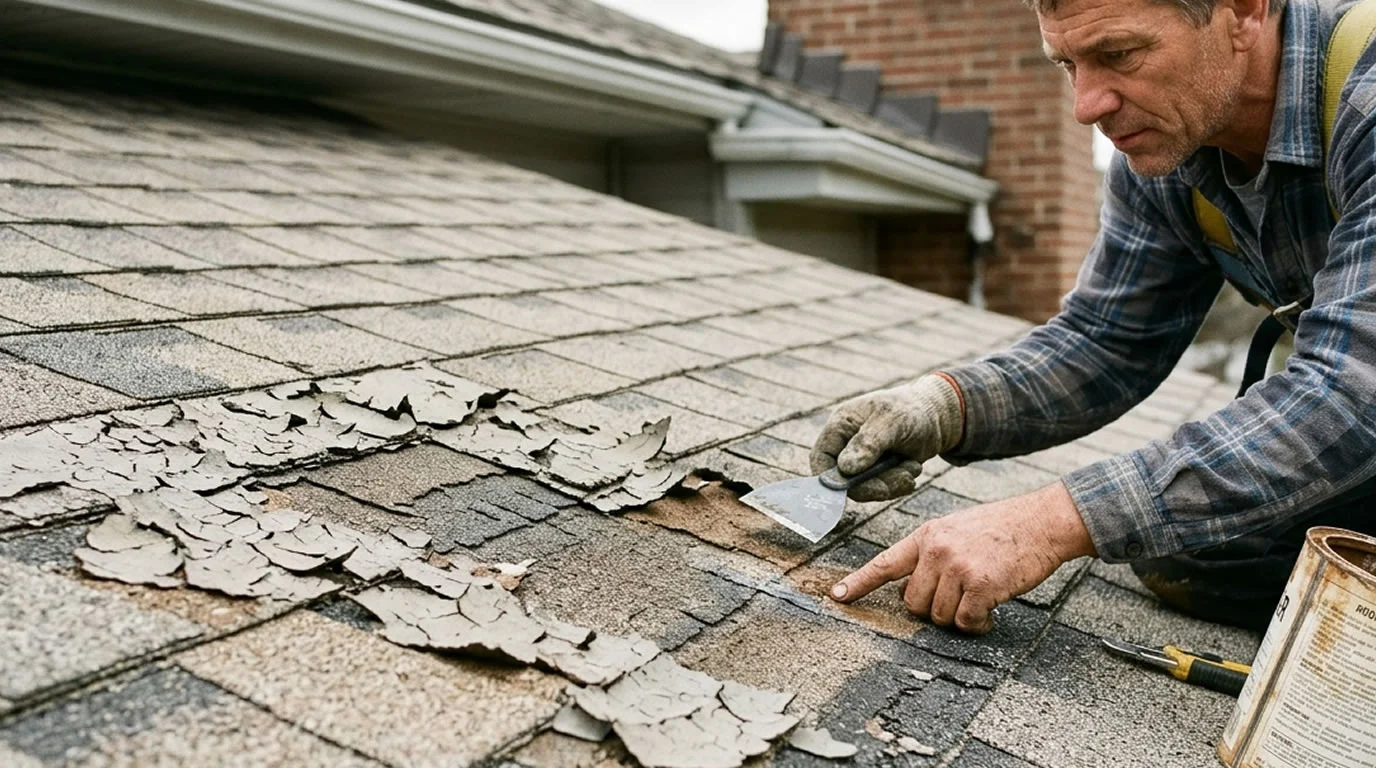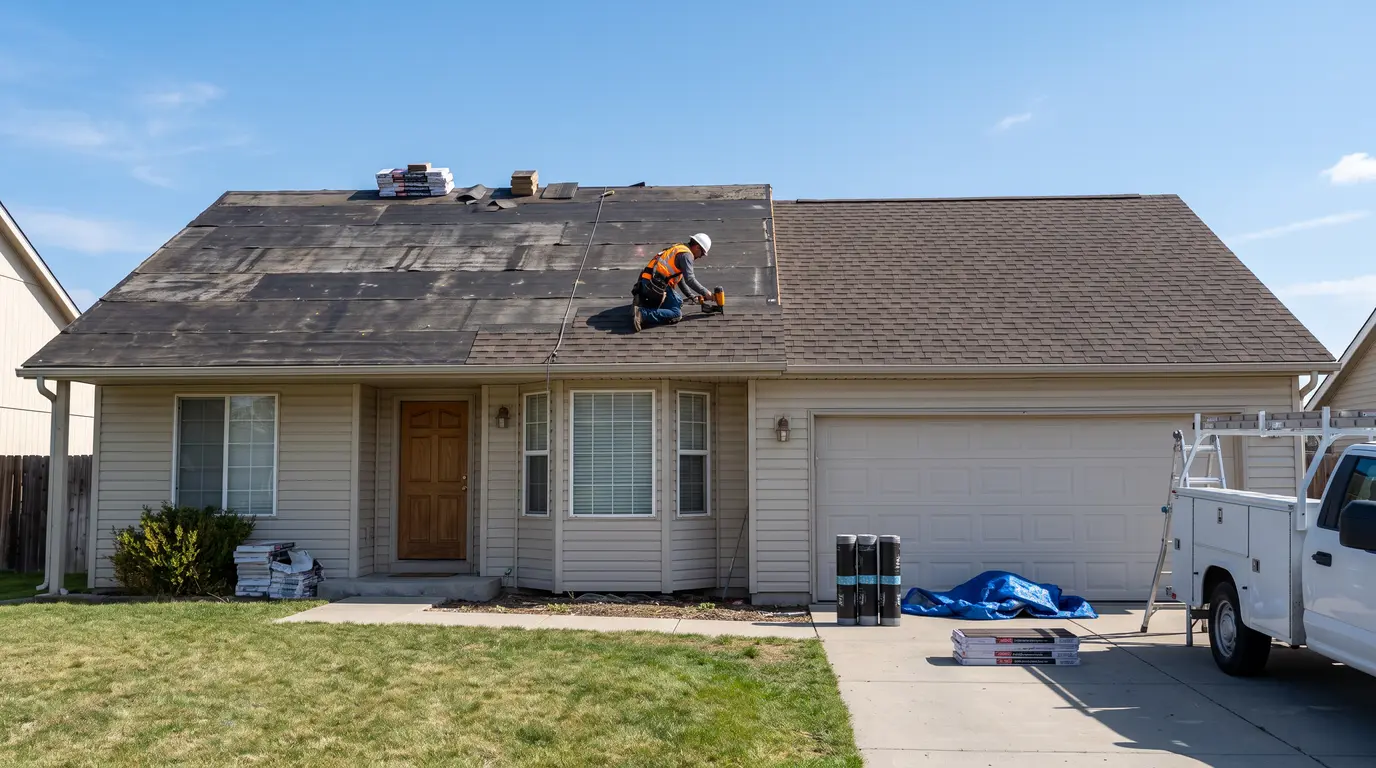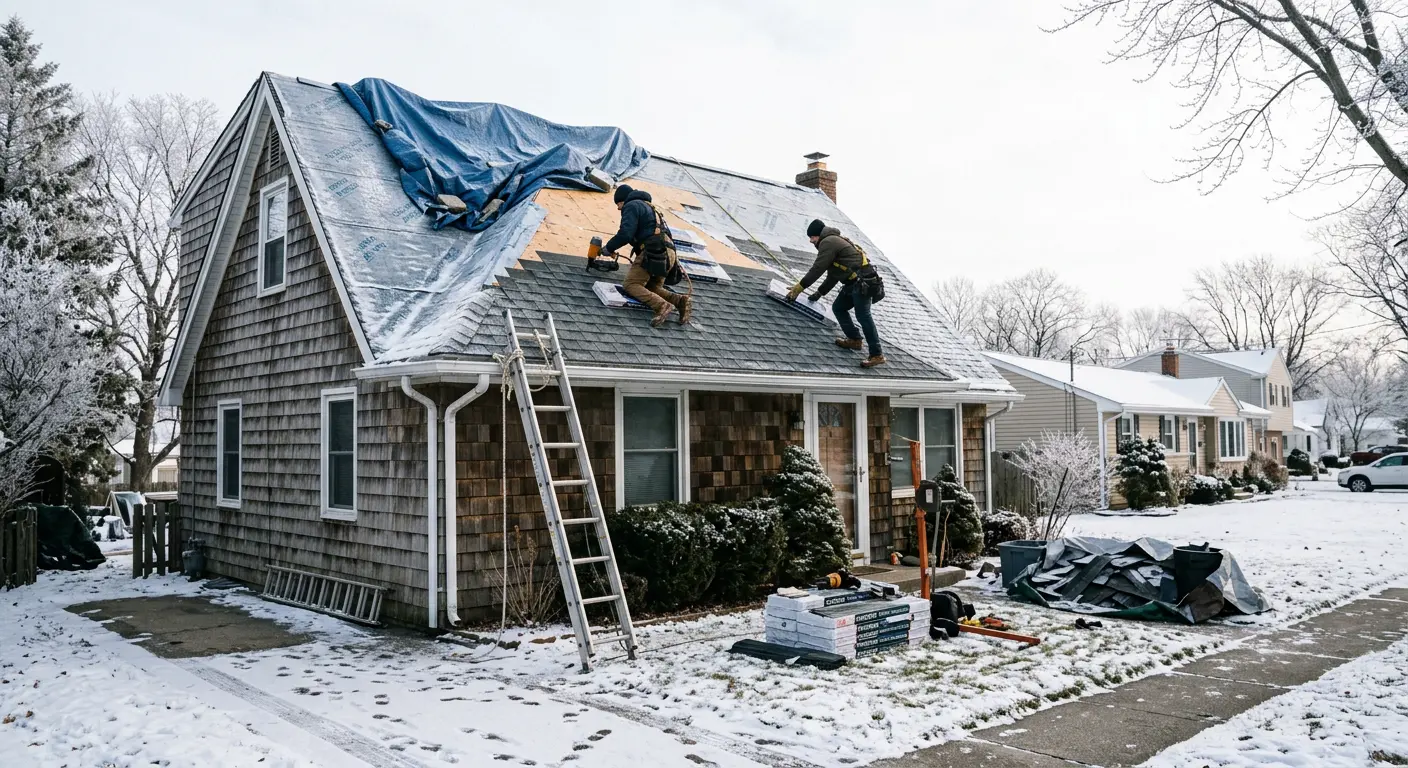
A roof replacement contract should do much more than state a price and say “replace roof.” It should identify the parties and property, describe the complete scope of work, explain materials and payment timing, assign permit responsibilities, address warranties and cleanup, and establish how unexpected work will be approved.
The exact legal requirements depend on the state and local jurisdiction. Some areas regulate deposits, cancellation notices, license information, payment schedules, change orders, or required contract language. Use this checklist to review the agreement, then verify any jurisdiction specific requirements with the appropriate local or state authority.
What the Contract Should Identify
Start with the basics. The contract should clearly identify the homeowner, contractor, property address, contractor contact information, and any applicable license information. It should also include the expected start date, anticipated completion date, total contract price, payment terms, and any cancellation notice that applies.
Do not rely on a proposal that contains only a company name and a lump sum. The signed contract and every attachment should make it clear who is responsible for the work, which property is covered, and what both sides have agreed to do. The Federal Trade Commission recommends obtaining a written contract with contractor identifying information, license information, estimated start and completion dates, scope and price promises, and applicable cancellation information. You can review its guidance in How to Avoid a Home Improvement Scam.
Scope of Work and Materials
The scope of work is the heart of the contract. “Replace roof” is not enough detail to settle questions about tear off, flashing, ventilation, damaged decking, or disposal. A useful scope describes the work and materials specifically enough that the homeowner can compare the contract with the estimate and later determine whether the promised work was completed.
- Which roof areas, structures, and slopes are included.
- Removal of existing roofing materials, including the number of layers to be removed if known.
- Loading, hauling, and disposal of the old roofing.
- Underlayment, ice or water protection where applicable, flashing, and drip edge.
- Ventilation work, including whether existing components will remain, be replaced, or be modified.
- Inspection and replacement terms for roof decking discovered after tear off.
- Treatment of chimneys, skylights, plumbing penetrations, walls, siding interfaces, gutters, and other accessories.
- Material manufacturer, product specifications, color, size, and any other selected product details.
- Items that are expressly excluded from the contract.
Some conditions cannot be fully evaluated before the existing roof is removed. Rotting decking, structural damage, inadequate ventilation, or code related upgrades may only become apparent during the project. The contract should explain how these conditions will be handled instead of leaving the answer to a conversation over the phone while the crew is already working.
Ask the contractor to put inspection limits and the approval process in writing. The California Contractors State License Board offers a detailed example of how home improvement contracts can describe products, performance, amounts, manufacturer information, and responsibility for each task. Its requirements apply to California contracts, but the level of detail is a useful model for reviewing a roofing scope. See Learn About Home Improvement Contracts.
Price, Payment Schedule, and Financing
The contract should state the total price and show when payments are due. A payment schedule tied to identifiable work or materials is easier to understand and document than one based only on calendar dates.
- Total contract price and what that price includes.
- Deposit amount and the date it is due.
- Progress payment triggers tied to stated work or materials.
- Conditions for final payment, such as completion of the contracted work and agreed cleanup.
- Accepted payment methods, receipts, and any financing charges.
- Charges associated with cancellation, financing, or approved changes.
Payment limits vary by jurisdiction. For example, California generally limits a home improvement down payment to the lesser of $1,000 or 10 percent of the contract price. That is a California rule, not a nationwide deposit limit. Check the law that applies to the property before assuming a deposit amount is permitted.
The Federal Trade Commission recommends avoiding full payment before the work is completed and accepted, checking contractor credentials and insurance, and being cautious about cash or wire transfers and other hard to reverse payment methods. These are consumer protection recommendations, not a universal legal payment rule. The contract should still make every payment trigger clear.
If insurance is involved, do not assume an insurer’s estimate or claim payment is automatically the same as the contract price. The agreement should state whether the homeowner remains responsible for a deductible, excluded work, or work the policy does not cover.
Timing, Permits, and Inspections
The contract should include an anticipated start date and completion date, along with any stated conditions that could affect the schedule. It should also say who is responsible for obtaining the permit, paying permit fees, scheduling inspections, and providing inspection documentation.
A roof replacement does not automatically require a permit everywhere. The answer depends on the local building authority, adopted code, property conditions, project scope, and applicable exemptions. A model code or an exemption from another jurisdiction does not establish the rule for your property.
Before signing, ask the local building department whether a permit, reroofing application, inspection, historic district approval, wildfire zone requirement, or other authorization applies. The contract should match that answer. Permit responsibility is a contract issue, but the actual permit requirement comes from the authority and code applicable to the property.
A missing permit or contract problem should not automatically be described as a reason an insurer must deny a claim, cancel coverage, or remove replacement cost benefits. Insurance consequences depend on the policy, facts, insurer practices, and applicable law.
Change Orders and Hidden Damage
Unexpected decking damage is one reason a roofing contract needs a clear change order process. The contractor should not be able to expand the scope or price based only on a verbal conversation that is difficult to prove later.
A change order should be written and signed by the homeowner and contractor before the changed work begins, where applicable law requires or supports that process. It should describe:
- The added, deleted, or revised work.
- The price added or subtracted, including a unit price when appropriate.
- The effect on the payment schedule.
- The effect on the completion date.
- Whether work will pause until the homeowner approves the change.
California provides a detailed example in which changes to the scope or price are documented in a written change order signed before the changed work begins. Other jurisdictions may use different requirements, but written approval is the safer way to prevent a dispute about what was requested and what is owed. The California Contractors State License Board sample is available through its Sample Home Improvement Contract.
Cleanup, Property Protection, and Disposal
Cleanup should be written into the scope instead of treated as an assumed courtesy. The contract should identify removal and disposal of old roofing materials and describe the expected final cleanup.
It should also address protection of landscaping and nearby property, along with work around gutters, siding, chimneys, skylights, and other areas affected by the replacement. If an item is not included, the contract should say so. Clear exclusions are much easier to evaluate before signing than after the last piece of roofing has been hauled away.
Workmanship and Manufacturer Warranties
A roofing contractor warranty and a manufacturer limited product warranty are different promises from different parties. The contract should identify each one separately rather than using the single word “warranty” as if it settled everything.
- Who provides the workmanship warranty.
- Who provides the product warranty.
- How long each warranty lasts.
- Which defects or problems are covered.
- What exclusions apply, including any limits related to installation, maintenance, ventilation, or storm damage.
- How to submit a claim and who handles the first response.
- Whether registration, maintenance, or inspection records are required.
- Whether the warranty transfers if the property is sold.
The research does not establish a universal warranty period. Request the actual workmanship warranty and manufacturer documents before signing, not merely a promise that a warranty exists. A manufacturer warranty may not cover an installation defect, and a workmanship warranty may not cover every problem affecting the roofing product.
Cancellation Rights
Do not assume every homeowner automatically has three business days to cancel a roofing contract. Cancellation rights depend on how and where the contract was formed, the type and price of the transaction, state law, and applicable exceptions.
The federal Cooling Off Rule can provide a three business day cancellation right for certain covered sales over $25 made at a consumer’s home or at specified temporary locations. Exceptions apply, including certain emergency transactions and transactions completed at the seller’s permanent place of business. State law may provide different or additional rights.
If a contractor solicited you at home, a hotel, fair, convention, or another temporary location, review the cancellation notice immediately. Follow the contract’s stated delivery method and deadline, retain proof that the notice was sent, and consult the applicable state consumer protection authority if the notice is missing or unclear. The FTC explains the federal rule in its guidance on the Cooling Off Period for Sales Made at Home or Other Locations.
Documents to Review Before Signing
Obtain the complete contract package before signing. That may include the scope, material specifications, diagrams, estimate, warranty documents, permit information, insurance related documents, financing papers, and cancellation notices.
Compare the contract with the estimate line by line. Confirm the roof areas included, tear off and disposal, underlayment, flashing, ventilation, decking treatment, skylights, chimneys, gutters, siding interfaces, landscaping protection, cleanup, payment triggers, and exclusions. If an important promise appears only in a conversation or text message, ask for it to be included in the contract or a signed attachment.
Common Roofing Contract Misconceptions
Misconception: A roofing estimate is the same as a contract.
Correction: An estimate may summarize price and work, but the signed contract should define payment triggers, permits, changes, warranties, cleanup, timing, and cancellation terms.
Misconception: A roof replacement always requires a permit.
Correction: Permit requirements vary by jurisdiction, adopted code, property location, project scope, and exemptions. Confirm the requirement with the local building authority.
Misconception: A contractor can charge for hidden damage based on a verbal conversation.
Correction: Written authorization is the safer method for changing the scope or price and may be legally required in some jurisdictions. The change order should state the added work, price, payment effect, and schedule effect.
Misconception: Every homeowner automatically has three days to cancel any roofing contract.
Correction: Cancellation rights depend on the transaction setting, contract type, price, emergency circumstances, state law, and other exceptions.
Misconception: The manufacturer warranty covers any roof leak.
Correction: Product and workmanship warranties are separate and may have different exclusions, claim procedures, maintenance conditions, and coverage limits.
Roof Replacement Contract FAQ
What should be listed in the scope of work for a complete roof replacement?
The scope should address roof areas included, removal and disposal, underlayment, flashing, ventilation, drip edge, decking inspection and replacement terms, penetrations, accessories, materials, and exclusions. It should also identify work involving gutters, skylights, chimneys, siding interfaces, and landscaping protection when those areas are affected.
Who is responsible for obtaining the roofing permit and scheduling inspections?
The contract should assign responsibility for obtaining the permit, paying related fees, scheduling inspections, and supplying documentation. Whether a permit is required must be confirmed with the local building authority because requirements vary by jurisdiction and property.
How should a roofing contract handle rotten decking discovered after tear off?
The contract should explain how concealed damage will be inspected, priced, approved, and scheduled. A signed written change order should describe the added work, price adjustment, payment schedule effect, and completion date effect before the changed work begins.
What payment schedule is reasonable, and what deposit limits apply in my state?
The contract should tie payments to identified work or materials and state the deposit, progress payments, final payment conditions, and accepted payment methods. Deposit limits are jurisdiction specific. California, for example, limits the down payment to the lesser of $1,000 or 10 percent of the contract price, but that rule is not nationwide.
What is the difference between a roofing contractor warranty and a shingle manufacturer warranty?
The contractor warranty concerns workmanship, while the manufacturer warranty concerns the roofing product. They may have different issuers, durations, exclusions, registration requirements, maintenance conditions, and claim procedures. Review both documents before signing.
Can I cancel a roof replacement contract after signing it at my home?
Possibly, depending on the transaction, price, location, state law, and exceptions. The federal Cooling Off Rule covers certain sales made at a home or specified temporary location and generally provides three business days to cancel, but emergency and other exceptions apply. Review the contract notice immediately and verify the rule that applies to your situation.
Should cleanup, landscaping protection, and disposal fees be written into the contract?
Yes. The scope should state how old roofing will be removed and disposed of, what final cleanup is included, and how landscaping and nearby property will be protected. Any exclusions or separate charges should be stated before signing.
What documents should I receive after the roof replacement is completed?
Keep the signed contract, approved change orders, payment records, permit and inspection documentation when applicable, workmanship warranty, manufacturer warranty, and any required registration or maintenance information. The exact documents depend on the project and jurisdiction, so the contract should identify what will be provided at completion.
Final Contract Check
Before signing, make sure the contract answers the practical questions that tend to cause disputes later: exactly what is being replaced, which materials are included, what happens when hidden damage is found, when payments are due, who handles permits, how cleanup will be completed, and which warranty covers which problem.
Read every attachment, compare the agreement with the estimate, and verify state and local requirements before work begins. A detailed contract may take a little longer to review, but it is far easier to settle the details on paper than on a roof with the old shingles already in a dumpster.