Home solar commonly costs tens of thousands of dollars before incentives. EnergySage marketplace data reported a median residential solar price of about $2.57 per watt in the first half of 2026. Its 2026 quote data also placed a typical 12 kilowatt system at approximately $30,720 before incentives.
These figures are useful starting points, not guaranteed prices for a particular home. Your final cost can change based on system size, roof condition and complexity, local labor, equipment, permitting, utility interconnection, and the way you pay for the project. For an early planning number, use the solar cost calculator to estimate your solar project cost. It supports preliminary residential and commercial estimates, but it is not a quote or an incentive eligibility check.
What home solar costs in 2026
The most useful way to think about solar pricing is to start with the complete installed project, rather than focusing only on the panels or a price per watt. In the first half of 2026, EnergySage reported a median residential price of $2.57 per watt before incentives. Its reported price for solar only systems was $2.62 per watt during the same period.
For perspective, a 12 kilowatt residential system was listed at approximately $30,720 before incentives in 2026 quote data. A home may need a smaller or larger system depending on electricity use, roof space, shade, orientation, and other site conditions. The benchmark should help you frame conversations with installers, not replace a project specific proposal.
You can review the marketplace benchmark in EnergySage’s first half of 2026 solar market highlights and see the 12 kilowatt example in its 12 kilowatt solar system cost guide.
What is included in a solar installation price?
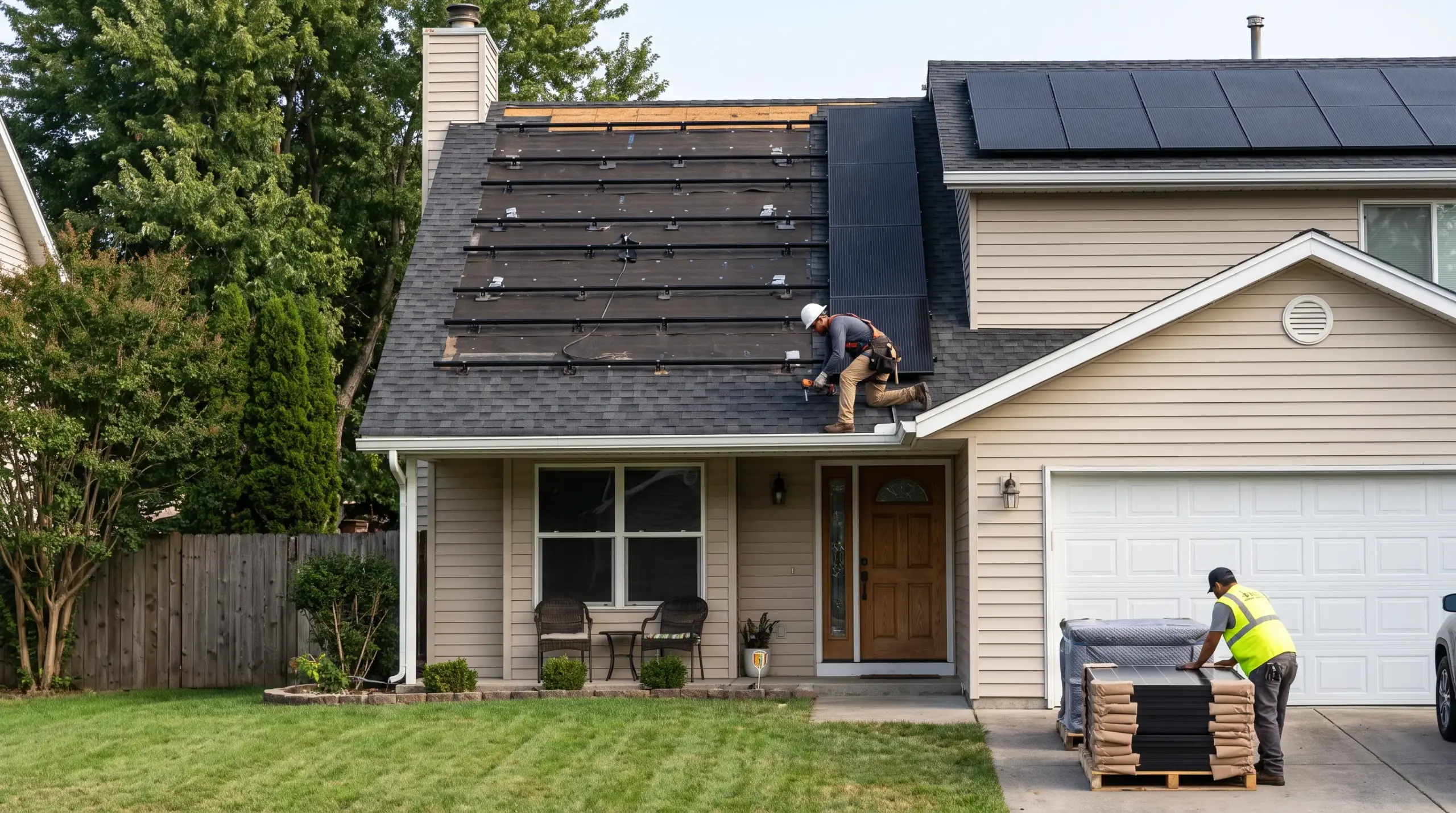
A complete proposal may include both physical equipment and the work required to design, approve, connect, and install the system. Hardware commonly includes solar modules, inverters, racking, and electrical wiring.
Other project costs may include system design, installation labor, permitting, inspections, utility interconnection, financing, sales, and administrative expenses. The exact scope can differ from one contractor proposal to another, so two prices are not truly comparable until you know what each one includes.
Ask whether the quoted price includes a battery. A solar system with storage is a different project from a solar only system, and those prices should not be compared as though they cover the same equipment.
For a useful overview of these nonhardware expenses, see the U.S. Department of Energy’s solar soft costs explanation. The Solar Energy Industries Association also discusses solar soft costs. Historical percentage estimates in these discussions should not be treated as a current price for your home.
Roof condition and site factors
Your roof is part of the solar project even when it is not included in the solar contractor’s price. Roof condition, location, orientation, shade, and the selected photovoltaic system can affect suitability and expected economics. An aging or damaged roof may lead to separate repair or replacement work, and later panel removal and reinstallation may complicate the project.
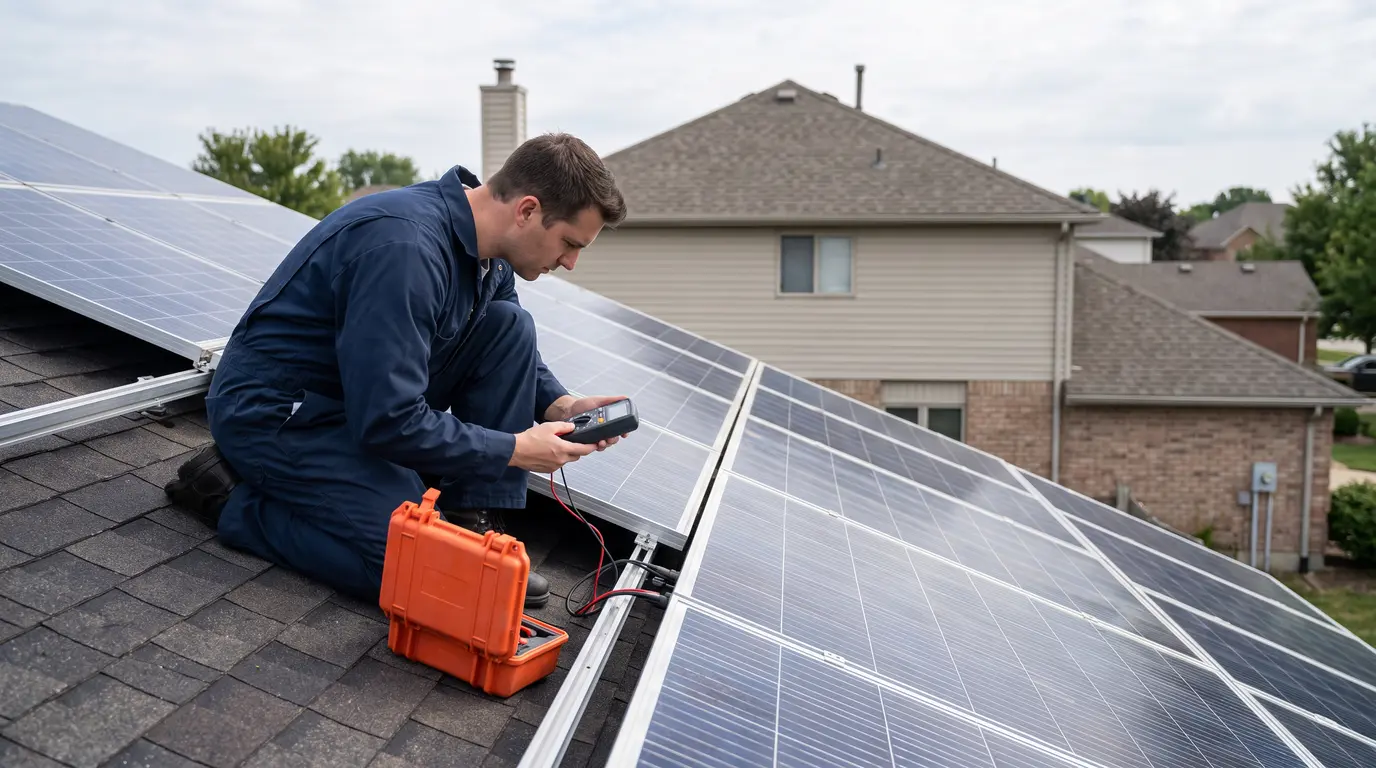
Before signing, ask the installer and, when appropriate, a roofing or structural professional to evaluate whether the roof can support the planned work. Do not climb onto the roof to perform a hazardous inspection yourself. If you are weighing roof work first, read more about whether you should replace your roof before solar. The right decision depends on the roof’s condition and remaining service life, not on a universal roof age rule.
Roof direction can also affect system design and production. This guide explains how roof direction affects solar without serving as a project specific production estimate.
Incentives and tax treatment
Incentives can change the amount you ultimately pay, but eligibility and tax treatment are time sensitive and location specific. Confirm current federal, state, local, and utility programs for your installation or placed in service date. Do not automatically apply a historical 30 percent federal credit to a 2026 installation without current tax guidance.
Ways to pay for home solar
Homeowners may purchase a system with cash, use a solar loan, lease the equipment, or enter a power purchase agreement. Ownership affects who owns the equipment, who handles maintenance, how payments are calculated, and what may happen if you sell the home.
| Payment approach | Who owns the system | Main budgeting feature | Items to verify |
|---|---|---|---|
| Cash purchase | Homeowner | Largest upfront payment, with no separate solar loan payment | Total installed price, warranties, maintenance responsibility, and incentive eligibility |
| Solar loan | Homeowner generally purchases the system with borrowed funds | Spreads payment over time | Interest rate, loan term, fees, prepayment terms, and any dealer or origination charges |
| Lease | Third party provider | Contracted payments for use of the system | Payment changes, maintenance coverage, contract term, transfer requirements, and end of term provisions |
| Power purchase agreement | Third party provider | Payments under a contract based on purchased solar electricity | Rate structure, contract term, payment changes, production assumptions, and home sale provisions |
Terms vary by provider and location. No single payment approach is financially best for every homeowner, and not every installer offers all four options. Compare total expected payments and contract responsibilities, not just an advertised monthly amount.
If you may sell your home, review how solar financing can affect a home sale. A contract may have different transfer, payoff, or buyer qualification provisions, and the agreement itself should provide the details.
How to compare solar proposals
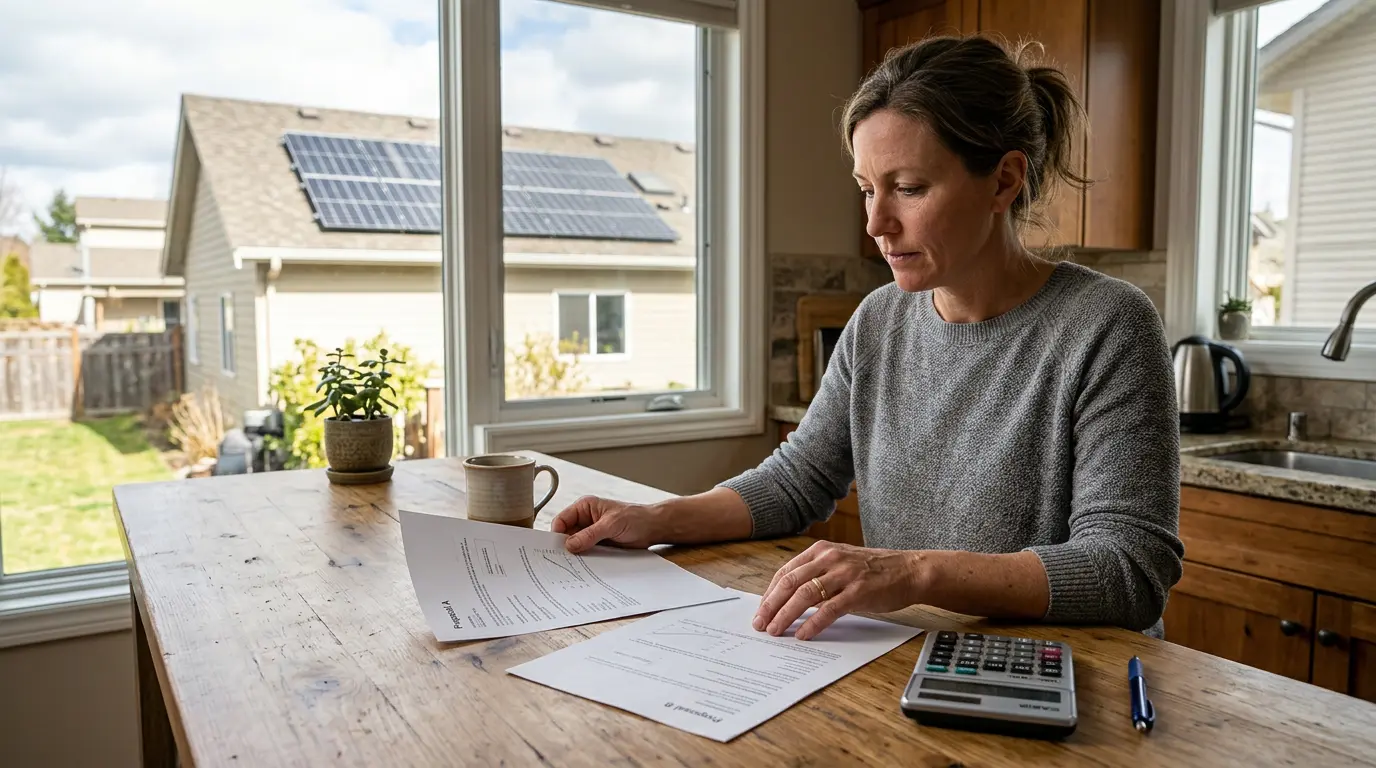
Price per watt is a helpful starting point, but the total proposal gives you a more useful budgeting picture. Compare proposals that use the same system size and account for the same equipment and project scope.
- Confirm the proposed system size in kilowatts and expected production.
- Review the equipment list, including modules, inverters, racking, wiring, and any battery.
- Check equipment and workmanship warranties and identify who handles service.
- Confirm who is responsible for permits, inspections, and utility interconnection.
- Ask about payment timing, financing fees, and every item excluded from the quoted price.
- Check whether electrical upgrades, roof work, or post installation service charges are included.
- For a lease or power purchase agreement, ask who owns the system and what happens if you sell the home.
A direct question can uncover gaps before they become surprises: “Does this proposal include every permit, inspection, interconnection, electrical upgrade, roof related item, and post installation service charge?”
For a third party agreement, also ask: “If I sell the home, can the agreement transfer, must it be paid off, or must the buyer qualify?” Keep the answers with the proposal and contract so the assumptions are easy to review later.
Frequently asked questions
What is included in a solar installation price?
It may include modules, inverters, racking, wiring, design, labor, permits, inspections, utility interconnection, financing related expenses, and administrative work. The exact inclusions vary, so review the proposal for exclusions and confirm whether a battery or electrical upgrades are included.
Does roof condition increase the cost of going solar?
It can. An aging, damaged, or unsuitable roof may require separate repair or replacement work before installation. Roof condition should be evaluated as part of planning, and the cost of any roof work should be clearly separated from the solar price.
Should I compare solar systems by total price or price per watt?
Use price per watt as an initial benchmark, then compare the complete installed price for systems with the same size, equipment scope, warranties, fees, and payment assumptions. A total price is more useful when it clearly shows what work and equipment are included.
Is a solar loan, lease, or power purchase agreement cheaper?
There is no universal answer from the available information. These options differ in ownership, payment structure, maintenance responsibilities, contract terms, and home sale provisions. Compare total expected payments and obligations rather than only the monthly amount.
What should I ask an installer before signing?
Ask for the system size, expected production, equipment list, warranties, payment schedule, permit and interconnection responsibilities, exclusions, roof or electrical work, and any post installation charges. Also ask who owns the system and what happens to the agreement if you sell the home.
Making a realistic solar budget
A residential solar system commonly costs tens of thousands of dollars before incentives. The 2026 national benchmarks of about $2.57 per watt and approximately $30,720 for a 12 kilowatt system provide a starting point, but your home’s roof, energy needs, equipment, local project costs, and payment choice determine the actual proposal.
The most useful next step is to estimate your project size, then request proposals that clearly show equipment, labor, permits, interconnection, roof and electrical items, warranties, payment terms, and exclusions. With those details in hand, you can compare offers on more than a monthly payment and make a decision that fits your home and budget.