Before buying a commercial building, find out whether the roof is a manageable maintenance item, an approaching capital expense, or a transaction risk. The most useful answer usually comes from an independent roof inspection or a commercial property condition assessment, combined with a review of the roof records, warranty documents, leases, and purchase terms.
A visual review alone cannot establish the roof’s full future cost. Concealed moisture, inaccessible areas, incomplete records, and unclear repair responsibilities can change the decision. A well documented review helps you separate current repairs from future capital work and gives your transaction team better information for negotiations and planning.
Start with a roof specific inspection
A commercial property condition assessment provides a recognized baseline process for reviewing major building systems. ASTM E2018 24 describes research and a walk through survey intended to identify and communicate material physical deficiencies.
That baseline is helpful, but it is not a guarantee that every defect, code issue, concealed condition, or future failure will be found. Confirm that the broader assessment gives the roof enough attention, and request a roof specific inspection when the building, roof system, access conditions, or transaction warrants a closer look.
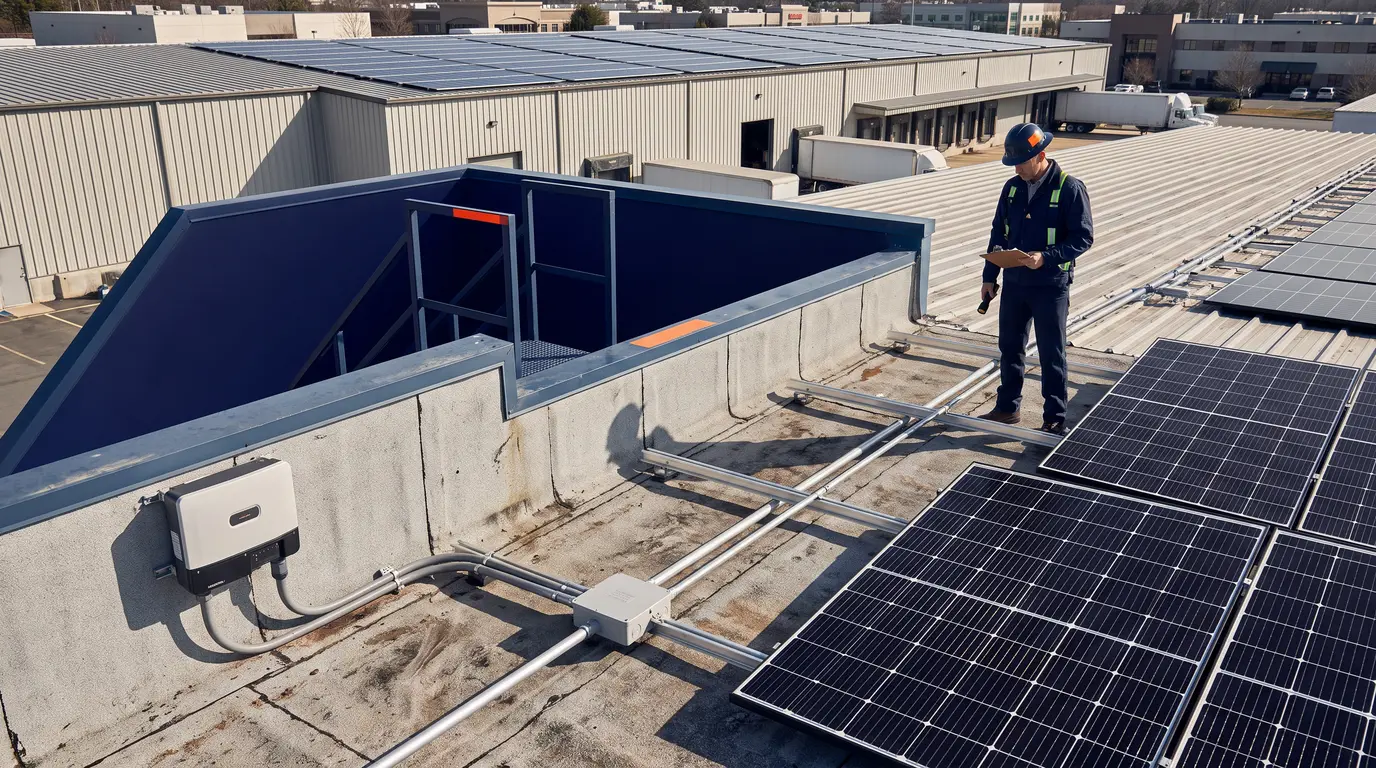
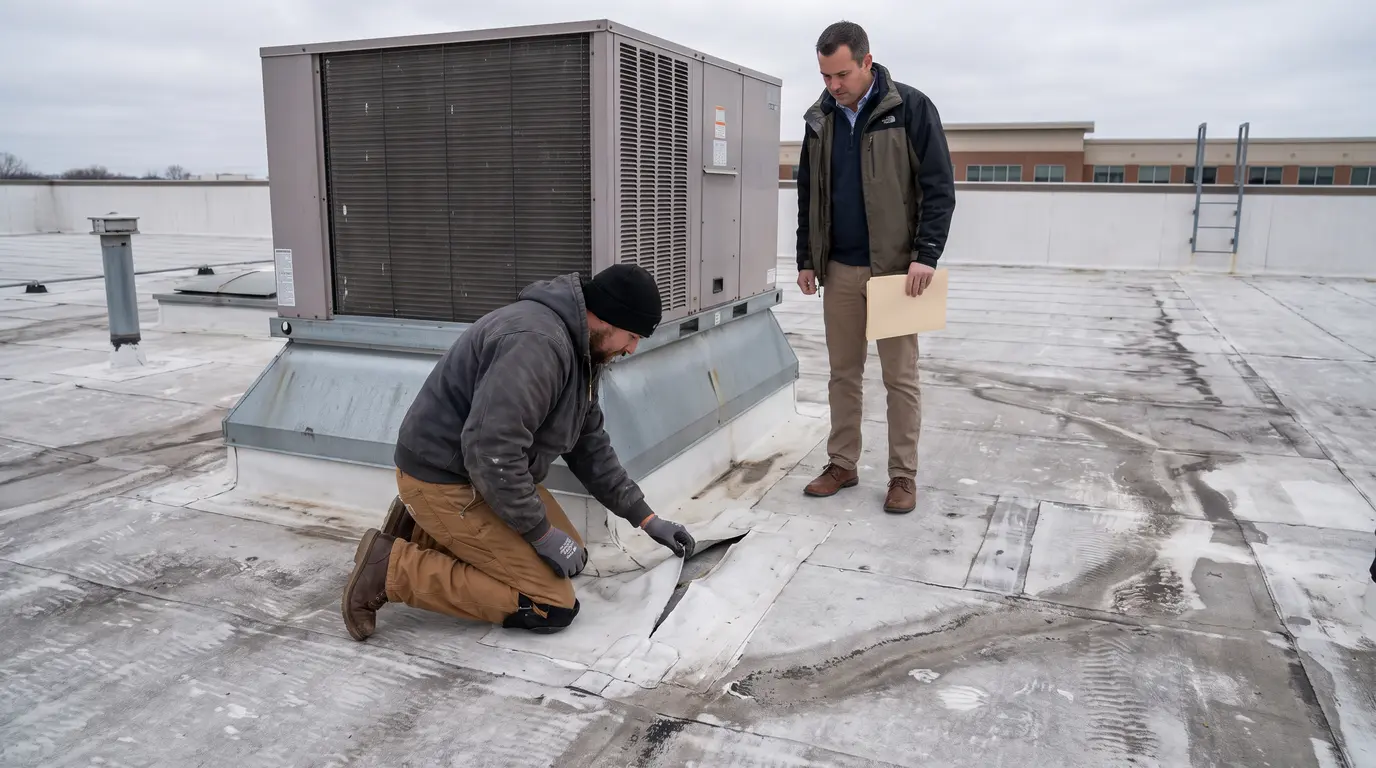
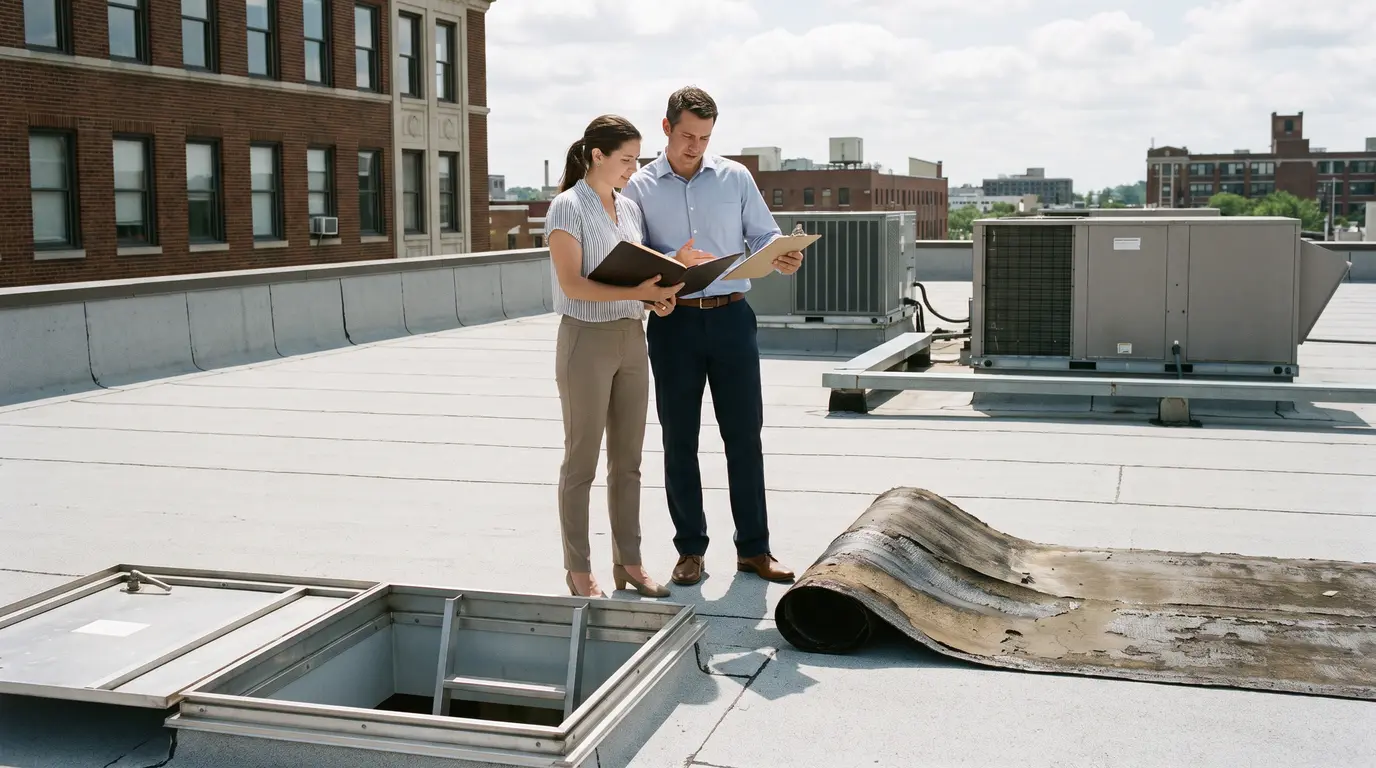
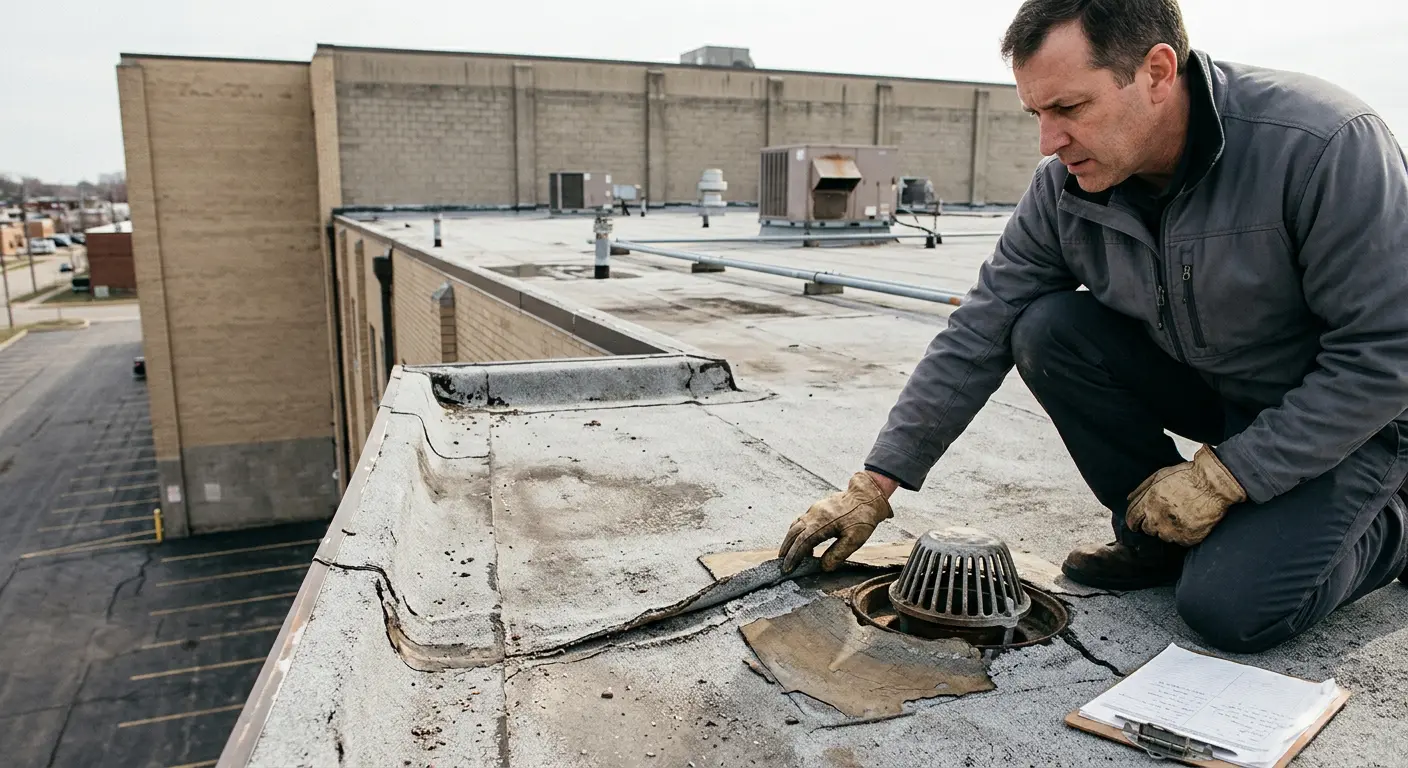
The report should address the roof system as a whole. That includes the covering or membrane, flashings, penetrations, drainage components, visible repairs, and observable supporting conditions. Ask for photographs, identified deficiencies, condition conclusions, recommended corrective action, and a clear description of areas that could not be accessed.
If concealed moisture or wet insulation is suspected, ask whether targeted moisture testing or another specialized investigation is warranted. A visual inspection may not determine concealed conditions.
Organize the review around six questions
| Evaluation area | What to verify | Why it matters |
|---|---|---|
| Physical condition | Roof covering or membrane, flashings, penetrations, drainage, visible damage, leaks, and accessible supporting conditions | Identifies current deficiencies and whether further investigation is needed |
| Documentation | Installation or replacement records, maintenance history, repair invoices, inspection reports, roof plans, permits, and warranties | Helps verify age, prior work, maintenance history, and unresolved uncertainty |
| Remaining service life | Estimated remaining useful life, immediate repairs, short term needs, and projected capital expenditures | Supports repair or replacement planning and reserve decisions |
| Warranty | Manufacturer warranty, contractor workmanship coverage, transfer rules, deadlines, exclusions, and maintenance conditions | Determines whether warranty value is actually available to the buyer |
| Responsibility | Lease clauses, amendments, estoppels, service contracts, and purchase agreement terms | Clarifies who may pay for maintenance, repairs, or replacement |
| Transaction impact | Repair scope, replacement timing, financing or insurance concerns, price adjustment, credit, or escrow options | Converts technical findings into a purchase decision |
The inspection is limited by its authorized scope, access, and timing. Remaining useful life and future costs are estimates rather than guarantees. Lease, insurance, financing, code, and warranty conclusions require review of the applicable documents and jurisdiction.
Review the roof’s condition and construction history
Ask the inspector to identify the roof type, approximate installation date, number of existing layers where knowable, visible repairs, drainage condition, penetrations, ponding indicators, and inaccessible areas. These details help show whether a reported issue is isolated or part of a broader pattern.
Request records from the seller before the inspection. Useful documents may include prior reports, maintenance logs, leak calls, repair invoices, roof plans, permits where applicable, warranties, invoices, and documentation of prior replacement or recover work.
Missing or inconsistent records should be treated as uncertainty to resolve, not automatic proof that the roof was improperly installed or maintained. Compare the records with the inspection findings. Repeated leak locations, unresolved drainage problems, wet insulation, or repairs that appear to address symptoms rather than causes may justify additional investigation.
Separate current repairs from future capital work
A roof can be serviceable today and still require replacement planning during your ownership period. Ask the report to distinguish immediate deficiencies, routine maintenance, short term repairs, a planned recover, and possible replacement. This makes the roof’s condition easier to compare with your expected hold period, financing term, tenant commitments, and available capital reserves.
Remaining useful life is a planning estimate, not an expiration date. It can be affected by roof construction, installation quality, climate exposure, maintenance, repairs, drainage, and concealed conditions. Ask what assumptions support the estimate and what work is most likely during your expected ownership period.
If a recover or replacement may be needed, the choice remains tied to the roof assembly, moisture, drainage, structural condition, code, and project specific investigation. The guide to recover or replace a commercial roof can help frame that discussion. For preliminary planning after a likely scope is identified, you can also estimate commercial roof costs. The calculator is not a quote or a substitute for a roof specific scope and contractor proposal.
Verify warranty value before relying on it
Commercial roof coverage may include separate manufacturer protection and contractor workmanship coverage. Review the actual documents rather than relying on an advertised warranty term. Confirm the current owner, covered roof areas, expiration dates, exclusions, maintenance requirements, and any required inspection or fee.
A warranty does not automatically transfer simply because the building is sold. The written terms may require notice, paperwork, an inspection, fees, approval, or completion within a stated period. Read more about whether a commercial roof warranty can transfer, then confirm the actual procedure with the applicable warranty documents.
Read leases and purchase documents for repair obligations
Existing commercial leases can assign roof maintenance, repair, and replacement responsibilities in different ways. Have the transaction team or counsel review lease clauses, amendments, estoppels, service contracts, and purchase agreement provisions. Do not assume that the landlord or tenant always pays for the roof.
The goal is to understand who may bear each cost and whether tenant obligations affect your capital plan. This review may also clarify seller representations, repair commitments, credits, escrow options, and documents that should be delivered before closing.
Translate findings into the purchase decision
A roof finding can affect more than the repair invoice. It may influence purchase price negotiations, reserves, financing discussions, insurance discussions, tenant obligations, construction scheduling, and the timing of future capital work. A roof report supports these conversations, but it does not replace legal, insurance, financing, or building code review.
Two practical questions can keep the discussion focused:
- What roof costs should be assigned to the seller, credited at closing, placed in escrow, or included in the buyer’s first capital budget?
- If the roof is serviceable now, what work is most likely during the expected ownership period, and what assumptions support that conclusion?
For additional context on transaction implications, see how roof condition affects commercial property value. It offers general guidance about roof condition and anticipated capital work, not a property specific valuation method.
Frequently asked questions
What documents should a buyer request for a commercial roof?
Request installation or replacement records, maintenance reports, repair invoices, inspection reports, leak history, photographs, roof plans, permits where applicable, and warranty documents. Missing records create uncertainty that should be compared with the physical inspection findings.
How reliable is a roof’s estimated remaining service life?
It is useful for planning but is not a guaranteed expiration date. The estimate depends on construction, installation quality, exposure, maintenance, repairs, drainage, and concealed conditions. Compare it with the expected ownership period and likely capital needs.
Who pays for roof repairs under existing commercial leases?
The lease language controls, along with applicable law and related documents. Review the leases, amendments, estoppels, service contracts, and purchase agreement with the transaction team or counsel rather than assuming the landlord or tenant bears every roof cost.
The most useful next step is to request the roof records, arrange an appropriately scoped commercial roof review, and compare the findings with the warranty, leases, expected ownership period, and capital budget. That process can turn an uncertain roof condition into a clearer purchase decision and a more manageable ownership plan.