When Hurricane Isaias approaches, one of the most important steps homeowners can take is making sure their roof is ready for severe weather. Strong winds, flying debris, and heavy rainfall can expose weak spots in your roofing system and lead to costly damage. Following essential pre-storm roof mitigation tips, such as inspecting shingles, clearing gutters, securing loose outdoor items, and documenting your roof’s condition, can help reduce the risk of damage before the storm hits. While no preparation can guarantee complete protection during a hurricane, taking preventive measures can make a meaningful difference in protecting your home.
Before beginning your preparations, check the latest storm updates and projected path using the National Hurricane Center’s storm tracker. Monitoring the storm’s track, watches, and warnings can help you understand potential risks in your area and determine when to complete essential roof preparation tasks. Keep in mind that dangerous weather conditions can occur outside the forecast cone, so always follow local emergency guidance.
Your roof is your home’s first line of defense against the elements, but even small problems can become serious during a tropical storm. Loose shingles, damaged flashing, clogged gutters, and overhanging tree branches can all create vulnerabilities when high winds and heavy rain arrive.
The good news is that you can address many potential hazards before the weather turns dangerous. A careful inspection, a little cleanup, and some advance planning can help you identify weak spots and prepare your property for the conditions ahead. For broader background, you can review the hidden costs of ignoring roof repairs before starting your storm preparation.
Essential Pre-Storm Roof Mitigation Checklist
Before Hurricane Isaias arrives, walk around your property and assess the areas that could be vulnerable to wind and rain. Focus on these five key preparation tasks to help reduce preventable roof damage.
| Preparation Task | What to Check | Why It Matters |
|---|---|---|
| Document your roof’s condition | Roof edges, shingles, flashing, vents, and interior ceilings | Photos and videos provide a record of your home’s condition before the storm and may help support an insurance claim. |
| Inspect for visible damage | Loose or curling shingles, damaged flashing, soffits, and fascia | Identifying vulnerable areas early gives you time to arrange professional repairs before conditions deteriorate. |
| Clear gutters and downspouts | Leaves, twigs, dirt, and other blockages | Clear drainage paths help rainwater move away from your roof and foundation. |
| Address nearby trees | Dead branches and limbs hanging over the roof | Falling branches can damage shingles, puncture roofing materials, and clog gutters. |
| Secure outdoor belongings | Patio furniture, potted plants, trash bins, and loose equipment | Strong winds can turn unsecured objects into flying debris that damages roofs, windows, and siding. |
These steps are intended to reduce preventable risks, not eliminate the possibility of hurricane damage. Your roof’s age, installation quality, existing condition, and exposure to local wind speeds will all affect how well it withstands a storm.
How to Prepare Your Roof for Hurricane Isaias
1. Document Your Roof’s Condition
Before the storm arrives, take photos and videos of your property to establish a clear record of its current condition. Capture your roof from several ground-level angles, paying particular attention to visible shingles, flashing, vents, gutters, and roof edges.
It’s also worth documenting your home’s interior. Photograph ceilings, upper-floor walls, and any areas where water stains or previous leaks are visible. These records can help you distinguish existing problems from new damage after the storm.
Store your photos and videos somewhere accessible, such as a cloud account or a secure digital folder. If you need to file a homeowners insurance claim later, having dated documentation may make the process easier.
Safety tip: Never climb onto your roof or use a ladder in preparation for an approaching storm. Take pictures from the ground or another secure location.
2. Clean Gutters and Downspouts
Heavy rainfall can overwhelm a drainage system that’s already clogged with leaves, twigs, and dirt. When water cannot drain properly, it may overflow near the roofline, collect around your foundation, or contribute to leaks and water damage.
Before severe weather arrives, remove accessible debris from your gutters and check that downspouts are clear. If conditions are dry and safe, you can run water through the system to check for blockages.
Pay attention to roof valleys, where leaves and other debris can accumulate and interfere with drainage. If your gutters are loose, sagging, or visibly damaged, arrange for repairs before the storm if time and conditions allow.
Avoid climbing ladders or cleaning gutters once strong winds or heavy rain begin. If your gutters are difficult to reach, hire a professional rather than risking a fall.
3. Inspect Shingles, Flashing, and Roof Edges
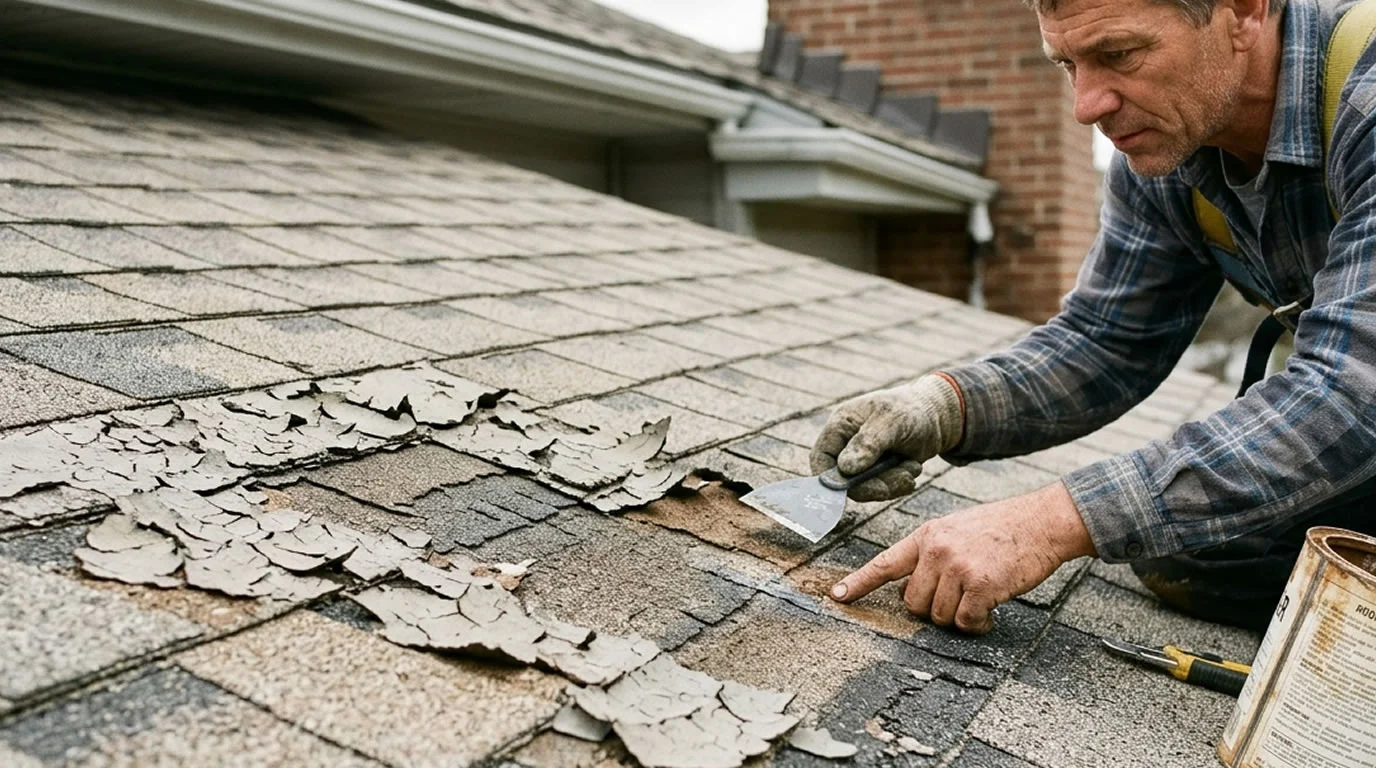
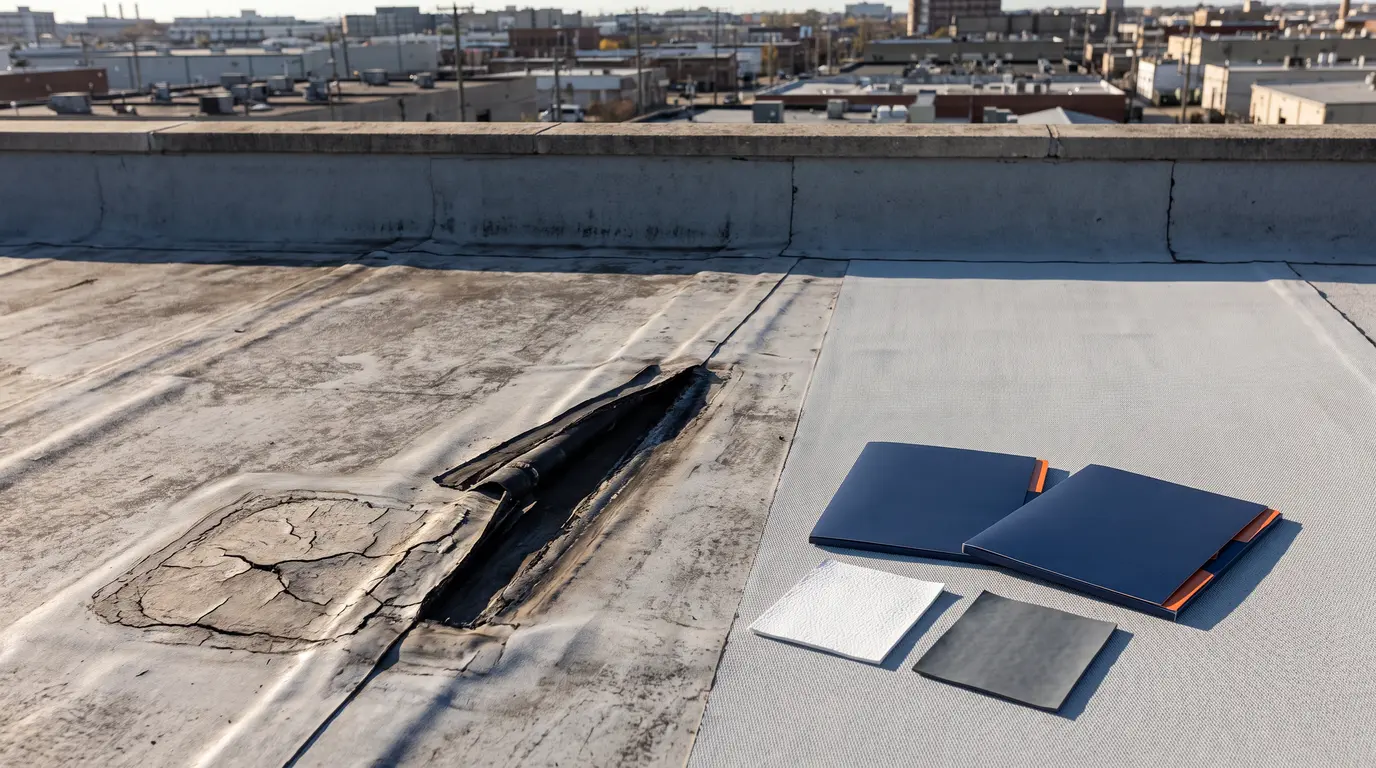
A roof doesn’t have to look severely damaged to be vulnerable during a hurricane. A few loose shingles or a section of deteriorating flashing can provide an entry point for wind-driven rain.
From the ground, look for shingles that appear cracked, curling, missing, or out of place. Check for visibly damaged flashing around chimneys, vents, and other roof penetrations, along with loose soffits or fascia.
If you notice a problem, contact a qualified roofing contractor as early as possible. Addressing minor issues before a storm may help prevent them from getting worse, but avoid attempting rushed roof repairs yourself.
If the storm is already approaching and professional repairs aren’t possible, prioritize your safety and follow local emergency guidance instead of trying to fix the roof at the last minute.
4. Trim Overhanging Branches and Secure Outdoor Items
Trees and unsecured outdoor belongings can pose a significant risk during hurricane-force winds. Heavy branches may snap and fall onto your roof, while patio furniture, plant pots, and trash bins can become airborne.
Before the weather deteriorates, move lightweight outdoor items into a garage, shed, or another secure indoor space. Secure heavier items according to the manufacturer’s instructions and local emergency guidance.
Inspect nearby trees for dead limbs or branches hanging directly over your roof. Arrange professional tree trimming well before the storm arrives, especially if large branches are involved. Never attempt to cut heavy limbs during high winds or when conditions make the work unsafe.
5. Protect Windows and Glass Doors
Protecting windows and glass doors is an important part of hurricane preparation. Broken glass can expose your home’s interior to wind and rain, increasing the risk of water damage and other structural problems.
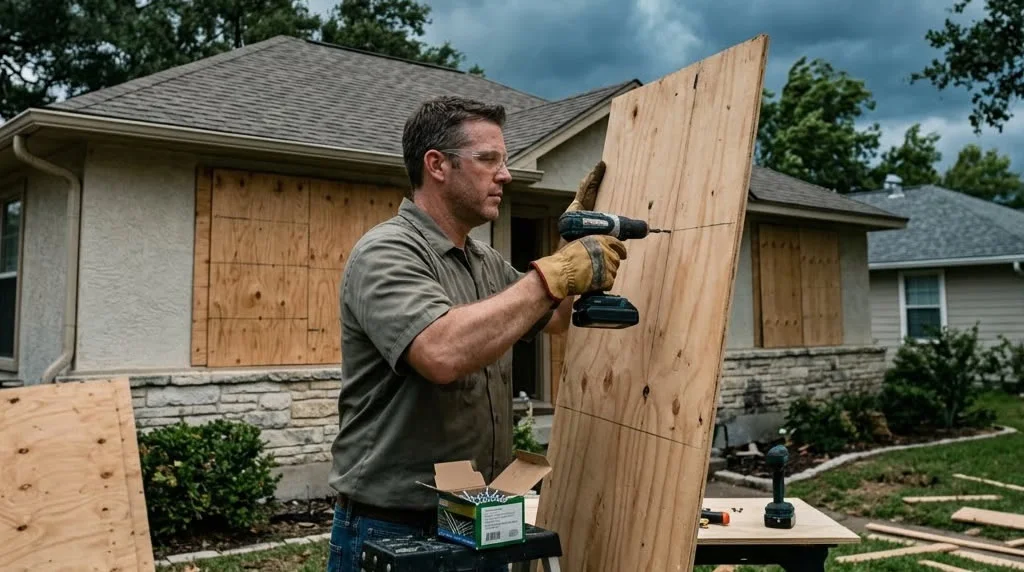
If you plan to use plywood storm panels, prepare them well before the storm approaches.
- Measure each window and exterior glass door carefully.
- Use exterior-grade plywood of an appropriate thickness and follow local building guidance.
- Cut and label each panel in advance so you know which opening it fits.
- Use an appropriate fastening system designed to secure the panels to the home’s structural framing.
- Store the panels and installation hardware in a dry, accessible location.
Plywood should be installed according to a reliable hurricane-protection plan, not simply placed over the glass or attached to trim that may not withstand strong winds. Improperly secured panels can fail during severe weather.
Where possible, consider tested hurricane shutters or other approved impact-protection systems. If you aren’t sure how to secure plywood correctly, consult a qualified contractor before hurricane season.
Important: Complete all installation work while conditions are safe. Never attempt to board up windows once dangerous winds or heavy rain have begun.
Prepare for Emergencies and Post-Storm Roof Repairs
Even a well-maintained roof can sustain damage during a powerful hurricane. Having a few basic supplies ready can help you respond safely once the storm has passed.
Consider keeping the following items in a dry, secure location:
- Heavy-duty tarps or suitable temporary roof-covering materials.
- Plastic sheeting for protecting belongings from water.
- Work gloves and a flashlight.
- A fully charged phone and backup power source.
- Copies of insurance documents and pre-storm roof photos.
- Contact information for a reputable roofing contractor.
Temporary coverings can help limit additional water intrusion when used appropriately, but roof repairs should be left to trained professionals whenever possible. Do not climb onto a wet, damaged, or potentially unstable roof after a hurricane.
Once local authorities confirm that conditions are safe, inspect your property from the ground for missing shingles, fallen branches, damaged gutters, and other visible signs of trouble. Photograph any damage before making temporary changes, provided it is safe to do so.
If you suspect structural damage, notice sagging ceilings, or see signs of electrical hazards, stay clear of the affected area and contact the appropriate professionals. Follow local emergency instructions and contact your insurer to understand the next steps for reporting damage.
Consider Long-Term Hurricane Roof Protection
Preparing for an approaching storm is important, but long-term roof maintenance can make a difference well before hurricane season begins.
Depending on your home’s construction and location, possible improvements include:
- Scheduling regular roof inspections and repairing deterioration promptly.
- Installing approved roof-to-wall connections, such as hurricane straps or clips, where appropriate.
- Replacing aging roofing materials with products rated for the relevant wind conditions.
- Improving attic ventilation and roof-deck attachment where recommended by a qualified professional.
- Installing approved storm shutters or impact-resistant window protection.
The right improvements depend on your roof’s design, local building codes, and the wind risks in your area. A qualified roofing contractor can assess your home and recommend upgrades that make sense for your property and budget.
Final Thoughts: Get Your Roof Ready Before the Storm
Preparing your roof for Hurricane Isaias starts with identifying potential weak spots and addressing them before conditions become dangerous. Document your home’s condition, clear drainage paths, arrange necessary repairs, trim hazardous branches, and secure outdoor belongings. If you plan to protect windows with plywood panels, prepare and install them correctly well before the storm arrives.
Remember that hurricane roof preparation is about reducing risk, not guaranteeing that damage won’t occur. Give yourself enough time to complete essential tasks, follow official evacuation and shelter instructions, and avoid working outdoors when dangerous weather approaches.
A little preparation today can help you protect your property, make post-storm recovery easier, and approach hurricane season with greater peace of mind.