A commercial roof maintenance contract should do more than promise regular service. It should tell you exactly which roof areas are covered, what each visit includes, how quickly different problems will receive attention, what records you will receive, and when additional spending requires approval. The strongest agreement gives a property manager a usable answer to three questions after every visit: what was inspected, what was completed, and what still needs action.
The first issue to settle is scope. A maintenance contract is not automatically a roof replacement agreement, a guarantee that leaks will never occur, or full coverage for storm damage and major repairs. Its terms should match the roof system, building use, rooftop equipment, drainage, roof age, warranty documents, access conditions, and number of buildings involved.
Start with a precise roof inventory
The agreement should list every covered property, building, roof section, roof system, and approximate roof area where that information is available. It should also identify access points, rooftop equipment, and known exclusions. For a portfolio, language covering “all roofs” is less useful than an attached property list or roof inventory.
Attach or reference the roof plan, warranty documents, prior inspection reports, known leak locations, equipment list, and current deficiencies. These records establish a baseline. They also help separate an existing condition from work discovered during a later visit.
What should scheduled inspections include?
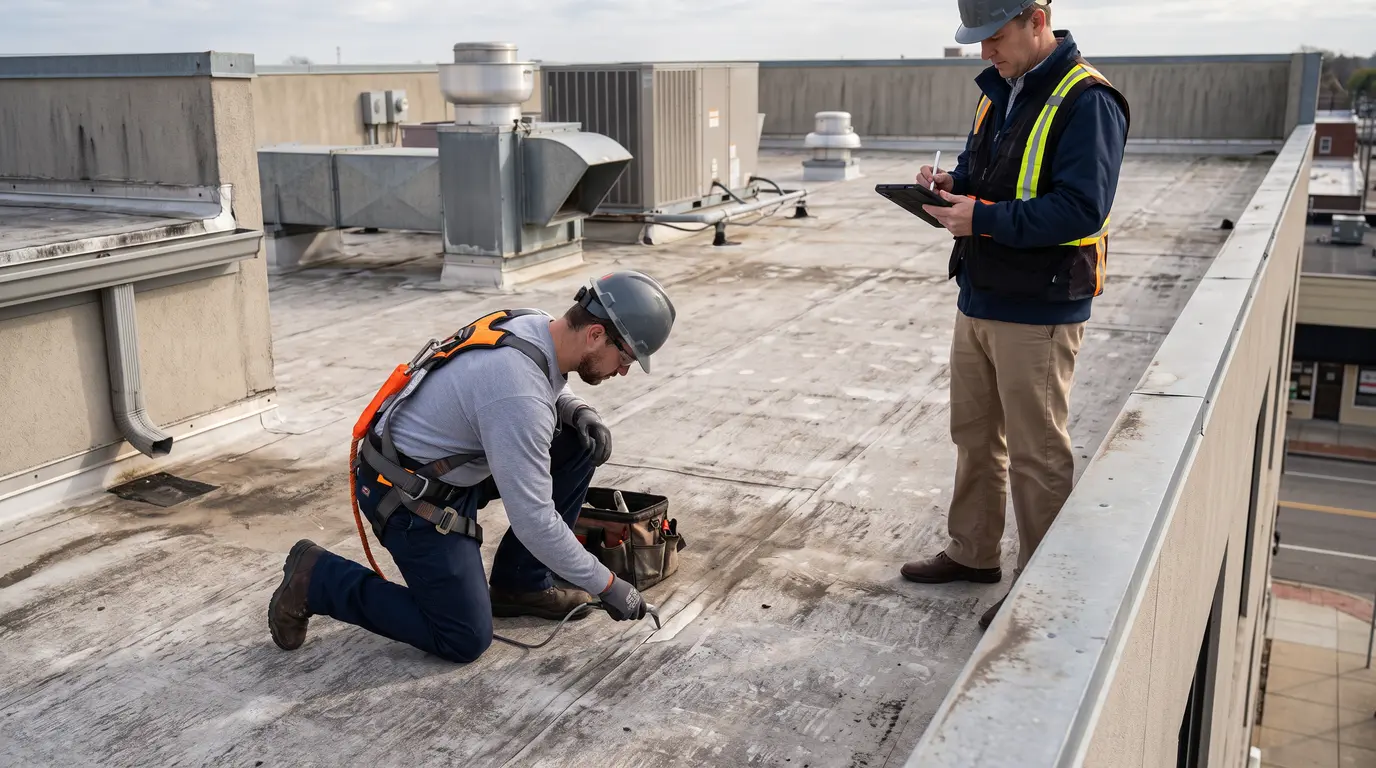
A useful inspection normally addresses the roof covering or membrane, seams, flashings, penetrations, drains, gutters or scuppers, rooftop equipment interfaces, debris, deterioration, and other conditions that could affect performance. The contract should identify the actual checklist rather than relying on the word “inspection” alone.
Routine inspections are commonly scheduled at least twice each year, often in spring and fall, with additional visits after severe storms or significant wind events. That schedule may need adjustment for the roof system, local exposure, roof age, building operations, warranty terms, and observed conditions. The agreement should state whether storm inspections are included or billed separately.
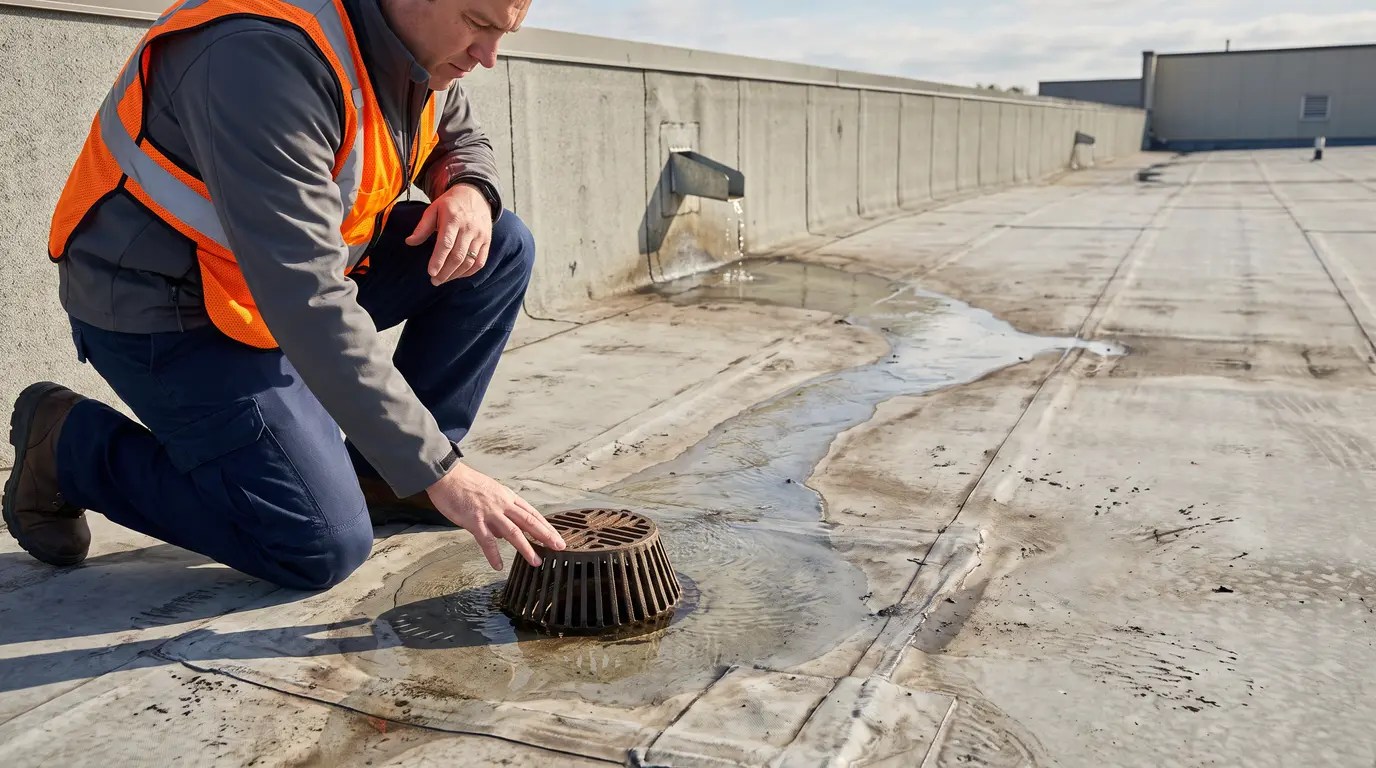
Drain and debris work deserves its own line in the scope. Cleaning drains, removing debris, investigating an active leak, and making minor sealant or flashing repairs may be included, but they should not be assumed simply because the agreement is called maintenance. If recurring ponding or blocked drainage is found, you can also review this guide to evaluate commercial roof drainage.
| Contract section | What to define | Why it matters |
|---|---|---|
| Covered roof and assets | Buildings, roof sections, roof systems, equipment interfaces, access areas, and known exclusions | Prevents disputes about which roof or component is included. |
| Scheduled inspections | Visit frequency, inspection checklist, storm inspections, drain and debris work | Establishes the recurring preventive maintenance service. |
| Reports and records | Photographs, roof locations, deficiencies, recommendations, completed work, warranty records, and delivery timing | Gives the manager a usable record for work orders, budgets, and warranty issues. |
| Response and escalation | Emergency, urgent, and routine categories, contact method, response definition, and after hours process | Converts vague priority service language into an operational commitment. |
| Repairs and approvals | Included minor work, labor and material allowances, proposal requirements, approval thresholds, and temporary versus permanent repairs | Controls unexpected spending and clarifies when a separate repair agreement is needed. |
| Exclusions and warranty coordination | Storm damage, major repairs, structural conditions, other trade damage, warranty procedures, and rooftop alterations | Prevents assumptions that maintenance covers every cause of leakage or preserves every warranty automatically. |
| Price and term | Fixed fee, time and materials rates, markups, mobilization, annual increases, renewal, termination, and record transfer | Makes the operating budget and contractor comparison more reliable. |
Require records that support decisions
An inspection report should connect each observation to a roof location, condition, photograph, recommended action, priority, and status. It should distinguish completed work from temporary measures, open recommendations, and needs that may become capital repairs.
Define the format and delivery timing in the contract. A report might include photographs, marked roof plans, written findings, work orders, or records that can be added to the building maintenance system. For a portfolio, consistent records make it easier to track roof repairs across properties without losing the connection between an inspection, a cost, and a completion status.
The record should also preserve roof plans, dimensions where available, access points, equipment locations, warranty information, prior reports, specifications, and changes to the roof or equipment. Those details can matter when a warranty claim or future repair requires someone to understand how the roof was configured.
Define response times instead of saying priority service
A contract should separate emergency, urgent, and routine requests. It should state how a request is submitted, when the response clock begins, and whether the commitment means a phone call, arrival at the property, temporary stabilization, or permanent repair. “Twenty four hour service” does not answer those questions by itself.
The categories should reflect building operations. An active leak affecting electrical equipment, occupied space, critical inventory, or building operations may need a different priority from an exterior deficiency with no active water entry. The agreement should also identify who receives escalation notices and what happens outside normal business hours.
Separate maintenance from repair authorization
Inspection and repair are separate deliverables. A contractor may identify a failed seam, damaged flashing, concealed wet insulation, or another deficiency without being authorized to perform corrective work beyond the minor maintenance scope.
The agreement should identify who can approve extra work, which dollar amount requires written approval, what a proposal must contain, and whether temporary stabilization can proceed before approval during an emergency. It should also distinguish a temporary measure from a permanent repair. When maintenance findings lead to a separate repair proposal, this guide can help you compare commercial roof repair proposals by scope, inclusions, exclusions, and warranty language.
Make exclusions and warranty duties explicit
Potential exclusions can include major repairs, roof replacement, concealed wet insulation or decking, structural work, storm or vandalism damage, damage caused by other trades, new penetrations, rooftop equipment work, interior damage, hazardous materials, snow or ice removal, permits, and engineering services. The list should match the proposal and the property rather than relying on a standard phrase.
Coordinate the maintenance agreement with the roof warranty. Confirm whether the provider must be an approved contractor, whether the manufacturer must inspect or approve repairs, who handles warranty claims, and how those claims will be documented. Warranty responsibilities vary by manufacturer, roof system, warranty form, and jurisdiction, so the contract should identify the actual procedure for the roof at issue. Manufacturer information and sample documents are available from Sika commercial roof maintenance guidance and its warranty document resources.
Rooftop alterations deserve advance coordination as well. HVAC equipment, solar, signage, antennae, tenant improvements, and other additions may affect roof integrity or warranty administration. The agreement should state when the maintenance provider or manufacturer must be involved before that work begins.
Review price structure, not just the annual fee
Commercial maintenance contracts commonly use a fixed fee for a defined preventive maintenance scope, time and materials billing for unplanned work, or a hybrid structure with allowances or priced repair items. None of those models is automatically better. The useful comparison is what each model includes and how it handles work outside the recurring scope.
Ask the agreement to state labor rates, material markups, trip or mobilization charges, emergency premiums, included labor and materials, approval thresholds, taxes, annual increases, and whether unused allowances expire. A fixed annual fee does not make excluded repairs free.
For budgeting, keep recurring maintenance, corrective repairs, emergency work, diagnostics, and future capital needs in separate categories. You can use this guide to budget for commercial roof maintenance. If an inspection identifies a larger repair or replacement need, the roof cost calculator may provide preliminary planning information, but it does not establish a contract price or replace project specific verification.
Cover safety, insurance, and contract administration
The contract should assign responsibility for safe roof access, fall protection, roof openings, fragile areas, permits, and coordination with other contractors. It should also address insurance, licensing, workers compensation, safety procedures, subcontractor use, and damage caused during service.
Federal OSHA construction rules include fall protection requirements for employees performing roofing activities on low slope roofs with unprotected sides and edges 6 feet or more above lower levels, subject to the standard’s options and exceptions. Applicability depends on the work, worker status, roof configuration, and applicable standard. The OSHA fall protection standard can help identify the issue, but it does not replace a site specific safety plan.
Finally, decide how the agreement renews and ends. Address automatic renewal, cancellation for cause or convenience, annual price adjustments, notice periods, and delivery of roof records when service ends. Record transfer matters because the next provider or building team needs the inspection history and warranty information to continue the maintenance program.
Questions to answer before approval
- If an active leak is found during a scheduled visit, is temporary stabilization included, and how quickly must the manager be notified?
- Does the annual price include drain cleaning, minor repairs, emergency dispatch, and post storm inspections, or are those billed separately?
- What report will the property manager receive after each visit, and can it be attached to the building maintenance or work order system?
- Who can approve additional work, what dollar amount requires approval, and what information must appear in the proposal?
- Which warranty inspections, repair approvals, and claim documents are assigned to the maintenance provider?
Frequently asked questions
Does a commercial roof maintenance contract include repairs?
It may include defined minor maintenance, such as limited sealant or flashing work, but the contract controls the scope. Major repairs, replacement, concealed conditions, storm damage, and other excluded work are commonly handled separately. The agreement should state what labor and materials are included and when written approval is required.
What should a roof inspection report contain?
It should identify the roof location and condition, include photographs where appropriate, describe the recommended action and priority, and show whether the issue was completed, temporarily stabilized, or left open. The contract should also state the report format and delivery timing.
Can a maintenance contract protect a commercial roof warranty?
Regular inspections and records can support warranty administration, but a maintenance contract does not automatically preserve every warranty. Confirm the warranty’s inspection, repair, contractor approval, and alteration requirements for the specific roof system. The agreement should assign responsibility for following those procedures and documenting claims.
A well written contract makes recurring maintenance predictable without pretending that every roof problem is included in one annual fee. Before approving it, confirm the covered roof inventory, inspection checklist, report format, response categories, repair approval process, exclusions, warranty duties, pricing details, and record transfer terms. Those details give you a clearer operating budget and a practical way to manage the work that follows each inspection.