Choosing between a metal roof and asphalt shingles is less about finding one universal winner and more about matching the roofing system to your home, budget, climate, and plans for the property. Asphalt shingles are usually the simpler and lower cost starting point, while metal roofing can offer longer service potential, low routine maintenance, and strong design flexibility. Installation quality matters greatly with either choice.
| Factor | Metal roofing | Asphalt shingles |
|---|---|---|
| Initial project cost | Generally higher initial cost than asphalt shingles. Exact pricing is specific to the project and market. | Usually the lower initial cost choice. Exact pricing is specific to the project and market. |
| Service life potential | Generally offers longer service potential, depending on the system, installation, climate, and maintenance. | Performance varies by product, installation, climate, roof design, ventilation, and maintenance. |
| Routine maintenance | Often characterized as low maintenance when properly installed. | Generally requires limited upkeep when properly installed and is straightforward to maintain. |
| Repairs | May require system specific parts, matching finishes, and attention to fasteners or seams. | Usually easier to repair with widely available replacement materials. |
| Appearance | Available as standing seam panels and metal shingles with multiple colors and finishes. Some styles resemble tile or wood shake. | Available in many colors, styles, textures, and imitation profiles. |
| Energy performance | Reflective or cool versions are available. Results depend on reflectance, climate, insulation, attic design, and roof orientation. | Reflective or cool versions are available. Results depend on reflectance, climate, insulation, attic design, and roof orientation. |
| Weather performance | Compare the specific wind, hail, and fire ratings. Metal should not be treated as uniformly storm proof. | Compare the specific wind, hail, and fire ratings. Asphalt shingles do not all perform the same in severe weather. |
The table is a starting point, not a guarantee of performance or cost. A complete comparison should include the roof covering and the rest of the assembly, including underlayment, flashing, ventilation, drip edge, fasteners, decking work, tear off, disposal, permits, cleanup, and workmanship coverage.
Metal roofing and asphalt shingles at a glance
Asphalt shingles remain a practical choice for many residential homes because they are widely available, relatively simple to install, and offered in a broad selection of colors and styles. Replacement materials and common repair methods are also widely available. Properly selected and installed shingles generally require little regular upkeep, although their performance is affected by product quality, installation, ventilation, climate, roof design, and maintenance.
Metal roofing is not one uniform product. Residential options include standing seam panels and metal shingles. Steel is a common material and is typically protected with metallic coatings to help limit corrosion. The metal type, coating or finish, profile, fasteners, substrate, and installation details all influence the roof’s appearance and performance.
Durability and long term suitability
Metal roofing generally offers longer service potential than asphalt shingles, which can make it appealing to homeowners planning to remain in the home for many years. A longer potential service period does not make every metal system the right choice, however. The complete system, installation details, climate, roof design, and maintenance still affect results.
Asphalt shingles may make more sense for a homeowner who is prioritizing a lower initial project cost or simpler future repairs. Their service life varies rather than following one guaranteed number. For more context on how material, climate, installation quality, and maintenance affect roof service life, see how long different roofing materials last.
Neither roof type should be treated as maintenance free. After severe weather, homeowners should arrange an appropriate roof inspection and pay attention to visible concerns involving flashing, drainage, penetrations, or the roof covering. Metal may need attention around seams, fasteners, and matching finishes. Asphalt shingles may be easier to replace in smaller sections.
Weather performance and energy considerations
Wind and hail performance depend on the specific product and its tested rating, not simply on whether the roof is metal or asphalt. Homeowners in areas with frequent hail or high winds should compare the actual product rating, installation method, local hazard exposure, and applicable building requirements. A rating is useful for comparison, but it is not a guarantee against storm damage.
The Insurance Institute for Business and Home Safety roof guidance provides residential information on asphalt shingles and metal roofing, including considerations related to roof cover performance. It is also useful to remember that asphalt shingle hail performance can decline as a roof ages.
Both materials can be available in reflective or cool versions for steep slope residential roofs. Reflective roofing may reduce solar heat gain and may reduce cooling energy use, particularly in hot climates. The result depends on the roof’s color and reflectance, insulation, attic design, heating and cooling use, climate, and orientation. In colder climates, a reflective roof may also affect winter heating demand.
The Environmental Protection Agency guidance on cool roofs and the Department of Energy consumer guide to cool roofs offer general background. They do not predict energy savings for a particular home.
Installation, cost, and repair considerations
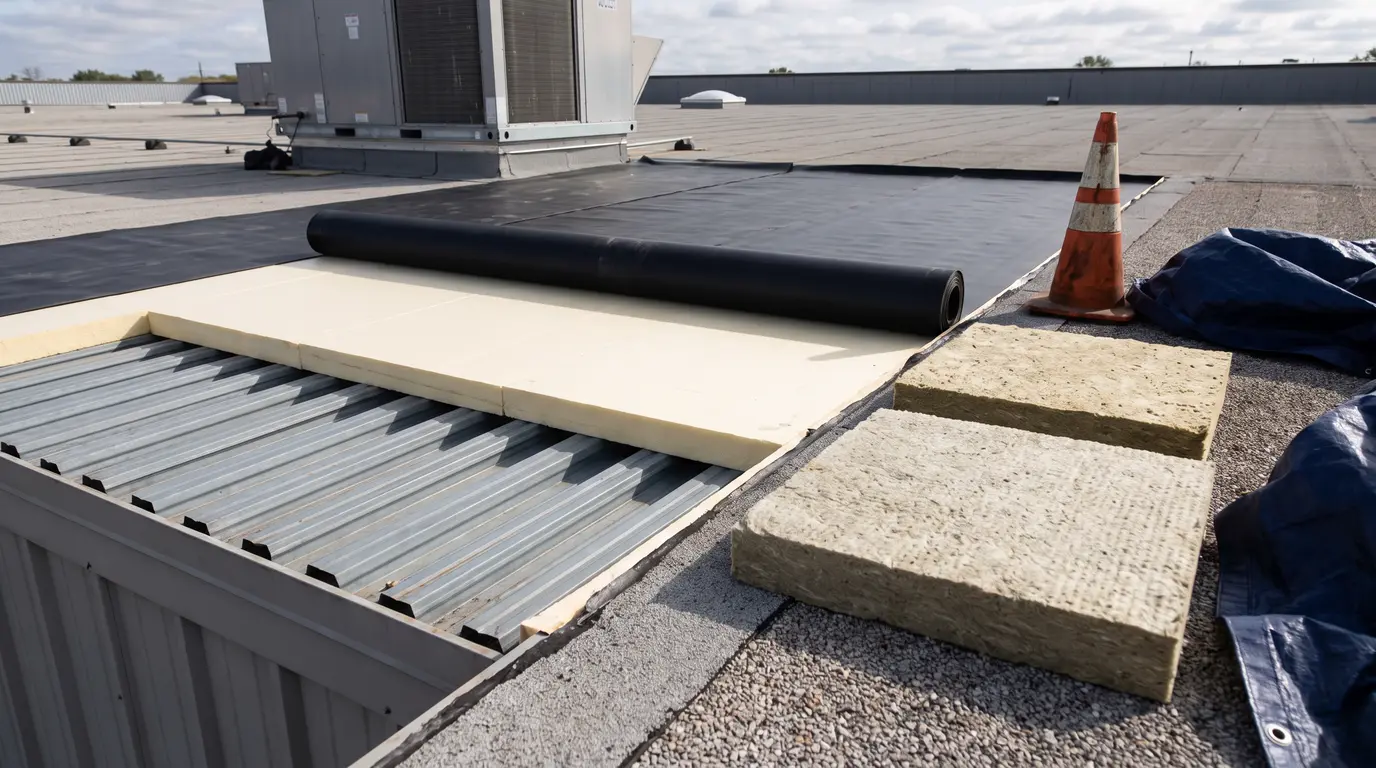
Asphalt shingles are generally easier and faster to install, while metal roofing requires careful detailing at seams, penetrations, edges, valleys, and fasteners. Both systems need suitable underlayment, flashing, drainage, ventilation, and compatible accessories. Roof geometry, the condition of the existing roof, the decking, and the scope of any tear off can change the complexity of either project.
When comparing proposals, ask what is included rather than comparing only the visible roof covering. A written estimate should identify the underlayment, flashing, ventilation work, drip edge, fasteners, tear off, disposal, decking allowances, permits, cleanup, and workmanship coverage. The guide on how to compare roof replacement estimates can help organize those differences.
For a metal proposal, ask for the exact metal type, coating or finish, panel or shingle profile, fastening approach, and manufacturer warranty. For asphalt shingles, compare the product line, wind and impact classifications, algae resistance features where relevant, installation specifications, and whether the proposed work follows the manufacturer’s requirements.
Asphalt repairs are generally more straightforward because replacement shingles and common repair methods are widely available. Metal repairs may require system specific parts, matching the coating or finish, and work around fasteners or seams without damaging nearby panels. Matching materials may become more difficult if the original product is no longer available.
For an early budgeting reference, you can estimate your roof replacement cost. Treat any calculator result as preliminary planning information, since the available information does not establish its methodology, accuracy, or coverage of every metal roofing configuration.
Appearance and design flexibility
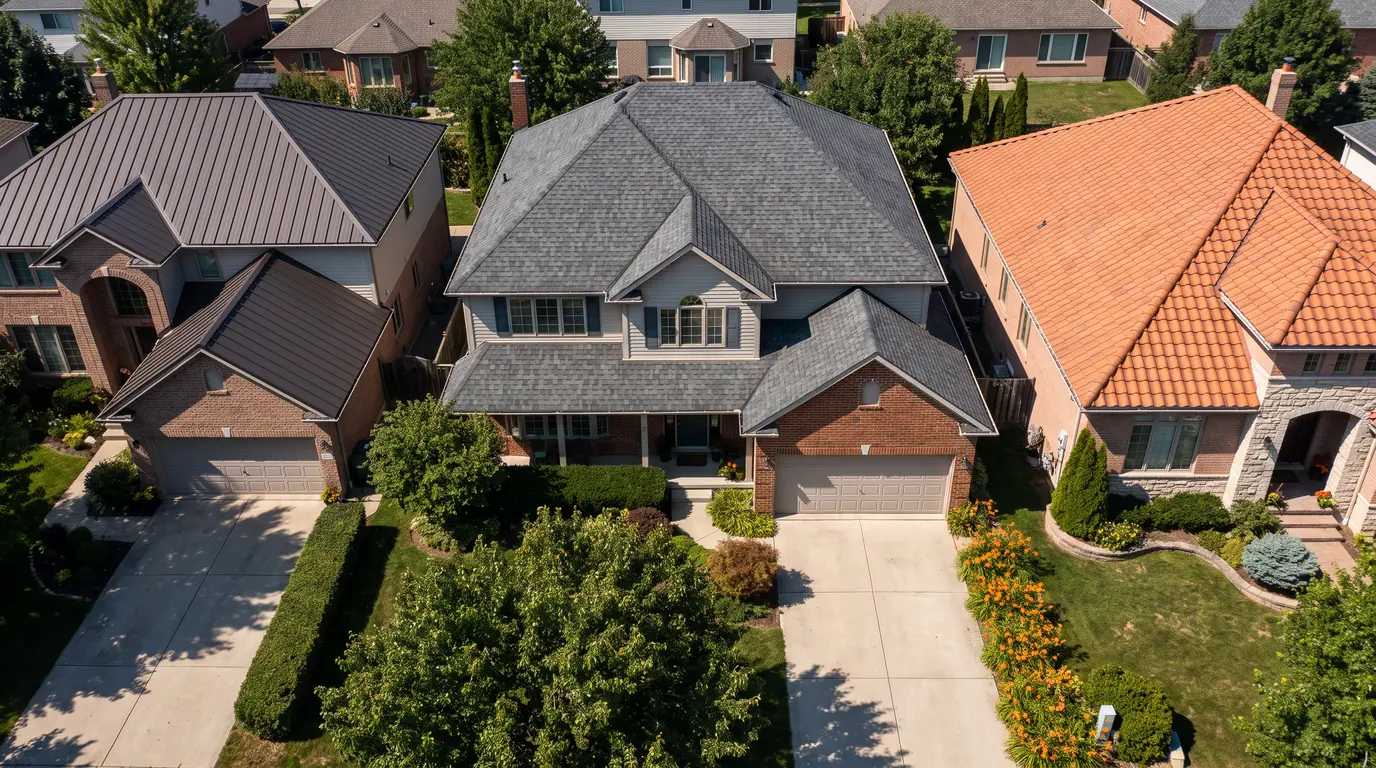
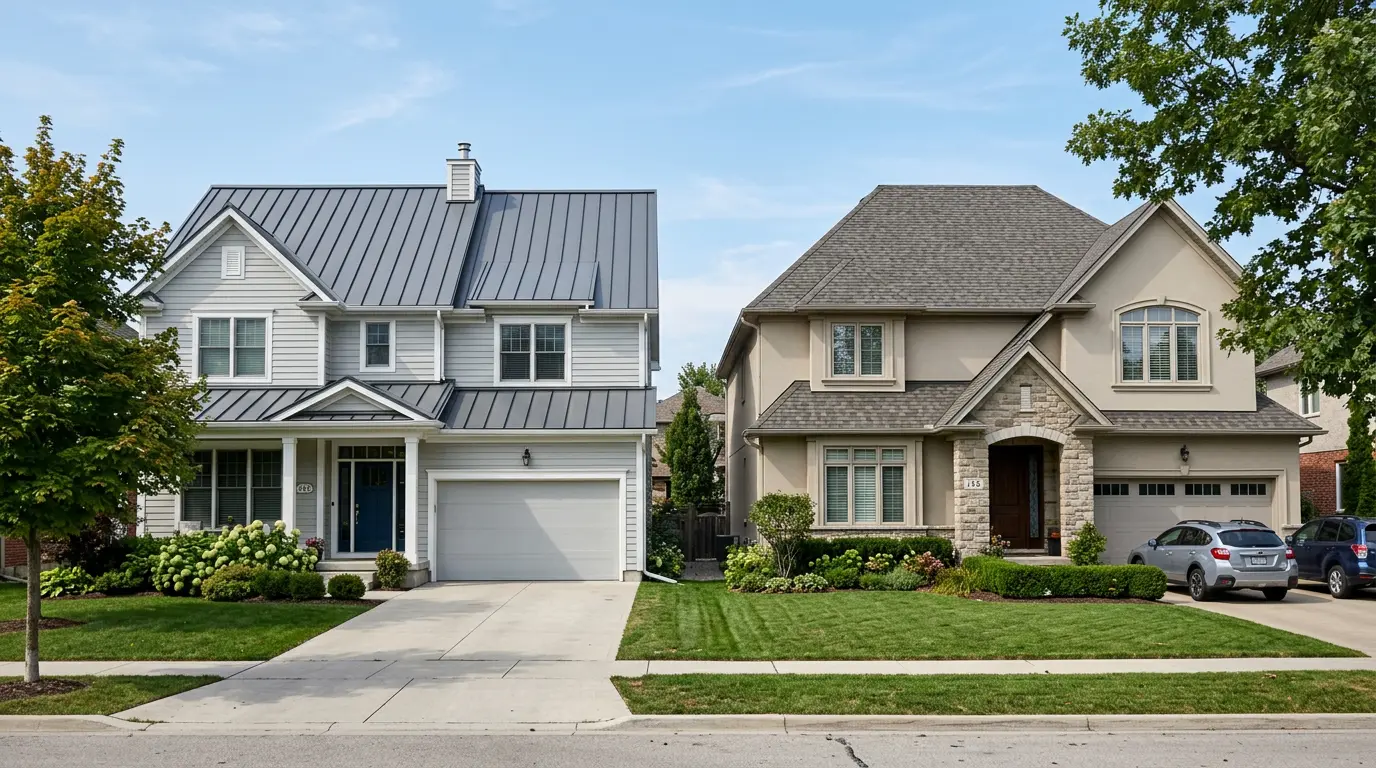
Appearance does not have to mean modern metal versus traditional shingles. Metal roofing includes standing seam designs and metal shingles in multiple colors and finishes. Some metal shingles can resemble tile or wood shake. Asphalt shingles also offer many profiles, textures, colors, and imitation styles.
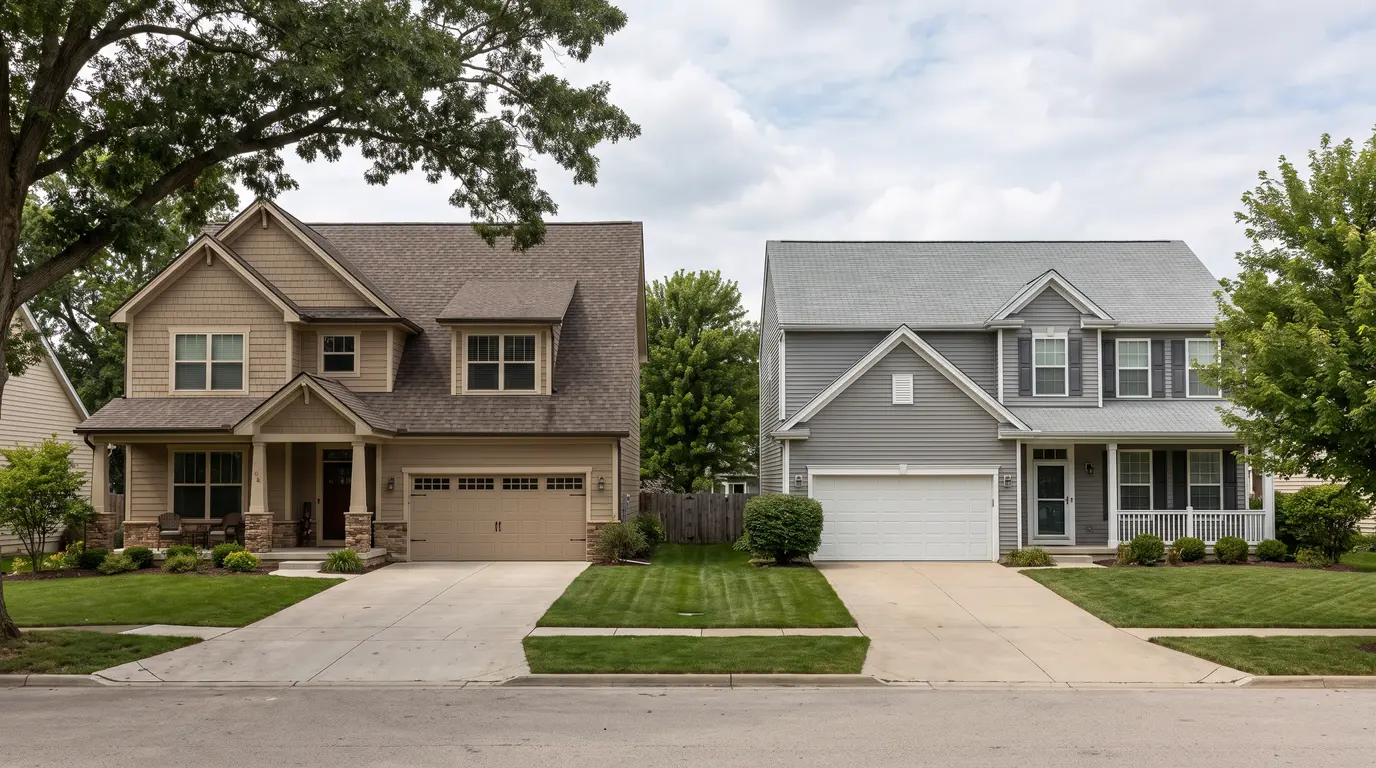
If matching an existing home is a priority, review installed samples where possible and compare the full roof system with the siding, trim, windows, and other exterior materials. The roof’s slope and geometry may also make one system substantially more suitable than another.
Questions to ask before choosing
- Does the roof slope and geometry make either system substantially more suitable?
- What condition are the existing decking, flashing, drainage paths, and ventilation in?
- What exact product, finish, profile, wind rating, hail rating, and fire rating are included?
- Which parts of the proposal cover tear off, disposal, permits, cleanup, and possible decking work?
- If solar may be installed later, can the proposed roof system accommodate the planned attachment method without avoidable rework?
Frequently asked questions
Is a metal roof always more durable than asphalt shingles?
No. Metal generally offers longer service potential, but durability depends on the specific product, coating, fastening approach, installation, climate, roof design, and maintenance. Asphalt products also differ in their performance and tested ratings.
Are metal roofs harder to repair?
They can be more system specific to repair. Metal work may involve matching a panel or finish and addressing seams or fasteners. Asphalt shingles are generally easier to repair in small sections because replacement materials are widely available.
Can asphalt shingles and metal roofing both be energy efficient?
Yes. Reflective or cool versions of both materials are available. Their effect depends on reflectance, climate, insulation, attic design, heating and cooling use, and roof orientation rather than on the material name alone.
Making the choice for your home
Choose asphalt shingles when a lower initial project cost, broad appearance choices, and straightforward repairs are the main priorities. Consider metal roofing when longer service potential, low routine maintenance, design flexibility, or reflective options carry more weight and fit the home’s roof design.
The most useful next step is to compare complete written proposals for the same scope of work. Look beyond the material label, confirm the exact products and installation details, and consider how long you expect to own the home. With those details in hand, either roofing system can be a reasonable choice for a residential property.