If your roof needs repair or replacement, the solar panels usually need to come off before the roofing work can begin. For a typical residential system, published planning estimates commonly place solar panel removal and reinstallation at about $1,500 to $6,000. Another commonly cited benchmark is about $200 to $300 per panel, while larger or more complicated projects may exceed $7,000.
That price usually covers temporarily removing the panels, handling or storing them during the roof work, and reinstalling and reconnecting the existing system. It does not usually include the roof repair or replacement itself. The most useful quote to request is a complete detach and reset estimate rather than a price for taking the panels down alone.
You can review the published residential cost discussion from EnergySage, but treat the figures as planning guidance rather than a guaranteed national price. Your final estimate will reflect the size and design of your system, roof access, equipment condition, storage needs, and local project requirements.
What solar panel removal and reinstallation includes
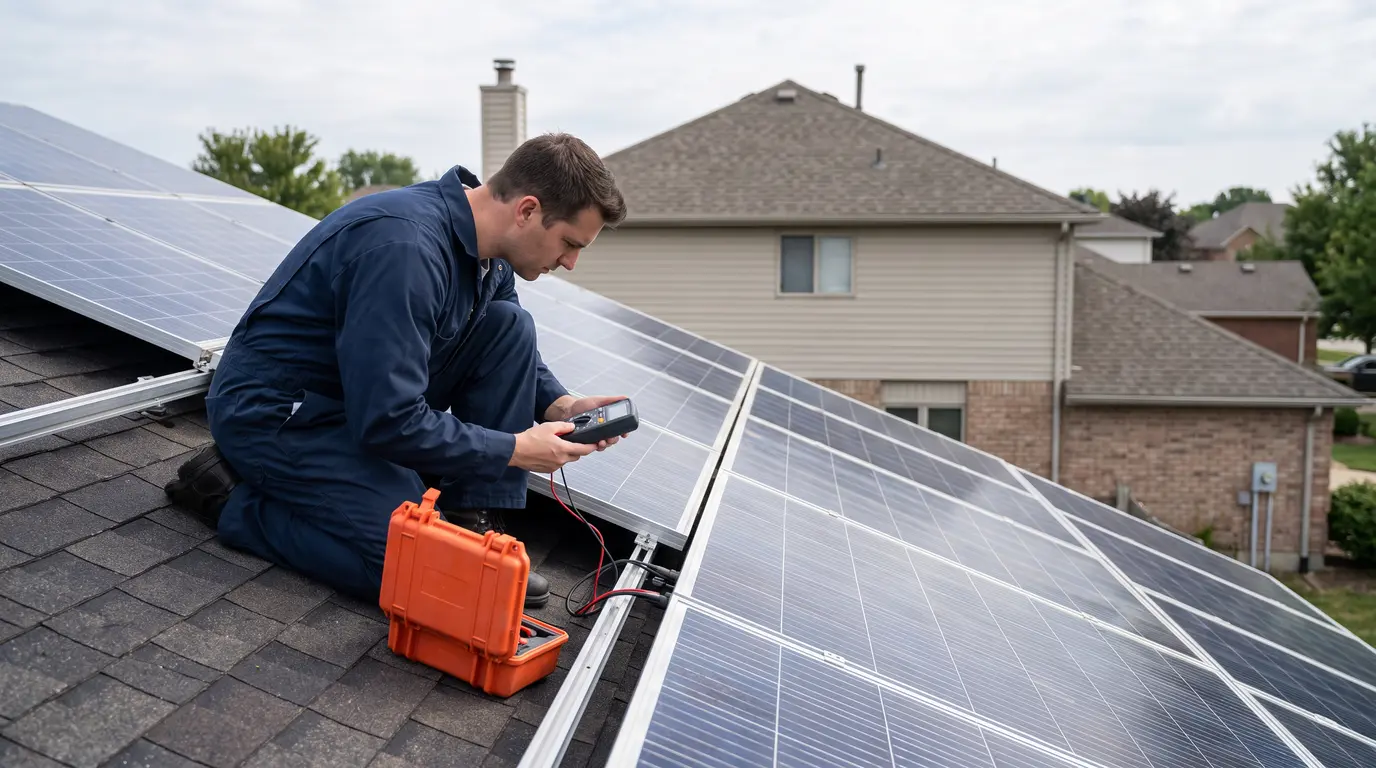
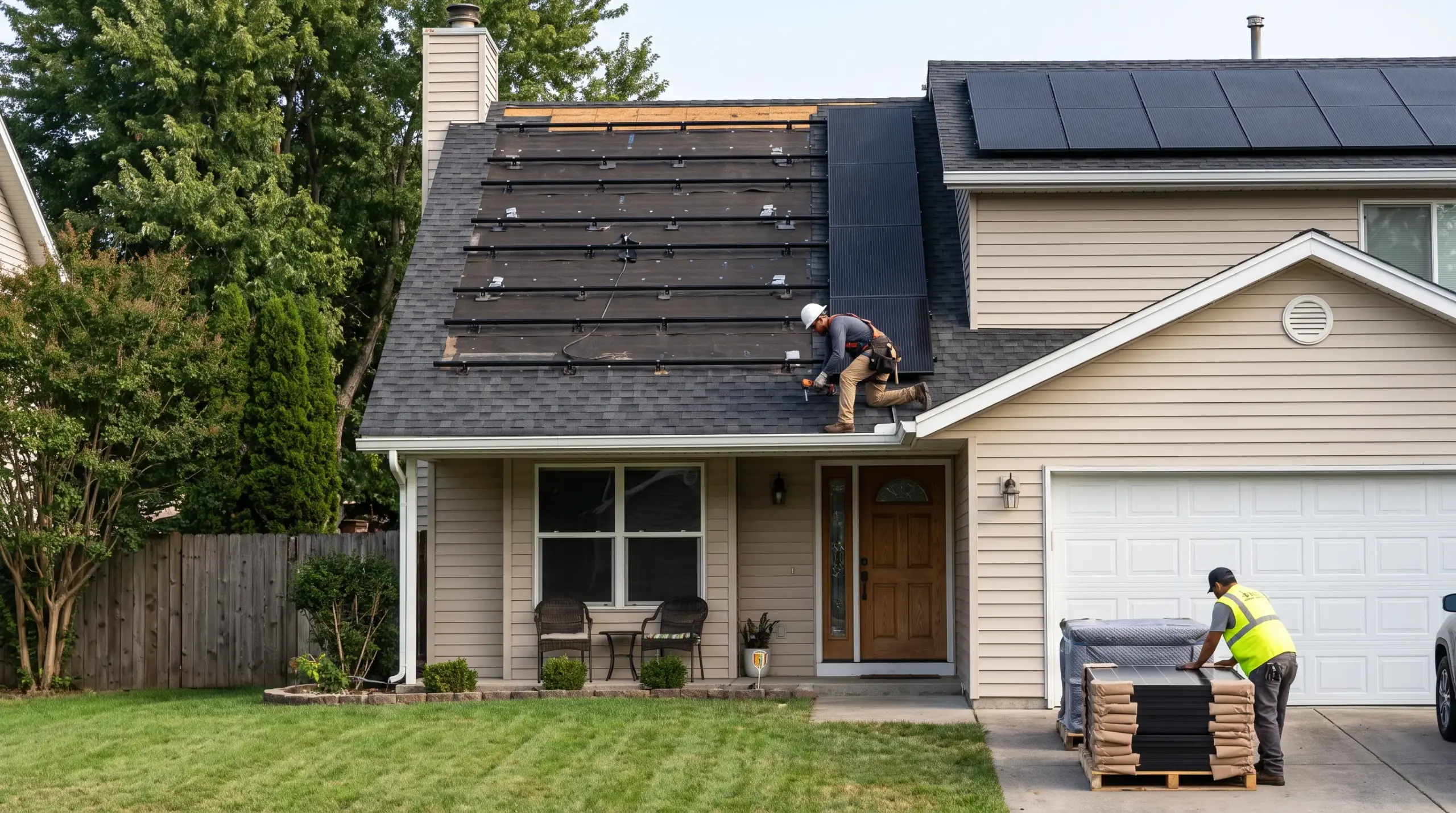
For roof work, solar removal is usually part of a larger detach and reset process. The solar contractor may de energize the system, remove the panels and related equipment, protect or store the components, and return later to reinstall, test, and reconnect the system after the roof is ready.
The roofing scope is separate. Roof replacement, decking, flashing, structural work, and other roof repairs should be listed separately unless your written proposal clearly combines them. Ask each contractor to explain what is included so the solar estimate does not get mistaken for the total project cost.
Factors that can change the cost
Panel count is one of the clearest price drivers. A larger array generally takes more time to remove, handle, store, reinstall, test, and reconnect. A contractor reported recent project estimates of about $275 to $300 per panel, including examples of $4,125 to $4,500 for 15 panels and $8,250 to $9,000 for 30 panels. Those figures illustrate how the total can grow with system size, but they are contractor project estimates rather than a universal rate.
| Cost or project element | How it affects the project | Evidence |
|---|---|---|
| Panel removal and reinstallation | Published residential planning estimates commonly range from $1,500 to $6,000. Another benchmark is about $200 to $300 per panel. | Published planning estimates |
| Larger panel count | More panels generally increase removal, handling, storage, and reinstallation labor. | Panel count examples and planning estimates |
| Roof access and roof type | A steep, high, tile, or otherwise difficult roof may increase labor and handling complexity. | Residential detach and reset guidance |
| Storage and transportation | The quote may change if panels must be stored away from the property or remain removed for an extended period. | Residential detach and reset guidance |
| Electrical, permit, inspection, and testing work | These items may be included or billed separately depending on the system and local requirements. | Residential project guidance |
Roof height and pitch can affect how easily crews reach and handle the equipment. Multiple roof planes, specialized roofing materials, complex racking, and difficult electrical routing may also require more labor. The panels themselves are not the only concern. Racking, wiring, inverters, microinverters, and mounting hardware all need to be considered during the removal and reset.
Storage is another detail to clarify. Some projects may require transportation or storage away from the home, while others may keep components at the property. The length of time between removal and reinstallation can also affect the scope. Ask whether storage, transportation, protection of components, cleanup, and system testing are included in the proposal.
Plan the roofer and solar contractor together
Scheduling matters because the roof cannot be completed beneath the array until the solar equipment has been removed. The panels should not be put back until the roofing work is complete and the roof is ready for the solar equipment. Coordinate the sequence before signing the roofing contract so one project does not wait unexpectedly for the other.
Ask whether one company will coordinate both scopes or whether you will manage separate roofing and solar contractors. One accountable party may make scheduling simpler, but the written agreements should still identify responsibility for roof damage, panel damage, wiring, delays, testing, and warranty issues.
Before removal, ask the solar contractor to review the panels, racking, wiring, inverter or microinverters, and mounting hardware. Existing damage, corrosion, obsolete equipment, or hardware that does not fit the repaired or replaced roof can create costs beyond basic removal and reinstallation labor.
Questions to ask before comparing estimates
- Does this quote include both removal and reinstallation, or only taking the panels off the roof?
- Does the estimate include transportation, temporary storage, cleanup, reconnecting wiring, testing, permits, and inspections?
- Will the existing mounting hardware be reused, and what happens if it is damaged or incompatible with the repaired or replaced roof?
- Who is responsible if a panel, racking component, roof surface, or wiring is damaged during the project?
- How long is the system expected to be offline, and are monitoring, reconnection, inspection, or utility notifications included?
Permit and inspection requirements are not the same in every location or for every system. If you are unsure about the approvals that may apply when the system is reconnected, review whether solar panels need permits, then confirm the applicable requirements with the local authority and utility.
Should you reinstall the existing system?
A roof project is a useful time to discuss whether the existing panels and mounting equipment are suitable for reinstallation. If the roof needs significant work or has limited remaining service life, broader planning may be worth considering before the system is put back. This guide on whether to replace your roof before solar can help frame that timing question, although it is not a cost source for detach and reset work.
For a preliminary view of overall residential solar budgeting, you can also use the solar cost calculator. It does not establish a specific price for panel removal, storage, or reinstallation, so you will still need a project quote for the roof related solar work.
Frequently asked questions
Can the same mounting hardware be reused?
It may be reusable, but the solar contractor should inspect it before removal and confirm whether it fits the repaired or replaced roof. Damaged, corroded, obsolete, or incompatible hardware may add to the project cost.
Who should coordinate the roofer and solar installer?
The solar and roofing work should be coordinated together. You may work with one company for both scopes or manage separate contractors. Either way, confirm the sequence, timing, responsibilities, damage provisions, testing, and warranty terms in writing.
Will permits or inspections be needed after the panels are reinstalled?
They may be, depending on the system and local requirements. Ask the solar contractor who will handle permits, inspections, utility coordination, and final testing, then confirm the applicable requirements with the authority having jurisdiction.
For most homeowners, a reasonable starting budget is $1,500 to $6,000 for solar panel removal and reinstallation, separate from the roof work. Request a written detach and reset quote that lists panel count, storage, hardware, electrical work, testing, approvals, timing, and responsibility for damage. That detail will make it easier to compare estimates and avoid surprises as your roof project moves forward.