Yes, solar can power a multifamily apartment property. The more important question is how the building receives electricity and how solar benefits will reach residents. A system may reduce electricity costs for common areas, the entire property, individual apartments, or a combination of these uses.
A rooftop array does not automatically send separately measured savings to every apartment. The right structure depends on the building’s meters, utility accounts, wiring, utility rules, leases, and tenant billing process. Start by mapping the electrical and billing arrangement before comparing system proposals.
How solar can serve an apartment property
The simplest project often connects solar to a common area meter or a master meter. This can help offset electricity used for corridor and exterior lighting, laundry facilities, offices, recreation rooms, elevators, pumps, central equipment, and other owner paid loads.
Individual residents may receive solar benefits through virtual net metering, on site shared solar, community solar, utility bill credits, submeters, or another approved billing arrangement. Availability varies by utility territory, state or local policy, property wiring, and the approved project design. The serving utility should confirm what is available before the property promises a particular resident benefit.
| Configuration | How solar is used | How tenants may benefit | Main management issue |
|---|---|---|---|
| Common area meter | Offsets owner paid common area electricity. | Usually indirect, through lower property operating costs or an owner defined benefit program. There is no automatic reduction to individually billed unit accounts. | Confirm common area load, meter capacity, export treatment, and system ownership. |
| Master metered building | Can offset the building’s primary electric account. | Owner managed utility allocation, reduced charges, or another approved credit mechanism. | Billing administration, lease terms, utility rules, and fair allocation of savings. |
| Individually metered units with virtual net metering or shared solar | One array serves multiple eligible utility accounts through bill credits or another approved allocation method. | Credits may appear on individual utility bills. | Utility eligibility, credit calculation, enrollment, account changes, and tenant turnover. |
| Reconfigured or hybrid electrical arrangement | The property may combine common area service, master metered service, storage, or a revised utility configuration. | Depends on the approved billing and benefit sharing structure. | Electrical construction, utility approval, regulatory review, tenant communication, and long term operations. |
These are project structures rather than universally available choices. Utility tariffs, state policy, local requirements, existing wiring, ownership, and lease arrangements determine which options are feasible.
Begin with the electrical and billing map
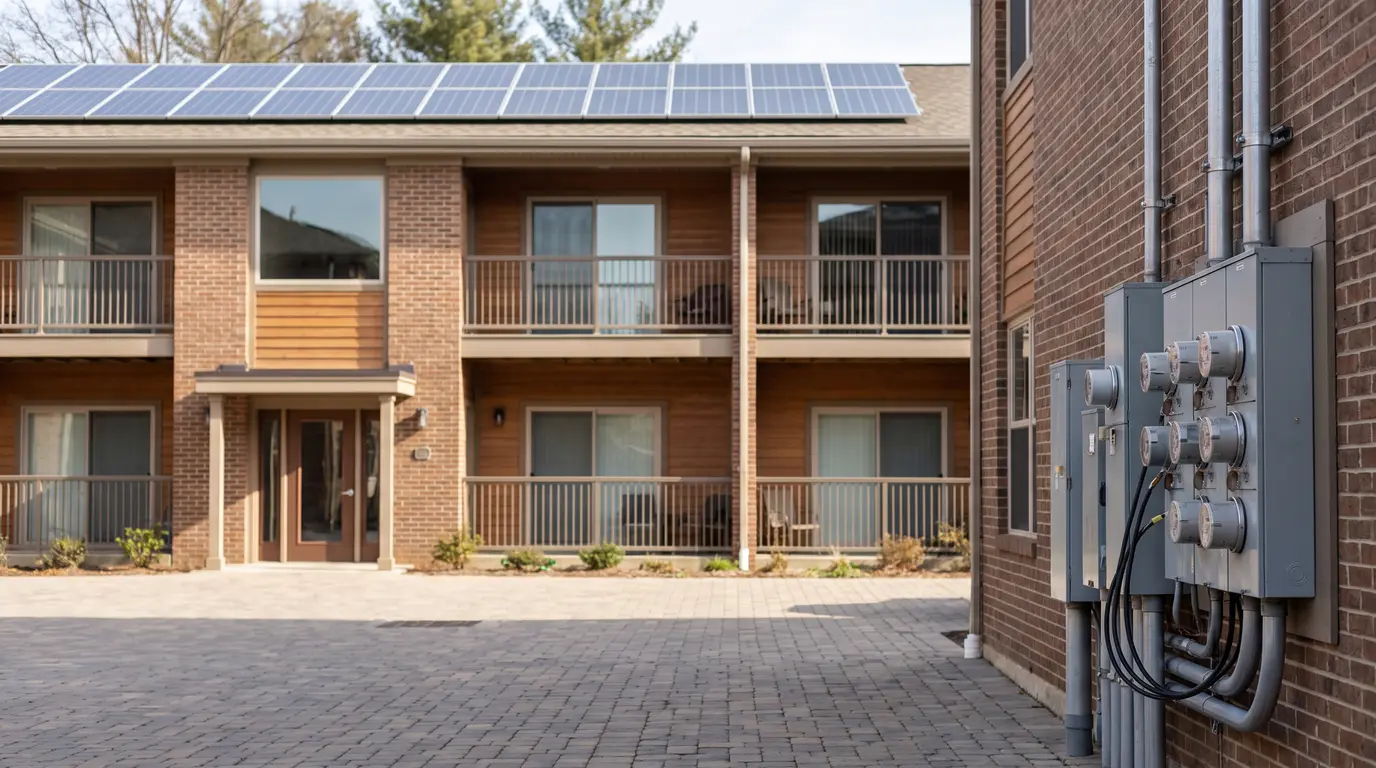
Before requesting final pricing, identify every utility meter, account holder, apartment meter, common area meter, submeter, main service, electrical room, and major owner paid load. Also document which party currently pays each electric account.
This map helps separate three different goals: lowering the property’s operating costs, reducing charges managed by the owner, and providing credits to individual residents. Those goals may require different system connections and billing arrangements.
Ask the serving utility in writing whether it supports virtual net metering, on site shared solar, master metered multifamily projects, tenant bill credits, or another allocation method. Confirm how credits are valued, which accounts qualify, how residents enroll, whether credits can transfer when a tenant moves, and how exported electricity is treated.
The solar for multifamily common areas guide can help with the related question of how a shared solar system serves common spaces. It does not replace a property specific review of tenant account allocation.
Compare the tenant benefit models
A property manager should compare at least three operating models: solar for common area loads only, solar connected to a master meter with owner managed allocation, and solar paired with a utility approved shared solar or virtual net metering structure for individual unit accounts.
Common area solar may be the clearest starting point because it can reduce an owner paid electric expense without allocating credits across separate tenant accounts. Its value still depends on common area electricity use, the timing of those loads, export treatment, system cost, and financing.
A master metered property may have a simpler physical connection, but the owner or housing provider generally controls the primary utility account and must determine how savings or credits are passed to residents. A change to the utility arrangement can also affect ownership, utility contracts, electrical work, leases, billing administration, and regulatory compliance.
With individually metered apartments, residents typically maintain separate utility accounts and pay the utility directly. A shared solar or virtual net metering program may allow credits to reach those accounts, but the utility must confirm eligibility, credit calculations, enrollment rules, and what happens when a resident moves.
For background on shared solar approaches, review the U.S. Department of Energy’s Community Solar Basics. The available approach for a particular property still comes from the serving utility and applicable local rules.
Set the tenant benefit policy before final pricing
Decide how residents may receive value before selecting a final system and billing structure. Possible approaches include utility bill credits, reduced utility charges, rent related benefits, common area cost reductions, or another legally reviewed method.
Review leases and applicable landlord tenant, utility billing, affordable housing, and public benefit rules before changing resident charges. Properties with housing assistance or income restrictions may need additional review because utility allowances and tenant income calculations can be affected by how solar benefits are distributed.
Avoid advertising a fixed tenant savings amount until the utility arrangement, billing method, system production, and lease treatment are confirmed. A clear policy should also explain what happens if production is lower than projected, the system is temporarily offline, or utility credit rules change.
- If a tenant moves, does the solar credit remain with the unit, transfer to another eligible account, return to the owner, or end?
- Will the proposed array connect to the common area service, the whole building service, or a separate tenant credit program?
- What happens to resident utility charges if the system produces less than projected, the utility changes its credit rules, or the system is temporarily offline?
Evaluate the roof and electrical design
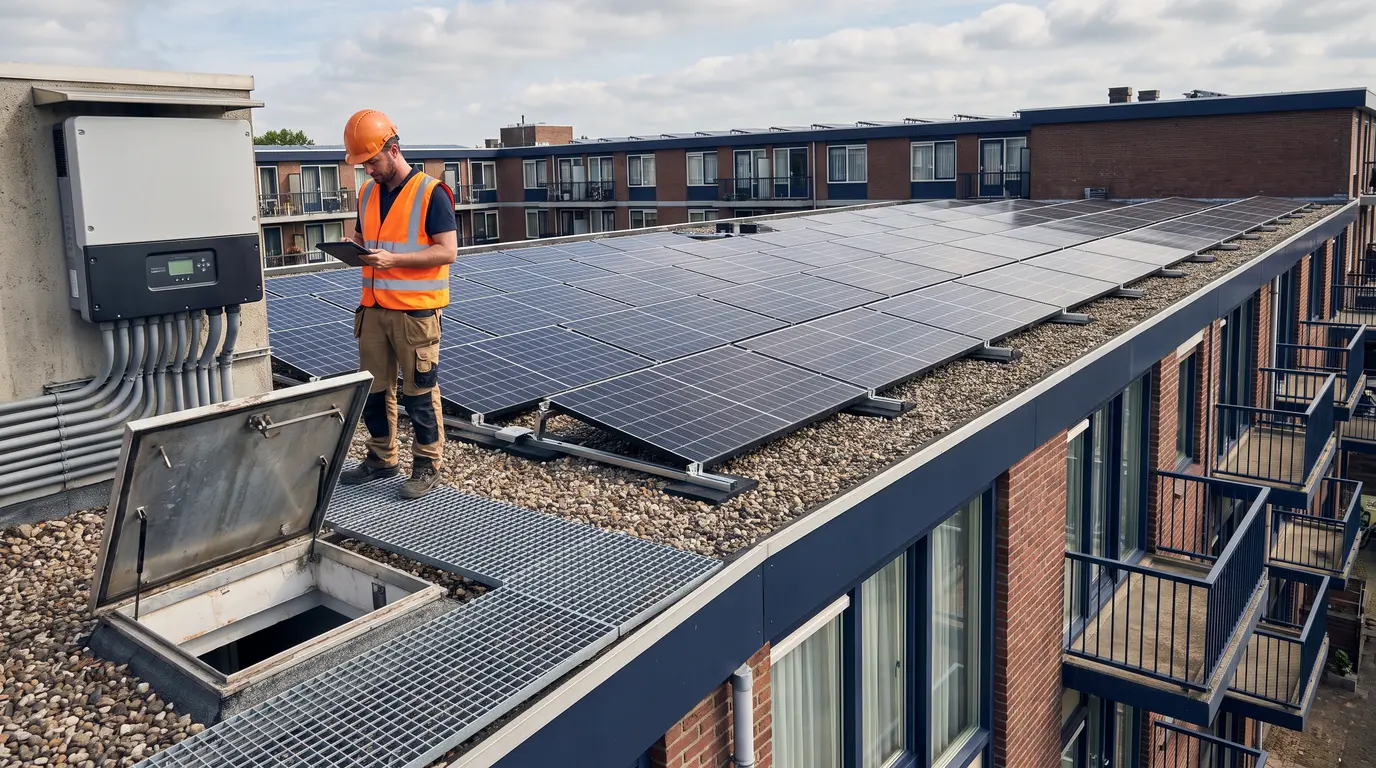
Roof area is only one part of solar feasibility. Review roof condition, shading, structural capacity, equipment locations, electrical service capacity, panel and inverter placement, access, and future roof work before finalizing a design.
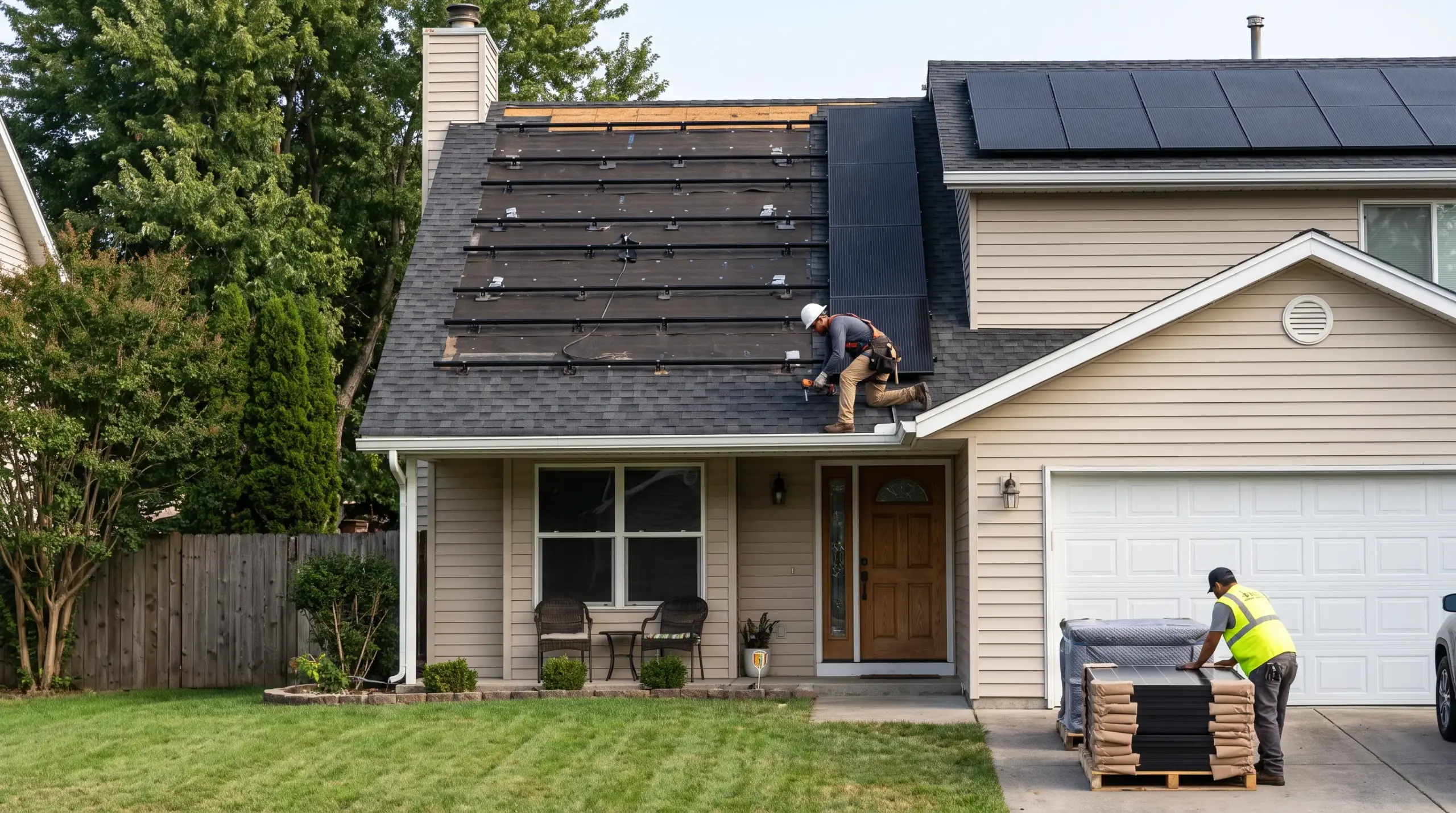
A roof with limited remaining service life can make future removal and reinstallation more expensive or disruptive. Compare the expected roof replacement timeline with the planned solar work before approving an attached array. The guide on whether to replace the roof before solar provides a useful planning framework, but it is not a substitute for a property specific roof inspection, structural review, or warranty review.
For a broader explanation of usable roof area and other design factors, see how much solar the roof can support. A property’s roof size alone does not establish its final solar capacity.
Plan permits, utility approval, and project coordination
Multifamily solar projects generally involve local authority review, permits, inspections, and utility interconnection approval. Exact requirements vary with the jurisdiction, property, system design, building characteristics, and serving utility.
Identify the applicable authority and utility before committing to an installation schedule. The commercial solar permits and approvals guide offers background on this coordination, while the Department of Energy solar technical assistance resource explains why local and utility processes matter.
Assign ownership and ongoing responsibilities
A multifamily solar plan should state who owns the system, receives monitoring alerts, schedules repairs, maintains warranty records, coordinates roof and electrical room access, handles tenant questions, and pays for removal or reinstallation if roof work becomes necessary.
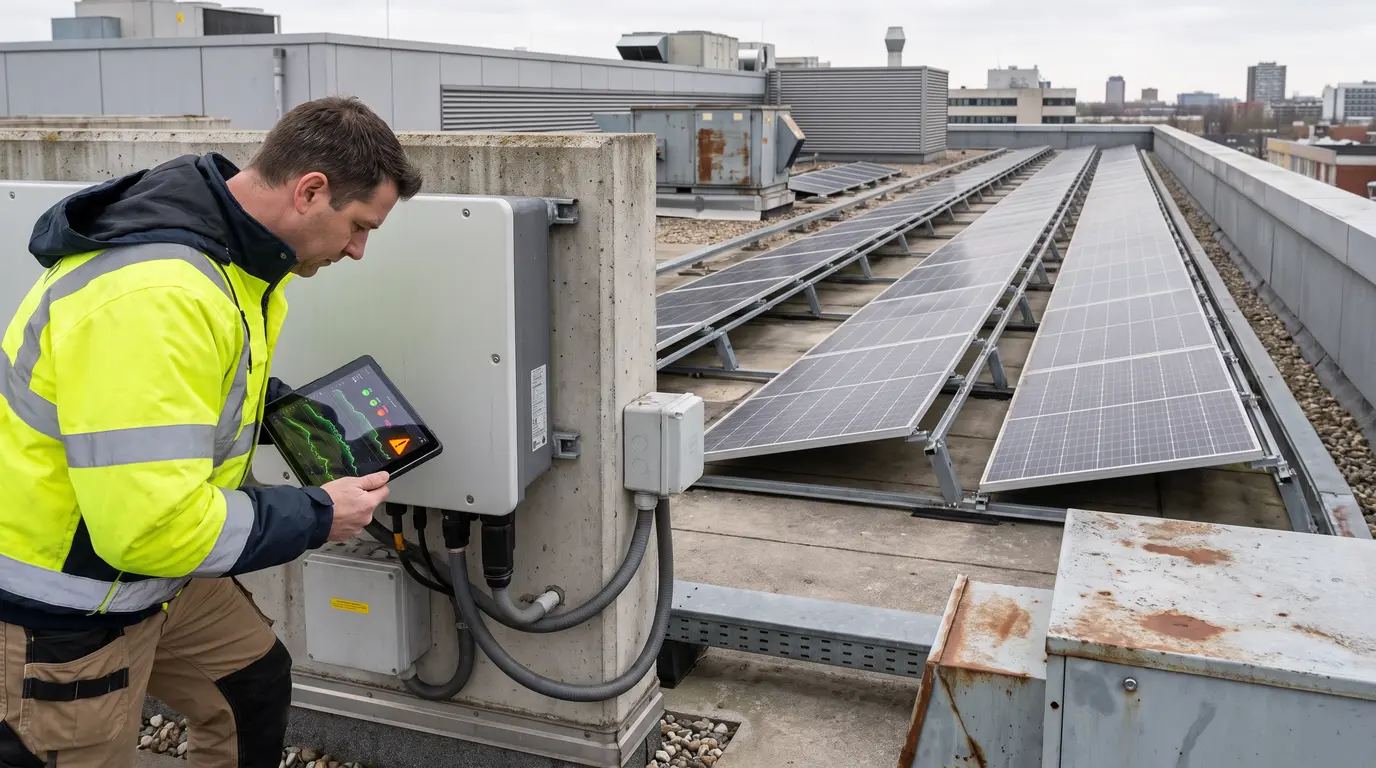
The service scope depends on the equipment, warranty, site conditions, ownership arrangement, and service contract. Someone should review production data and alerts, compare output with expected conditions, maintain records, and coordinate access to inverters, disconnects, meters, roof areas, and electrical rooms.
The guide on how to monitor commercial solar performance can help organize production reviews, alerts, and vendor records. Monitoring practices should match the system owner’s responsibilities and the service agreement.
Battery storage is optional rather than automatic. It may help increase on site use of solar or support selected loads during an outage, but its value depends on the property’s load profile, outage objectives, utility rates, controls, and added cost.
Review tax treatment separately
Do not assume that a federal residential clean energy credit applies simply because an apartment building contains residences. IRS materials distinguish residential credits from business or investment property incentives. The Section 48E clean electricity investment credit applies to qualifying business scale property under its applicable rules, and IRS guidance also addresses construction timing for certain wind and solar facilities beginning construction after July 4, 2026.
Eligibility can depend on ownership, tax status, construction or placed in service dates, project qualifications, prevailing wage requirements, and later guidance. A tax professional should verify eligibility as of the project date. The IRS clean energy tax incentive publication and IRS beginning of construction notice provide the relevant federal materials.
Estimate costs only after defining the project
System size, electrical work, roof conditions, storage, billing structure, utility requirements, and project ownership can all affect cost. Once those factors are clearer, you can use the solar cost calculator for preliminary planning. It supports residential and commercial projects, but it is not a multifamily specific quote, utility interconnection analysis, incentive determination, or guaranteed project price.
Frequently asked questions
Can solar panels connect directly to individual apartment meters?
A shared rooftop system does not automatically provide separately measured savings to every apartment meter. Individual tenant benefits may require virtual net metering, shared solar, utility bill credits, or another utility approved allocation method. The serving utility must confirm whether that structure is available.
Who is responsible for solar maintenance at a rental property?
The responsible party should be named in the ownership and service agreements. That party may monitor production, review alerts, coordinate repairs, maintain warranty records, arrange access, and manage roof related work. The exact scope depends on the equipment, ownership, warranty, site conditions, and service contract.
Does a multifamily solar project qualify for a federal tax incentive?
Possibly, but the building’s residential use alone does not determine eligibility. Ownership, tax status, project timing, applicable statutory requirements, and later IRS guidance all matter. A tax professional should review the specific project before the owner relies on an incentive.
The practical next step
Solar can serve an apartment property, but the best design begins with the building’s electrical and billing map rather than the roof alone. Document the meters, account holders, common area loads, roof condition, and tenant billing responsibilities. Then ask the utility to confirm available allocation options and define how residents will benefit before comparing final proposals.