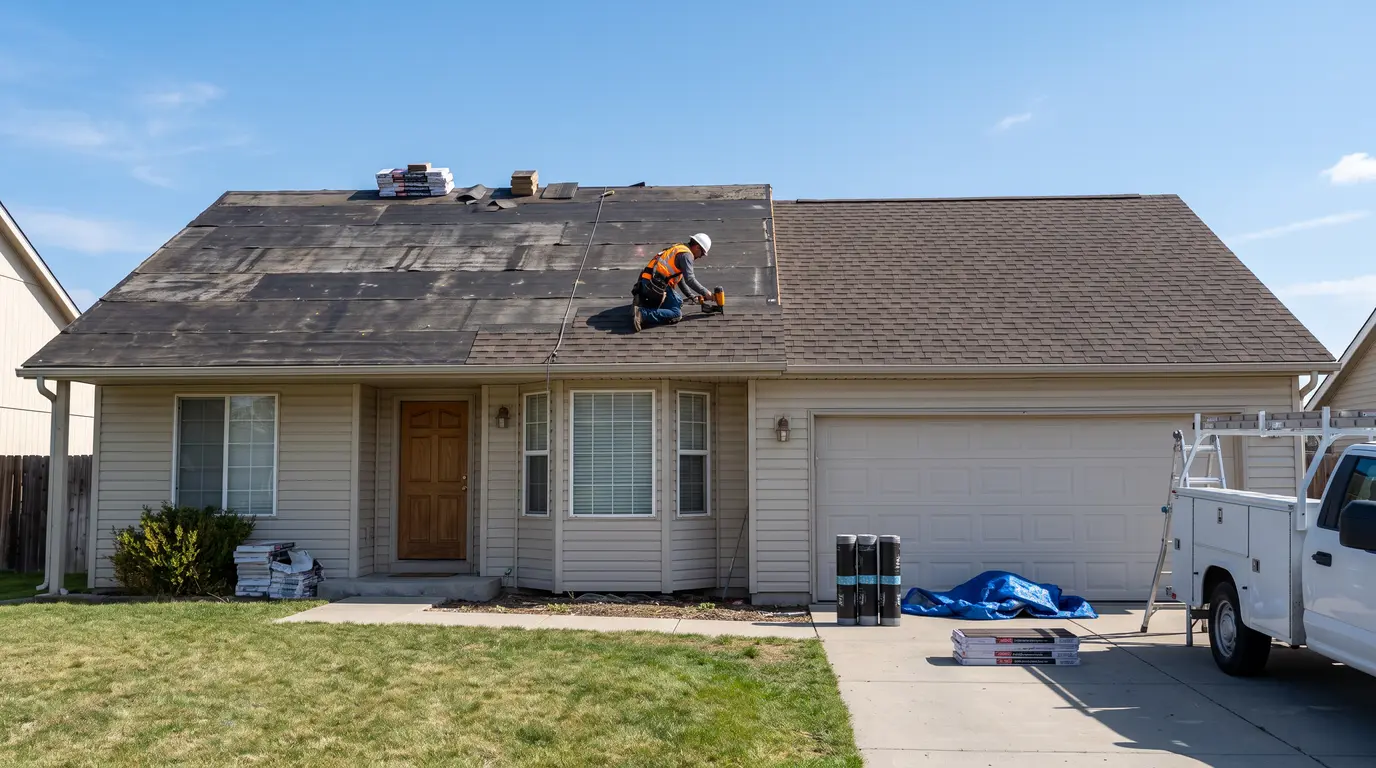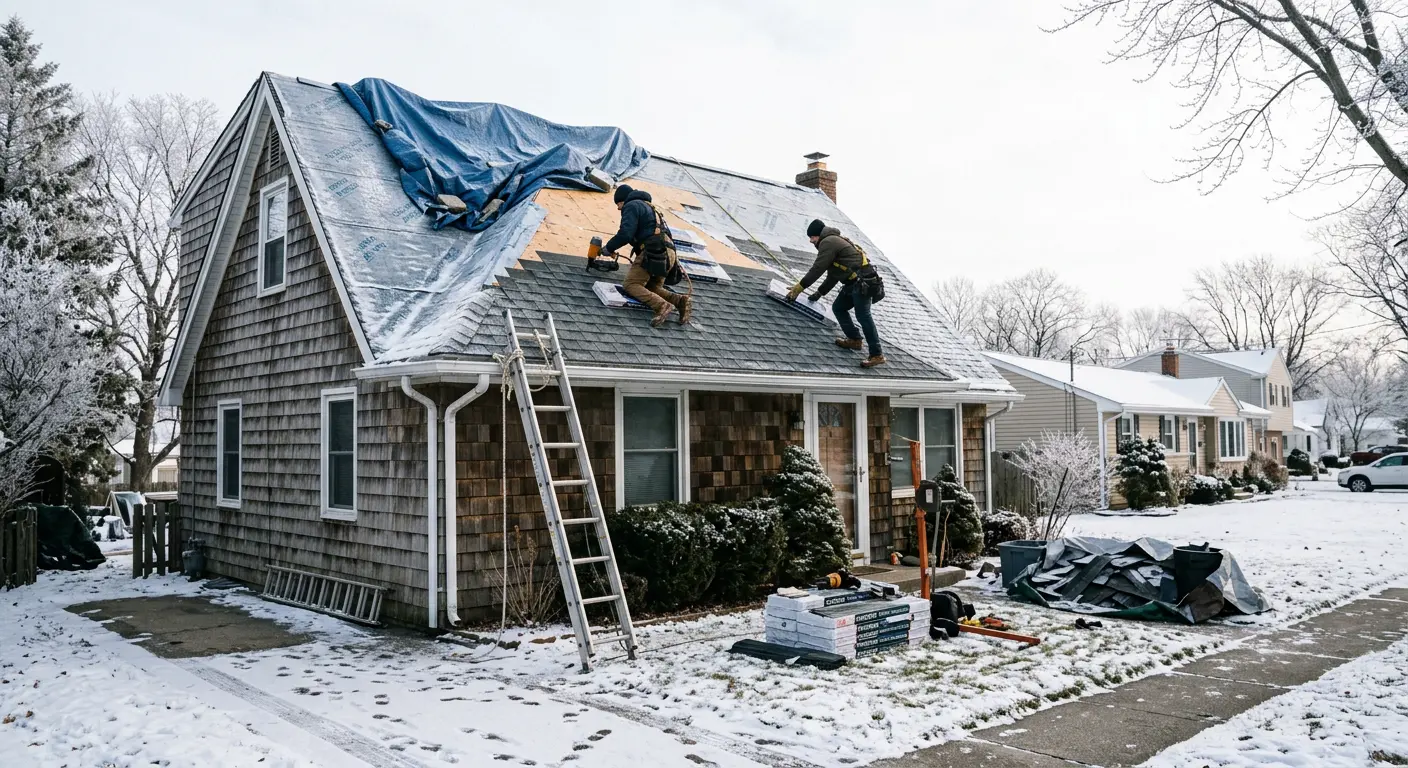
Usually, no. A roof replacement does not automatically include replacing the roof decking beneath the shingles, tile, or other roof covering. The estimate may cover only the visible roof covering, while the decking or sheathing remains in place if it is sound.
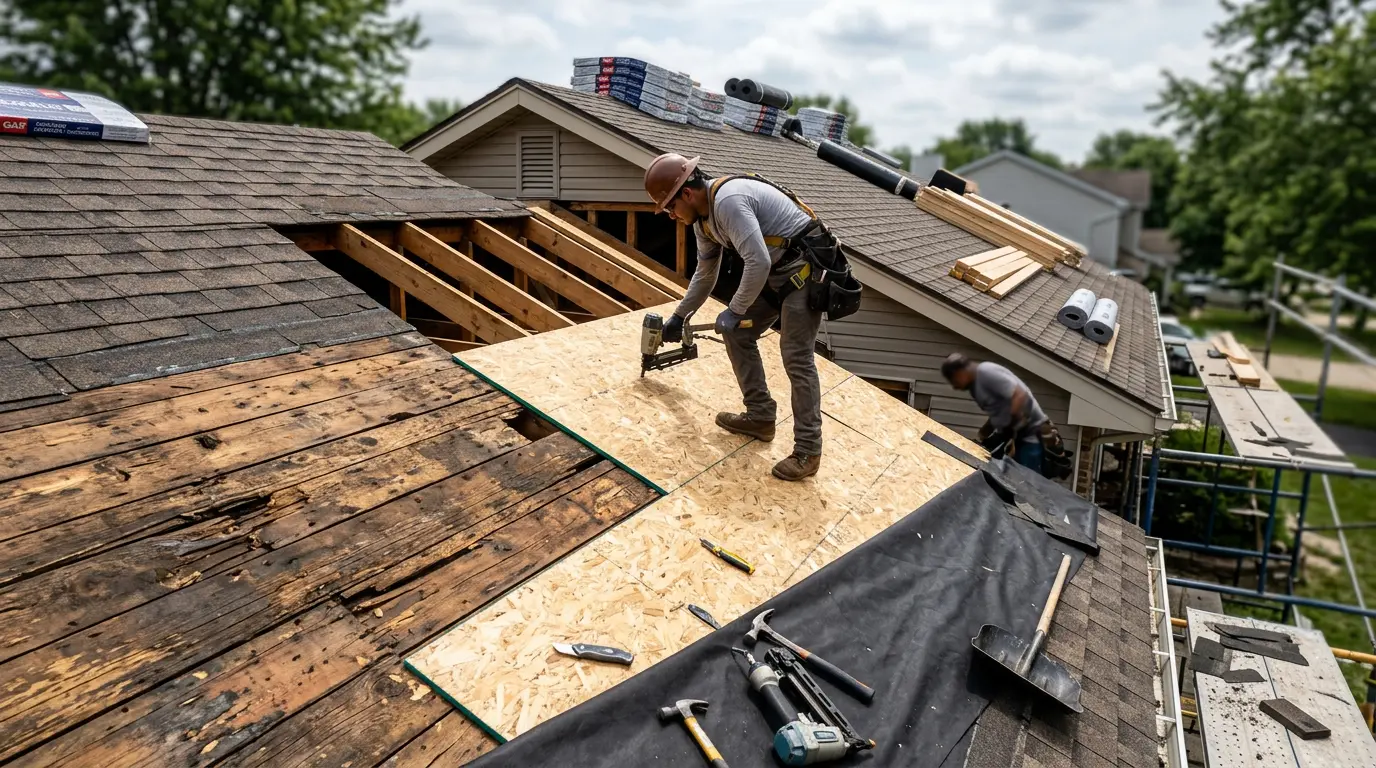
Decking may become part of the project when tear off reveals water soaked, rotten, delaminated, broken, weakened, or otherwise inadequate material. The final answer depends on the condition of the deck, the written contract, the roofing system, and local building requirements. That is why a good estimate should explain what happens if concealed damage is found.
The condition of the decking often cannot be confirmed completely until the existing roof covering and underlayment are removed. In roofing, the most important problem is sometimes hiding under the part everyone can see.
What Roof Decking Is and Why It Matters
Roof decking, also called roof sheathing, is the structural layer attached to the rafters or trusses. It supports the rest of the roofing assembly and provides the surface where many roof coverings are fastened.
Plywood and other wood structural panels are common decking materials. Older roofs may also have boards or planks, sometimes with spaces between them. The proper material, thickness, span rating, edge support, and fastening depend on the framing, roof covering, loads, manufacturer instructions, and locally adopted requirements.
Decking does more than hold nails. It can contribute to the roof diaphragm, which helps the roof resist wind and other lateral forces. The APA guidance on roof systems explains the structural role of wood panel sheathing in roof construction.
It is also important to separate the decking from the other parts of the roof. The roof covering is the exterior material, such as shingles, tile, or a membrane. Underlayment is installed below the covering, while flashing protects vulnerable joints and penetrations. Ventilation components manage air movement. Rafters and trusses support the deck itself. Replacing one of these components does not automatically mean replacing all the others.
When Roof Replacement Includes Decking Replacement
Decking repair or replacement becomes necessary when the existing material cannot provide a sound base for the new roofing. Conditions that may require work include:
- Water soaked or deteriorated sheathing
- Rot, delamination, or weakened panels
- Broken or decayed boards
- Decking that is inadequate as a base for the new roof covering
- Inadequate fastening or other deficiencies discovered after removal
- Damage associated with a roof leak or another source of moisture
Damaged decking should not simply be covered with new roofing. The 2024 International Residential Code provides conditions for recovering an existing roof, including a requirement that the existing roof and sheathing remain adequate. The code is a model code, however, and local jurisdictions may adopt it with changes or use different requirements. You can review the 2024 International Residential Code roof assembly provisions for the model code language.
The work may be limited to a few sheets, boards, or damaged areas. If deterioration is widespread, more of the deck may need to be replaced. This is different from repairing rafters, trusses, fascia, or other framing. Framing damage can create a more serious structural issue that may require evaluation by a qualified professional and, in some cases, the building department.
Why Decking Damage May Not Be Discovered Until Tear Off
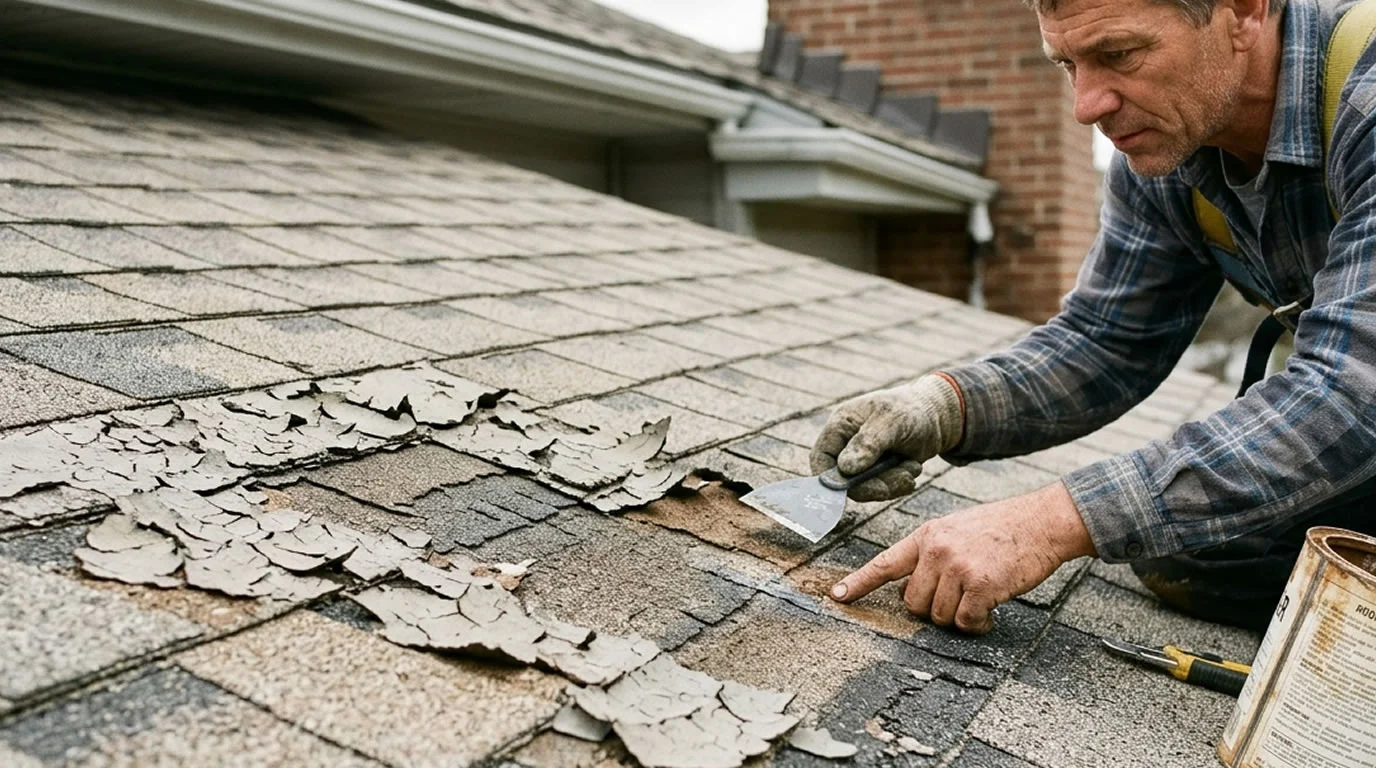
The exterior of a roof can look reasonably sound while the material below it has been affected by moisture. Shingles, tile, underlayment, and flashing can hide rot, delamination, broken boards, or weakened panels from view.
An inspection from above can identify warning signs, but it may not fully verify the condition of the deck. More of the decking becomes visible when the existing roof covering and underlayment are removed. Until that point, the contractor may be able to identify a risk without knowing the exact amount of material that needs repair.
This is why concealed damage should be handled as a documented project contingency, not treated as proof that every roof will need new decking. The contractor should photograph exposed damage, describe the affected areas, and identify the apparent source of the moisture or deterioration before the repair is covered.
Responsibility for the additional cost depends on the written contract. A contractor is not automatically required to absorb concealed condition work, and a homeowner should not be expected to approve an unexplained extra charge. The estimate should establish how the discovery will be documented and how approval will occur.
How Decking Changes the Scope and Cost of Roof Replacement
Replacing decking can expand a roofing project beyond the original covering replacement. Additional work may include tear off, disposal, replacement panels or boards, fasteners, installation labor, temporary weather protection, inspections, and correction of the leak source.
If rot or water intrusion has reached rafters or trusses, structural repairs may also be needed. That is a different scope from replacing a sheet of sheathing and should be identified separately.
There is no universally reliable percentage or national cost figure for how much decking replacement adds. The impact depends on the extent of damage, the material used, site access, related repairs, disposal, and local requirements.
Look for clear language stating whether decking is:
- Included in the base price
- Excluded from the base price
- Covered by an allowance
- Priced by the sheet or board
- Billed according to time and materials
- Handled through a written change order
Labor, disposal, fasteners, and temporary weather protection should be identified rather than left to guesswork. A low base price can become less useful if the concealed condition process is vague.
What the Roofing Contract Should Say About Decking
A detailed estimate should separate the main parts of the roofing work. At a minimum, look for line items for:
- Roof covering
- Tear off
- Underlayment
- Flashing
- Ventilation
- Decking or sheathing
- Framing repairs
- Disposal
- Permits and inspections
The contract should explain whether concealed decking damage will be priced by unit price, allowance, time and materials, or a change order. It should also state who can approve additional work and whether that approval must be in writing.
Ask the contractor to provide photographs or other documentation before extra decking work proceeds. Keep the contract, change orders, photographs, permits, inspection approvals, invoices, and material documentation with your project records. These records help show what work was approved and what concealed conditions were found.
Can New Roofing Be Installed Over Existing Decking or Roof Covering?
Sound existing decking can remain under a new roof covering when the project and applicable requirements allow it. That is different from installing a new roof covering over an existing roof covering.
The 2024 International Residential Code includes provisions for roof recovery. Those provisions address the condition of the existing roof and sheathing, the number of existing roof covering layers, and the types of materials involved. Water soaked or deteriorated sheathing that is inadequate as a base can prevent the recover approach.
Multiple existing roof covering layers may also affect whether tear off is required. The type of covering matters as well. Do not assume that any roof can receive another layer simply because the new shingles are in good condition.
The 2024 code is a model code, not automatically binding law throughout the country. Local adoption, amendments, permits, and inspections control the requirements for a particular property.
Special Decking and Roof System Situations
Spaced Board or Plank Decking
Older roofs may have boards with gaps instead of continuous plywood or oriented strand board panels. A jurisdiction or project design may allow panels to be installed over existing boards, while decayed or broken boards may still require repair. That does not create a universal requirement to replace every original board.
Tile Slate Cement or Asbestos Cement Coverings
Removal, reuse, and damaged unit rules can differ for tile, slate, cement, and asbestos cement coverings. The 2024 International Residential Code allows some existing slate, clay, or cement tile to be reinstalled, but not damaged, cracked, or broken pieces. The applicable local requirements and material instructions should be checked before removal or reuse.
Heavier or Different Roof Coverings
Changing from asphalt shingles to tile, slate, or another heavier system can raise structural load and code questions. Engineering or structural upgrades may be necessary. Ordinary shingle replacement rules do not answer those questions.
Framing Damage
Damaged rafters or trusses are separate from ordinary decking replacement. Sagging, widespread rot, damaged framing, unusual loads, or a change to a heavier covering justify an evaluation by an appropriately qualified roofing or structural professional.
Permits Inspections and Local Requirements
Permit and inspection requirements differ by jurisdiction. Some places exempt ordinary reroofing from a permit while specifically excluding roof sheathing replacement from that exemption. Other places require permits for most reroofing or require the application to describe changes to sheathing and framing.
For example, information from Pierce County, Washington, Santa Cruz County, California, and the City of Springfield, Missouri demonstrates this variation. These are local examples, not a nationwide rule.
A routine reroofing exemption may not cover sheathing replacement, rafter or truss repairs, other structural alterations, or changes affecting roof loads. Before work begins, contact the local building department and ask specifically about the decking, sheathing, rafters, trusses, permits, and inspections involved in the project.
Questions to Ask Before the Roofing Work Begins
Before signing, ask the contractor:
- Does the estimate include, exclude, or separately price roof decking?
- How will concealed damage be photographed, described, and approved?
- What is the price per sheet or board, including labor, fasteners, and disposal?
- What material, thickness, span rating, edge support, fastening, and spacing will be used?
- Will the materials and installation follow the adopted code and manufacturer instructions?
- Are permits or inspections required for sheathing, framing, or roof load changes?
- What caused the damage, and how will that source be corrected?
These questions are especially important when the roof has sagging, widespread rot, damaged rafters or trusses, unusual loads, or a heavier replacement covering.
Frequently Asked Questions
Does a Roof Replacement Include Replacing the Plywood or OSB Decking?
Not automatically. Sound decking may remain, while damaged or inadequate areas may be replaced as part of the project or through an approved change order.
How Can a Roofer Tell Whether Roof Decking Is Damaged?
The condition may be partly concealed by the roof covering and underlayment. Tear off exposes more of the deck and allows the contractor to document damage that could not be fully confirmed from the exterior.
What Happens if Rotten Decking Is Found During Roof Replacement?
The affected material should be documented and repaired or replaced before the new roofing is installed. The price and approval process should follow the written contract.
Can New Shingles Be Installed Over Old Roof Decking?
Yes, when the existing decking remains adequate and the roofing system and local requirements allow it. Inadequate, water soaked, or deteriorated decking should not be used as the base.
How Much Does Roof Decking Replacement Add to a Roofing Project?
There is no reliable universal amount. The effect depends on the area damaged, materials, labor, disposal, access, related repairs, and local requirements.
Is a Permit Required to Replace Roof Sheathing?
It depends on the jurisdiction. Some local rules distinguish ordinary reroofing from sheathing or structural work, so contact the local building department before starting.
Should Damaged Roof Rafters Be Repaired at the Same Time as the Decking?
Rafter and truss repairs are separate structural work. When they are damaged, a qualified professional and possibly the building department may need to evaluate the condition and required repair.
How Should a Roofing Contract Handle Concealed Decking Damage?
It should state how damage will be documented, priced, and approved. Common approaches include a unit price, allowance, time and materials, or a written change order.
The Bottom Line on Roof Decking
Roof replacement does not automatically include replacing all roof decking. Sound decking can remain, but water soaked, deteriorated, weakened, or otherwise inadequate material should be repaired or replaced before new roofing covers it.
Before work begins, make sure the estimate separates decking from the roof covering and explains the concealed damage process. Confirm local permit requirements, ask for documentation of exposed damage, and address the source of any leak rather than simply covering the evidence.