Residential solar panels typically remain useful for about 25 to 35 years. That does not mean they suddenly stop producing electricity on a specific birthday. Their output usually declines gradually, so the practical decision is whether the system still produces enough electricity to justify continued repairs and maintenance. In many cases, the panels remain serviceable while the inverter or another system component needs attention first.
The panel’s age is only one part of the answer. Production records, weather exposure, shading, soiling, warranty coverage, roof condition, and the cost of repairing the specific problem all affect whether repair or replacement makes more sense.
How long do solar panels usually last?
The U.S. Department of Energy reports an average operational lifespan of approximately 25 to 35 years for solar panels in 2025. Crystalline silicon modules, which are widely used in residential systems, generally have life spans of at least 25 years. Their power output commonly declines by less than 1 percent per year, although the actual rate varies with the module design, installation, climate, weather exposure, and operating history.
These figures describe an expected useful performance period, not a guarantee that every panel will perform the same way for the full term. A panel may continue generating electricity after that period, but its reduced production should be weighed against repair costs and the value of installing new equipment.
The U.S. Department of Energy’s solar photovoltaic guidance explains that the end of a panel’s expected life is not necessarily the moment it stops working. That distinction matters when deciding whether an older system needs replacement or simply needs a more specific diagnosis.
| Component | Typical planning life or coverage reference | What homeowners should understand |
|---|---|---|
| PV modules | Approximately 25 to 35 years of average operational lifespan | Output gradually declines rather than stopping suddenly. |
| Complete PV system | Commonly modeled or described around 20 to 30 years | Continued operation depends on maintenance, weather exposure, production, and component condition. |
| Inverter and other system equipment | Often shorter lived than the panels | These components may require replacement during the array’s life. Exact service life depends on the equipment and warranty. |
The panels and the full solar system do not age at the same rate
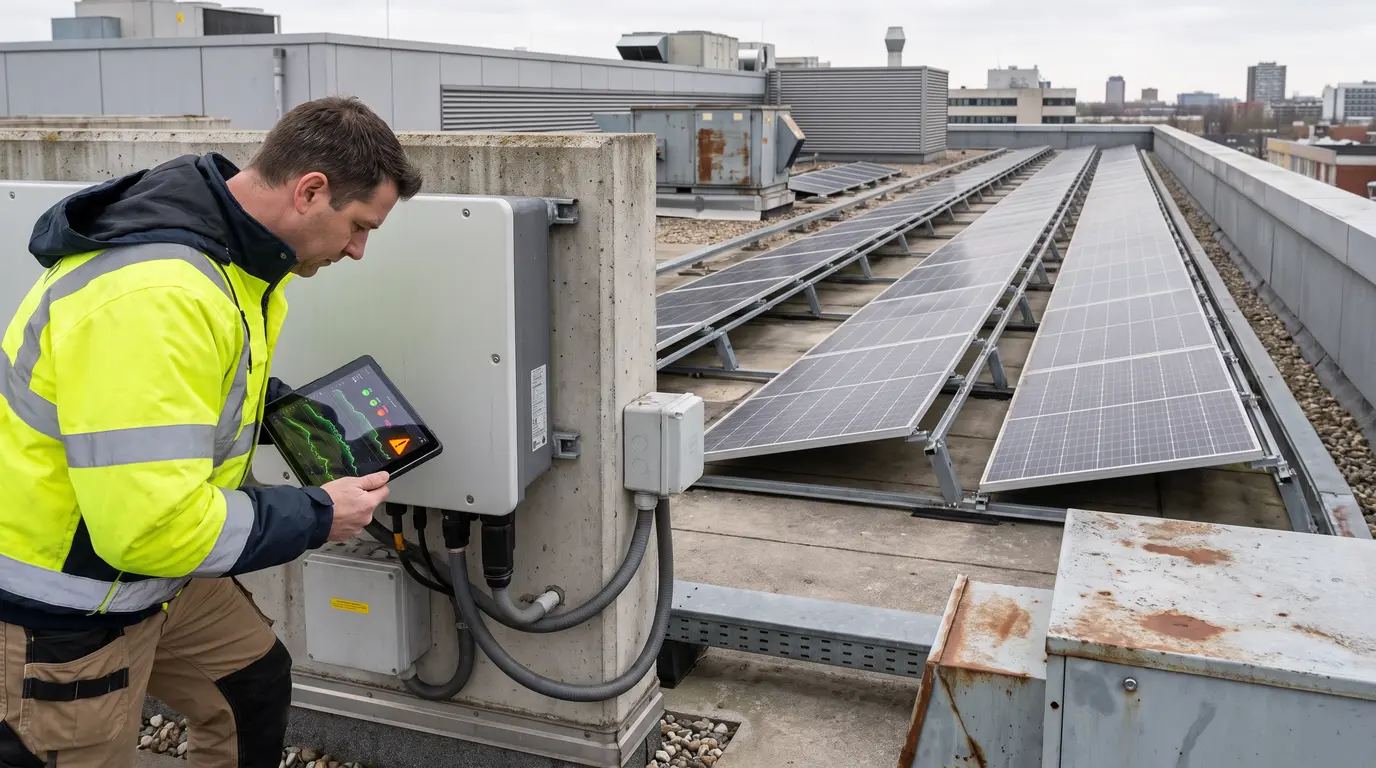
A solar array is more than the panels on the roof. The inverter changes the panels’ electricity into a form used by the home, while wiring, racking, monitoring equipment, and other components support system operation. Because these parts do not necessarily have the same service life as the modules, an inverter problem can reduce or stop production even when the panels are still usable.
That is why a low production report should not automatically lead to a panel replacement quote. The cause could be panel degradation, an inverter problem, damaged wiring, shading, soiling, a monitoring error, or unusual weather. The Department of Energy’s photovoltaic operations guidance treats the system as a group of connected components rather than as panels alone.
How to tell whether low production is a sign of aging
Start with the production history instead of relying on one low month. Compare current output with earlier periods while accounting for seasonal sunlight, weather, shading, and soiling. A short term decline does not by itself prove that the panels are failing.
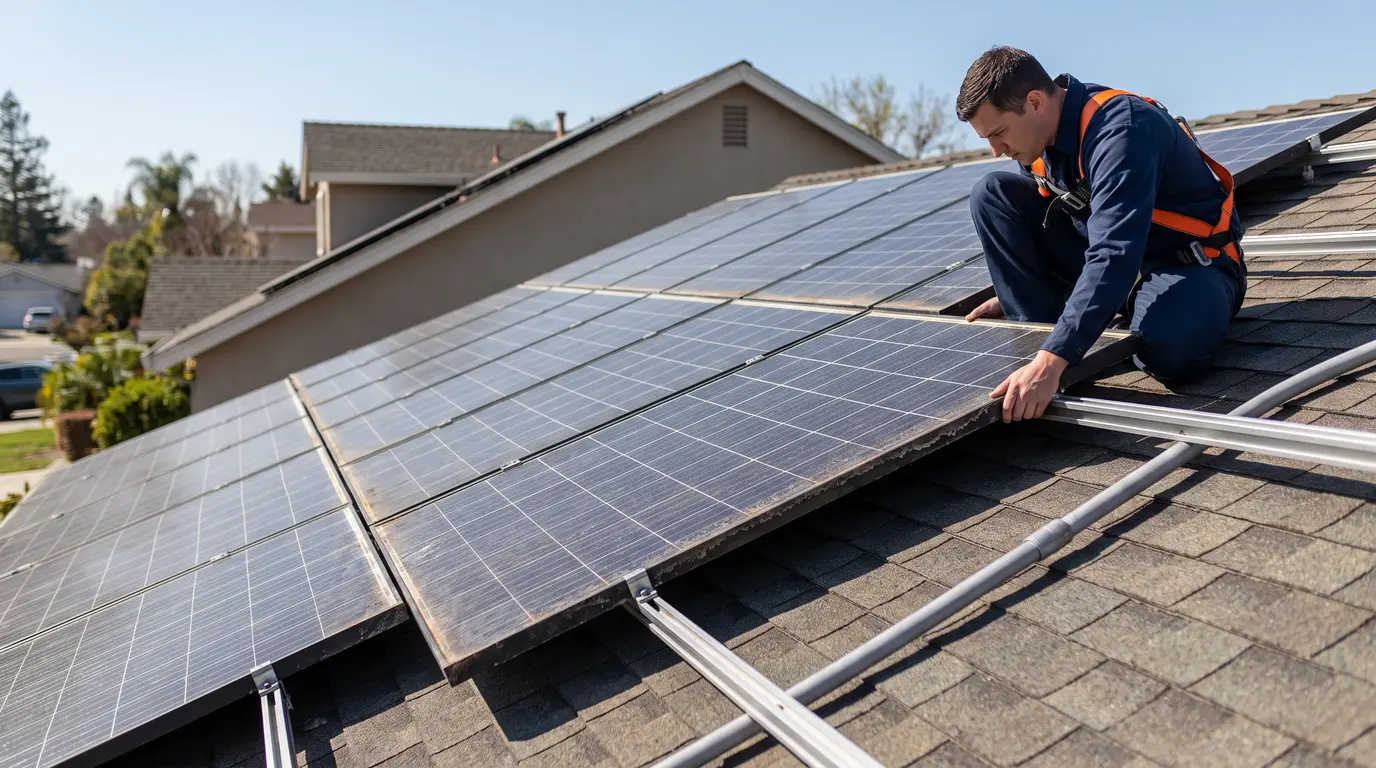
A substantial unexplained decline deserves professional diagnosis. Homeowners can review monitoring data and look for visible changes from the ground, but roof access, electrical testing, and repairs should be handled by qualified personnel. After hail, strong wind, falling debris, flooding, or another severe weather event, arrange an inspection if damage or unusual production loss is suspected. Do not climb onto the roof or handle damaged electrical equipment.
Keeping production records, warranty documents, maintenance information, and repair records makes this comparison easier. The Department of Energy’s guidance on photovoltaic performance also supports monitoring system output over time so ordinary weather variation can be separated from possible underperformance.
What solar panel warranties actually tell you
Solar warranties usually contain two different types of coverage. Product or equipment coverage addresses defects in the panel or another component. Performance coverage states the minimum output the manufacturer promises at particular points during the warranty period.
A performance warranty does not mean the panel will stop working when the warranty ends. It also does not necessarily cover every cost involved in a claim. Review the promised output at the system’s current age, the remaining warranty term, exclusions, degradation schedule, claim process, shipping coverage, labor coverage, and transfer rules. Exact terms differ by manufacturer and product.
When repair makes more sense than replacement
Repair is worth investigating when the problem is localized, the rest of the system is producing normally, replacement parts or warranty support are available, and the repair cost is reasonable compared with replacing the array. A failed inverter, for example, does not automatically mean the modules also need to be replaced.
Ask the service provider to identify the reported cause of low production. A useful question is: “Is the problem caused by panel degradation, an inverter or wiring problem, shading, soiling, a monitoring error, or weather?” Also ask which parts and labor the warranty covers and what costs would remain your responsibility.
Routine care can also support continued operation. For planning purposes, you can review solar panel maintenance costs to understand how cleaning and inspection fit into long term ownership. That resource does not determine how long a particular panel will last, but it can help organize the maintenance side of the decision.
When replacement deserves serious consideration
Replacement becomes more relevant when production has materially declined, several components are failing, compatible parts are difficult to obtain, or continued repairs approach the value of a new system. These conditions do not establish a universal replacement date. They show that the financial comparison should include the condition of the entire system, not just the age printed on the panel documents.
The roof can change the decision as well. If the roof needs work, coordinate that issue with any solar project rather than evaluating the panels in isolation. Our guide on whether to replace your roof before solar addresses that planning question. If roof replacement or major system work requires the array to come off, review potential solar panel removal and reinstallation costs before comparing options.
For a preliminary comparison of continued repairs with a new residential system, the solar cost calculator can help organize an initial estimate. It is a planning tool, not a diagnosis or a substitute for system specific verification.
Frequently asked questions
Do solar panels stop working after 25 years?
No. The 25 year point is a planning reference, not an automatic shutoff date. Panels usually lose output gradually and may continue producing electricity afterward. Whether continued use makes sense depends on production, condition, repair costs, and the value of replacement.
What usually needs replacement before the panels?
The inverter and other system equipment may have shorter service lives than the PV modules. Exact timing depends on the equipment model, operating history, condition, and warranty. An equipment failure does not automatically mean the panels need replacement.
Do solar panel warranties guarantee the same power output for the full warranty term?
Usually, performance coverage promises a minimum output that declines according to the manufacturer’s stated schedule. It does not promise the same output for the entire warranty term, and it may not cover every labor, shipping, or installation cost. Check the exact warranty documents for the panel and other system equipment.
For most homeowners, the useful answer is not simply a panel age. It is a production and cost comparison. Review the system’s trend, identify the failing component, check the remaining warranty coverage, and account for roof work before choosing repair or replacement. A system that is 25 years old may still be worth operating, while a newer system with a damaged inverter or severe weather damage may need prompt attention.