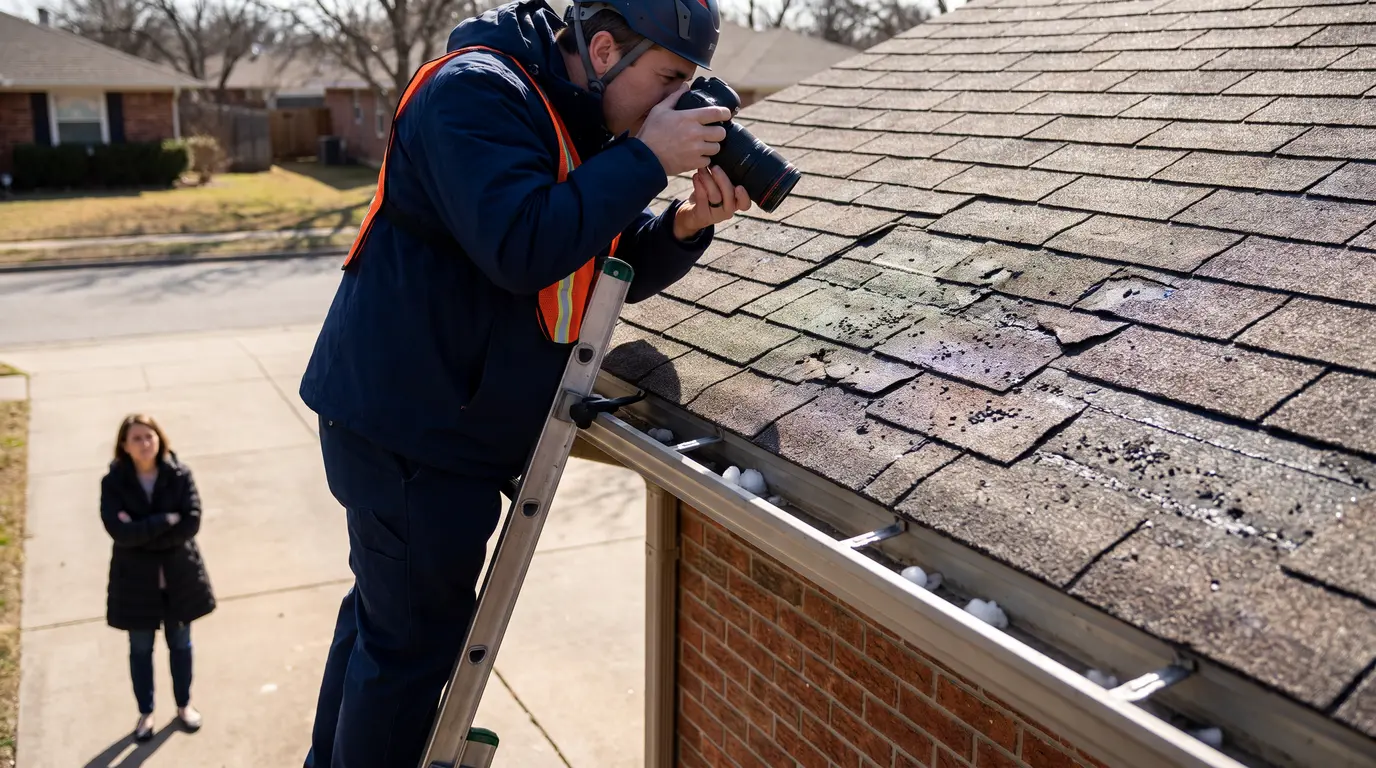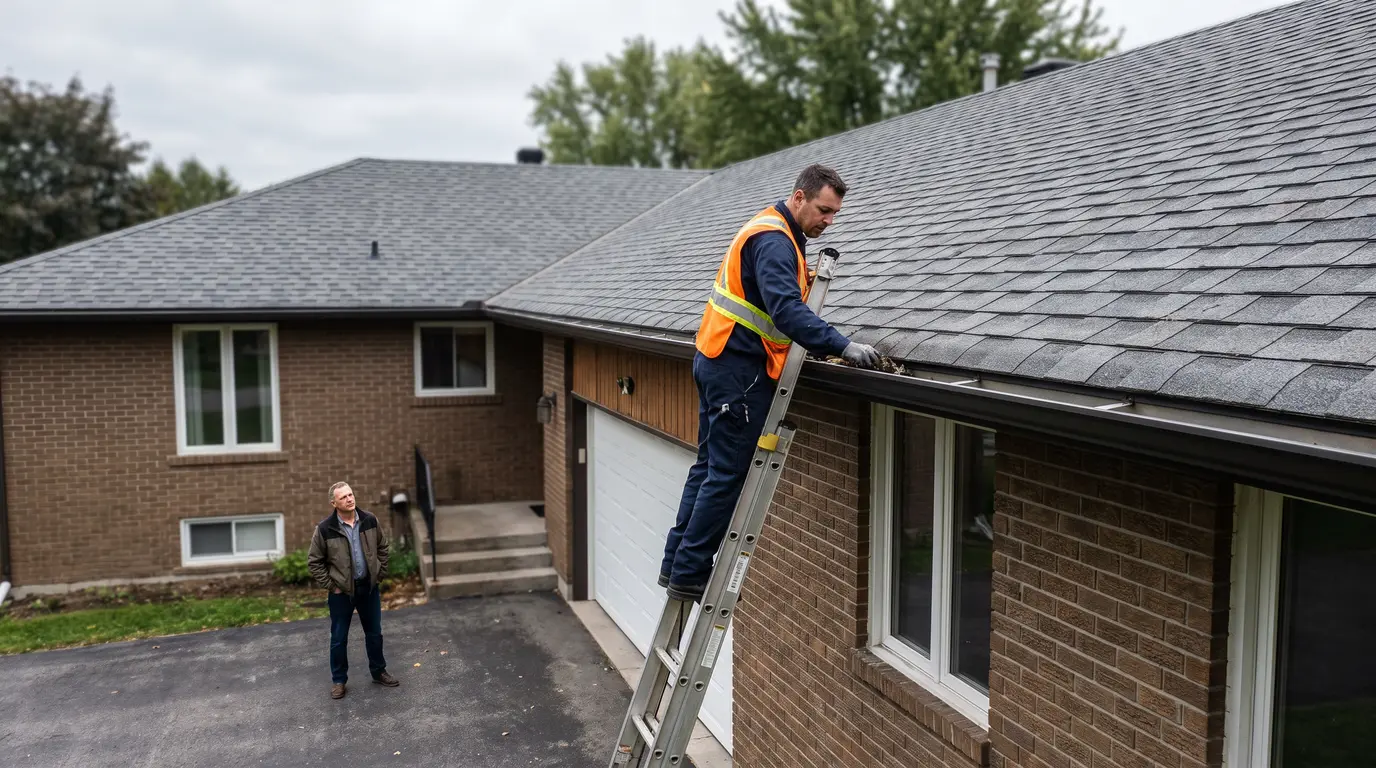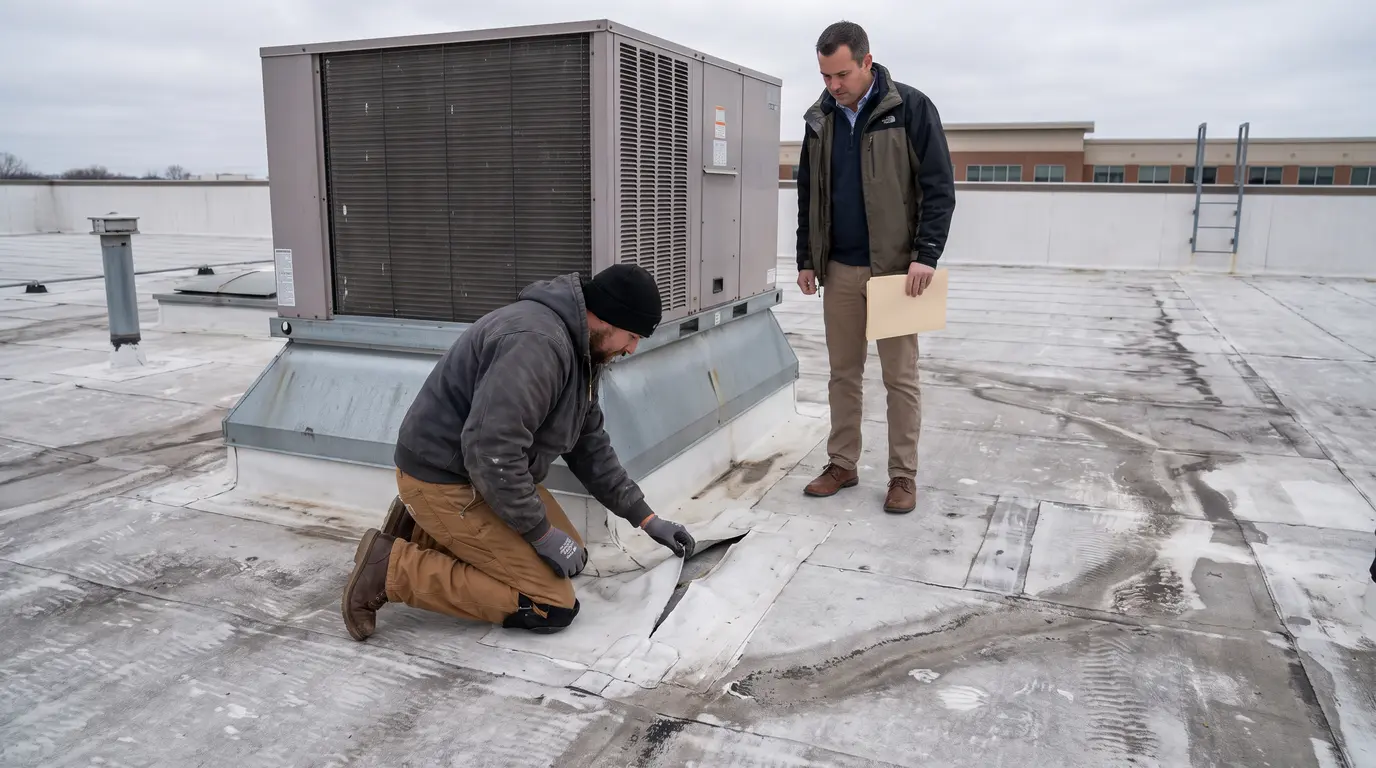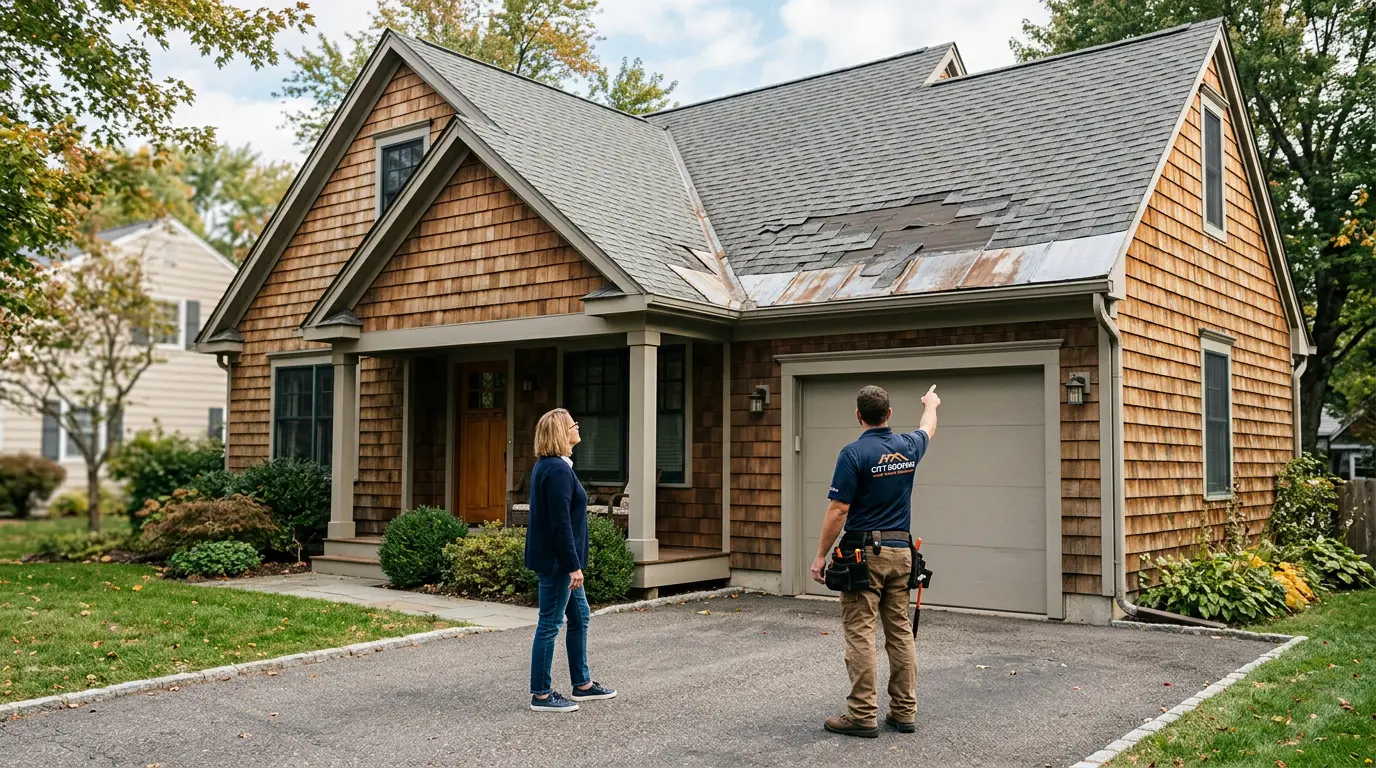
For a U.S. homeowner, a professional residential roof repair commonly costs about $379 to $1,755. Small repairs may cost less, while projects involving structural damage, extensive decking, or partial replacement can reach several thousand dollars. A 2026 estimate from This Old House places the average roof repair at $531, while Angi reports an average range of $395 to $1,967.
These figures are useful for early budgeting, not guaranteed quotes. The repair type, roofing material, roof design, accessibility, local labor market, and concealed damage can all change the final price. For a preliminary starting point, you can estimate your roofing project cost, then compare that result with a written contractor scope for your home.
Common Roof Repair Costs
The table below covers selected common residential repair categories. Some categories can overlap, especially when a leak leads to damaged flashing, underlayment, or decking.
| Repair type | 2026 estimate | What can change the price |
|---|---|---|
| Roof leak | $360 to $1,550 | Locating the source, access, materials, and concealed damage |
| Flashing repair | $200 to $500 | Complexity and location around chimneys, vents, valleys, or roof edges |
| Vent repair | $75 to $250 | The component involved, access, and surrounding damage |
| Ridge cap repair | $200 to $750 | The affected length, roofing material, roof pitch, and access |
| Hole patching | $100 to $1,000 | The size of the opening and damage to underlayment or decking |
| Sagging repair | $1,500 to $1,700 | Structural assessment, reinforcement, and the extent of underlying damage |
A small vent repair may be relatively straightforward, while a leak can require more investigation before anyone knows the full scope. A sagging roof belongs in a different category altogether because the work may involve structural assessment or reinforcement rather than a cosmetic fix.
What Affects Roof Repair Pricing?
Repair Type and Hidden Damage
The visible problem does not always show the complete repair. Water can travel beneath the roof covering before it appears inside the home. A contractor may need to locate the actual entry point, remove part of the roof covering, and check the underlayment or decking before confirming the final scope.
When reviewing an estimate, ask whether the price covers only the visible roof covering or includes a stated allowance or unit price for damaged decking discovered during the work. This helps explain why an invoice may be higher than an initial inspection estimate without treating every increase as unexpected.
Roofing Material
Roofing material can affect both the repair method and the price. Angi’s 2026 material comparison lists average repair costs of about $975 for asphalt shingles, $1,000 for tile, $1,700 for metal, and $1,800 for slate.
Those are material category averages, not prices for a specific repair. Tile, metal, slate, wood, and specialty roofing may require different repair methods and matching materials, so a material average should be treated as a planning reference rather than a quote.
Roof Design, Access, and Labor
Roof pitch, design, accessibility, local labor rates, and the amount of material or labor required can move the price in either direction. Older roofs may also be more difficult to repair because aging materials can be brittle and concealed damage may already be present.
This is why two estimates can differ even when they appear to describe the same problem. The useful comparison is not simply the total at the bottom. It is the scope behind that total.
When Is Repair Enough?
Repair is more likely to be practical when the damage is localized and the remaining roof is in reasonable condition. A limited issue with a vent, flashing section, ridge cap, or small area of roof covering may not require broader work.
Partial replacement or full replacement deserves consideration when damage is widespread, the roof is near the end of its service life, leaks keep returning, the roof is sagging, or the repair involves substantial deterioration beneath the roof covering. The right choice depends on the condition and extent of the damage, not just the first visible symptom.
If you are unsure whether visible damage may be more serious than it appears, you can tell whether roof damage may be serious. The resource provides general guidance, but it does not replace an inspection of a specific home.
When a contractor says a repair may expand, ask: “If the roof cannot be repaired as quoted, what specific condition would make partial replacement or full replacement more appropriate?” A clear answer can make the decision much easier to follow.
Does Homeowners Insurance Cover Roof Repair?
Insurance may cover roof damage caused by a covered event such as wind or hail, but coverage depends on the policy. Deductibles, coverage limits, actual cash value provisions, and exclusions can affect what the insurer pays. Some policies also exclude wind or hail, particularly in certain coastal areas.
Normal aging and maintenance related deterioration are not automatically covered. Before assuming a repair will be reimbursed, review your policy and contact the insurer about the cause of damage, required documentation, and claim steps. A contractor’s opinion about insurance does not determine coverage.
For a broader explanation of the questions that can arise after storm damage, learn how insurance may handle roof damage. You can also review consumer guidance from the National Association of Insurance Commissioners.
How to Compare Roof Repair Estimates
Getting more than one estimate can help you understand whether contractors are pricing the same work. The comparison is most useful when each estimate addresses the same location and materials, along with tear out, disposal, damaged wood, labor, cleanup, warranty terms, and responsibility for any required inspection or permit.
- Confirm the exact repair location and the materials proposed.
- Ask how concealed decking, underlayment, flashing, or framing damage will be priced if discovered.
- Check whether tear out, disposal, cleanup, and labor are included.
- Review the stated warranty and any conditions attached to it.
- Ask who is responsible for confirming any local inspection or permit requirements.
Local requirements should be confirmed with the contractor or building department rather than assumed from a national estimate. If the recommended work becomes broader, you can also compare roofing estimates by scope, while keeping in mind that replacement proposals may not apply identically to a small repair.
Frequently Asked Questions
What is the least expensive common roof repair?
Among the selected estimates in this guide, vent repair has the lowest listed range at $75 to $250. The actual price still depends on the component, access, and whether nearby materials are damaged.
Why does finding a roof leak sometimes cost more than replacing a few shingles?
A leak may not appear directly below its entry point. Locating the source can require more investigation, and opening the roof may reveal damage beneath the visible covering. That broader scope can cost more than replacing a small, clearly identified area.
When should a homeowner consider repair versus partial or full replacement?
Repair is more likely to make sense when damage is localized and the remaining roof is in reasonable condition. Widespread damage, recurring leaks, a roof near the end of its service life, sagging, or substantial underlying deterioration may justify discussing partial or full replacement.
Does homeowners insurance pay for roof repairs?
It may, when the damage results from a covered event such as wind or hail. Payment depends on the policy, deductible, exclusions, limits, and valuation terms. Normal aging is not automatically covered, so review the policy and contact the insurer before assuming reimbursement.
Should a homeowner get more than one roof repair estimate?
More than one estimate can help you compare scope and pricing, especially when concealed damage may be involved. Ask each contractor to describe the same repair area, materials, labor, cleanup, and possible additional work so the totals are easier to compare.
Final Takeaway
A professional residential roof repair commonly falls between about $379 and $1,755 in the United States, with a 2026 average estimate of $531 from This Old House. Small repairs may cost less, while concealed damage, structural work, or partial replacement can raise the price substantially.
The most useful next step is to obtain a written scope that separates the visible repair from possible underlying work. Use a calculator for early planning, then compare local estimates by scope so you can make a clear, informed decision for your home.