If you’re researching roofing options for a flat or low-slope roof, chances are you’ve come across TPO and PVC. These two single-ply roofing systems have grown in popularity over the years, and for good reason. They’re both energy-efficient, water-resistant, and designed to last.
But while they may seem similar at first, there are key differences between them that can impact performance, durability, and cost over time.
In this guide, we’ll break down what sets TPO and PVC apart, what they have in common, and how to decide which one is right for your building. We’ll also include helpful links to our dedicated TPO roofing and PVC roofing pages if you want to explore each option in more detail.
What Are TPO and PVC Roofing Systems?
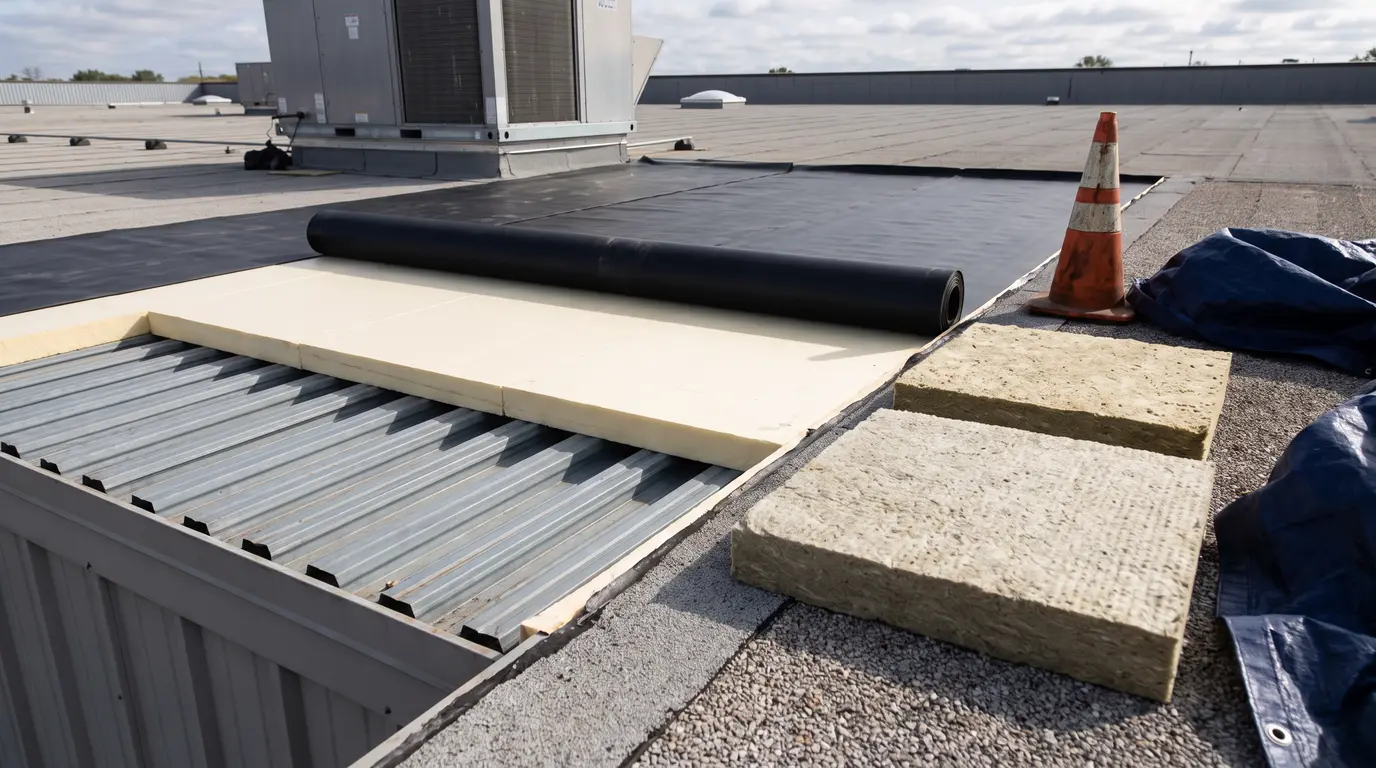
Both TPO and PVC are single-ply membrane roofing systems designed to protect flat and low-slope roofs from the elements. These membranes are installed in large rolls, heat-welded at the seams, and form a continuous waterproof layer over the roof.
TPO, or thermoplastic polyolefin, is a flexible roofing membrane made from a blend of rubber and plastic. It’s known for its reflectivity and affordability.
PVC, or polyvinyl chloride, is a more rigid material that has been used in roofing for decades. It offers excellent chemical resistance, durability, and long-term performance.
Comparing Durability and Performance
TPO Durability
TPO roofing is flexible and resistant to punctures, UV rays, and dirt buildup. It performs well in a variety of climates, especially in hot and sunny regions. Earlier formulations of TPO had some issues with seam integrity, so choosing a reputable brand and an experienced installer is important.
PVC Durability
PVC has a longer track record and is generally considered more consistent across manufacturers. It holds up very well against strong winds, fire, and impact. Its seams are easier to weld, which helps create a more secure waterproof seal.
Bottom line:
PVC tends to have an advantage when it comes to long-term strength and resistance to foot traffic, chemicals, and extreme weather.
Chemical and Fire Resistance
One of PVC’s biggest strengths is its resistance to chemicals. It can handle exposure to grease, oil, and industrial byproducts, which makes it ideal for restaurants and commercial facilities.
TPO also resists UV rays and ozone but isn’t quite as reliable against harsh chemicals. If your roof will be exposed to more than just the elements, PVC may be the smarter choice.
PVC is also naturally fire-resistant and can self-extinguish in the event of a flame. TPO offers some fire resistance but not to the same degree.
Installation Methods
Both systems are installed using similar methods such as mechanical fastening, full adhesion, or ballasting.
The biggest difference lies in how the seams are welded. PVC generally welds more easily and consistently. TPO welds well too but the process can be more sensitive to heat and requires a careful hand.
This makes choosing a skilled installer especially important for TPO.
Energy Efficiency
TPO and PVC are both available in white or other light colors that reflect sunlight and help reduce heat buildup. This can lead to lower indoor temperatures and energy savings, particularly during hot months.
TPO is often marketed as highly energy-efficient because of its strong reflectivity. PVC also performs well in this category, and both types can meet Energy Star standards.
To get the full benefit of their reflectivity, regular cleaning is key. Dirt buildup can reduce their ability to reflect sunlight.
Longevity and Maintenance
PVC roofs typically last between 20 and 30 years with proper care. Their chemical resistance, strong seams, and overall thickness give them an edge in terms of durability and longevity.
TPO roofs usually last around 15 to 25 years. They perform well in most climates, but their lifespan depends heavily on the quality of the product and the quality of the installation.
Both systems benefit from annual inspections and routine maintenance to stay in top shape.
Environmental Impact
TPO is often seen as the greener option since it is chlorine-free and more easily recyclable. Some manufacturers also offer TPO membranes with high recycled content.
PVC has faced some environmental scrutiny due to its chlorine content. However, many modern PVC membranes are designed to be recyclable and are produced in facilities that follow sustainable practices.
Cost Comparison
TPO is generally more budget-friendly. It has a lower cost per square foot and is often chosen for projects with tight budgets.
PVC comes with a higher upfront cost. However, its long lifespan, strength, and lower maintenance needs can make it a more cost-effective option in the long run, especially for buildings that require chemical resistance or are exposed to harsher conditions.
Which Roofing System Is Right for You?
Here’s a quick guide to help you decide.
Choose TPO if:
- You want a budget-friendly roofing option with good performance
- Your roof will not be exposed to grease, oils, or chemicals
- You live in a hot climate and want strong UV reflectivity
- You are looking for an eco-conscious material
- Your project requires a more affordable upfront investment
Choose PVC if:
- Your roof is exposed to chemicals, grease, or frequent exhaust
- You expect regular foot traffic or rooftop equipment
- You need a roof with strong fire resistance
- You want a longer-lasting solution with consistent performance
- You are willing to invest more upfront for better durability
Final Thoughts
Both TPO and PVC roofing systems offer excellent protection for flat and low-sloped roofs. They are efficient, relatively low maintenance, and designed to meet the needs of both commercial and residential buildings.
TPO is a great option for those looking for a cost-effective and energy-efficient system. PVC, on the other hand, is ideal for demanding environments that require long-term performance, chemical resistance, and durability.
Whichever you choose, the key to a successful roof is quality installation. Even the best material can fail if not installed properly.