A commercial roof can influence property value by changing the building’s physical condition, future capital needs, operating risk, and the terms of a sale. An aging or poorly documented roof may lead a buyer, lender, or appraiser to account for deferred maintenance, a shorter remaining service life, or an anticipated repair or replacement cost.
A well maintained roof with clear inspection, maintenance, warranty, and repair records can make the building’s condition easier to evaluate. That does not create an automatic increase in value, and a roof replacement does not necessarily add its full cost to the property’s price. The effect depends on the roof’s actual condition, the estimated work, the building’s income and operating performance, comparable properties, local market conditions, and the valuation method being used.
How roof condition enters commercial property value
Commercial property valuation commonly considers income producing ability, operating efficiency, physical condition, and market conditions. A roof can affect more than one of these areas. Leaks may create repair expenses, disrupt operations, or affect the building’s appeal to tenants. A roof nearing the end of its useful life may also represent a significant future capital need, even when it is not currently leaking.
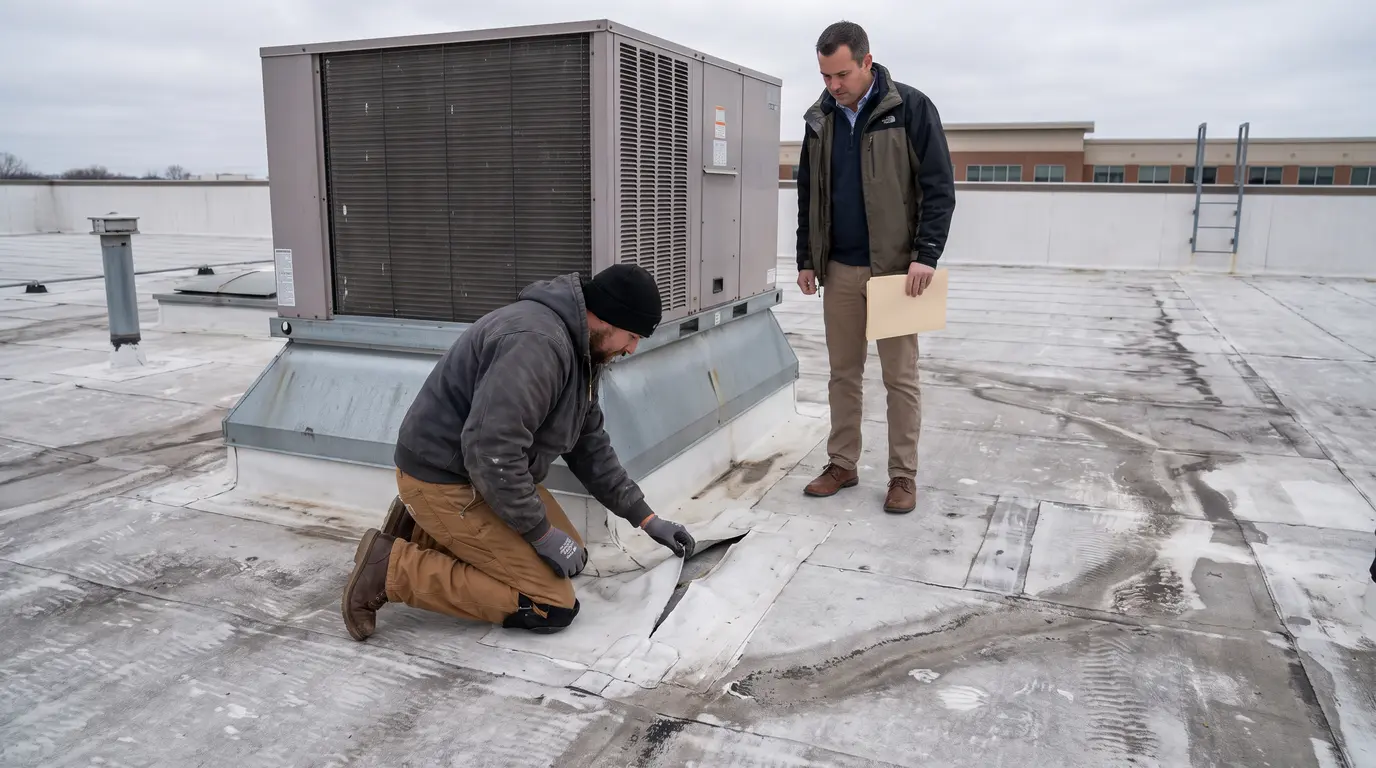
In an appraisal, roof deterioration and other deferred maintenance may be treated as a condition issue. An appraiser may consider a credible estimate of the cost to cure the problem, along with how the building compares with similar properties. That adjustment is not automatically equal to a contractor’s replacement estimate. The property’s condition, the scope of the work, the market, and the circumstances of the valuation all matter.
For more background on the broader factors used in commercial valuation, see Commercial Real Estate Valuation Approaches. The discussion is not a roof specific formula, but it helps put roof condition in the larger valuation picture.
How different roof conditions may affect a transaction
| Roof situation | Likely valuation or transaction significance | Documentation that helps |
|---|---|---|
| Well maintained roof with current records | Lower uncertainty about condition and future capital planning | Current inspections, maintenance history, warranty documents, and repair records |
| Aging roof with meaningful remaining service life | May require a near term capital reserve or buyer review, but does not automatically require replacement before sale | Current condition assessment and lifecycle estimate |
| Active leaks or documented deferred repairs | May support a repair obligation, buyer credit, reserve, or valuation adjustment | Defect documentation and a credible cost to cure estimate |
| Roof with unclear history or missing records | Increases uncertainty about condition, warranty status, remaining life, and future capital needs | Independent inspection and available ownership or contractor records |
These are qualitative transaction implications, not automatic appraisal adjustments. Actual treatment depends on the property, market, valuation method, financing, lease obligations, inspection findings, and negotiations between the parties.
Roof age is only a starting point
Two commercial roofs of the same age may have very different remaining service lives. System type, installation quality, climate exposure, drainage, repairs, maintenance, and observed condition can all affect how much useful service remains.
Remaining service life is also different from a warranty period. A warranty describes particular contractual coverage and requirements. It does not, by itself, establish how long the roof will continue to perform or what condition the roof is in today.
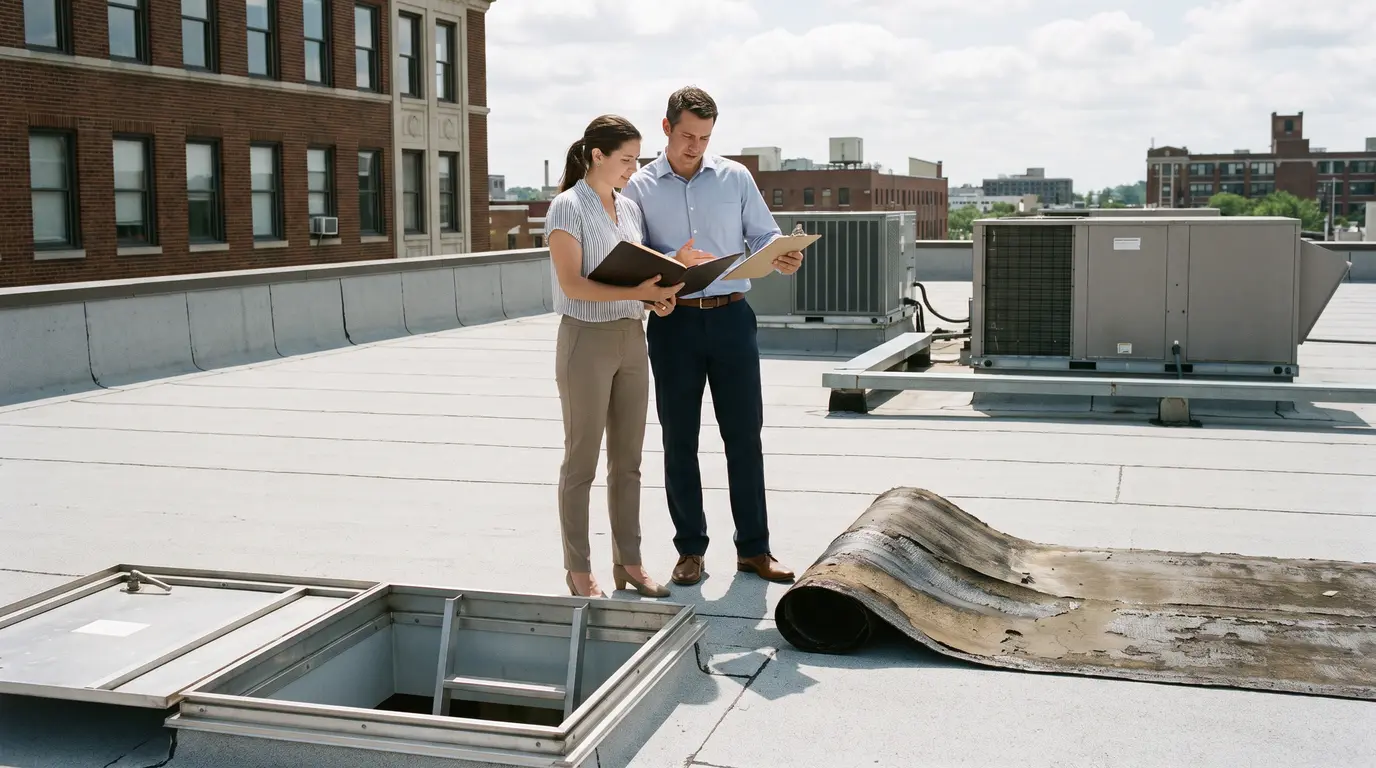
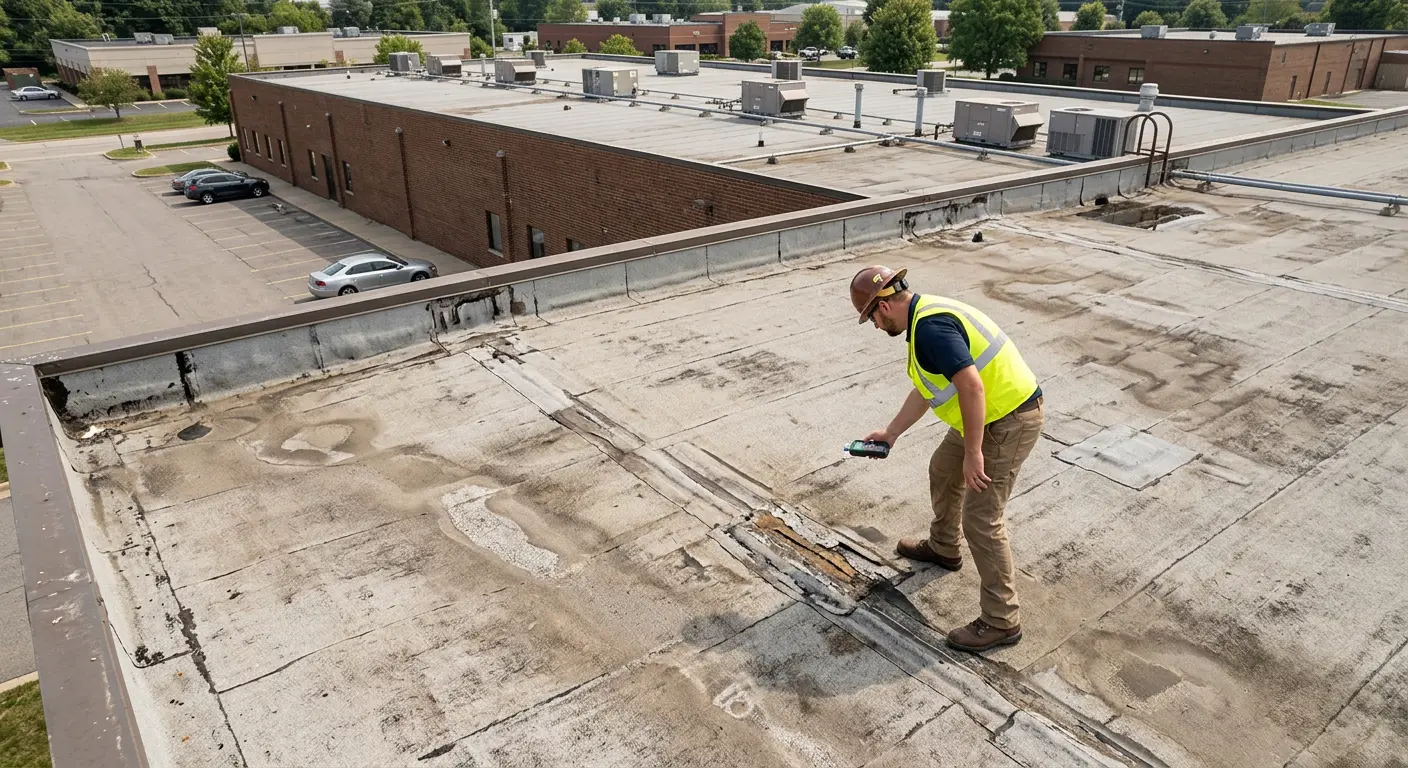
A current commercial roof condition assessment can help separate an aging roof that is still serviceable from one with immediate deficiencies or a substantial replacement need. A report may document accessible conditions, observed deficiencies, estimated remaining useful life, and projected repair or replacement needs. Its scope and limitations matter, because a baseline assessment is not automatically a destructive investigation, engineering analysis, or guarantee of future performance.
Records can reduce uncertainty
Roof records give buyers, lenders, appraisers, and owners a clearer basis for understanding how the roof has been managed. They also support capital planning before a transaction becomes urgent. Useful records may include:
- Installation information and roof system details
- Warranty documents and related requirements
- Inspection and condition reports
- Leak logs, repair invoices, and maintenance agreements
- Photographs and prior moisture investigation records
Missing records do not prove that a roof is in poor condition. They do make the condition, warranty status, maintenance history, and remaining service life harder to verify. Owners preparing for a sale or refinancing can start by gathering what is available and identifying which questions still need a current inspection or professional review.
If you are reviewing a report, this guide explains how to read a roof inspection report, including the importance of understanding its scope, findings, and limitations. For a general overview of the components a buyer side inspection may review, you can also see what a roof inspection should cover. That resource is residential focused, so it should not be treated as a complete commercial property condition assessment.
Anticipated replacement costs and cost to cure
A roof issue can be minor, recurring, or widespread. A small repair, repeated leaks, deteriorated membrane, and near term replacement need should not be treated as equivalent conditions. The more clearly the scope is defined, the easier it is to discuss the likely financial effect with an appraiser, lender, buyer, or advisor.
Use a project specific estimate rather than a generic online figure when discussing a possible adjustment. Roof area, access, tear off requirements, insulation or decking conditions, flashing, penetrations, code related work, and local labor conditions can materially change the cost.
If you are budgeting at an early stage, the Roof Cost Calculator can provide a preliminary estimate for commercial or residential planning. It should not replace project specific verification, particularly for specialized roof assemblies or a transaction where the estimate may affect price or closing terms.
When comparing proposals, focus on whether the scopes describe comparable work. The guide to compare commercial roof replacement estimates can help organize that review. A commercial scope should still be evaluated for the specific building and roof system.
Should you replace the roof before selling?
Not necessarily. Replacing the roof may improve marketability and reduce uncertainty, but the financial result depends on the roof’s condition before replacement, the quality and documentation of the completed work, the property’s income, its market position, and the expected response from buyers and lenders.
In some cases, a documented repair plan and credible replacement estimate may be more practical than completing the work before closing. A buyer may instead request a price adjustment, credit, escrow, reserve, repair obligation, or another deal term. The appropriate response depends on the inspection findings, financing terms, lease obligations, and negotiations.
Lease language also matters. Depending on the agreement and applicable law, roof work may be an owner expense, a recoverable operating expense, or an item whose allocation is negotiated. Review the relevant agreements rather than assuming one treatment applies to every commercial property.
Questions to clarify before closing
- If the roof is not replaced before closing, how will the documented repair or replacement need affect the price, credits, escrow, reserves, or closing conditions?
- What does the current report actually support about remaining service life, and what limitations should a buyer or lender understand?
Practical steps for commercial building owners
A manageable preparation process can make the roof easier to discuss and help separate known costs from uncertainty:
- Gather installation details, warranties, inspection reports, maintenance records, repair invoices, photographs, and leak information.
- Review the roof’s accessible condition and identify whether the issue is an immediate deficiency, a repair need, or a predictable capital planning item.
- Obtain a current commercial roof condition assessment if the roof is a material asset risk or a sale is approaching.
- Ask the assessor to identify inspected areas, limitations, observed deficiencies, estimated remaining service life, and anticipated repair or replacement needs.
- Use a credible, project specific estimate when discussing potential transaction adjustments.
- Review leases and other agreements so responsibility for roof work is understood before negotiations begin.
Roof Mechanics is a roofing and solar directory that can help owners find local contractors for the next stage of planning. A directory listing is not a substitute for reviewing the contractor’s proposed scope, records, and project specific information.
Frequently asked questions
Does a new commercial roof automatically increase property value?
No. A new roof may improve marketability and reduce uncertainty, but it does not automatically increase value by the full replacement cost. The result depends on the building’s income, market position, prior roof condition, completed work, documentation, and transaction circumstances.
Can a roof inspection affect a commercial property sale?
Yes. A report may clarify current repairs, projected lifecycle expenses, and replacement timing. A buyer may use that information when evaluating price, credits, repair obligations, reserves, or other deal terms. The response depends on the findings, financing, leases, buyer, lender, and market.
What roof records should a commercial building owner keep?
Keep installation details, roof system information, warranties, inspection reports, maintenance agreements, leak logs, repair invoices, photographs, and prior moisture investigation records. These documents help establish how the roof has been managed, although records alone do not prove that the roof is in good condition.
Is remaining useful life the same as a roof warranty period?
No. Remaining useful life is an assessment of expected service based on the roof’s condition and other relevant factors. A warranty is a contractual arrangement with its own terms and requirements. Neither one alone provides a complete picture of the roof’s present condition.
Final takeaway
Roof condition can affect commercial property value by changing the building’s physical condition, future capital needs, operating risk, and sale negotiations. The most useful next step is to assemble the roof records and obtain a current, clearly scoped condition assessment when the roof is a material concern. With a documented condition, realistic cost information, and a clear understanding of lease responsibilities, owners can approach valuation and negotiations with fewer unknowns.