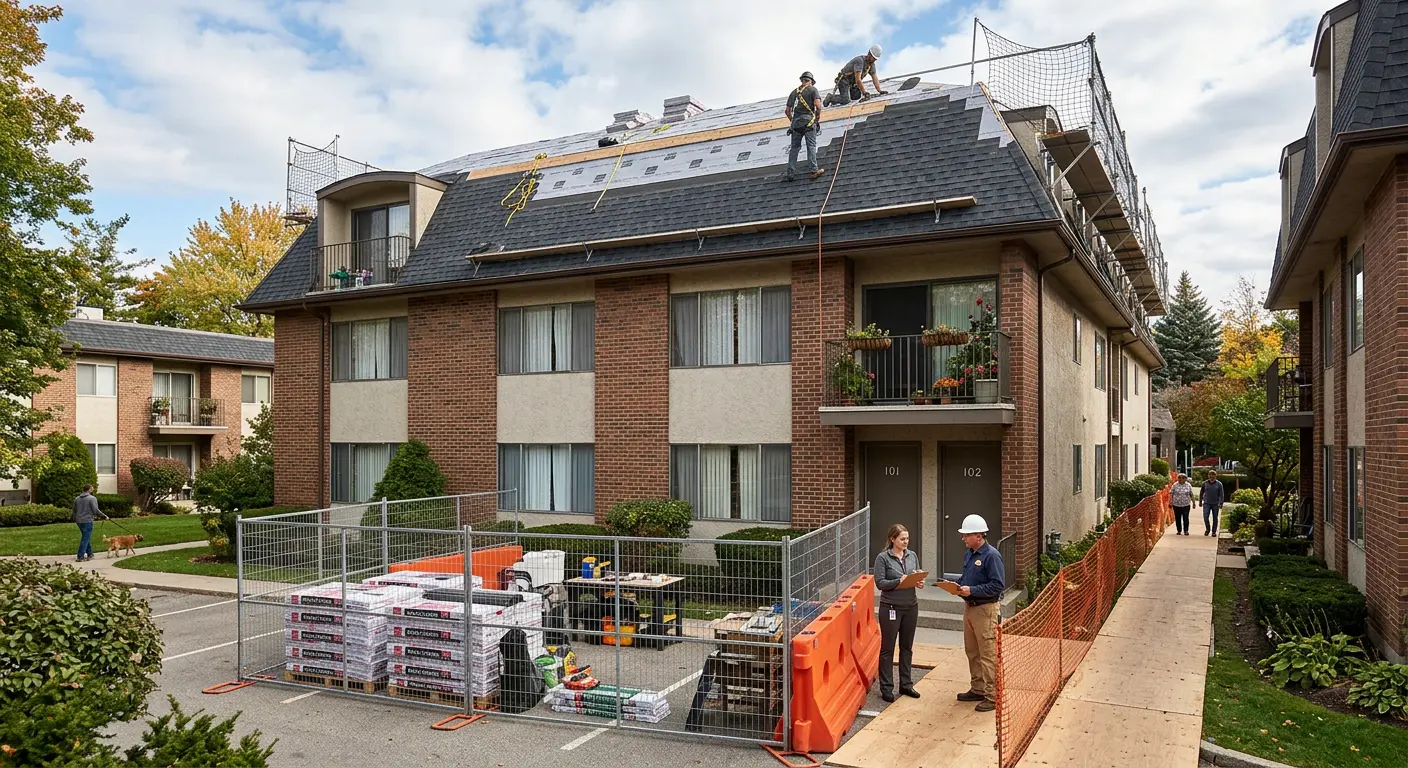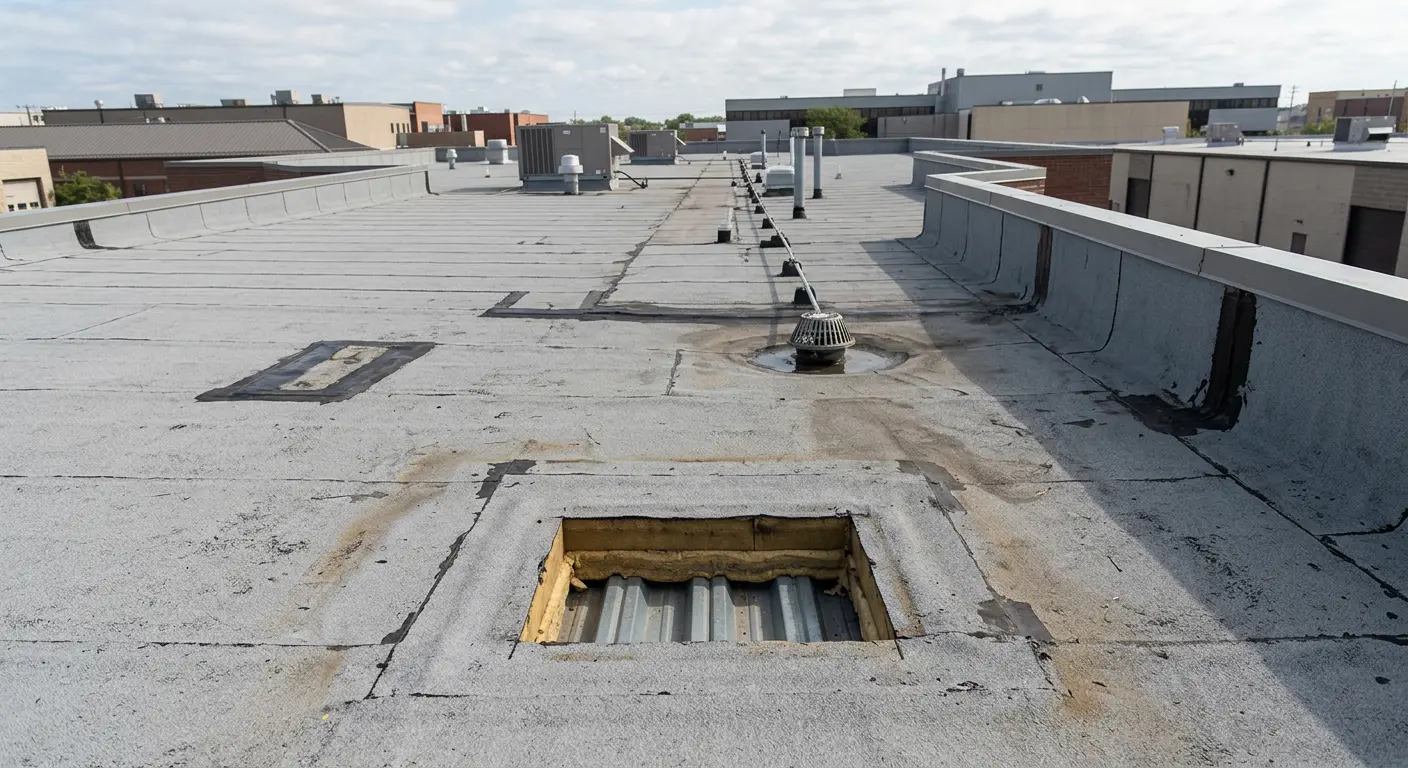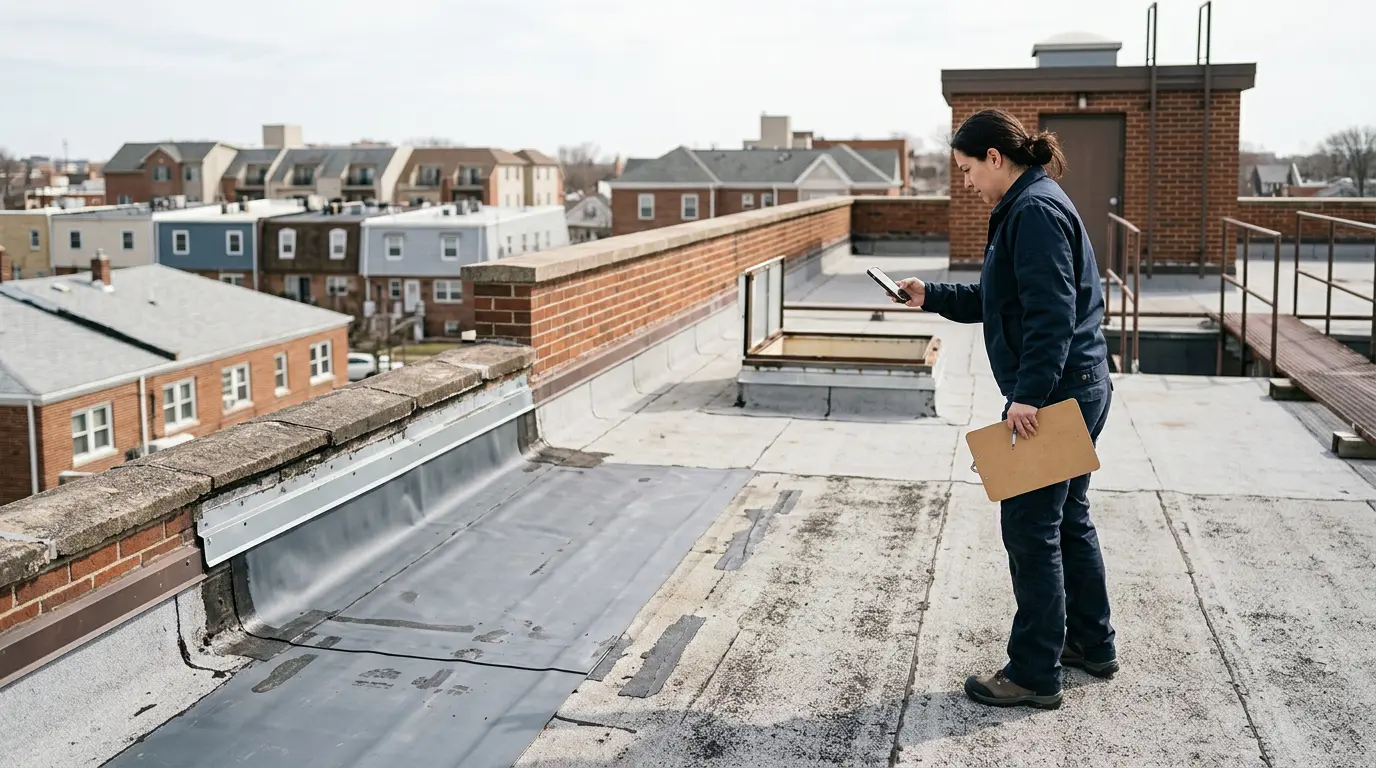
Tracking roof repairs across multifamily properties works best when every issue is connected to a specific property, building, roof area, work order, vendor, cost, status, and completion record. A centralized system can be property management software, a computerized maintenance management system, or a consistently structured portfolio log. The goal is the same: give managers one dependable place to see open problems, recurring leaks, overdue work, repair history, and possible capital needs.
The record should continue after the vendor leaves. Inspection notes, photographs, proposals, invoices, change orders, warranties, and post repair verification belong with the same issue or roof asset record. That history supports day to day maintenance, vendor accountability, documentation after damaging events, and better decisions about future repairs.
Build one roof repair record for each property
Start with a consistent record for each property and building. Whenever possible, identify the roof section, elevation, penetration, or other specific area instead of entering only “roof leak.” A location based record makes it easier to connect a new report with earlier inspections, warranty calls, temporary repairs, and recurring trouble spots.
HUD maintenance materials identify historical roofing records and inspection forms as useful management tools. HUD guidance also describes work orders as a way to record inspections, routine repairs, preventive maintenance, priorities, assignments, and completed work. These materials are useful references, but they are not universal requirements for every privately managed multifamily property. Adapt the approach to your ownership structure, software, contracts, and applicable requirements. You can review the HUD roof and waterproofing maintenance guidebooks and its maintenance management guidance for additional context.
At a minimum, each roof issue record should make these details easy to find:
- Property, building, and roof area
- Date reported and source of the report
- Observed symptoms and suspected source, when determined
- Affected units, common areas, equipment, or other building operations
- Urgency, temporary measures, and assigned vendor
- Estimate, approval status, scheduled date, and completion date
- Work performed, materials used, actual cost, and unresolved items
- Photographs, inspection notes, proposals, invoices, warranties, and follow up results
Use clear statuses
A defined status sequence keeps a portfolio view understandable, especially when several buildings have active issues at once. A practical sequence is reported, inspected, approved, scheduled, in progress, awaiting verification, and closed.
Keep emergency temporary work distinct from permanent repair status. A leak may be stopped temporarily while the underlying condition still needs inspection, approval, or a larger repair. Closing the work order only because an invoice arrived can hide that distinction.
Prioritize issues by consequence and time sensitivity
Roof requests do not always belong in the order they arrive. Your internal priority framework should consider the likely consequences of delay and how quickly conditions may change. Active water intrusion affecting occupied units, electrical equipment, life safety systems, or structural components should be escalated for professional assessment.
The exact priority levels are an operating framework for your organization, not a universal legal standard. Whatever labels you use, apply them consistently and record why an issue received that priority. A short explanation helps the next manager understand the decision without searching through email threads.
Resident access and property operations also belong in the work order. Note whether the repair affects an occupied unit, parking, walkways, amenities, or a common area. This gives staff and vendors the information they need to coordinate access and communication before work begins.
Use a portfolio wide workflow
The following workflow gives each repair a clear handoff. It can be implemented in dedicated software or in a consistently structured portfolio log.
| Stage | What the manager records | Useful attachments | Decision or handoff |
|---|---|---|---|
| Reported | Property, building, roof area if known, date, report source, symptoms, and affected unit or common area | Resident or staff description and initial photographs | Create and classify the work order |
| Inspected | Inspection date, observed condition, likely source if determined, urgency, temporary protection, and recommended next step | Inspection form, notes, and photographs | Approve investigation, temporary repair, or permanent repair |
| Vendor assigned | Vendor, scope, estimate, schedule, access needs, approval status, and warranty considerations | Proposal, contract, and communications | Coordinate work and resident or property operations |
| Work completed | Actual work, materials, labor, cost, change orders, completion date, and unresolved items | Invoice, completion photographs, warranty documents, and inspection signoff | Verify and close, or create follow up work |
| Reviewed for trends | Repeat locations, repair frequency, total spend, warranty activity, and capital planning recommendation | Historical roof record and inspection reports | Plan preventive maintenance, further assessment, or replacement planning |
This is a recommended management workflow, not a universal regulatory form. Local law, insurance policies, loan requirements, program requirements, and vendor warranties may call for additional records or specific retention practices.
Coordinate vendors and verify the work
A well documented vendor assignment gives the contractor a clear scope and gives the property team a clear handoff. Record the assigned vendor, proposal, approval, schedule, access requirements, warranty considerations, and communications in the same work order.
Ask for the exact repair area, work performed, materials used, photographs, unresolved conditions, and recommended follow up. Those details are more useful than an invoice that simply says “roof repair.” If you are building or refreshing a vendor list, Roof Mechanics is a roofing and solar directory that can help you with finding reliable roofers for multiple properties. The directory can support your search, but the work order should still document your own scope, approvals, and coordination.
Before closing the record, verify that the reported condition was addressed or that the remaining work has a new follow up item. Compare completion photographs with the original report when possible. If a proposal, invoice, or vendor note uses unfamiliar terminology, reviewing how to read a roof inspection report can help you organize the information before approving the next step.
Keep temporary and permanent work separate
A temporary leak stop should remain visible as temporary work. Record what was done, when it was done, and what permanent action is still pending. This prevents an emergency response from disappearing into a closed file and makes later review more accurate.
Post repair verification can lead to one of three outcomes: close the issue, create follow up work, or schedule a broader assessment. The correct choice depends on the observed condition and the documented scope, not simply on whether the vendor has submitted an invoice.
Turn repair history into maintenance and capital planning
Repair records become more valuable when they are reviewed across the portfolio instead of filed away one work order at a time. Look for repeat locations, repair frequency, total spending, warranty activity, and unresolved conditions. A pattern of repeated temporary repairs may justify a broader roof assessment, but the history alone does not prove that replacement is required.
Connect recurring leaks and repairs with inspection reports, proposals, invoices, warranty calls, and capital planning notes. This creates a fuller picture of the roof’s history and helps distinguish a single isolated issue from a roof area that deserves closer review.
When a repair history points toward a larger project, compare proposals on an equivalent written scope. The guide on how to compare roofing estimates can help organize that review. For early budgeting conversations, the roof cost calculator offers preliminary estimates for residential and commercial roofing projects. It is not a quote, a guarantee, or specialized multifamily pricing.
If the work may affect an occupied multifamily property, planning extends beyond the roof surface. Review planning roof replacement for multifamily buildings for considerations involving residents, staff, vendors, access, communication, and phasing. That resource addresses project planning rather than repair tracking software.
Ask three review questions
- Could a new manager understand this property’s roof history without searching through emails, paper files, and separate vendor portals?
- Does the record distinguish a temporary leak stop from a completed permanent repair?
- Which roof areas generate repeat work orders, and are those patterns reflected in the next inspection or capital budget?
Protect the record with photos and supporting documents
Photographs and supporting records help establish the condition, timing, and extent of a roof problem. Save before and after photographs with the issue record, along with inspection reports, maintenance records, work orders, emergency repair invoices, proposals, and completion documentation.
This is especially useful after storms or other potentially insurable events. Documentation requirements vary by policy, program, and jurisdiction, so complete records do not guarantee claim approval or reimbursement. They do give the property team a clearer account of what was observed, when it was addressed, and what work was performed.
Use consistent file names or attachment labels that identify the property, building, roof area, date, and work order. The exact naming convention is up to your organization. Consistency is what makes the files useful later.
Frequently asked questions
What information should every roof repair work order include?
Include the property, building, roof area, date reported, source, symptoms, affected unit or common area, urgency, suspected source if known, temporary measures, assigned vendor, scope, approval, schedule, completion details, cost, unresolved items, and follow up result. Attach photographs, inspection notes, proposals, invoices, warranties, and verification records.
How should temporary roof repairs be distinguished from permanent repairs?
Use separate status or work description fields to identify temporary protection, what it addressed, and what permanent work remains. Do not close the overall issue until the permanent scope is verified or a clearly documented follow up work order is created.
How can repair records reveal recurring roof problems?
Review repeat locations, repair frequency, total spend, warranty activity, and unresolved conditions across buildings. Link related work orders to the same roof area or asset so repeated calls are visible during inspections and capital planning.
What photographs and documents should be saved after a roof repair?
Save before and after photographs, inspection reports, maintenance records, work orders, proposals, emergency repair invoices, completion invoices, warranty documents, and any inspection signoff or follow up notes. After a storm or other potentially insurable event, preserve records that show the condition and timing of the damage and response.
When should repeated repairs trigger a broader roof assessment?
Repeated repairs in one roof area, frequent temporary work, unresolved conditions, or a pattern of rising repair activity can justify a broader assessment. The repair history is a useful reason to investigate further, but it does not by itself establish that replacement is necessary.
Make the next repair easier to understand
The most reliable portfolio wide approach is to connect every roof issue to its property, building, roof area, work order, vendor, cost, status, attachments, and completion record. Start by standardizing those fields and statuses, then review the history for repeat locations and future planning needs.
A clear record does not eliminate the need for inspection or professional assessment. It does give your team a shared starting point, a better vendor handoff, and a practical history for deciding what should happen next.