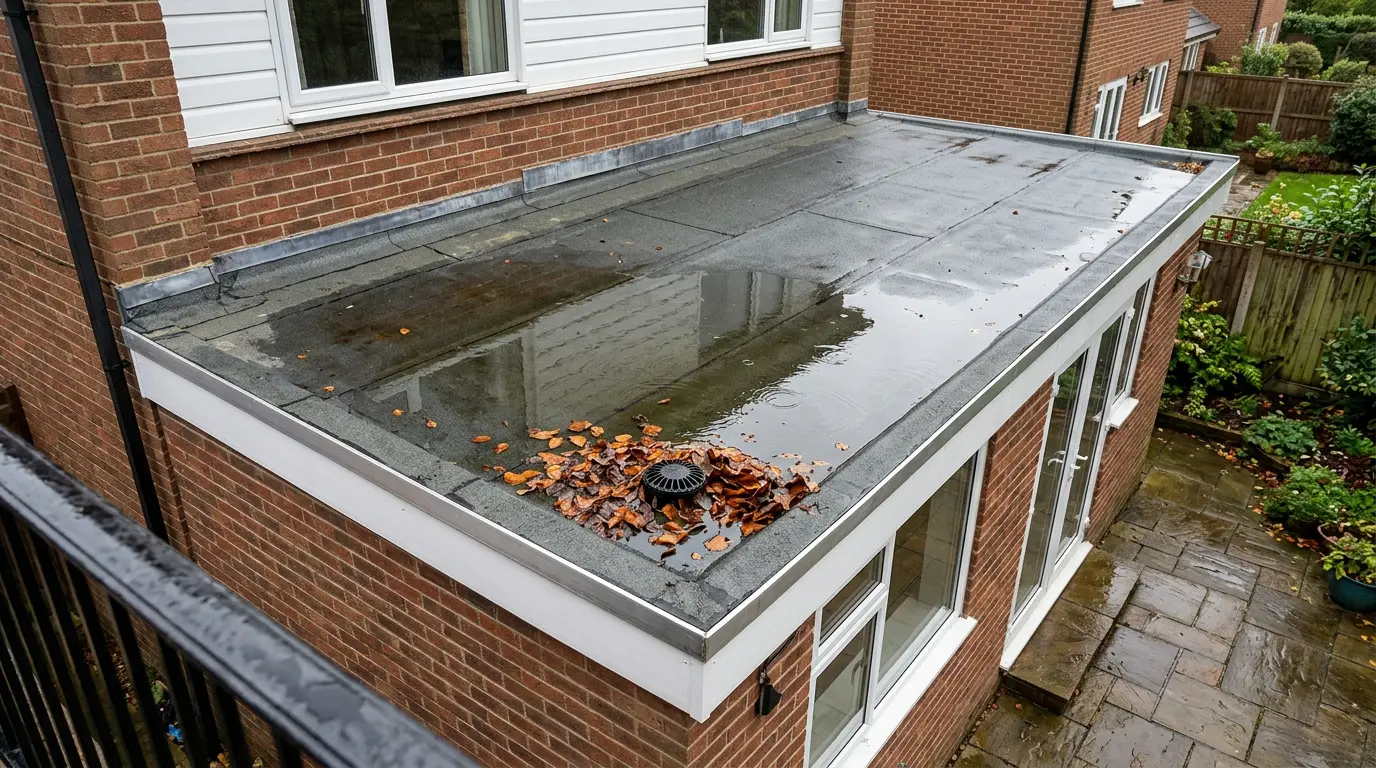
A little moisture after a storm is not always a reason to worry. But if water repeatedly sits on your residential roof, especially on a sloped shingle roof, the drainage path deserves attention. The water may be trapped by debris, a blocked gutter or downspout, a low spot, or a roof area that does not direct runoff effectively.
The first step is to determine where the water is actually sitting. It may be on the roof covering, inside a gutter, behind a blockage, or at a roof to wall or roof section intersection. Each condition points to a different next step.
Common reasons water remains on a roof
Roof water is meant to follow a planned path toward a gutter, downspout, scupper, or drain. Pooling happens when something interrupts that path. The cause may be simple maintenance, such as leaves blocking an outlet, or it may involve the roof design, surface, deck, insulation, framing, or a connection between roof areas.
| Possible cause | What you may notice | What needs to be checked |
|---|---|---|
| Clogged gutter, downspout, valley, or drain | Overflow, debris, or water backing up near an outlet | Clear visible drainage components safely from the ground where possible. Arrange professional evaluation if the blockage or defect is inaccessible. |
| Low spot or inadequate slope | Water repeatedly collects in the same location after rain | Have a roofer determine whether the issue involves roof design, installation, insulation, decking, or framing deflection. |
| Roof section or roof to wall transition | Water gathers where roof planes meet or near a wall, addition, porch, or garage | Inspect flashing, drainage paths, and the connection between roof areas. |
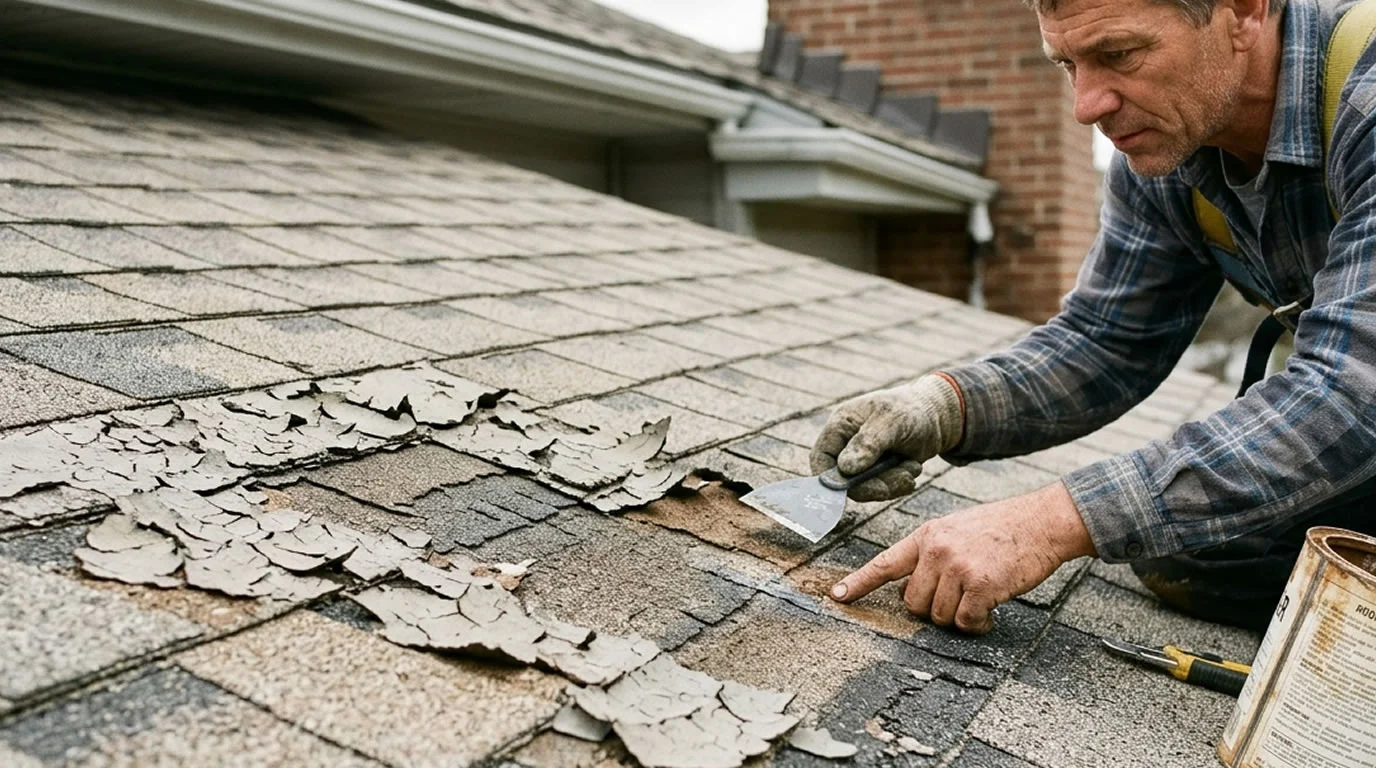
| Damaged or deteriorated roof covering | Ponding occurs with cracking, blisters, open seams, worn materials, or interior stains | Determine whether localized repair, drainage correction, or broader roof work is appropriate. |
| Heavy or concentrated runoff | Pooling occurs below a valley, roof penetration, or another area receiving runoff from multiple roof planes | Check whether the drainage outlet is adequate and unobstructed. |
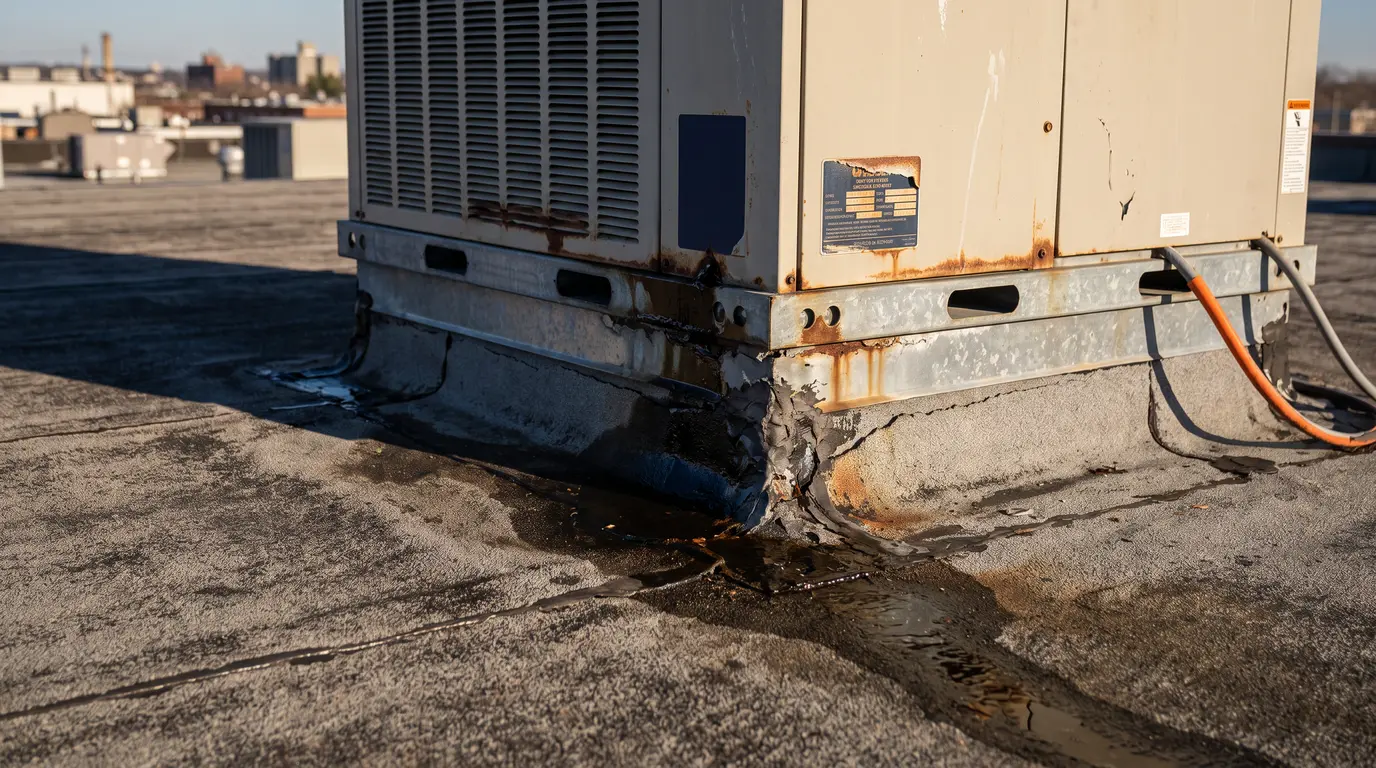
A brief wet area that drains or dries promptly is different from ponding that remains for approximately 48 hours or longer. That 48 hour benchmark is mainly used in guidance for low slope roof systems, not as a universal rule for every residential roof. The Asphalt Roofing Manufacturers Association guidance on ponding water explains the connection between positive drainage, roof slope, and prolonged standing water.
How roof slope and low spots affect drainage
Some residential areas have little slope by design, including porch roofs, additions, garages, and transitions between roof sections. These areas depend on correctly designed and maintained drainage. A low spot may also develop when the roof deck, framing, insulation, or another supporting component deflects.
A visible depression does not prove that the structure is damaged. However, recurring water in the same depression should be evaluated before adding material, changing drainage, or repairing the roof covering. The evaluation should identify whether the issue comes from the original design, installation, a later repair, or deflection in the roof assembly.
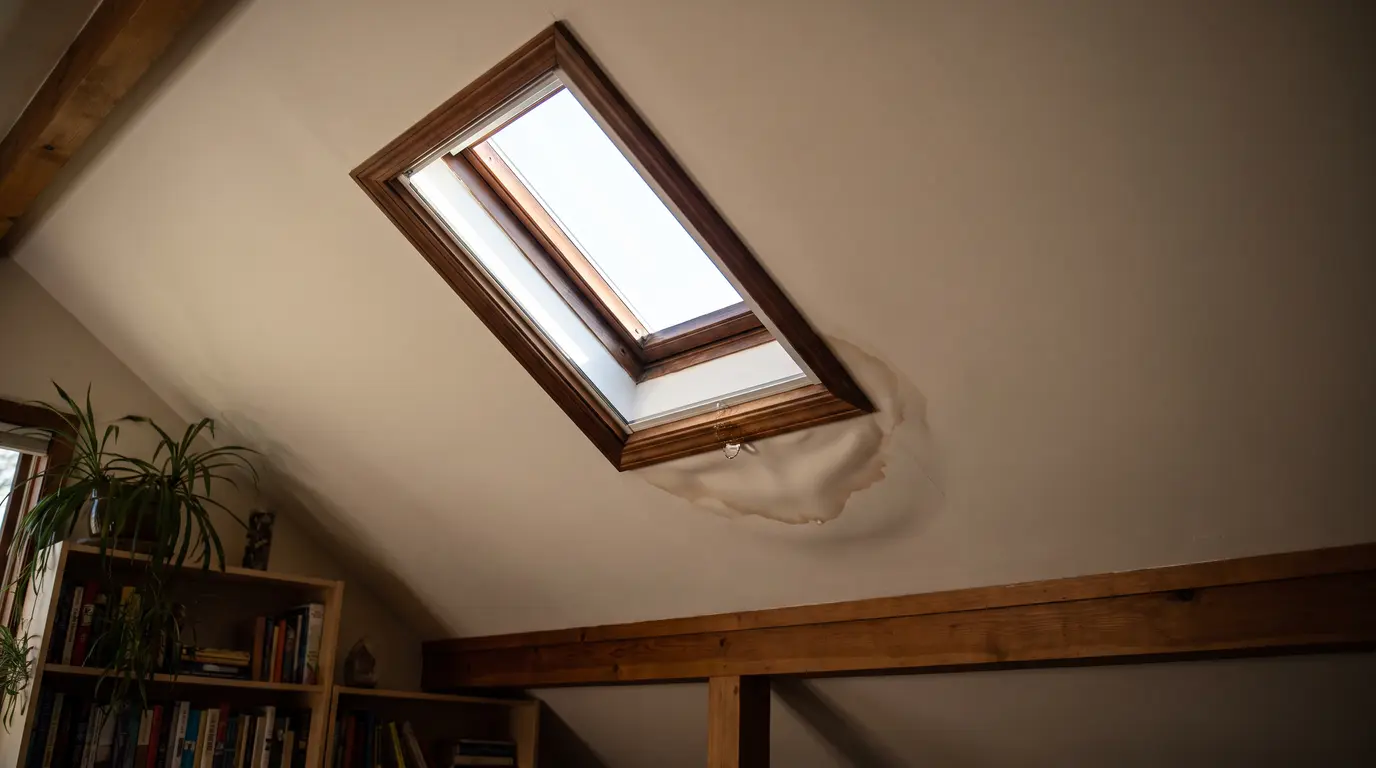
If the roof also appears to sag, water is entering the home, or a ceiling is bulging, limit exposure to the affected area and seek prompt professional help. For more context, read about what a sagging roof may mean. That resource explains possible causes, but it cannot replace a site specific structural assessment.
Could clogged gutters cause roof pooling?
Yes. Leaves, branches, and other debris can block gutters, downspouts, valleys, roof drains, or other drainage components. When water cannot reach an outlet, it may overflow at the roof edge, back up near a valley, or collect in a nearby low area.
Gutter overflow is not exactly the same as ponding on the roof surface. Water inside a gutter or behind a blockage may indicate a drainage obstruction, while water sitting on the roof may indicate a low spot or inadequate slope. Water near a valley or roof to wall intersection may instead involve flashing, concentrated runoff, or a connection between roof areas.
Why persistent pooling should not be ignored
Standing water can increase deterioration of roofing materials and raise the chance of leaks. The concern is greater when water remains for a long time, the roof covering is already damaged, or the roof assembly has a drainage or structural problem. Accumulated water also adds weight, which may contribute to structural distress where supporting components are already weakened.
This does not mean an ordinary puddle after rain is expected to cause a collapse. The significance depends on the amount and duration of water, the roof assembly, existing damage, and structural capacity. Persistent pooling on a conventional sloped residential roof is not something to dismiss as normal, particularly when it returns in the same place.
What to do when you find water on the roof
Start with a safe ground level check. Look for overflowing gutters, blocked downspouts, visible debris in valleys, interior ceiling stains, and visible sagging. Do not climb onto a wet roof or a roof that appears to sag. A preliminary visual check can help you describe the problem without creating another safety risk. You can also review how to check your roof without climbing.
- Note where the water appears to collect and whether the same area is affected after each storm.
- Record whether water is on the roof surface, in a gutter, behind a blockage, or near a roof intersection.
- Look for interior stains or changes in a ceiling below the affected area.
- Ask the roofer to identify the drainage path and document the approximate location and size of the ponding area.
- Ask whether the roof deck or supporting structure appears to be deflecting.
- Ask whether the recommendation addresses the cause or only the visible symptom.
Do not assume that adding a drain, applying a roof coating, or patching the surface will solve the problem. The drainage issue, roof assembly, structural condition, warranty terms, and local requirements should be considered together. If an evaluation identifies repair, drainage correction, or replacement work, the roof cost calculator may help with preliminary budgeting. It should not be treated as a project specific quote or a way to price specialized drainage or structural work.
For recurring ponding, an inspection can help distinguish a maintenance issue from a roof covering, drainage, deck, or framing concern. You can learn more about the benefits of regular roof inspections before deciding what type of evaluation fits the situation.
Frequently asked questions
How long is it normal for water to remain on a roof after rain?
A small wet area that drains or dries promptly may not indicate a major defect. Water that remains for approximately 48 hours or longer is commonly treated as ponding in low slope roof guidance. For a sloped residential roof, recurring water deserves evaluation even if the exact drying time is shorter.
Is pooling water on a sloped shingle roof an emergency?
It is not automatically an emergency, but persistent pooling on a sloped shingle roof is not normal and should be evaluated. Treat the situation as urgent if water is entering the home, a ceiling is bulging, or the roof appears to sag. Avoid climbing onto the roof while it is wet or visibly unstable.
What is the difference between roof ponding and gutter overflow?
Roof ponding means water remains on the roof surface. Gutter overflow means water is backing up in or spilling from a drainage component. They can be related when debris blocks the intended path, but they may require different checks. Water near a valley or roof intersection may also involve flashing or concentrated runoff rather than surface ponding.
Water that repeatedly collects on your roof usually has a reason, and identifying the location is a useful first step. Check what you can safely see from the ground, avoid climbing onto a wet or sagging roof, and arrange an evaluation when pooling returns, remains in place, or appears alongside leaks or visible sagging.