If your roof leaks only during heavy rain, the next step is usually not to assume you need a new roof. Intense rainfall can expose a localized weakness that ordinary rain does not reach, such as an overloaded drainage path, damaged flashing, a roof penetration, or an opening affected by wind. Start with safe observations and arrange a professional evaluation if the source is not clear.
The place where water appears inside may not be where it entered. Water can travel along the roof deck or framing before reaching a ceiling or wall. Heavy rain can also reveal a plumbing, heating, ventilation, or condensation problem that only happens during storms.
Why heavy rain reveals roof problems
A strong storm sends more water across valleys, roof edges, gutters, and roof to wall transitions in a shorter period. If a gutter overflows, a valley is blocked, or a flashing joint is weak, that concentrated flow may reach a vulnerable part of the roof or wall assembly. Wind can add another pathway by pushing rain against edges, walls, vents, and other openings.
The following comparison can help you describe what you are seeing without treating a clue as a diagnosis.
| Possible pathway | What heavy rain may expose | Safe clues to observe | Important limitation |
|---|---|---|---|
| Gutters, downspouts, and roof drainage | Overflow, backup, or concentrated runoff during intense rainfall | Overflowing gutters, blocked downspouts, or water collecting near roof edges | A gutter problem may contribute to water entry without being the original roof defect. |
| Valleys and roof edges | Large volumes of runoff passing through vulnerable areas | Debris, visible deterioration, or water spilling at edges | A ground level view cannot confirm the condition of concealed materials. |
| Flashing at walls, chimneys, and dormers | Water reaching joints and vertical intersections | Visible gaps, corrosion, displacement, or staining near the transition | The repair depends on the roof material, flashing design, and concealed damage. |
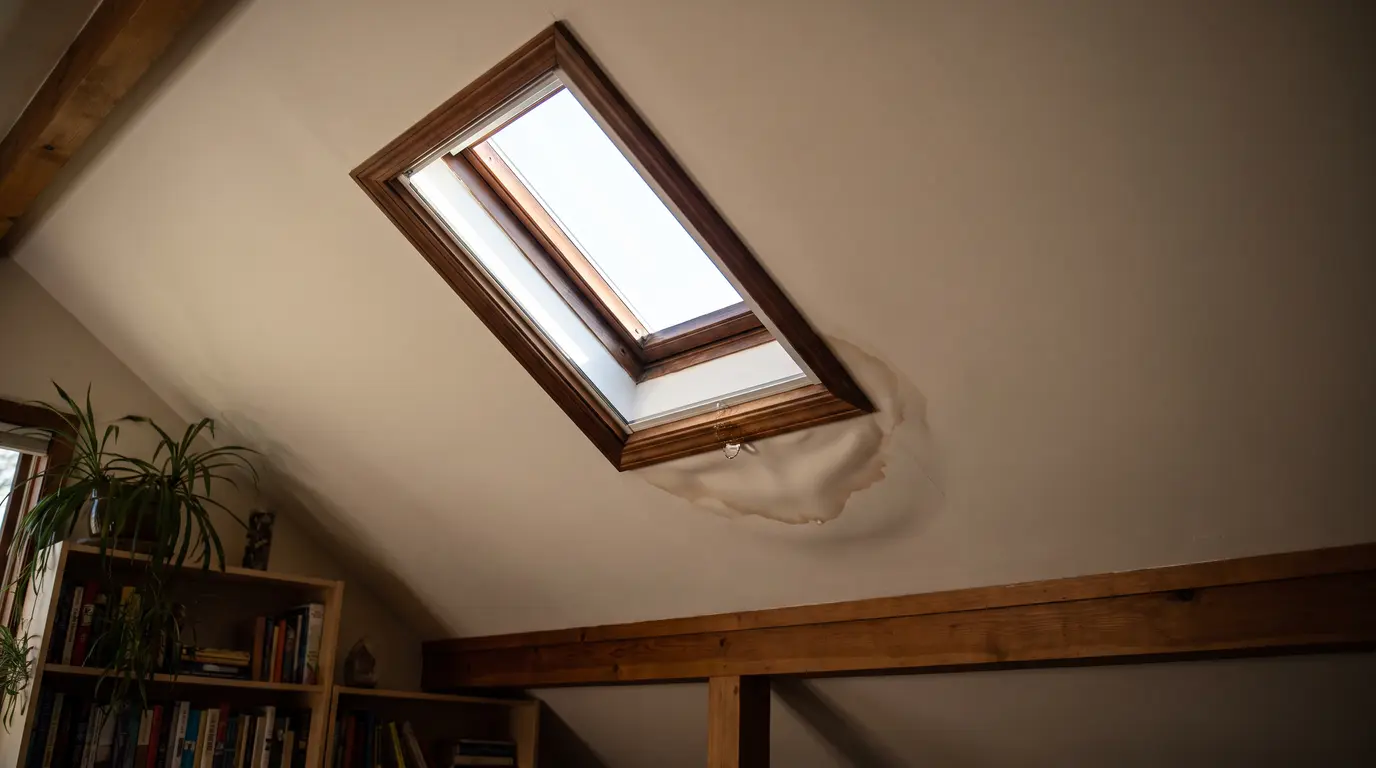
| Roof penetrations | Water entering around skylights, plumbing vents, exhaust vents, or other openings | Interior staining near or downhill from a penetration | The visible stain may be offset from the actual entry point. |
| Wind driven rain and storm damage | Wind pushing rain through damaged coverings or weak building envelope details | A leak during a particular wind direction or after visible displacement | Wind driven leakage can involve more than one damaged or poorly integrated component. |
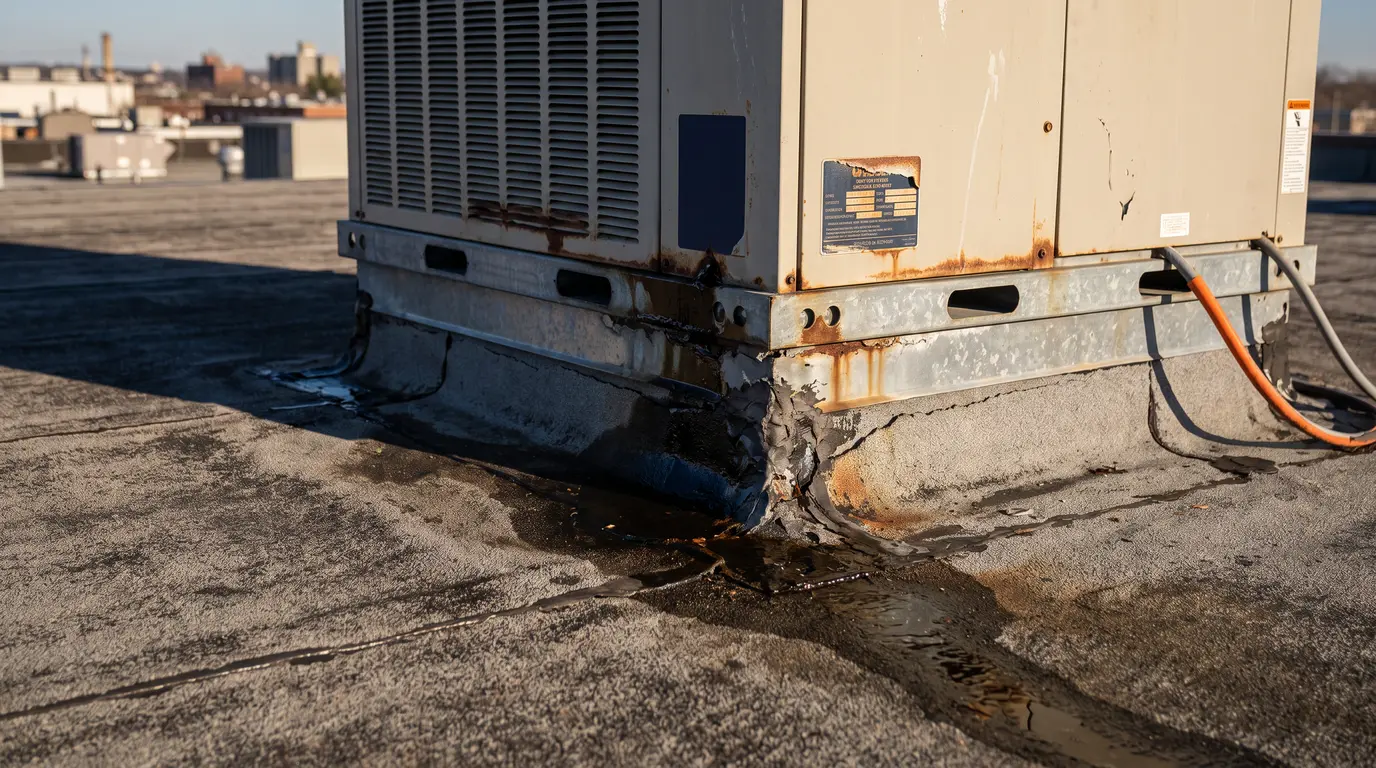
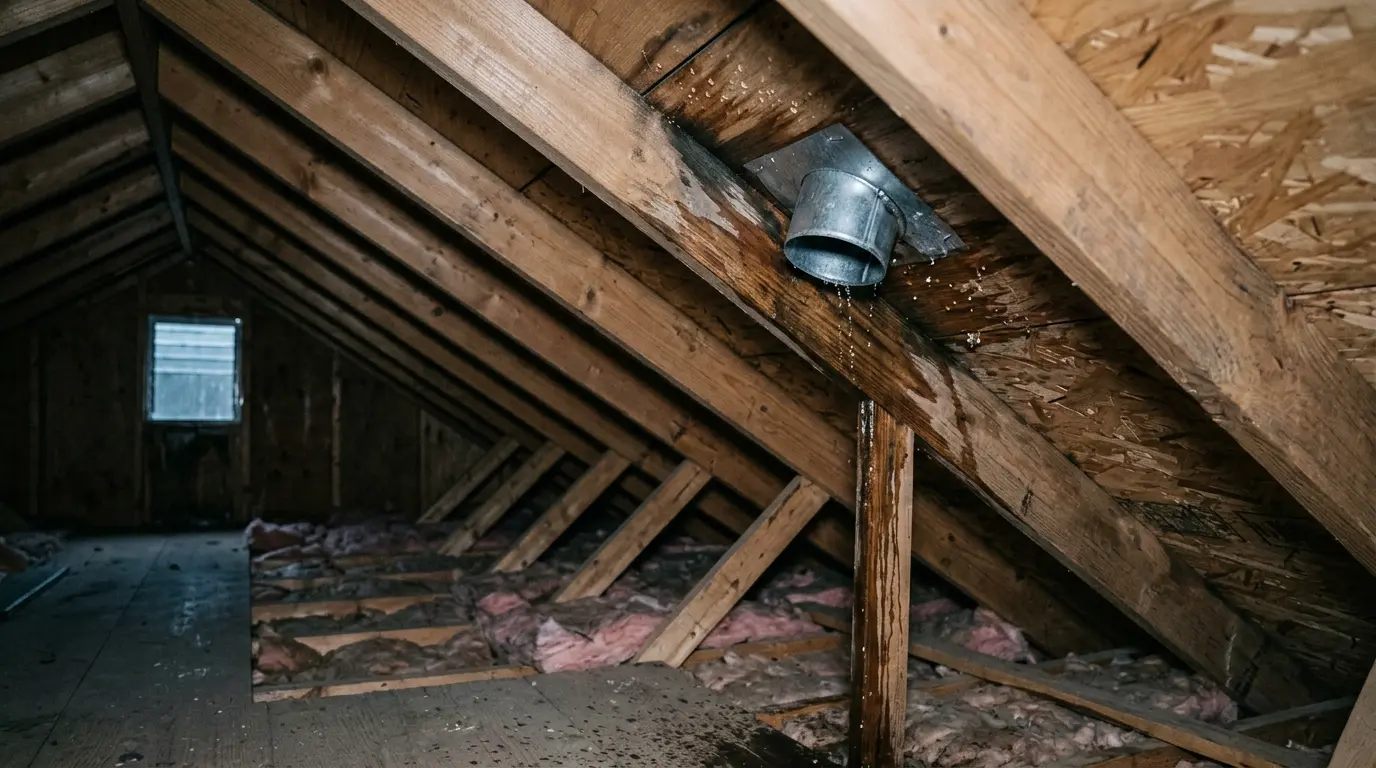
| Non roof moisture source | Water appearing during storms while originating from plumbing, heating, ventilation, condensation, or another component | The timing or location does not align with roof features | A ceiling stain alone does not prove that the roof is the source. |
The most likely places to look
Drainage paths
Begin with the areas that handle the most runoff. Look from the ground for overflowing gutters, blocked downspouts, debris in valleys, and water spilling over roof edges. Pay attention to whether the leak begins after rain has continued long enough for drainage components to fill. Poorly directed discharge can also send water toward a vulnerable roof or wall area.
Flashing and roof to wall transitions
Flashing helps manage water where the roof meets a wall, chimney, dormer, skylight, or another change in the building surface. Heavy rain may expose loose, cracked, corroded, displaced, or poorly integrated flashing. These areas deserve particular attention when the interior stain is near a wall or appears downhill from one of these transitions.
A bead of surface caulking is not a universal repair. The correct response depends on the roof material, the flashing design, and whether water has reached concealed parts of the roof or wall assembly. For background on drainage, flashing, and roof inspection areas, you can review Building America Best Practices Series: Volume 5 and the Residential Rehabilitation Inspection Guide.
Roof coverings and penetrations
Missing, lifted, cracked, or displaced roof covering can allow water into the roof assembly, especially when wind accompanies the rain. Inspect accessible views for visible damage around skylights, plumbing vents, exhaust vents, and other roof mounted elements. A leak near one of these features may still have entered somewhere higher or farther away, so the visible interior location is only a clue.
How to investigate without creating a safety problem
You can gather useful information without walking on a wet roof. The check your roof without climbing guide can support a preliminary ground level and interior observation.
- Write down when the leak started, how intense the rain was, whether wind was present, and whether the wind came from a particular direction.
- From the ground, use binoculars or camera zoom to look for missing, lifted, cracked, or displaced roof covering, visible flashing damage, blocked downspouts, debris in valleys, and overflowing gutters.
- From a safe and accessible interior area, look for damp insulation, water staining, wet roof decking, and water tracks. Do not enter a wet attic or handle wiring.
- Photograph visible damage and the interior location before cleanup when it is safe to do so.
- Ask a roofing professional to identify the entry point, not just the place where water appeared inside.
Do not climb onto a wet or steep roof, and do not inspect a ceiling or attic area when water is near electrical equipment. If a ceiling is bulging, keep people away from the area rather than cutting into it or touching the wet material.
What to do when water is near electricity or the ceiling is bulging
Water near a light fixture, outlet, wiring, or other electrical equipment is a safety concern. Keep people away and refer visible electrical damage or suspected utility hazards to the appropriate utility or a qualified professional. Do not touch wet electrical equipment, enter a wet attic, or assume that turning a leak into a bucket has solved the underlying problem.
If the roof has visible storm damage, document it with photographs and notes when possible, then seek help to limit additional exposure. A tarp or another temporary measure may be appropriate only when installed safely by a qualified person. For general information about temporary storm response, see these emergency roof repair products, but do not treat products as a replacement for professional repairs or safe roof access.
FEMA guidance also supports documenting visible damage and contacting a contractor to seal roof or exterior openings when possible. Insurance coverage is separate and depends on the individual policy, cause of loss, exclusions, and claim handling.
What to ask during a professional evaluation
A professional evaluation is especially useful when the leak is intermittent, concealed, or difficult to distinguish from another moisture source. Ask whether the inspection included the roof covering, valleys, flashing, penetrations, gutters, accessible attic areas, and possible non roof sources such as plumbing, heating, ventilation, or condensation.
You can also ask, “Can you identify the entry point, not just the place where water appeared inside?” The resource what a roof inspection should cover explains overlapping inspection topics, including drainage, flashing, penetrations, and accessible attic areas. It is a general guide and not a diagnosis of a particular leak.
Frequently asked questions
Why does my roof leak only when it rains hard?
Heavy rain can overwhelm or expose a weak drainage path, valley, flashing joint, roof penetration, roof covering, or roof to wall transition. Wind can also push rain through a damaged or poorly integrated building envelope detail. The timing alone does not identify the exact defect.
Can clogged gutters cause a roof leak?
They may contribute to water entry when runoff overflows, backs up, or is directed toward a vulnerable roof or wall area. A gutter problem does not prove that the roof covering itself is defective, so the drainage components and nearby roof details should be evaluated together.
Does a heavy rain leak always mean the roof needs replacement?
No. Heavy rain may expose a localized issue involving drainage, flashing, a penetration, or storm damage. A professional evaluation can help distinguish a repairable detail from broader damage and can also check whether the moisture is coming from a non roof source.
The next useful step
A heavy rain leak usually calls for careful observation rather than a rushed conclusion. Record the weather and leak pattern, inspect only from safe locations, document visible damage, and arrange an evaluation that traces the entry point as well as the interior stain. If water is near electrical components or a ceiling is bulging, make safety the first priority and keep people away until qualified help addresses the hazard.