Choosing a roof for a multifamily property is not simply a matter of finding the lowest bid or selecting the material with the longest warranty. The right choice should fit each roof section, support a manageable maintenance plan, limit disruption for residents, and make sense for the owner’s replacement timeline.
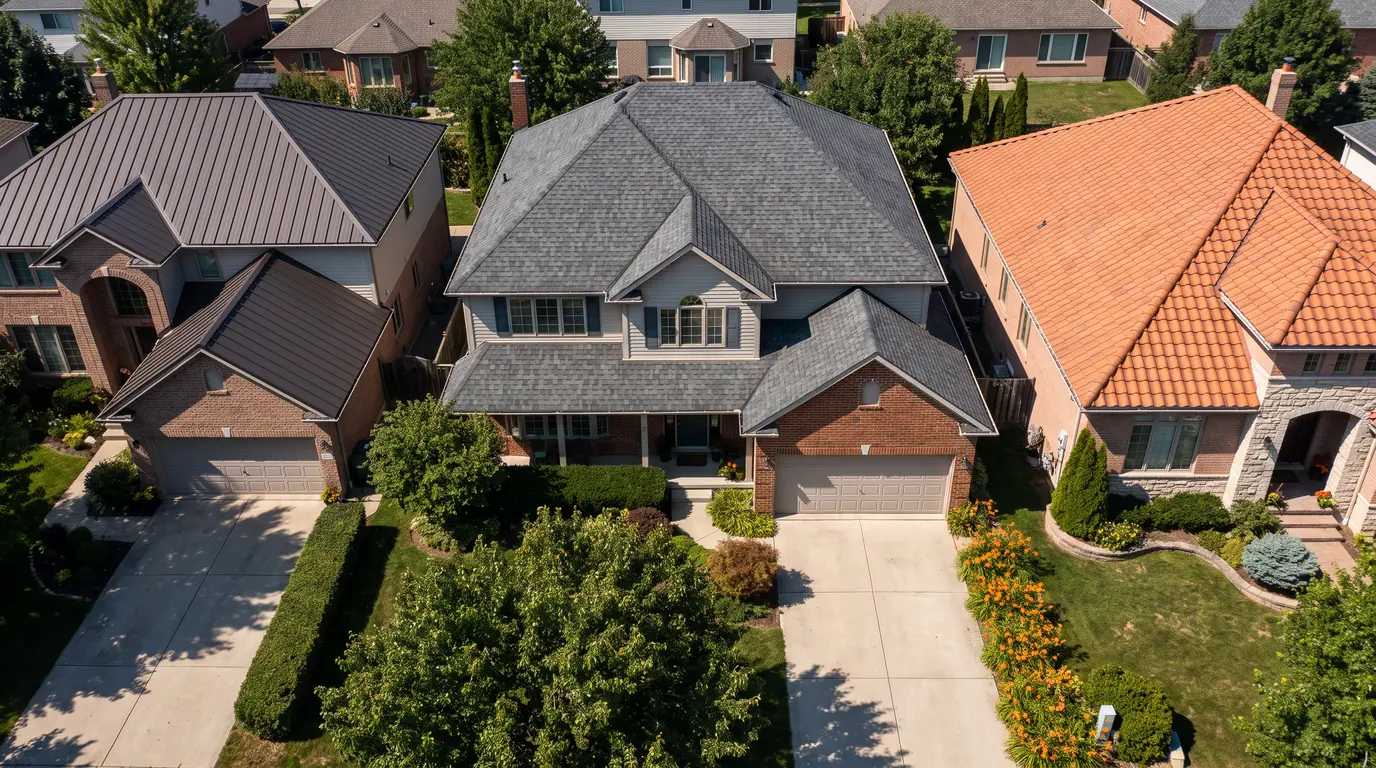
There is no single best roofing material for every multifamily building. Start with the roof design. Steep slope sections may call for asphalt shingles, metal, tile, or another approved system. Low slope sections are commonly compared using TPO, PVC, EPDM, asphaltic systems, or metal assemblies. From there, evaluate drainage, rooftop equipment, climate, maintenance, resident coordination, budget, and future work.
For broader background, you can compare commercial roofing materials before narrowing the decision to the needs of your multifamily property.
Start with the roof design
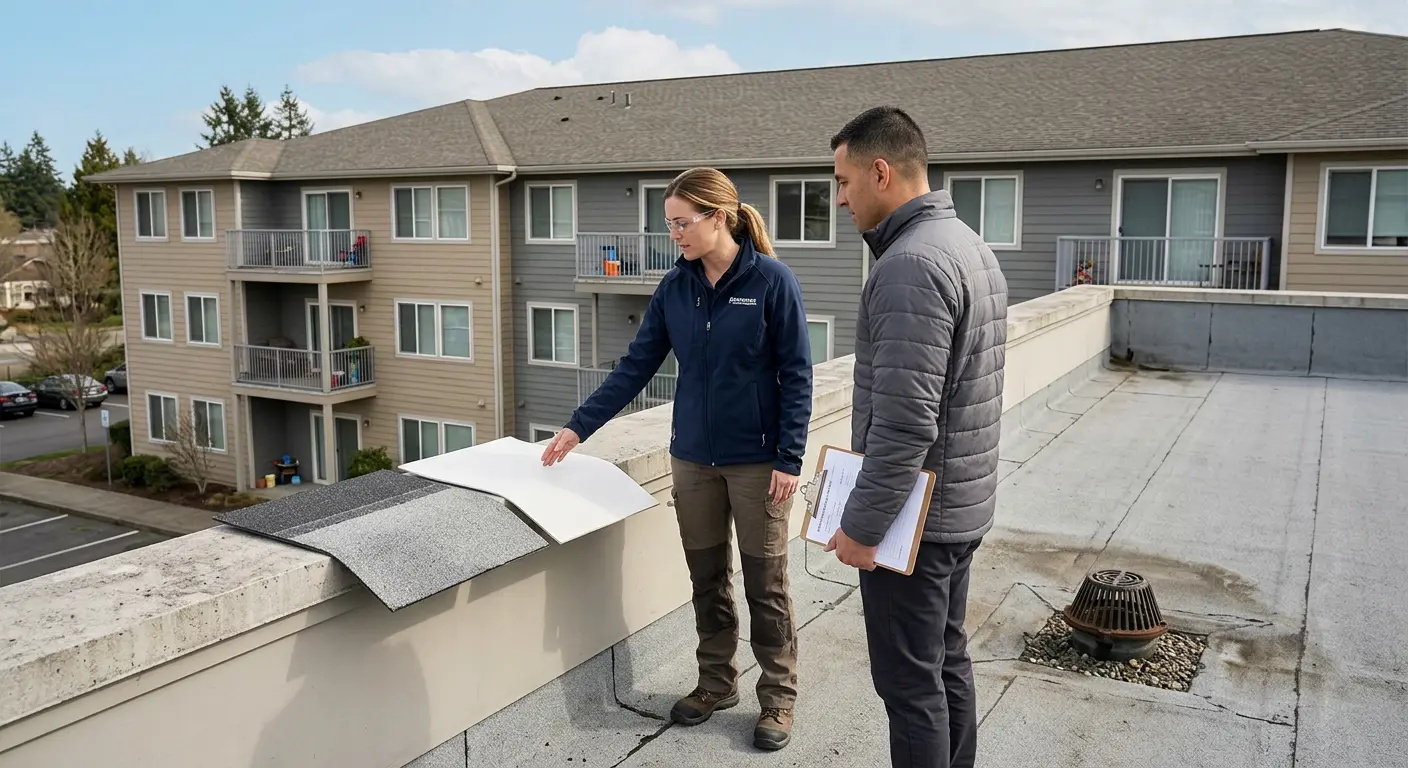
A single property may have several roof sections with different slopes, drainage patterns, penetrations, and construction histories. That means material selection may need to happen by roof section rather than by building. A system that fits a steep slope residential style section may not be the right choice for a low slope roof over a common area or equipment space.
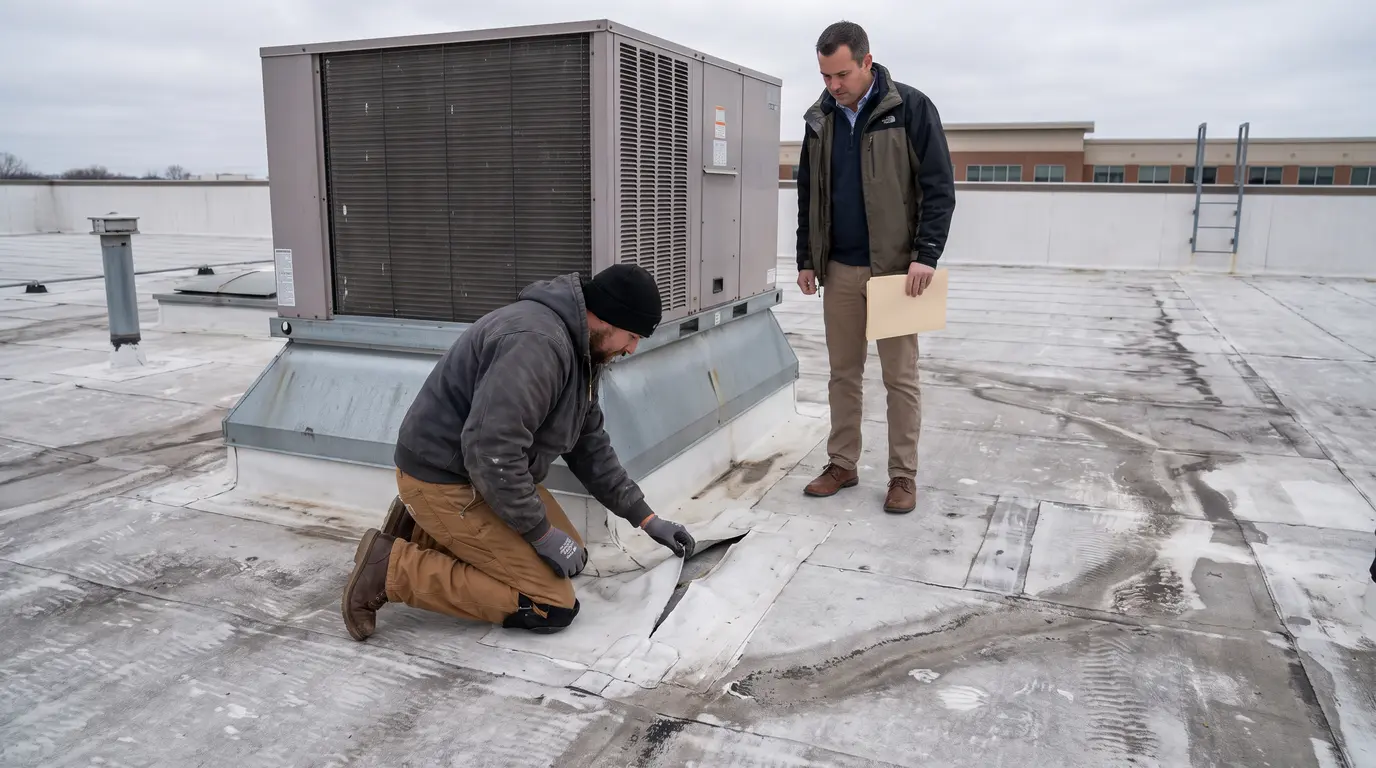
Before comparing material prices, document the roof geometry, existing layers, drainage paths, penetrations, rooftop equipment, and prior repairs. Also ask whether the project involves a recover or a full replacement. Existing moisture, structural conditions, drainage concerns, and attachment limitations can affect what systems are practical.
| Roofing category | Typical roof context | Supported strengths or reasons to consider | Key qualification |
|---|---|---|---|
| Asphaltic roofing systems or asphalt shingles | Commonly considered for steep slope residential style roof sections. Asphaltic systems are also available in commercial roofing assemblies. | Familiar material category with multiple residential and commercial system options. | The available evidence does not provide a reliable multifamily specific service life, maintenance, or cost comparison. |
| Metal roofing systems | May be evaluated for appropriate steep slope or low slope applications depending on the assembly and design. | Recognized commercial roofing system category. | The available evidence does not establish when metal is preferable or support a universal durability, cost, or disruption ranking. |
| TPO | Low slope roofs. | Heat welded seams, reflectivity, installation flexibility, and resistance to UV, ozone, and common rooftop chemical exposure for applicable products. | Product and assembly performance varies. A warranty term is not the same as service life. |
| PVC | Low slope roofs. | Heat welded seams and resistance to chemicals, grease, fire, punctures, tearing, and harsh environments for applicable systems. Reflectivity may also be a consideration. | Specialized resistance should be matched to a documented building condition. Product specific verification is necessary. |
| EPDM | Low slope roofs. | Flexible synthetic rubber membrane with weathering and UV resistance claims for applicable products. Available in adhered, mechanically attached, and ballasted systems. | Attachment, loading, wind exposure, climate, and maintenance affect suitability and performance. |
These are material categories, not complete specifications. The insulation, cover board, deck, attachment method, flashing, edge details, drainage, penetrations, contractor execution, and local requirements can change the recommendation. You can review general commercial system information from Holcim Elevate commercial roofing systems, while remembering that manufacturer information is not a universal cost or service life comparison.
Compare low slope membrane options by operating needs
TPO
TPO is a low slope single ply membrane with heat welded seams. It may be considered when reflectivity, installation flexibility, and overall value are priorities. Applicable products may also be designed to resist UV, ozone, and common rooftop chemical exposure.
The useful comparison is not simply the name TPO. Request the exact product, membrane thickness, reinforcement, insulation, cover board, attachment method, seam approach, flashing details, and warranty conditions. Learn how TPO roofing works if your team needs a basic explanation of the terminology.
PVC
PVC is another low slope single ply membrane with heat welded seams. Applicable systems may offer resistance to chemicals, grease, fire, punctures, tearing, and harsh rooftop conditions. Those characteristics can matter when a property has a documented exposure or a specific performance need.
A typical multifamily roof should not be assigned PVC automatically. Compare its complete assembly with TPO and EPDM, then verify whether the property actually has the exposure that makes specialized resistance valuable. For background, you can understand PVC roofing before reviewing proposals.
EPDM
EPDM is a flexible synthetic rubber membrane promoted for weathering and UV resistance. It may be installed in fully adhered or mechanically attached systems, and some products are available in ballasted assemblies.
The attachment method, roof structure, wind exposure, access plan, and rooftop loading all deserve review before selecting an EPDM assembly. Its flexibility may fit the project, but the proposed system still needs to align with the property’s maintenance and access plan.
Compare complete assemblies, not material names
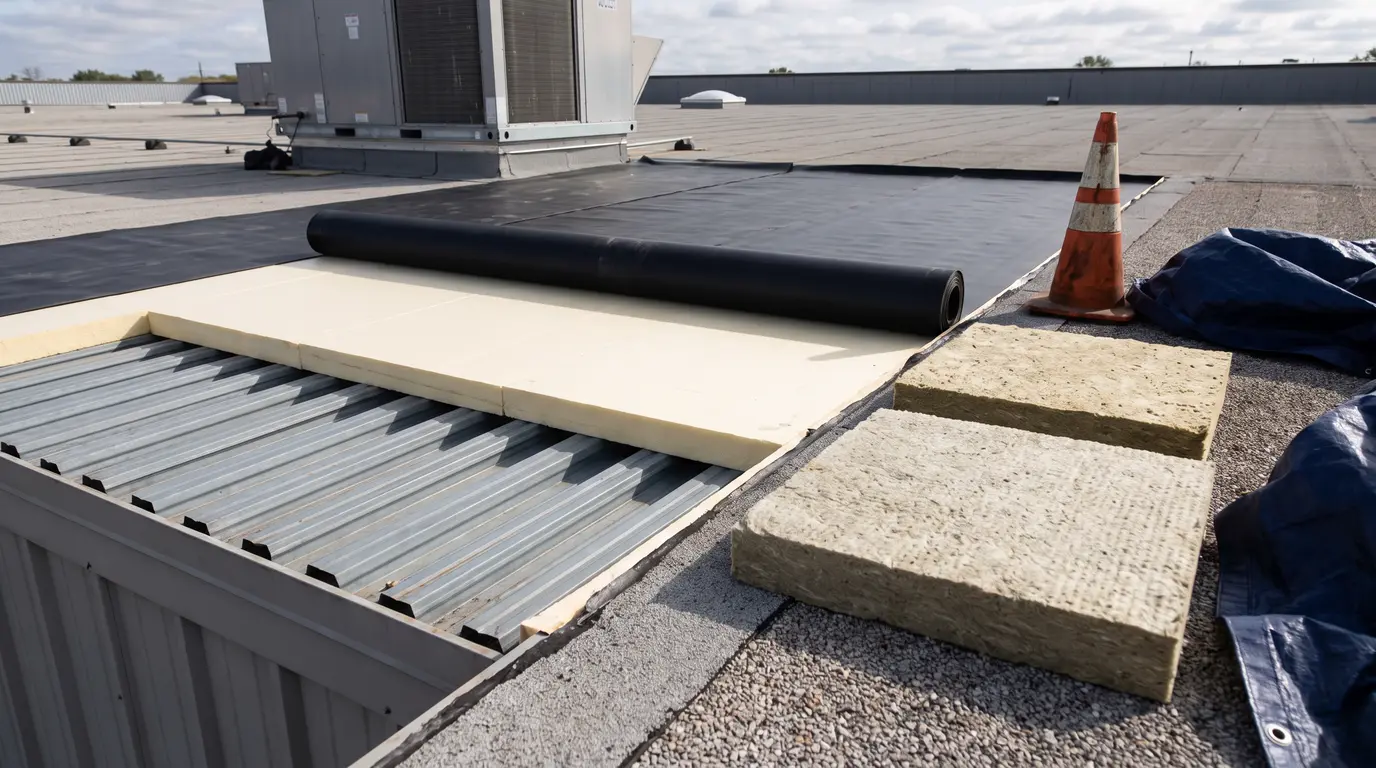
Two proposals using the same membrane name can differ substantially in scope. Ask each contractor to identify the proposed membrane or covering, insulation, cover board, attachment method, flashing, edge metal, drainage work, tear off, disposal, and repair allowances.
Installation may be mechanically attached, fully adhered, self adhered, or ballasted. The method affects project duration, rooftop loading, attachment, and compatibility with the existing deck and assembly. It can also affect how work is coordinated around occupied areas. The evidence does not support a universal ranking for cost, wind performance, or resident disruption, so those points should be addressed in project specific proposals.
Plan maintenance and future work
A roof becomes easier to manage when its inspection, repair, and warranty requirements are documented from the beginning. Ask how inspections will be performed, how rooftop access will be controlled, how repairs will be recorded, and what steps are required to preserve warranty coverage.
Future HVAC, communications, or solar work should also be part of the discussion. Ask whether future penetrations can be completed without compromising the assembly or warranty, and identify who will document that work.
A warranty should not be treated as a direct service life estimate. Compare the warranty term, inspection requirements, exclusions, transfer rules, workmanship coverage, and required maintenance separately from expected roof performance. To improve portfolio records, you can track roof repairs across your properties by roof area, vendor, cost, and status.
Reduce disruption for residents and staff
Roof replacement at an occupied multifamily property is an operations project as well as a construction project. Before choosing an installation method, compare anticipated noise, odor, roof access, staging, work hours, entry into units or common areas, parking impacts, weather interruptions, and the number of work phases.
No material can promise less disruption in every situation. The method, building layout, weather, crew, and project scope all influence the resident experience. A written communication plan can help staff coordinate access routes, common areas, vendors, and resident notices before work begins.
For more planning guidance, review planning a roof replacement at an occupied multifamily property around residents, staff, vendors, access, phasing, and communication.
Use lifecycle planning instead of bid price alone
The lowest initial price may not provide the clearest ownership plan. Compare the full installation scope, expected inspection and repair needs, warranty obligations, energy objectives, future equipment work, and the likely timing of replacement for each roof section.
Reflective TPO, PVC, and some white EPDM products may reflect solar radiation and may affect cooling demand. The energy effect depends on the building, insulation, climate, roof color, HVAC operation, and complete assembly, so treat reflectivity as one part of the building energy strategy rather than a guaranteed utility savings measure.
For early budget planning, the preliminary roofing cost calculator can help frame residential or commercial project costs. Its output is not a quote, guaranteed project price, or multifamily specific lifecycle cost analysis.
Questions to ask before approving a system
- What roof sections, deck conditions, drainage problems, penetrations, and future equipment plans are included in each proposal?
- What membrane or covering, insulation, cover board, attachment method, flashing, edge details, and drainage work are included?
- What maintenance, inspection, documentation, and warranty steps must the property manager follow to preserve coverage?
- How will the contractor phase work around occupied units, common areas, resident access, and weather interruptions?
- What local requirements must be confirmed with the authority having jurisdiction before work begins?
Frequently asked questions
Is TPO, PVC, or EPDM best for a multifamily low slope roof?
None is universally best. TPO may fit a project where reflectivity, installation flexibility, and value are priorities. PVC may fit a documented chemical, grease, fire, or harsh condition exposure. EPDM may fit where flexibility, weather resistance, and the proposed attachment method align with the building. Compare complete assemblies and warranty obligations rather than membrane names alone.
Should different roof sections at the same property use different materials?
They may. Different slopes, drainage paths, existing construction, penetrations, and rooftop conditions can make section by section evaluation more practical. The decision should be based on the documented conditions and the proposed complete assemblies.
Does a longer warranty mean the roof will last longer?
No. Warranty duration and expected service life are separate considerations. Review coverage, exclusions, transfer rules, workmanship coverage, inspection requirements, and maintenance obligations alongside the design, installation, climate, rooftop conditions, and future work plan.
Make the decision easier to manage
The most dependable selection process starts with roof sections and existing conditions, then compares complete assemblies, maintenance obligations, resident coordination, future penetrations, and lifecycle timing. A clear written comparison gives the property team a better basis for choosing a system that fits both the roof and the way the property operates.
The next useful step is to request proposals that answer the same questions for every roof section. That makes differences in scope, maintenance, warranty responsibilities, phasing, and budget easier to see before a material choice becomes a long term property decision.