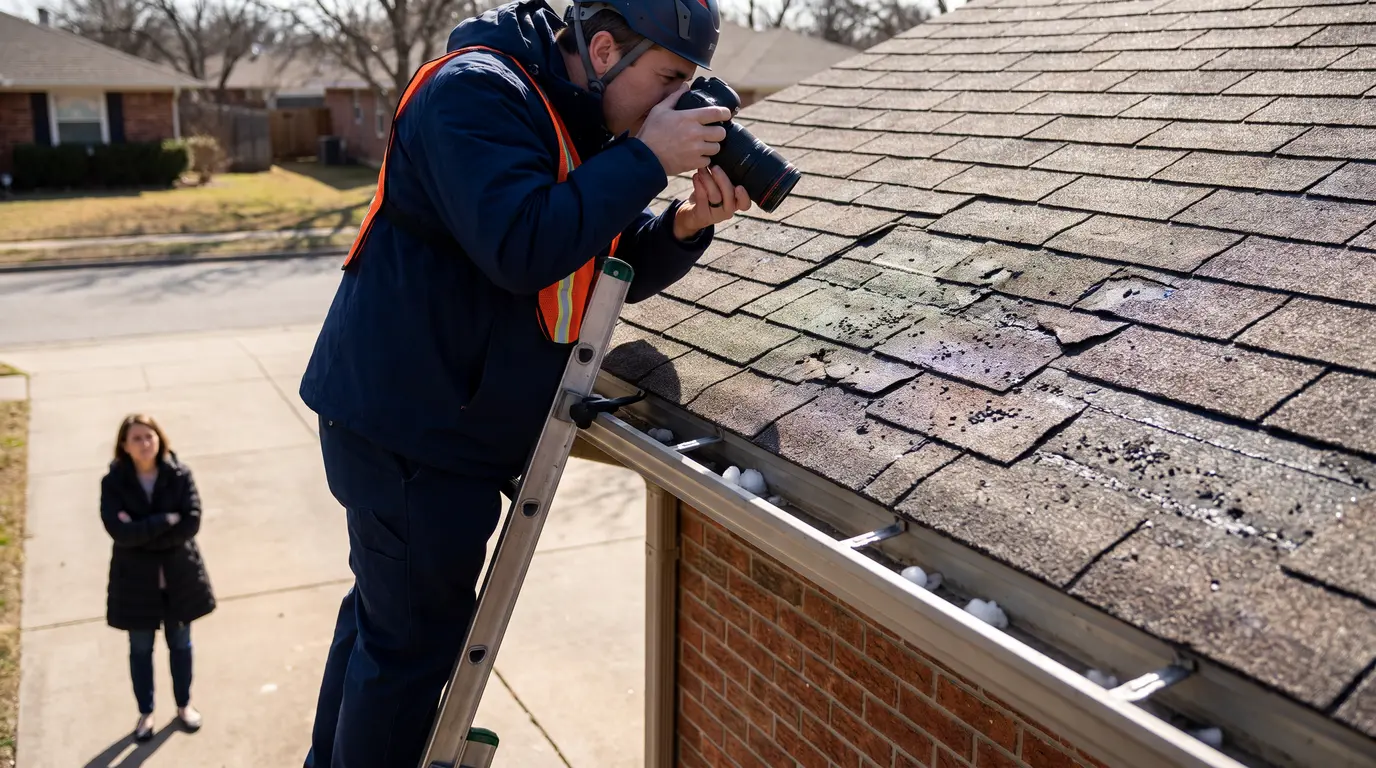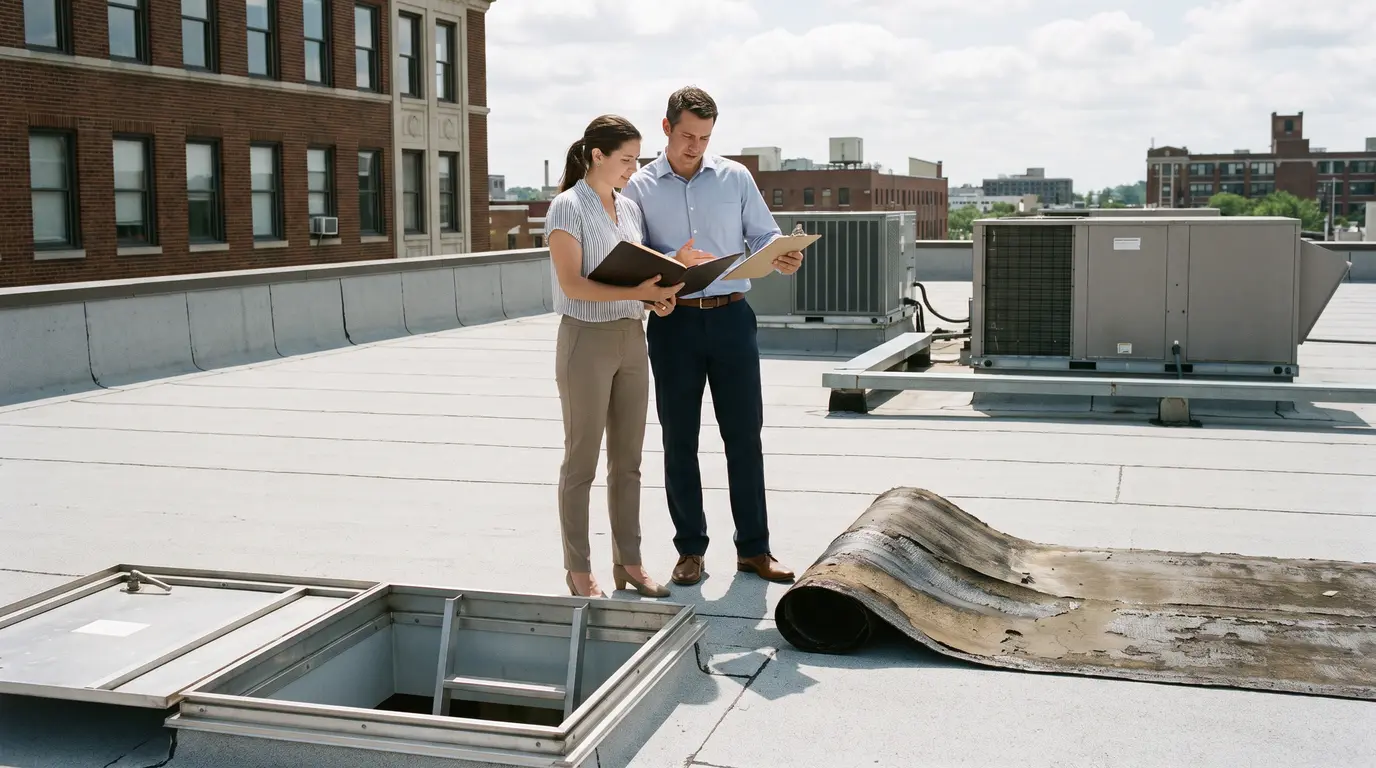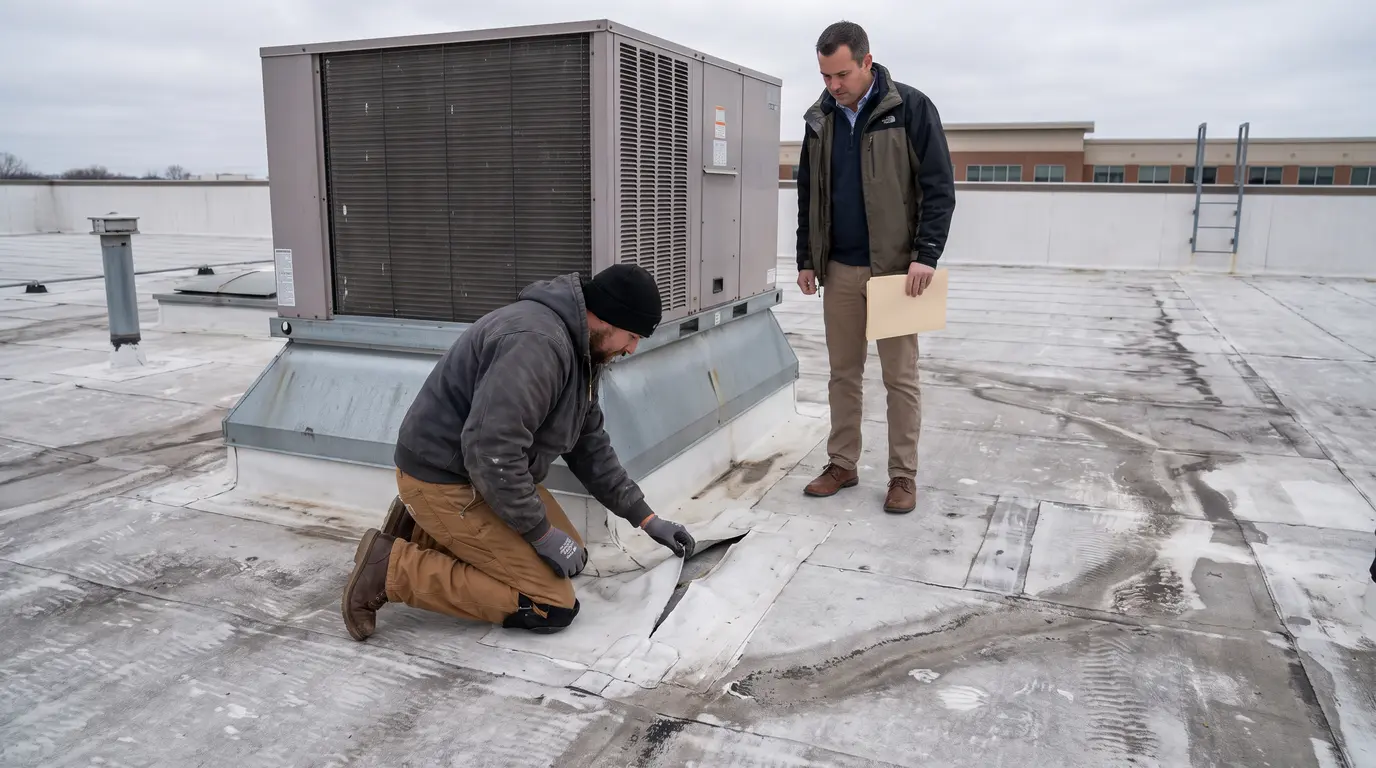
A commercial roof repair can cost a few hundred dollars for a localized patch or several thousand dollars when the work involves failed seams, wet insulation, drainage components, or damaged decking. Published 2026 planning ranges place many commercial roof repairs at approximately $3 to $10 per square foot, but commercial roofing is usually priced by the specific scope rather than by roof size alone.
The most useful way to evaluate a proposal is to separate the cost of finding the problem, accessing the roof, repairing the roof assembly, addressing related details, and restoring any affected building areas. Once those parts are clear, different proposals become easier to compare and future spending is easier to plan.
Commercial Roof Repair Cost Ranges
Small repairs may have a flat service charge or minimum mobilization cost. Larger work may be priced by square foot, linear foot, unit, or lump sum. The following figures are published 2026 planning estimates for selected commercial repair scopes. They are not guaranteed national prices and should not be combined into one total.
| Repair scope | Typical published planning figure | What can increase the scope | Evidence |
|---|---|---|---|
| Small TPO or EPDM membrane patch | $300 to $1,200 | Concealed moisture, difficult access, additional tear out, or multiple repair locations | Published 2026 planning estimate |
| Larger patch or seam repair | $1,500 to $5,000 | Longer failed seams, wet insulation, cover board or deck repairs, and additional membrane work | Published 2026 planning estimate |
| Drain or penetration flashing repair | Drain flashing approximately $400 to $1,800; curb or penetration flashing approximately $500 to $2,500 | Damaged decking or added equipment details | Published 2026 planning estimate |
| Full membrane overlay | Approximately $4 to $7 per square foot | System compatibility, cover board, membrane thickness, insulation or vapor control needs, access, and detailing | Published 2026 planning estimate |
These figures are best used as conversation starters. Location, roof system, building size, urgency, access, and the items included in the proposal can all change the final price. A small patch may cost more than expected if the contractor must investigate concealed moisture or work around difficult rooftop equipment.
What Determines Commercial Roof Repair Cost?
The type and extent of damage
A visible leak does not always show where water entered the roof or how far moisture has traveled. The repair may involve a membrane patch, failed seam, flashing at a curb or penetration, drain flashing, wet insulation, or damaged roof decking. Each additional layer or detail can expand the scope.
Ask the proposal to identify the affected roof areas and explain what is assumed about concealed conditions. Confirm whether the price includes removal and disposal of damaged materials, replacement of insulation or cover board, deck repairs, and restoration of the roof surface.
The existing roof system
Repair methods and materials need to match the existing assembly. A proposal should identify whether the roof uses TPO, EPDM, modified bitumen, built up roofing, metal panels, coatings, or another system. Materials and labor can differ because the repair method, compatibility concerns, and applicable manufacturer requirements differ as well.
Do not assume that one roof system is always cheaper to repair. Instead, ask how the proposed materials will work with the existing roof and whether the work could affect an existing manufacturer warranty.
Roof access and project logistics
Building height, roof access, rooftop equipment, staging space, weather, time of year, and occupied areas can affect labor and mobilization. A repair proposal may also change if the crew needs a lift or crane, protection for equipment routes, tenant coordination, or restricted work hours.
Ask whether the price assumes normal roof access and ordinary working hours. If the building is occupied, confirm how the contractor plans to protect interior areas and coordinate access around tenants or business operations.
Urgency and emergency response
An active leak may require immediate investigation, temporary water control, after hours labor, expedited materials, or work during unfavorable conditions. Those needs can make an urgent repair more expensive than a planned project, although there is no dependable universal emergency percentage.
Treat temporary protection and permanent repair as separate decisions when necessary. The first visible interior stain may not mark the roof opening, so the proposal should explain what was investigated and what remains uncertain.
Related building work
Roof repairs can connect to drains, curbs, penetrations, edge metal, fasteners, sealants, insulation, the roof deck, and interior finishes. A proposal that covers only the visible membrane may not include every item needed to address the cause or effects of the leak.
Review exclusions carefully. Ask whether the price includes testing, tear out, disposal, additional flashing, drain work, concealed moisture, deck repair, and interior restoration. If these items are not included, request unit prices or a clear method for pricing them if they are discovered.
Inspection and diagnostic costs
Inspection or diagnostic work may be billed separately from the repair. Search result planning figures place a standard visual inspection of a typical 10,000 square foot commercial roof at approximately $300 to $1,000, with higher amounts possible for detailed reports or moisture scanning. These figures vary by building size, location, reporting detail, and diagnostic method, so they should not be added automatically to every repair budget.
Before approving diagnostic work, ask what areas will be inspected, what testing will be performed, what report you will receive, and what areas will not be accessible. That information helps you understand whether the inspection is intended to locate one leak or assess broader roof conditions.
How to Compare Commercial Roof Repair Proposals
The lowest proposal is not necessarily the least expensive option if it omits investigation, tear out, disposal, concealed condition allowances, warranty administration, or follow up testing. Compare proposals only after confirming that they address the same locations and layers of the roof.
- Identify the roof system or membrane involved.
- Confirm the repair locations and the proposed repair method.
- Check whether access, staging, tenant coordination, and work hour assumptions are included.
- Review inclusions and exclusions for insulation, cover board, decking, flashing, drains, curbs, edge metal, fasteners, sealants, disposal, testing, and interior restoration.
- Ask how concealed conditions will be priced and request unit prices for wet insulation, damaged decking, additional seams, drains, or flashing.
- Ask whether the work is intended as a temporary leak stop, a permanent repair, or part of a broader restoration plan.
- Confirm whether the proposed materials and methods could affect an existing manufacturer warranty.
For a related framework, you can compare roofing proposals by scope. That article concerns replacement estimates, so use the comparison principles while checking that a repair proposal has the correct repair specific details.
Repair, Restoration, Overlay, or Replacement?
A localized repair is generally more compatible with a roof that remains fundamentally sound. Repeated leaks in the same area, widespread deterioration, compromised insulation or decking, and an assembly near the end of its service life may justify evaluating restoration or replacement instead of approving another isolated patch.
There is no universal damage percentage that determines when replacement is required. Review the repair history, recurring leak locations, concealed conditions, and the likely future needs of the roof before treating another patch as the long term plan.
If a larger project is being considered, you can learn whether to recover or replace a commercial roof and compare commercial roof repair with replacement costs. These resources address broader decisions and replacement planning rather than guaranteeing the cost of a particular repair.
For preliminary planning, owners can also use the commercial roof cost calculator. Treat the result as an initial planning figure, not as a substitute for a roof inspection or project specific proposal.
Budgeting for Repairs and Prevention
A known roof problem can become a larger project if water intrusion reaches insulation, decking, interior finishes, or other building components. Recurring leaks, drainage problems, penetrations, and flashing defects should be documented and addressed rather than handled only through repeated emergency calls.
Keep records of leak locations, dates, temporary measures, completed repairs, photographs, inspection findings, and warranty information. To connect one time repair decisions with recurring inspections and future capital planning, review how to build a commercial roof maintenance budget.
Frequently Asked Questions
Is commercial roof repair priced by square foot?
Sometimes. Larger work may use a square foot price, while small repairs may use a flat service charge. Other proposals may use a linear foot price, unit price, or lump sum. The repair method, roof system, access, and included work matter more than applying one square foot figure to every project.
What is usually excluded from a commercial roof repair estimate?
Possible exclusions include concealed wet insulation, damaged decking, additional tear out, disposal, drain or flashing work, testing, access equipment, and interior restoration. Read the exclusions and ask how unexpected conditions will be priced before approving the work.
Can emergency commercial roof repairs cost more than planned work?
They can. Emergency work may involve immediate investigation, temporary protection, after hours labor, expedited materials, or difficult working conditions. No single emergency surcharge applies to every project, so ask the contractor to separate temporary measures from the permanent repair and explain the pricing assumptions.
A practical budget starts with the repair scope, not just the size of the leak. Request a written proposal that identifies the roof system, repair locations, access assumptions, included layers, exclusions, and unit prices for concealed conditions. Then compare that repair plan with the roof’s age, repair history, and broader restoration or replacement needs before deciding how to spend the building’s roofing budget.