A reliable multifamily roof inspection plan does more than schedule a contractor once a year. It gives every building and roof section a place in your records, establishes safe access procedures, connects findings to work orders, and confirms that repairs were completed. That structure helps property managers respond to leaks promptly while also planning routine maintenance and future capital work.
Begin with a property by property roof register. Then create a layered schedule that includes routine professional inspections, additional reviews after significant weather, prompt investigation of reported leaks, and a follow up inspection after repairs. An annual professional maintenance inspection is a useful baseline, but it is not a universal legal interval and does not replace event driven reviews or prompt attention to active water intrusion.
Start With a Roof Register
A recurring schedule is only useful if it covers the entire portfolio. Create a record for each property, building, and distinct roof section. Include detached wings, low slope additions, garage roofs, canopies, and equipment platforms when they are part of the property.
- Property and building identifier
- Roof section identifier and location
- Roof covering or membrane type
- Approximate installation date
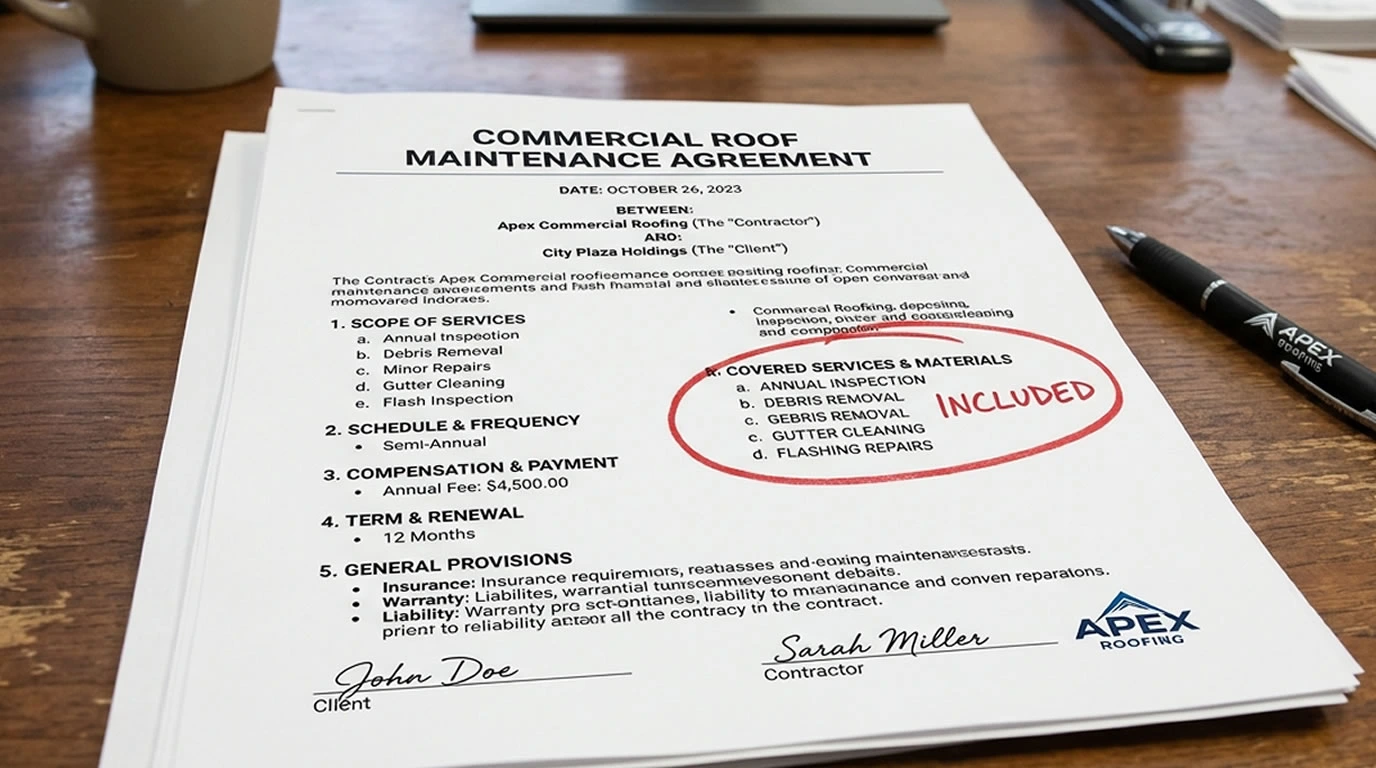
- Warranty information and service agreements
- Roof access points, locked gates, ladders, and hatches
- Drainage design, including drains, scuppers, gutters, and downspouts
- Rooftop HVAC and other equipment
- Known leak history and prior repairs
- Responsible vendor and internal property contact
This register prevents the portfolio from being treated as if every roof were identical. A low slope membrane roof, an asphalt shingle roof, a tile roof, and a roof with extensive equipment require different inspection attention. It also gives inspectors and maintenance staff a shared naming system for locations and findings.
Use more than one inspection trigger. The routine inspection keeps records current, while event driven reviews help identify damage or water intrusion that can appear between scheduled visits.
| Inspection trigger | Primary purpose | What to coordinate | Typical record or outcome | Qualifications |
|---|---|---|---|---|
| Routine professional inspection | Evaluate roof condition, drainage, flashings, penetrations, equipment interfaces, and visible deterioration | Safe roof access and attendance by relevant staff or vendors | Completed report with photographs and prioritized recommendations | An annual inspection is a useful baseline, not a universal legal interval |
| Reported leak or visible interior water damage | Investigate the reported location and distinguish roof conditions from HVAC, plumbing, or building envelope sources | Resident or unit access and interior photographs | Diagnostic work order tied to the building and roof area | A ceiling stain alone does not prove that the roof is the source |
| Post storm review | Look for storm related damage, displaced or torn coverings, damaged edge components, debris, drainage problems, and new interior intrusion | Safe access only after hazards are evaluated | Event inspection record with urgent repairs or monitoring actions | The response should reflect the storm type and roof system |
| Repair completion follow up | Verify that the specified repair was completed and that the original condition was addressed | Contractor records, photographs, and access to the repaired area | Closed work order with completion date, documentation, and warranty information when applicable | Verification is a separate step from authorizing the repair |
The schedule is a management framework rather than a universal code requirement. Review the roof manufacturer’s maintenance instructions, warranty terms, service contracts, local requirements, insurance conditions, and any applicable financing or regulatory obligations before finalizing the calendar.
Coordinate Access in Occupied Buildings
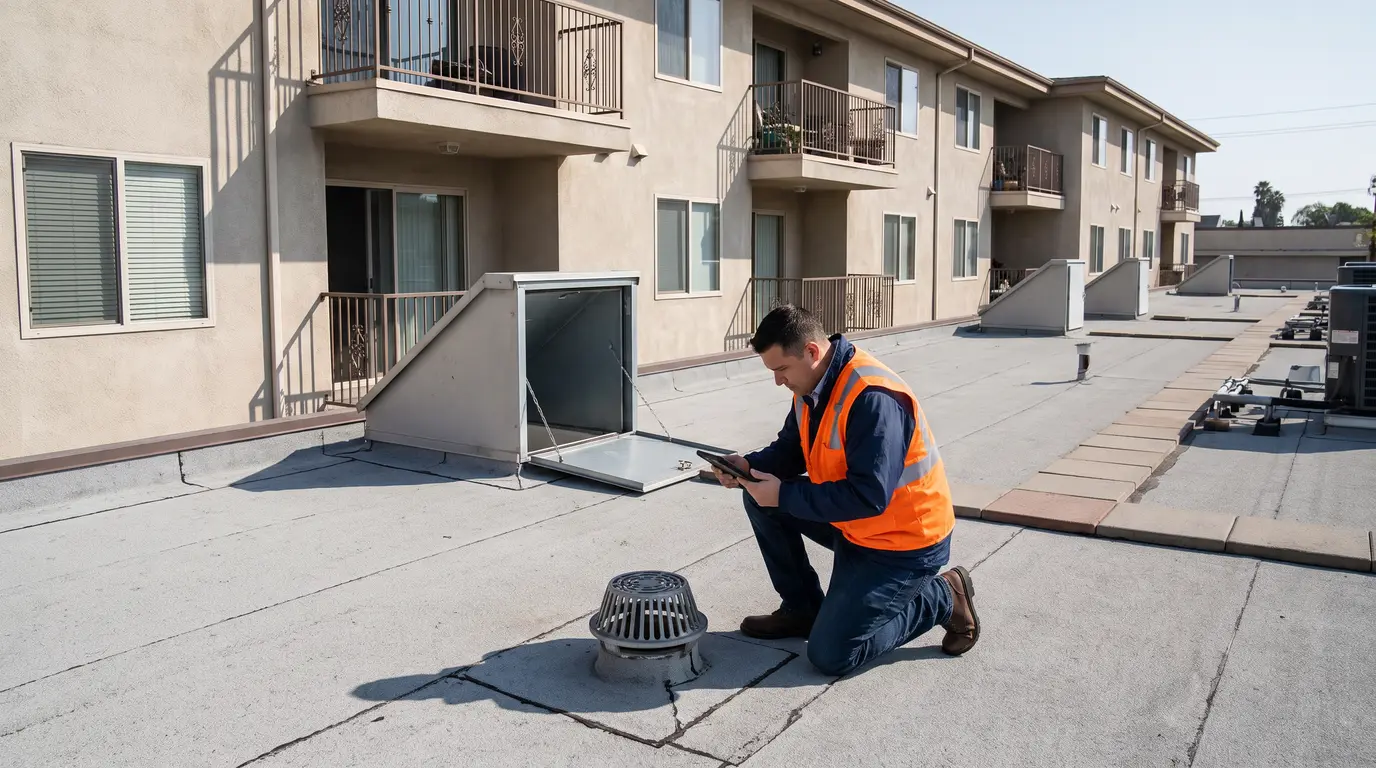
Roof inspections often involve more than opening a roof hatch. Before the visit, identify keys, locked gates, ladders, hatches, mechanical rooms, attic areas, restricted spaces, and any resident units that may need inspection from the interior. Confirm who is responsible for opening each area and how the inspector will reach it.
Give residents appropriate notice when entry, noise, balcony access, or interior leak investigation may be needed. Keep the access plan connected to the inspection request so that a contractor does not arrive without the person, key, or permission needed to examine the reported area.
If the property is subject to a HUD or REAC inspection, access to relevant common areas and sampled units may be part of the inspection process. The HUD guidance for preparing for REAC inspections can help managers understand the importance of coordinating access in those applicable situations. It does not establish a universal process for every privately managed multifamily property.
Property staff can provide valuable information from safe locations. They can record interior stains, active dripping, ceiling damage, blocked ground level drainage, debris, and visible exterior concerns. That screening helps the inspector understand where to begin.
Do not direct untrained staff or residents to climb onto a roof. Roof access and inspection work involve fall hazards, including unprotected edges, holes, and skylights. The applicable safety procedures depend on the employer, work activity, roof conditions, and whether the assignment involves general industry maintenance or construction work. OSHA’s resources on walking working surfaces and fall protection provide relevant safety context, while the employer, roofing contractor, or safety professional should determine the procedure for the assignment.
A useful report tells the next person what was inspected, where the condition was found, and what should happen next. Use the same basic structure across properties while allowing the inspector to address the specific roof assembly.
- Building and roof section identifier
- Inspection date, weather, and inspector
- Roof covering or membrane condition
- Flashings, penetrations, curbs, skylights, and edge metal
- Drains, scuppers, gutters, and downspouts
- Ponding or drainage concerns
- Rooftop HVAC and other equipment interfaces
- Interior evidence of leakage
- Photographs with location references
- Recommended action, urgency, estimated scope, assigned vendor, due date, and completion status
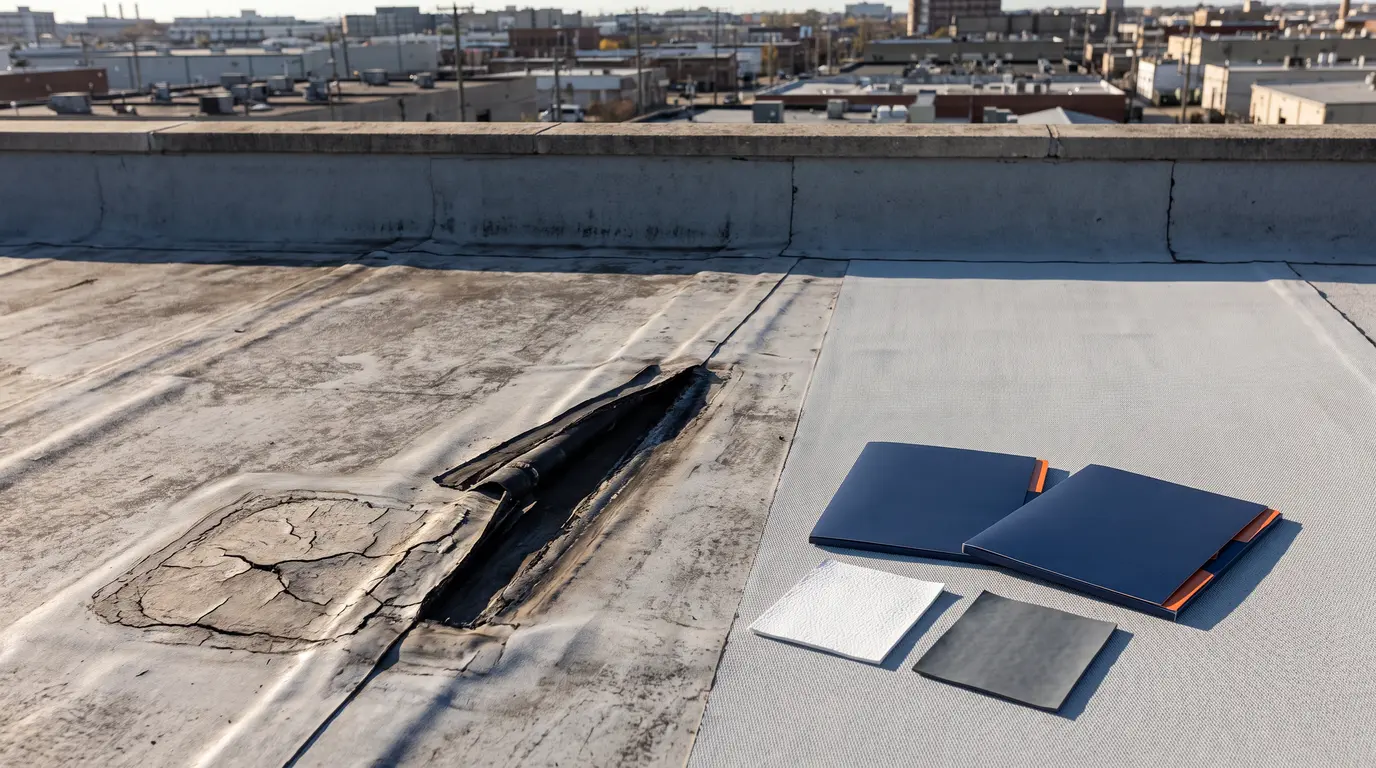
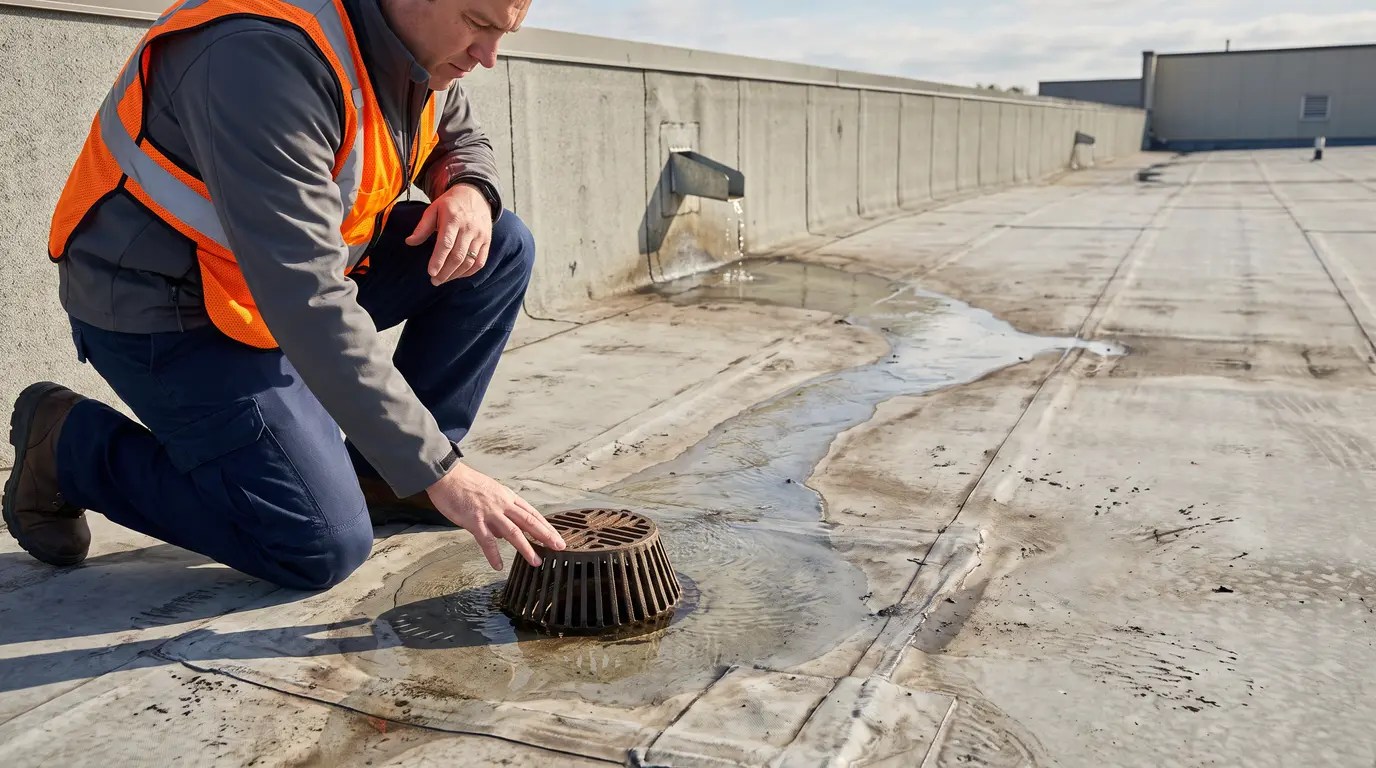
Roof related inspection points may include damaged or clogged drains, damaged gutters and downspouts, damaged soffits or fascia, damaged vents, torn membrane, missing ballast, ponding water, and missing or damaged shingles. The relevant items depend on the roof assembly and the equipment installed on it.
Photographs are more useful when they include a location reference. Instead of saving a photo as a general roof image, connect it to a building, roof section, nearby equipment, drain, penetration, or other recognizable point. A report should also identify the areas examined, observed conditions, recommended repairs, contractor or inspector, date and time, work performed, and cost information when appropriate.
Prioritize Findings by Consequence
Appearance alone should not determine priority. An active leak, an unsafe condition, or a drainage problem can deserve faster attention than a larger area of cosmetic wear. Use categories that help staff decide who owns the next action and when it is due.
This approach keeps urgent response separate from planned maintenance and long range budgeting. The article budget for recurring roof maintenance can help organize inspection, routine maintenance, corrective repairs, emergency response, and future capital needs. It is a budgeting resource, not a universal multifamily inspection interval.
An inspection report should lead to an accountable next step. Create a work order for each actionable finding and connect the photographs, proposal, vendor, location, cost information, and due date. Record whether the work is temporary or permanent when that distinction matters.
Do not close the item simply because a repair was authorized. Confirm that the specified work was completed, save completion photographs and related records, and document any warranty information. A follow up inspection may be needed to verify the repaired area and determine whether the original condition was addressed.
For a portfolio wide records structure, see how to track roof repairs across properties. Use that resource as a records management companion rather than as technical inspection or safety guidance.
A ceiling stain is a useful starting point, not proof that the roof is the source. The investigation may need to consider roof coverings, flashing, penetrations, rooftop equipment, HVAC conditions, plumbing, and other building envelope areas. Tie the interior report to the exterior roof section being investigated so that recurring patterns become visible.
When water appears below rooftop equipment, the resource on how to investigate leaks around rooftop HVAC units may help organize the questions for a multifamily building. Its focus is commercial roofing, so adapt the operational guidance to the actual roof assembly and equipment arrangement at your property.
Recurring records make it easier to distinguish an isolated repair from a broader pattern. Review findings by building, roof section, condition, vendor, cost, status, and completion date. Repeated drainage problems, widespread deterioration, or an aging roof system may belong in a capital plan rather than a series of unrelated emergency work orders.
If inspection findings point toward a larger project, you can read how to plan a roof replacement at an occupied multifamily property. That resource addresses replacement planning, resident coordination, access, and project operations, but it does not establish an inspection frequency. For preliminary planning only, the roof cost calculator may help frame potential repair or replacement costs before project specific verification.
Frequently Asked Questions
How often should a multifamily roof be inspected?
An annual professional maintenance inspection is a useful baseline. Add reviews after significant wind, hail, heavy rain, falling debris, or other relevant events, and investigate reported leaks promptly. The final schedule should also reflect the roof type, age, condition, climate, warranty terms, access, and applicable property obligations.
Who should inspect a multifamily roof?
Use appropriately qualified personnel for roof surface inspection, diagnostic work, membrane probing, flashing investigation, structural evaluation, and fall hazard work. Property staff can document conditions from safe locations and coordinate access, but untrained staff and residents should not be directed to climb onto roofs.
What should happen after a roofing contractor completes a repair?
Verify that the specified work was completed, connect completion photographs and contractor records to the original finding, record the completion date and any warranty information, and close the work order only after the condition has been reviewed. If the repair was temporary or the problem remains, keep the item open with a clear next action.
The most useful next step is to compare your roof register with the actual property. Confirm that every building and roof section has an identifier, an access plan, a recurring inspection date, and an owner for follow up. Once those basics are in place, inspections become a manageable part of property operations rather than a last minute response to the next leak.